Technical Review & Analysis
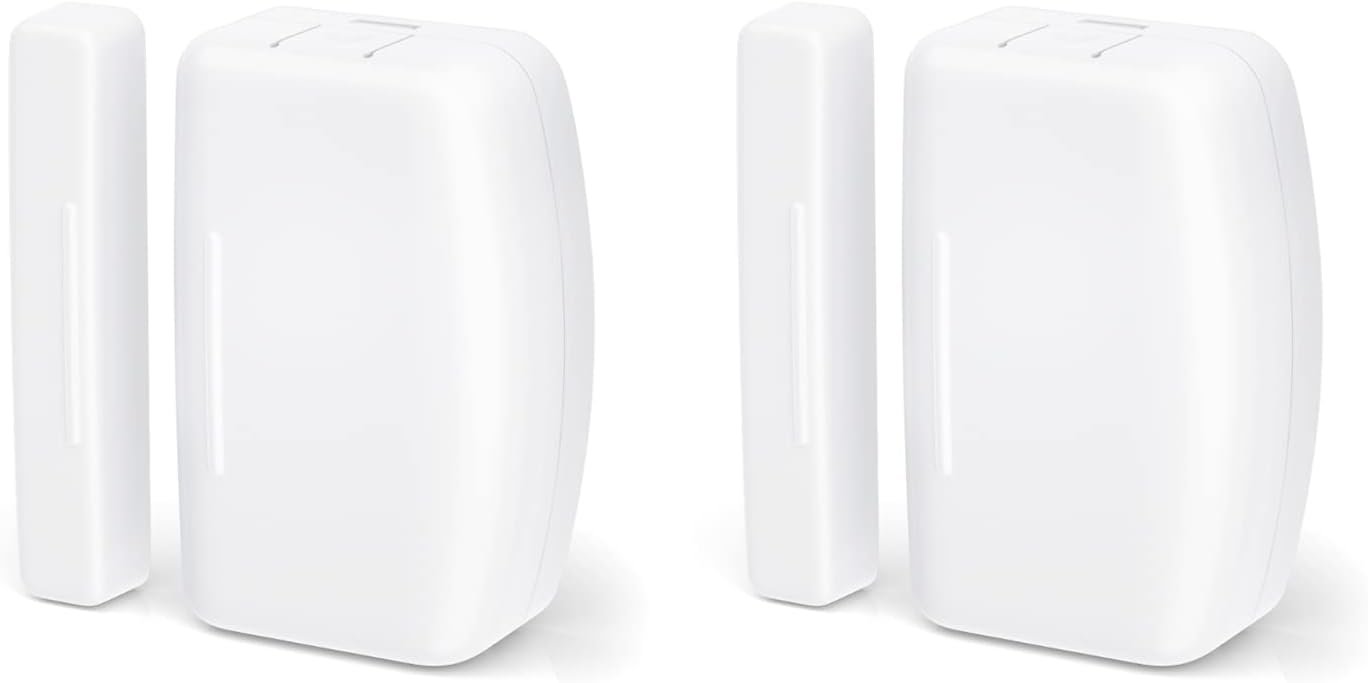
Robust perimeter security is the cornerstone of any resilient smart home. The THIRDREALITY Zigbee Contact Sensor presents itself as a foundational component for monitoring ingress points, offering crucial event triggers for integrated security protocols. Its reliance on the Zigbee standard promises interoperability essential for true system redundancy and effective anomaly detection.
Core Specifications
- Connectivity Protocol: Utilizes the robust Zigbee (IEEE 802.15.4) wireless standard, ensuring broad compatibility with a multitude of certified Zigbee hubs and gateways, including prominent ecosystems like SmartThings, Home Assistant, and Amazon Echo devices with integrated Zigbee radios. This leverages the mesh network topology inherent to Zigbee for enhanced signal propagation and redundancy within a properly deployed smart home network.
- Power Source & Longevity: Powered by two 1.5V AAA alkaline batteries, providing an estimated operational life of up to two years. This translates to an approximate total energy capacity of 2.4-3.0 Watt-hours, engineered for ultra-low power consumption to minimize maintenance cycles.
- Environmental & Installation Constraints: Rated for indoor use only. Critical operational note: Prohibits installation on metallic surfaces, which can significantly attenuate Zigbee radio frequency signals, impairing reliable communication and compromising security monitoring integrity.
- Security Integration: Functions as a binary state sensor (open/closed) directly feeding into security automation routines. This allows for immediate trigger actions such as activating audible alarms, initiating push notifications, or engaging other networked defensive countermeasures via compatible smart home platforms, leveraging Zigbee’s inherent AES-128 encryption for secure data transmission within the local mesh network.
Real-world Reliability
Operating on the local Zigbee mesh, the sensor itself remains functional during typical internet service disruptions, continuously transmitting its state to the local hub. However, its effectiveness in triggering alerts or automations is entirely dependent on the operational status of the primary Zigbee gateway and any associated notification infrastructure. While the sensor is battery-powered, ensuring its individual resilience during grid power outages, a downed smart home hub or a non-redundant local network can compromise its ability to communicate critical security events, underscoring the necessity for a robust, uninterruptible power supply (UPS) for the central hub and networking equipment to maintain full security posture.
Who is this for?
Ideal for homeowners deploying a foundational, low-power perimeter security layer within a robust, hub-centric Zigbee smart home ecosystem.