Technical Review & Analysis
For those prioritizing robust home security and unwavering power independence, every component demands rigorous scrutiny. This Kidde unit offers a layer of environmental awareness beyond mere threat detection, integrating seamlessly into a truly resilient smart home ecosystem.
Core Specifications
- Connectivity: Operates exclusively on a 2.4 GHz Wi-Fi network, a standard but secure protocol for device communication. No support for 5 GHz or mesh networking protocols like Zigbee or Z-Wave is mentioned, limiting integration options with more advanced smart home hubs.
- Power Source: Primarily powered by a 120V AC mains connection. It includes a crucial AA battery backup, offering a theoretical reserve of approximately 10-20 Wh (depending on battery capacity, e.g., 2500 mAh), ensuring continued operation during grid failures.
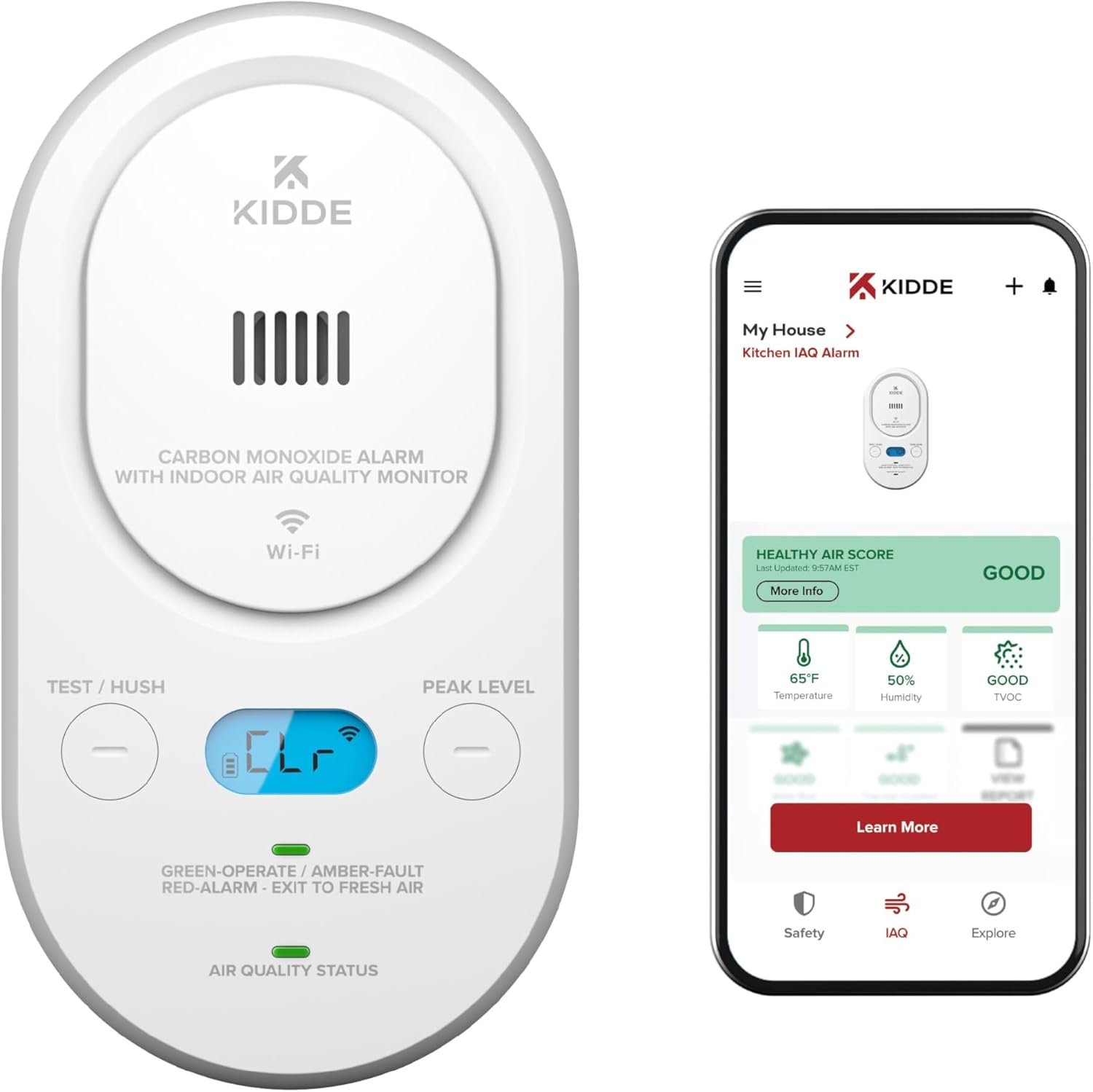
- Detection Technology: Employs advanced low-level Carbon Monoxide (CO) detection, calibrated to UL 2034, 5th Edition standards, exceeding basic requirements for enhanced early warning. It also monitors Total Volatile Organic Compounds (TVOC) and humidity, providing a comprehensive indoor air quality (IAQ) profile.
- Alarm Output: Generates a loud 85 dB audible alarm, a standard but effective alert mechanism for immediate notification within the premises.
- Smart Home Integration: Offers integration with Alexa-enabled devices for voice alerts and is compatible with Google Home. This allows for remote notification and potential integration into broader home automation routines via cloud services.
- Data Logging & Analysis: Provides real-time notifications via the Kidde App. An optional subscription unlocks weekly IAQ trends and personalized insights, including mold risk assessment and thermal comfort analysis, though the specific data granularity and frequency (e.g., sampling rate for TVOC) are not detailed.
Real-world Reliability
The plug-in design with AA battery backup is a fundamental resilience feature against short-term power outages, ensuring continuous CO monitoring. While the Wi-Fi dependency for real-time notifications presents a potential vulnerability during extended internet service disruptions, the device’s core CO detection and audible alarm will function independently. Extreme weather events that might impact grid stability or network infrastructure necessitate a layered approach; this device serves as a critical sensor within a larger resilient system.
Who is this for?
Discerning homeowners seeking proactive health and safety monitoring within a connected dwelling.