Technical Review & Analysis
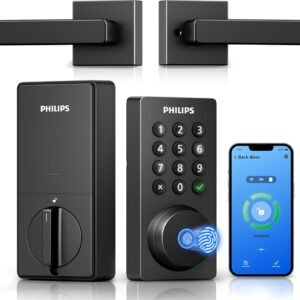
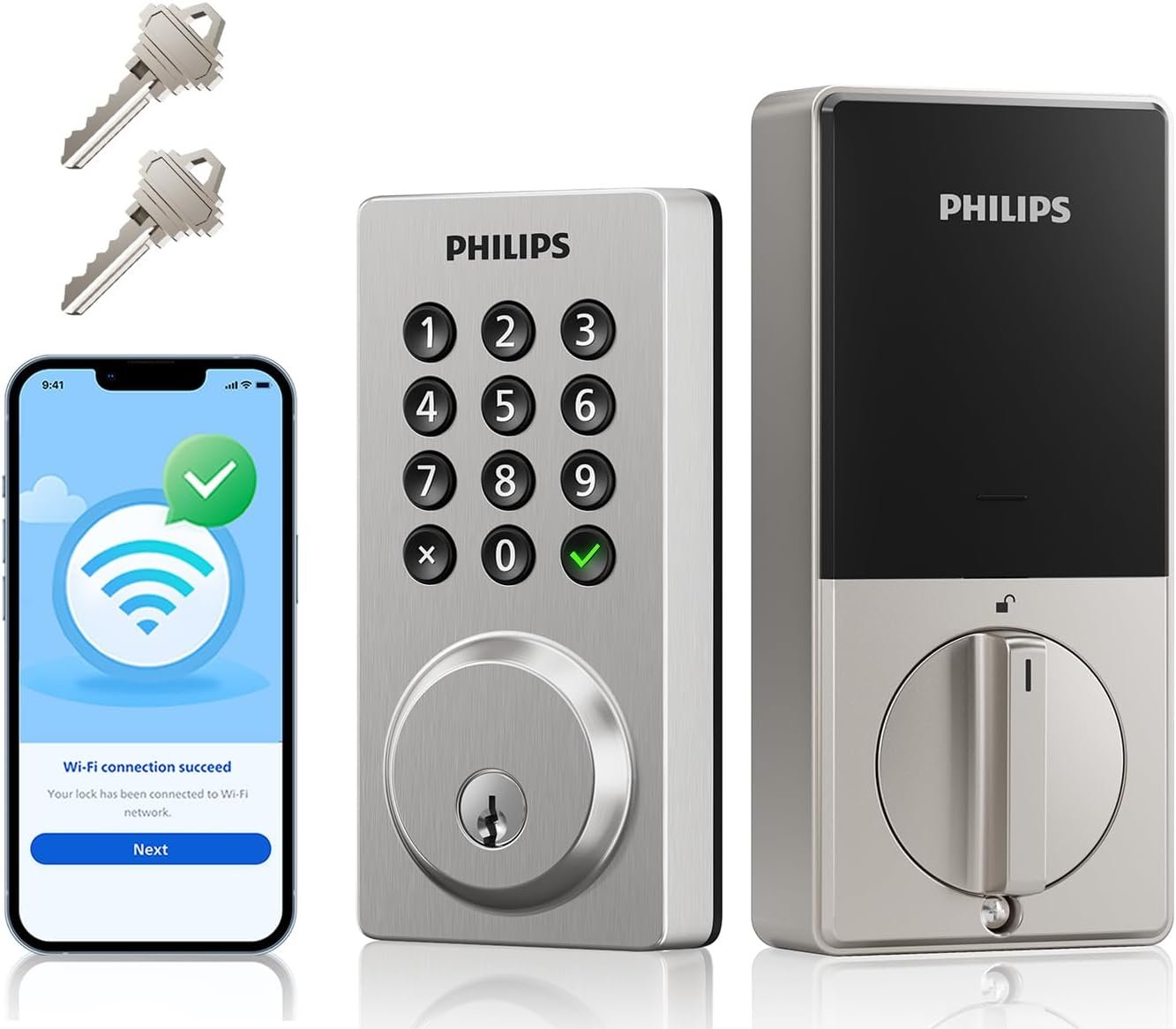
In an era demanding uncompromising home security and seamless control, a deadbolt system must transcend mere physical barriers. The Philips WiFi Smart Keypad Deadbolt Lock enters this arena, offering a directly integrated Wi-Fi solution for robust access management, mitigating the vulnerabilities often associated with hub-dependent smart lock ecosystems.
Core Specifications
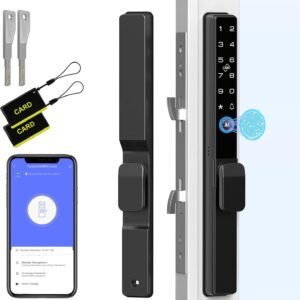
- Connectivity Protocol: Integrated Wi-Fi module enables direct connection to your home network, bypassing the need for a dedicated smart home hub. This facilitates remote control via the Philips Home Access App, providing real-time status, event history, and access permission management.
- Authentication Vectors: This system supports four distinct methods for access: traditional physical key, numerical keypad entry (up to 100 customizable passcodes, including permanent, one-time, and timed options), mobile application control, and voice command integration via Alexa and Google Assistant. The design prioritizes physical buttons over capacitive touchscreens for enhanced tactile feedback and presumed operational resilience.
- Automated Security Protocols: Features an adjustable auto-lock mechanism, configurable via the mobile application from 10 to 180 seconds. This critical functionality ensures the deadbolt re-engages automatically, mitigating human error and maintaining the integrity of the security perimeter.
- Power Subsystem & Longevity: Powered by 8 AA batteries (not included), the unit boasts an estimated operational lifespan of up to 6 months based on 20-30 daily cycles. Integrated low-battery alerts are provided both audibly at the unit (below 10% charge) and through push notifications within the Philips Home Access App, ensuring timely power source replacement.
Real-world Reliability
The Philips Smart Keypad Deadbolt is engineered for sustained functionality even during network interruptions or grid power outages. Its core mechanical and keypad access mechanisms operate independently of Wi-Fi, ensuring occupants retain entry via physical key or user-defined passcodes. Battery life management is critical, with proactive alerts mitigating unexpected lockouts, thereby minimizing operational downtime. The choice of physical keypad buttons suggests a design preference for durability and consistent performance over aesthetic touch-based interfaces, which can be prone to environmental factors or wear.
Who is this for?
Ideal for discerning homeowners and property managers prioritizing robust, app-managed access control with local redundancy for enhanced security.