Technical Review & Analysis
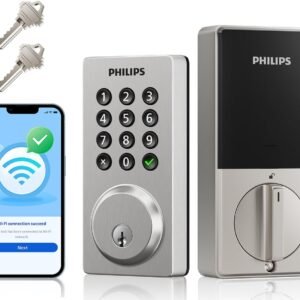
In the realm of residential access control, security and uninterrupted functionality are non-negotiable. The Philips Wi-Fi Smart Door Lock presents an integrated biometric solution, yet its reliance on network uptime and inherent architectural limitations warrant critical scrutiny for robust home defense. While offering multi-modal access, a thorough technical evaluation is essential to understand its true reliability profile.
Core Specifications
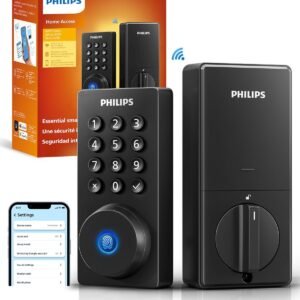
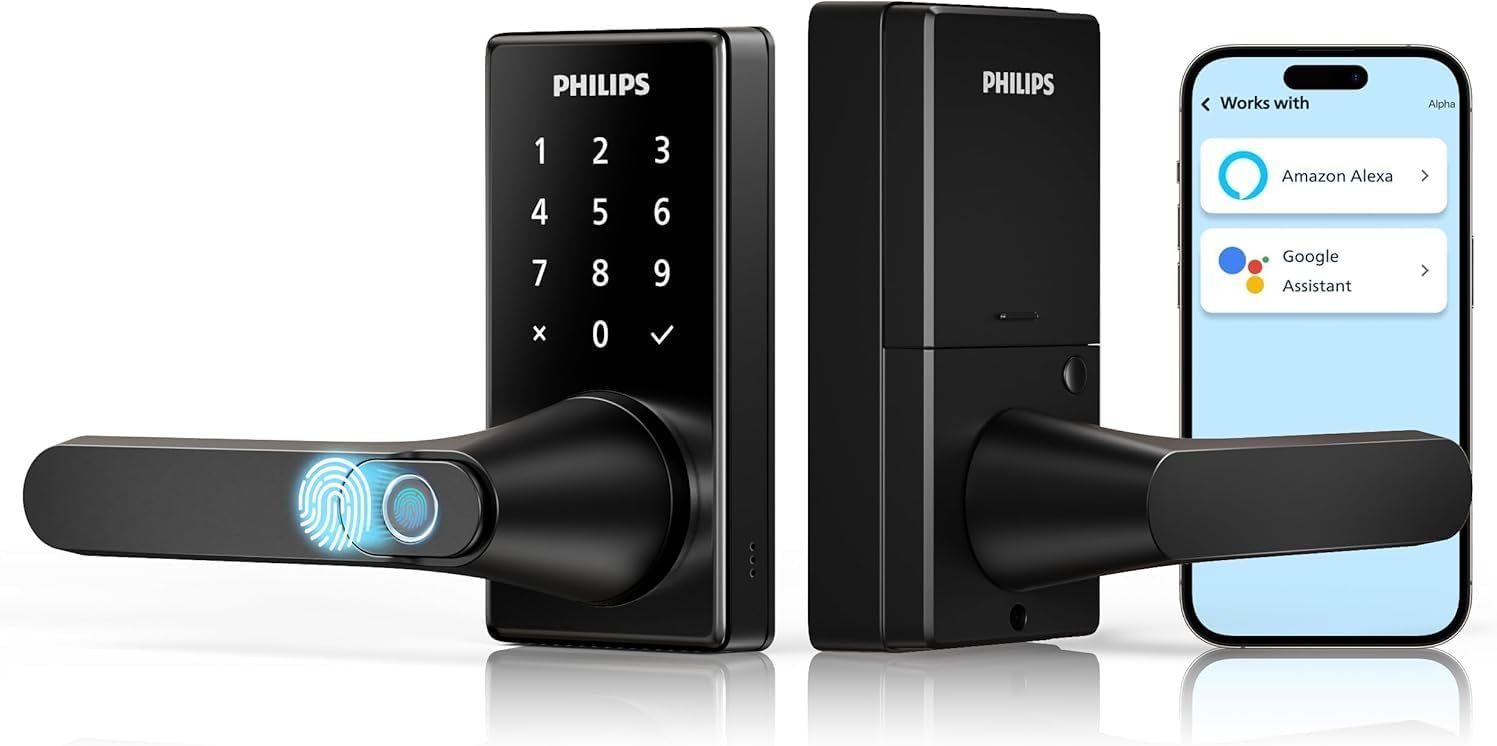
- Biometric Sensor Integration: Utilizes an integrated capacitive fingerprint sensor within the handle, allowing for single-motion authentication and unlocking. This architecture minimizes latency, achieving an advertised unlock speed of 0.3 seconds. Supports a biometric database of up to 50 unique fingerprint profiles.
- Wireless Connectivity Protocol: Incorporates a direct 2.4GHz IEEE 802.11 b/g/n Wi-Fi module for cloud-based remote access and status monitoring via the Philips HomeAccess App. This protocol choice offers broad compatibility but is susceptible to interference and congestion in dense wireless environments.
- Access Control Modalities: Provides five distinct methods for entry:
- Capacitive Fingerprint Scan.
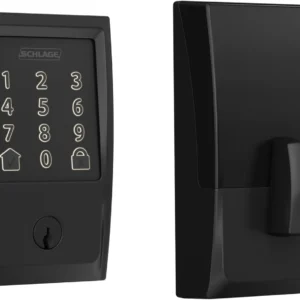
- Numerical PIN Code via Touchscreen Keypad (up to 100 unique codes, supports anti-peeping obfuscation).
- Remote App Control (Philips HomeAccess).
- Voice Command Integration (Alexa/Google Assistant via Wi-Fi bridge).
- Physical Key Override.
- Automated Locking Mechanism: Features an adjustable auto-lock timer from 5 to 180 seconds, engaging the latch post-closure. An immediate manual lock can be initiated by a 2-second press on the keypad. This function relies on a functional door sensor for status verification.
- Event Logging & Notifications: The integrated Wi-Fi module enables real-time push notifications for access events (e.g., successful unlock, failed attempts) and maintains a detailed event log accessible via the mobile application, crucial for audit trails.
Real-world Reliability
The Philips Wi-Fi Smart Door Lock’s operational resilience is primarily dictated by its integrated Wi-Fi dependency and internal power source. During network outages, app control and voice assistant functionalities become inert, forcing reliance on local biometric, PIN, or physical key entry. While this redundancy is standard, the absence of explicit battery life specifications or a low-power warning threshold is a notable oversight. Prolonged power loss or extreme temperature fluctuations, typical scenarios in off-grid or vulnerable suburban environments, could degrade biometric scanner performance or deplete batteries prematurely, potentially leaving users reliant solely on the physical key, which should always be kept accessible externally as a failsafe.
Who is this for?
This system is best suited for tech-forward homeowners seeking convenient, multi-modal access control for standard residential entries with consistent 2.4GHz Wi-Fi availability.
Data Breakdown
| Specification | Detail |
|---|---|
| Connectivity Protocol | IEEE 802.11 b/g/n Wi-Fi |
| Wi-Fi Frequency | 2.4 GHz Only |
| Biometric Capacity | Up to 50 Fingerprints |
| PIN Code Capacity | Up to 100 User Codes |
| Biometric Unlock Speed | 0.3 Seconds |
| Auto-Lock Timer Range | 5 – 180 Seconds |