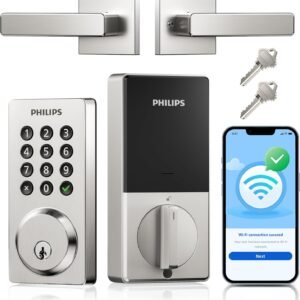
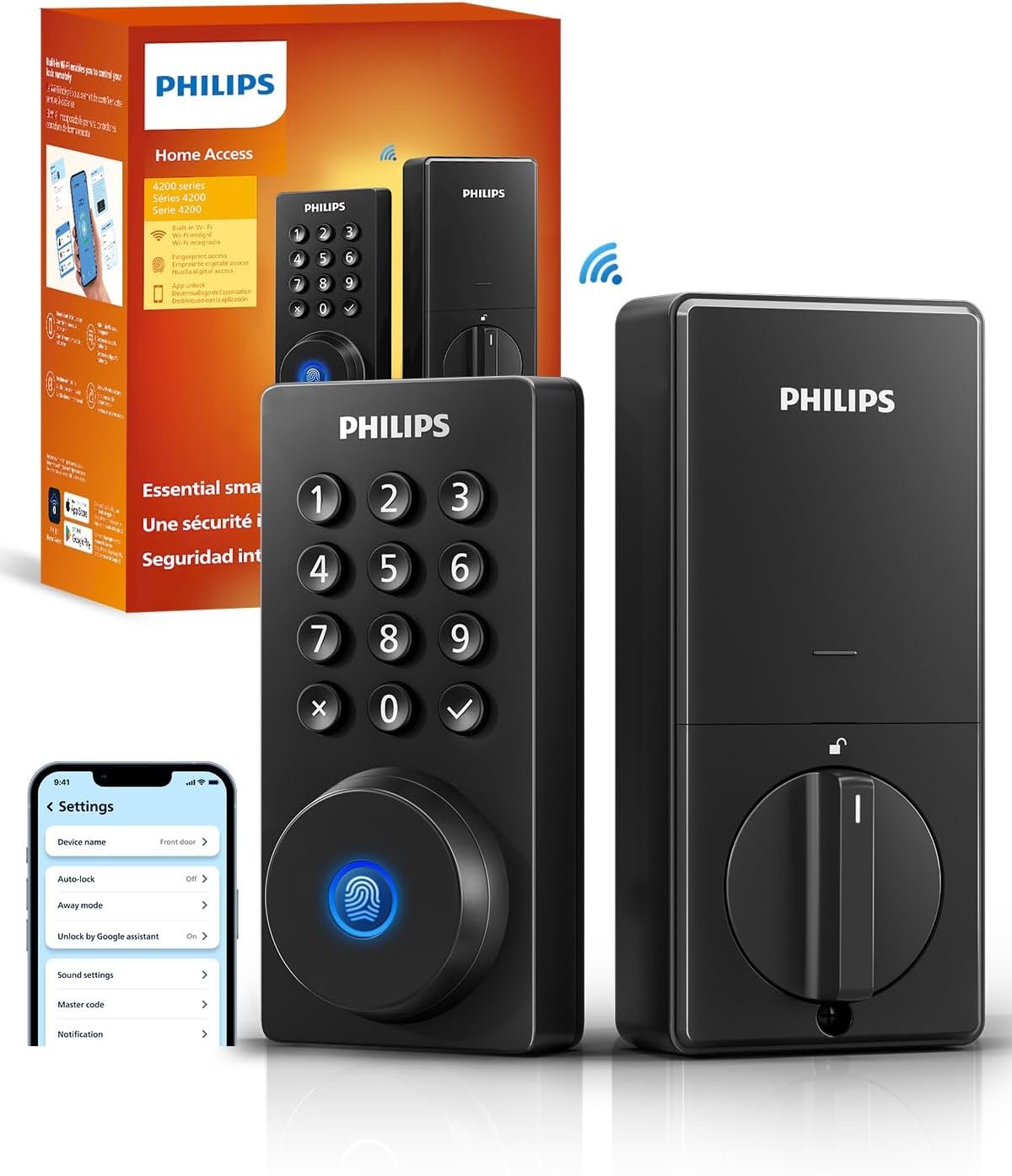
Technical Review & Analysis
For any critical entry point, security hinges on resilience and redundant power. A Wi-Fi-dependent smart lock introduces a network-centric vulnerability, raising serious questions about operational integrity during power outages or compromised local network infrastructure. Its reliance on internal battery power mandates stringent consideration for maintenance cycles and the absence of a fail-safe secondary power input.
Core Specifications
- Connectivity Protocol: Integrated IEEE 802.11b/g/n Wi-Fi module, operating exclusively on the 2.4GHz band. This limits integration to legacy network segments and mandates an Access Point (AP) within 20 meters (65 feet) for stable remote operation.
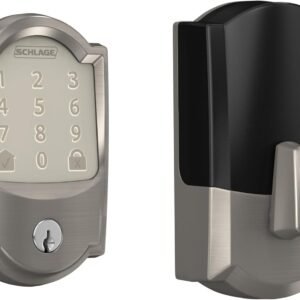
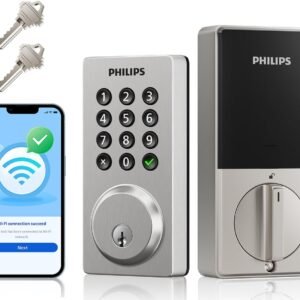
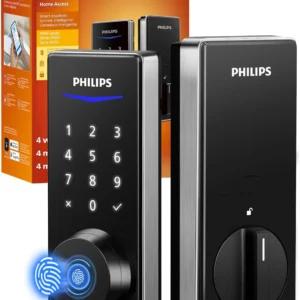
- Authentication Methods: Provides a multi-modal authentication suite including biometric (capacitive fingerprint sensor for multiple user profiles), numeric passcode keypad (supporting up to 100 unique user-defined codes), dedicated mobile application interface, voice command integration via Alexa/Google Assistant APIs, and traditional physical key override.
- Remote Command Latency: Functionality for remote lock/unlock operations is entirely contingent on a stable 2.4GHz Wi-Fi connection and Philips’ cloud infrastructure, introducing potential latency and single points of failure.
- Event Logging & Notifications: Features real-time event logging for access events and push notification alerts to registered mobile devices, dependent on active internet connectivity.
- Power Source: Operates strictly on a specified number of AA batteries (not included), dictating a finite operational lifespan between replacements and lacking any hardwired or redundant power input for sustained off-grid functionality.
Real-world Reliability
In the event of a power grid failure or local network outage, the Philips Wi-Fi Door Lock’s remote access and notification capabilities cease entirely due to its singular reliance on Wi-Fi connectivity. Local functions—fingerprint, keypad, and physical key—remain operational as they draw power from the internal battery array. This reliance on consumer-grade alkaline batteries introduces a critical maintenance dependency; depletion renders the electronic functions inert, necessitating fallback to the physical key. Extreme weather conditions that disrupt power or internet services will isolate the lock from its remote management interface, underscoring the importance of the mechanical override.
Who is this for?
This lock is suited for suburban smart homes with consistent grid power and robust 2.4GHz Wi-Fi, prioritizing convenience over absolute off-grid security autonomy.
Data Breakdown
| Specification | Detail |
|---|---|
| Wireless Protocol | Wi-Fi 2.4GHz (IEEE 802.11b/g/n) |
| Authentication Suite | Fingerprint, Passcode, Physical Key, App, Voice API |
| User Code Capacity | 100 Unique Passcodes |
| Biometric Capacity | Multiple Fingerprints (Vendor specific, typically 20-50 profiles) |
| Power Source | 4x AA Batteries (User Supplied) |
| Wireless Range (AP) | Optimal < 20 meters (65 feet) |
| Encryption Standard | Undisclosed (Implied TLS/SSL for cloud communication) |