Technical Review & Analysis
In an era where smart home integration and off-grid resilience are paramount, understanding the true security and power capabilities of every device is non-negotiable. This eLinkSmart fingerprint lock presents an interesting proposition for those seeking keyless entry with a biometric edge, but its true value lies in its technical implementation and how it stands up under rigorous, real-world conditions.
Core Specifications
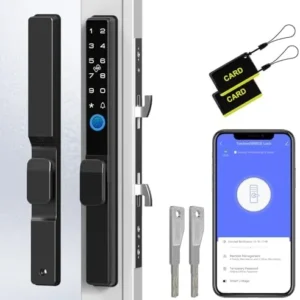
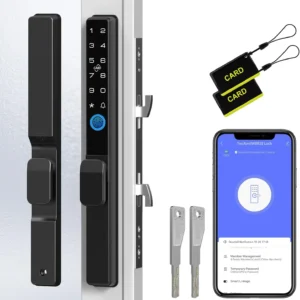
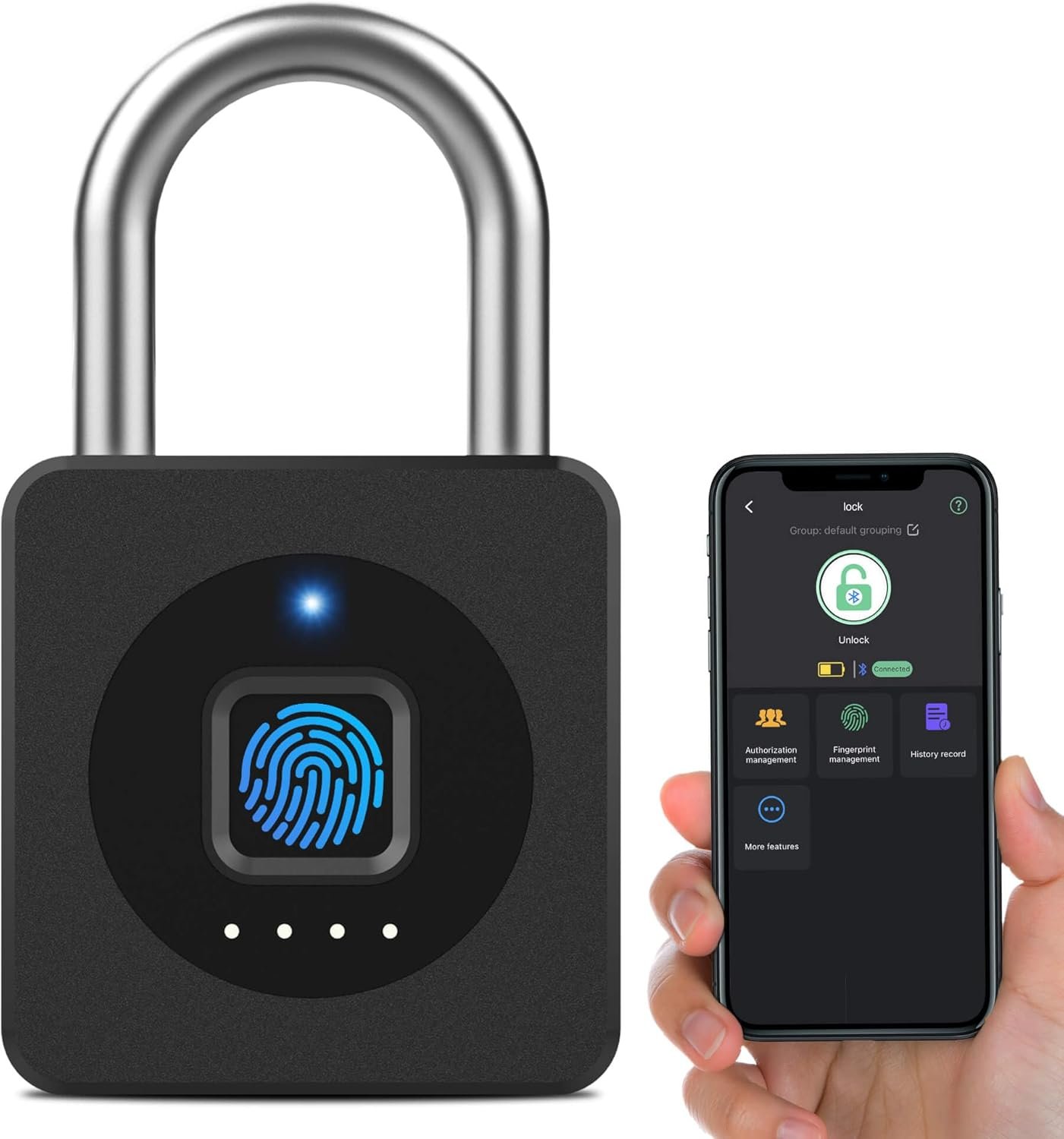
- Biometric Authentication: Utilizes an unspecified advanced biometric sensor with a reported 0.2s unlock time. The precise sensor technology and its accuracy under varying conditions (e.g., moisture, dirt) are not detailed, which is a critical omission for security-conscious users.
- Connectivity: Employs Bluetooth for app-based control and remote permission sharing. The Bluetooth version and its effective range are not specified. Data transmission for unlocking and record checking is likely encrypted, but the encryption protocol (e.g., AES-128, AES-256) is not disclosed.
- Power System: Features a 110mAh rechargeable lithium-ion battery. At approximately 3.7V, this equates to roughly 0.407 Watt-hours (Wh). The claim of 2000 unlocks or 6 months standby time per charge is achievable with low power draw, but actual standby time can vary significantly based on environmental factors and unlock frequency. Charging is via USB-C, a standard and appreciated feature.
- Construction & Durability: Built with alloy steel and a zinc alloy body, featuring a hardened steel shackle for cut resistance. The “weatherproof” claim is vague; specific IP ratings (e.g., IP65, IP67) which denote dust and water ingress protection are absent, making its suitability for prolonged outdoor exposure uncertain without further data.
Real-world Reliability
While the 110mAh battery offers a decent number of unlocks, its performance in extreme temperatures or prolonged humidity is a significant unknown. The Bluetooth connection, essential for app control and remote sharing, is susceptible to signal degradation in dense environments or over extended distances, potentially rendering remote management features unreliable if the primary user isn’t in proximity. The “weatherproof” designation is a marketing term lacking concrete IP certification, which is a concern for true off-grid applications where protection against the elements is critical.
Who is this for?
This lock is best suited for users prioritizing convenient, keyless access for less critical, but still secure, outdoor storage.