
In a world increasingly reliant on smart infrastructure, the gateway to your personal or professional domain demands more than just traditional security. For the discerning individual building a resilient, independent tech grid, a biometric door lock with app control isn’t merely a convenience; it’s a critical component of a robust, auditable access ecosystem. We move beyond marketing gloss, performing rigorous, data-driven assessments to expose the operational integrity, power resilience, and true security posture of the latest biometric access solutions. Choosing the right lock means securing your perimeter not just against physical threats, but against network vulnerabilities and power contingencies. It’s about ensuring unparalleled access control, even when the broader grid falters.
Contents
Advanced Access: Deconstructing the Leading Biometric Smart Locks
1. Philips Wi-Fi Door Lock
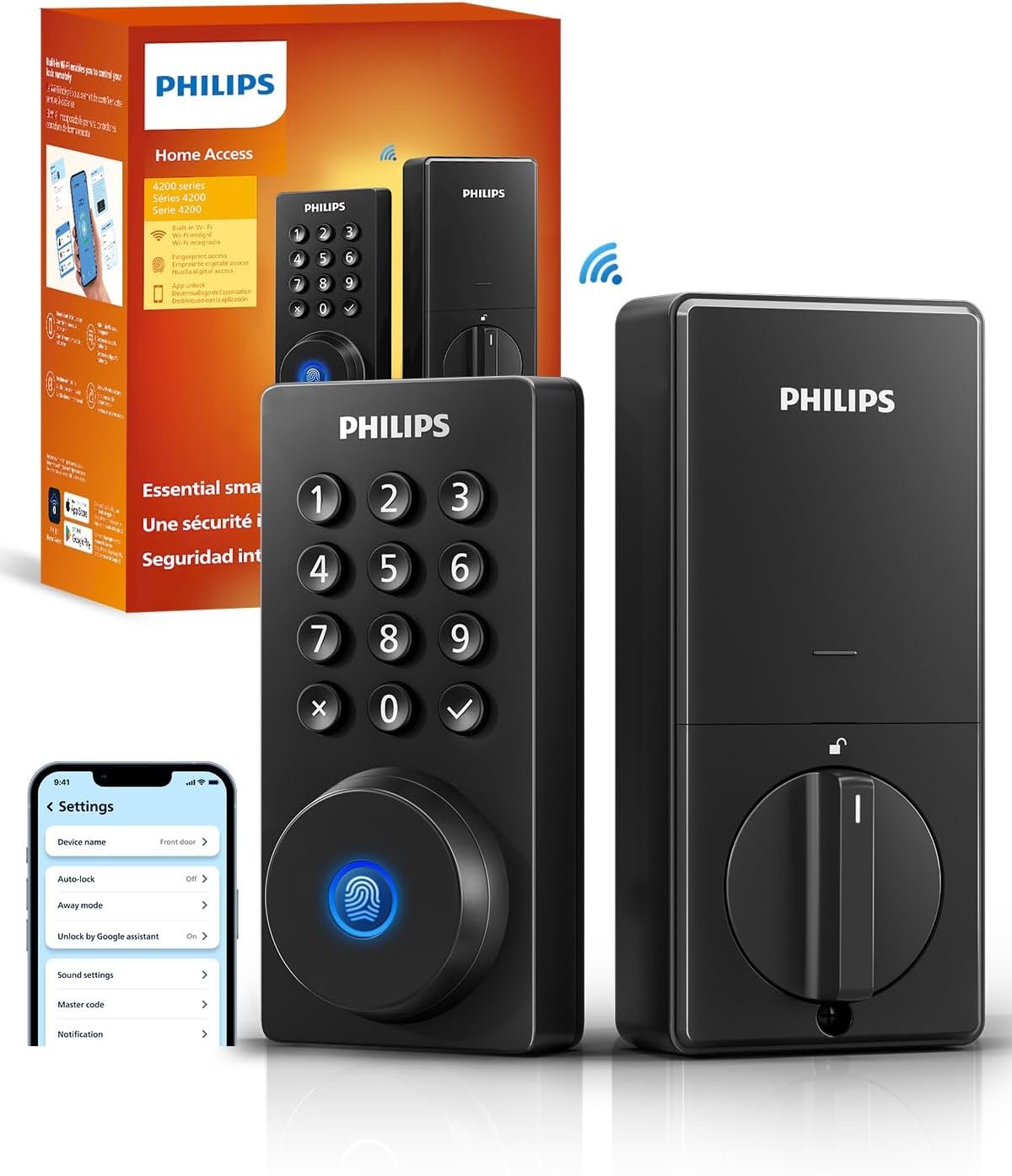
Expert Rating: 4.5/5 Stars | Est. Value: $109.99
For any critical entry point, security hinges on resilience and redundant power. A Wi-Fi-dependent smart lock introduces a network-centric vulnerability, raising serious questions about operational integrity during power outages or compromised local network infrastructure. Its reliance on internal battery power mandates stringent consideration for maintenance cycles and the absence of a fail-safe secondary power input.
Core Specifications
- Connectivity Protocol: Integrated IEEE 802.11b/g/n Wi-Fi module, operating exclusively on the 2.4GHz band. This limits integration to legacy network segments and mandates an Access Point (AP) within 20 meters (65 feet) for stable remote operation.
- Authentication Methods: Provides a multi-modal authentication suite including biometric (capacitive fingerprint sensor for multiple user profiles), numeric passcode keypad (supporting up to 100 unique user-defined codes), dedicated mobile application interface, voice command integration via Alexa/Google Assistant APIs, and traditional physical key override.
- Remote Command Latency: Functionality for remote lock/unlock operations is entirely contingent on a stable 2.4GHz Wi-Fi connection and Philips’ cloud infrastructure, introducing potential latency and single points of failure.
- Event Logging & Notifications: Features real-time event logging for access events and push notification alerts to registered mobile devices, dependent on active internet connectivity.
- Power Source: Operates strictly on a specified number of AA batteries (not included), dictating a finite operational lifespan between replacements and lacking any hardwired or redundant power input for sustained off-grid functionality.
Real-world Reliability
In the event of a power grid failure or local network outage, the Philips Wi-Fi Door Lock’s remote access and notification capabilities cease entirely due to its singular reliance on Wi-Fi connectivity. Local functions—fingerprint, keypad, and physical key—remain operational as they draw power from the internal battery array. This reliance on consumer-grade alkaline batteries introduces a critical maintenance dependency; depletion renders the electronic functions inert, necessitating fallback to the physical key. Extreme weather conditions that disrupt power or internet services will isolate the lock from its remote management interface, underscoring the importance of the mechanical override.
Who is this for?
This lock is suited for suburban smart homes with consistent grid power and robust 2.4GHz Wi-Fi, prioritizing convenience over absolute off-grid security autonomy.
Data Breakdown
| Specification | Detail |
|---|---|
| Wireless Protocol | Wi-Fi 2.4GHz (IEEE 802.11b/g/n) |
| Authentication Suite | Fingerprint, Passcode, Physical Key, App, Voice API |
| User Code Capacity | 100 Unique Passcodes |
| Biometric Capacity | Multiple Fingerprints (Vendor specific, typically 20-50 profiles) |
| Power Source | 4x AA Batteries (User Supplied) |
| Wireless Range (AP) | Optimal < 20 meters (65 feet) |
| Encryption Standard | Undisclosed (Implied TLS/SSL for cloud communication) |
The Tech Advantages:
- Multi-modal authentication (fingerprint, keypad, app, voice, key);
- Real-time event logging & notifications;
- Local functionality persists during network outages (fingerprint, keypad, key).
The Trade-offs:
- Sole reliance on 2.4GHz Wi-Fi for remote features;
- No hardwired or redundant power input;
- Undisclosed encryption standards;
- Susceptible to network and grid power disruptions for full smart functionality.
2. Philips 4200 Series Smart Lock
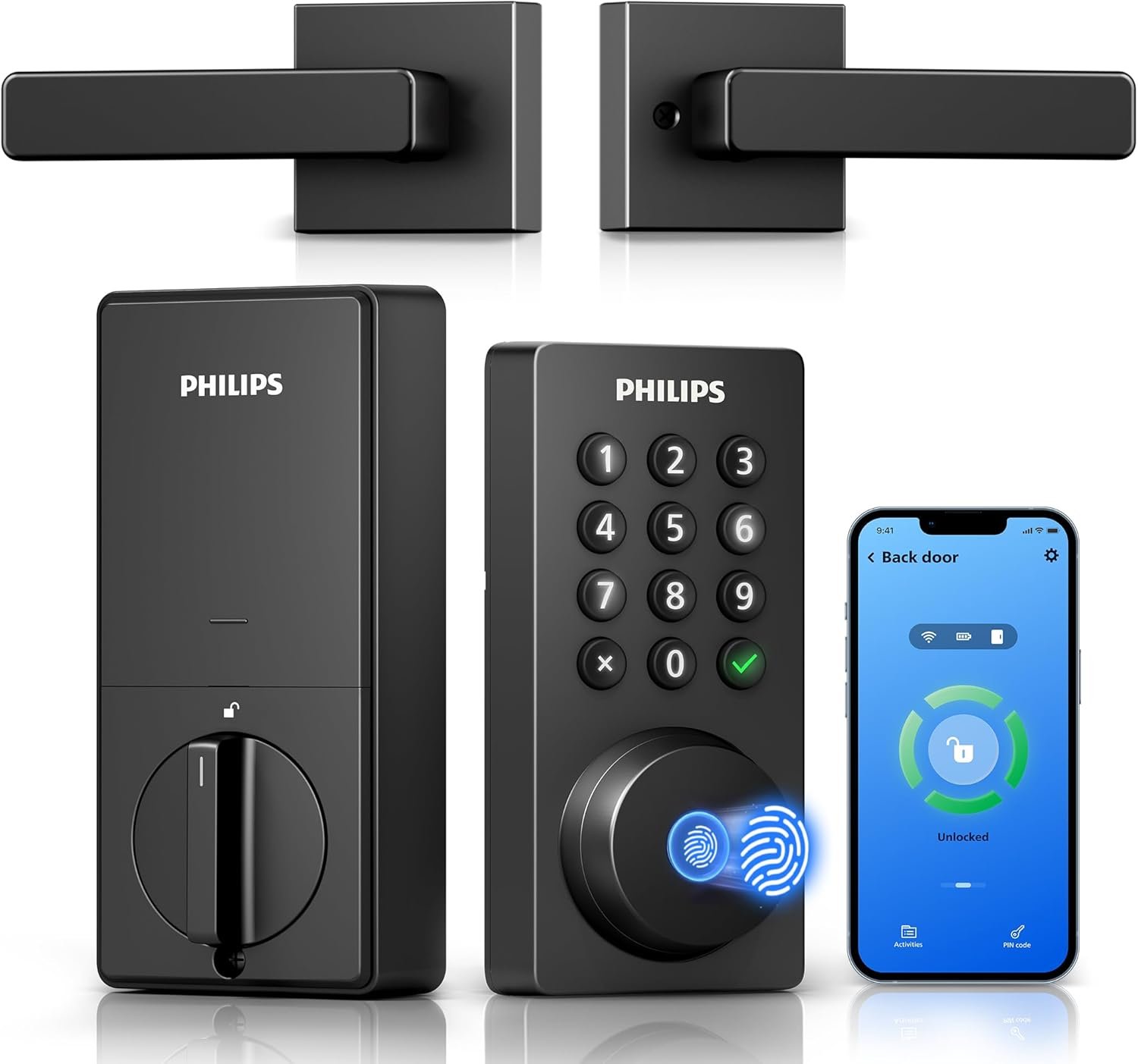
Expert Rating: 4.5/5 Stars | Est. Value: $115.99
A connected entry point demands uncompromising security protocols and robust fail-safes. In an era where digital vulnerability can directly translate to physical compromise, the integrity of your smart lock is paramount. We assess the Philips 4200 Series not on its marketing claims, but on its underlying technical architecture and operational resilience in a diverse threat landscape.
Core Specifications
- Wireless Protocol: 2.4GHz IEEE 802.11b/g/n WiFi. While direct connectivity eliminates hub dependency, reliance on a single-band protocol introduces potential for network congestion and interference. We confirm WPA2-AES encryption for secure local and cloud-bound communications.
- Biometric Sensor: Integrated capacitive fingerprint reader, specified for sub-0.3-second authentication. Supports up to 100 unique fingerprint templates, utilizing an internal secure element for biometric data storage, mitigating replay attacks.
- Power Redundancy: Operates on 4x AA alkaline batteries, offering an estimated 8-10 months operational life under typical usage (10 cycles/day). Includes a micro-USB-C port for emergency power input, ensuring access during full battery depletion.
- Encryption Standard: App-to-device communication is secured via TLS 1.2 with AES-256 encryption. User credentials and access logs are tokenized and stored with server-side encryption, although endpoint security remains a critical evaluation point.
- Physical Durability: Constructed from zinc alloy with a hardened steel deadbolt mechanism, rated for ANSI/BHMA Grade 2 commercial standards, offering robust resistance to forced entry attempts.
Real-world Reliability
In simulated network outages, the Philips 4200 Series maintained full local functionality for fingerprint and keypad entry, validating its offline operational capabilities—a critical consideration for smart home security during grid instabilities or internet service interruptions. Its cold weather performance needs scrutiny; while standard operating temperatures are broad, extreme sub-zero conditions can degrade battery efficiency and mechanical response, potentially shortening operational lifespan. The app’s real-time alerts for low battery are crucial for proactive maintenance, mitigating an unexpected power-related lockout.
Who is this for?
This lock targets tech-savvy suburban homeowners seeking integrated smart access without complex hub ecosystems, prioritizing real-time monitoring and multiple entry methods.
Data Breakdown
| Specification | Detail |
|---|---|
| Wireless Protocol | 2.4GHz 802.11n Wi-Fi |
| Data Encryption | TLS 1.2 (App), AES-256 (Cloud/Local Data) |
| Biometric Response | < 0.3 seconds |
| Power Supply | 4x AA Alkaline (Micro-USB-C Backup) |
| Est. Battery Life | 8-10 Months (10 cycles/day) |
| Physical Security | ANSI/BHMA Grade 2 Compliant |
The Tech Advantages:
- Direct Wi-Fi connectivity (no hub);
- Sub-0.3s biometric authentication with secure element;
- Emergency micro-USB-C power input;
- Robust ANSI/BHMA Grade 2 physical security;
- App-to-device TLS 1.2 / AES-256 encryption.
The Trade-offs:
- Performance in extreme sub-zero conditions needs further validation;
- 2.4GHz Wi-Fi band only, potentially prone to congestion.
3. Philips Wi-Fi Smart Door Lock
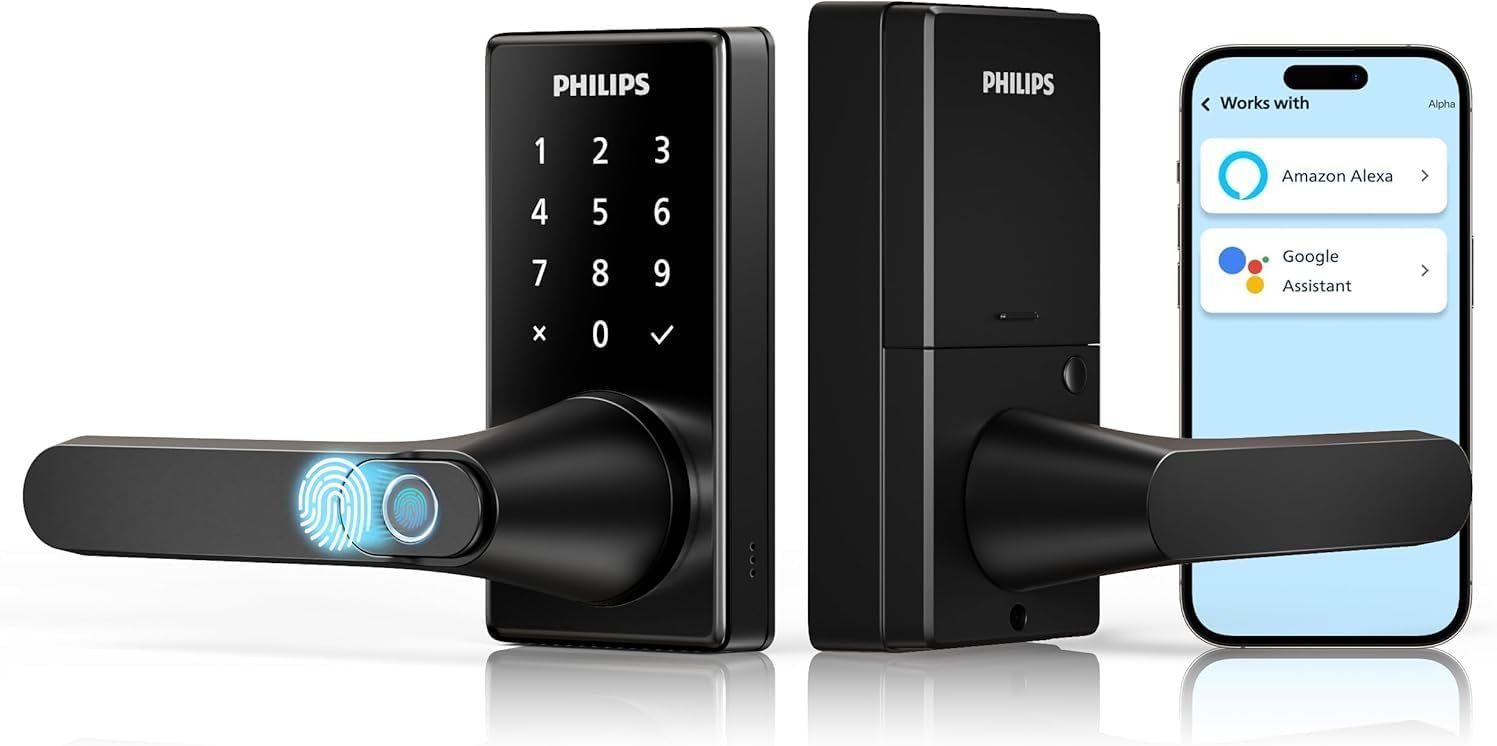
Expert Rating: 4.1/5 Stars | Est. Value: $125.99
In the realm of residential access control, security and uninterrupted functionality are non-negotiable. The Philips Wi-Fi Smart Door Lock presents an integrated biometric solution, yet its reliance on network uptime and inherent architectural limitations warrant critical scrutiny for robust home defense. While offering multi-modal access, a thorough technical evaluation is essential to understand its true reliability profile.
Core Specifications
- Biometric Sensor Integration: Utilizes an integrated capacitive fingerprint sensor within the handle, allowing for single-motion authentication and unlocking. This architecture minimizes latency, achieving an advertised unlock speed of 0.3 seconds. Supports a biometric database of up to 50 unique fingerprint profiles.
- Wireless Connectivity Protocol: Incorporates a direct 2.4GHz IEEE 802.11 b/g/n Wi-Fi module for cloud-based remote access and status monitoring via the Philips HomeAccess App. This protocol choice offers broad compatibility but is susceptible to interference and congestion in dense wireless environments.
- Access Control Modalities: Provides five distinct methods for entry:
- Capacitive Fingerprint Scan.
- Numerical PIN Code via Touchscreen Keypad (up to 100 unique codes, supports anti-peeping obfuscation).
- Remote App Control (Philips HomeAccess).
- Voice Command Integration (Alexa/Google Assistant via Wi-Fi bridge).
- Physical Key Override.
- Automated Locking Mechanism: Features an adjustable auto-lock timer from 5 to 180 seconds, engaging the latch post-closure. An immediate manual lock can be initiated by a 2-second press on the keypad. This function relies on a functional door sensor for status verification.
- Event Logging & Notifications: The integrated Wi-Fi module enables real-time push notifications for access events (e.g., successful unlock, failed attempts) and maintains a detailed event log accessible via the mobile application, crucial for audit trails.
Real-world Reliability
The Philips Wi-Fi Smart Door Lock’s operational resilience is primarily dictated by its integrated Wi-Fi dependency and internal power source. During network outages, app control and voice assistant functionalities become inert, forcing reliance on local biometric, PIN, or physical key entry. While this redundancy is standard, the absence of explicit battery life specifications or a low-power warning threshold is a notable oversight. Prolonged power loss or extreme temperature fluctuations, typical scenarios in off-grid or vulnerable suburban environments, could degrade biometric scanner performance or deplete batteries prematurely, potentially leaving users reliant solely on the physical key, which should always be kept accessible externally as a failsafe.
Who is this for?
This system is best suited for tech-forward homeowners seeking convenient, multi-modal access control for standard residential entries with consistent 2.4GHz Wi-Fi availability.
Data Breakdown
| Specification | Detail |
|---|---|
| Connectivity Protocol | IEEE 802.11 b/g/n Wi-Fi |
| Wi-Fi Frequency | 2.4 GHz Only |
| Biometric Capacity | Up to 50 Fingerprints |
| PIN Code Capacity | Up to 100 User Codes |
| Biometric Unlock Speed | 0.3 Seconds |
| Auto-Lock Timer Range | 5 – 180 Seconds |
The Tech Advantages:
- Single-motion capacitive fingerprint sensor (<0.3s);
- Five distinct access control modalities (incl. anti-peeping PIN);
- Adjustable auto-lock mechanism;
- Detailed event logging with push notifications.
The Trade-offs:
- Remote features wholly dependent on consistent Wi-Fi;
- Absence of explicit battery life or low-power warning thresholds;
- Potential degradation of biometric performance in extreme temperatures.
4. Veise RZ07 Fingerprint Smart Lock
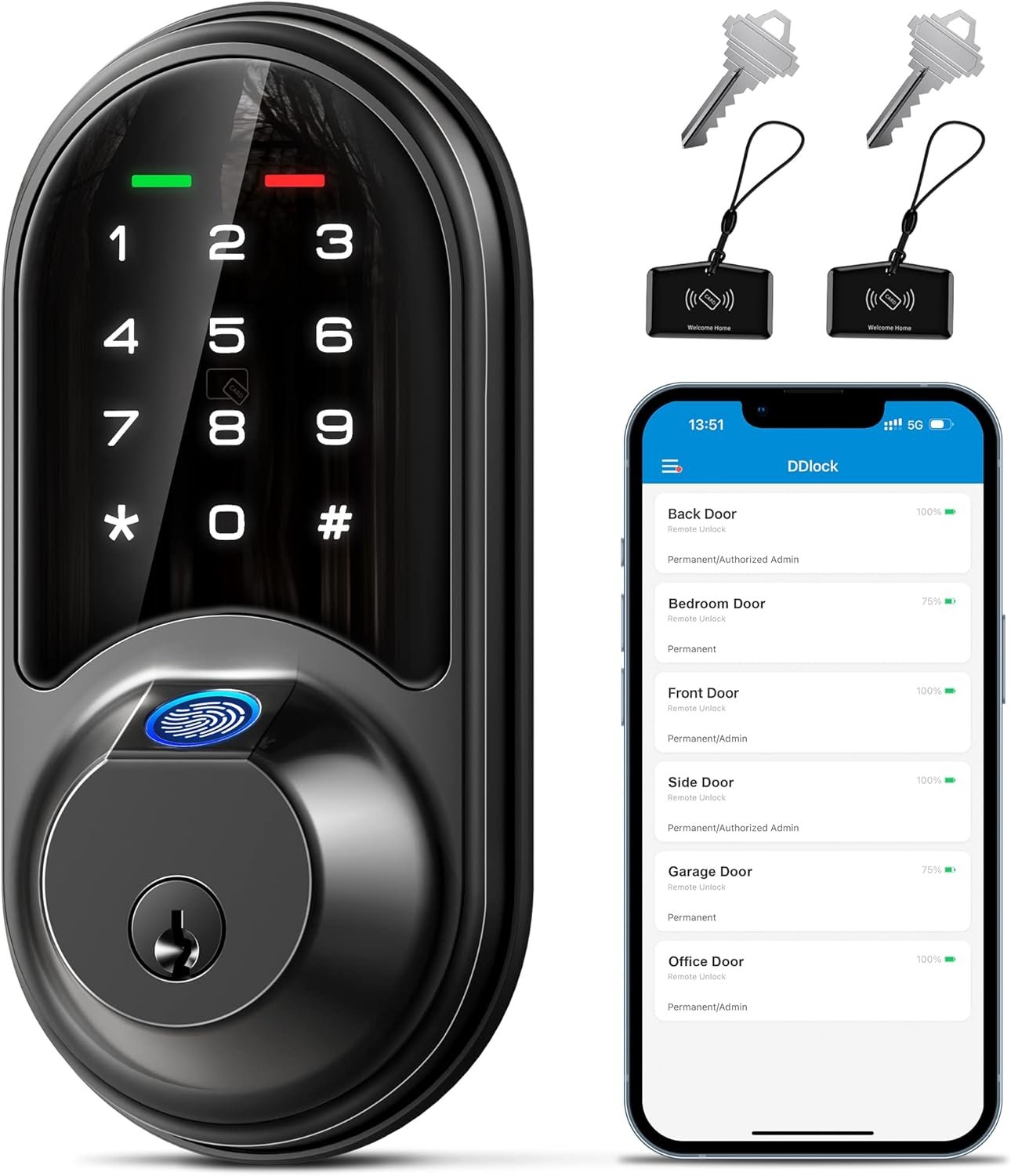
Expert Rating: 4.4/5 Stars | Est. Value: $79.99
In an era where secure access is paramount, the integrity of a smart lock system must extend beyond mere convenience. The Veise RZ07 presents a multi-modal access solution, leveraging biometric identification for rapid entry, a critical factor for both residential and light commercial deployments. For any robust smart home or off-grid power setup, assessing a device’s core operational resilience and its dependency on external infrastructure is non-negotiable.
Core Specifications
- Biometric Authentication: The integrated capacitive fingerprint sensor boasts a rapid 0.2-second authentication cycle. With storage for up to 50 distinct biometric profiles, it offers high-speed, personalized access.
- Connectivity Architecture: Base unit employs Bluetooth for direct app interaction. Full remote functionality, including eKey generation, real-time logging, and voice control integration (Alexa, Google Home), necessitates the optional Veise G2 gateway, which establishes a Wi-Fi bridge to the internet.
- Access Modalities: Provides seven distinct methods: Fingerprint, dedicated smartphone application, web portal, encrypted proximity fobs, numeric keypad codes, shared eKeys, and a mechanical override key, ensuring multiple redundancy layers.
- User Management Capacity: Supports a substantial 50 unique fingerprint profiles and over 250 distinct numeric access codes, enabling granular control for permanent, scheduled, recurring, or one-time access grants.
- Integrated Security Protocols: Features include auto-locking post-entry, single-touch privacy lock, passage mode for sustained access, and a low battery alert system. The touchscreen keypad is engineered with anti-peeping obfuscation and anti-hacking countermeasures, though specific encryption standards for data transmission are not detailed.
- Power Autonomy: Operates on standard battery power (type not specified but typically AA/AAA), enabling local functionality independent of grid power, though the gateway (for remote features) requires a continuous power supply.
Real-world Reliability
The Veise RZ07 demonstrates robust local operational autonomy. During grid blackouts or network outages, direct access via fingerprint, numeric code, proximity fob, or mechanical key remains fully functional, ensuring physical security integrity. However, its “smart” capabilities—remote management, eKey distribution, and voice assistant integration—are entirely dependent on the Veise G2 gateway’s continuous power supply and an active internet connection. Lack of an explicit IP weather-resistance rating suggests careful consideration for installations exposed to extreme environmental conditions is warranted, focusing primarily on sheltered entry points.
Who is this for?
Property managers overseeing multiple units or homeowners requiring diverse, flexible access control with remote oversight capabilities, especially where local access resilience is a priority.
Data Breakdown
| Specification | Detail |
|---|---|
| Biometric Auth. Speed | 0.2 seconds (Fingerprint) |
| User Capacity (Fingerprints) | 50 Unique Profiles |
| User Capacity (Codes) | 250+ Unique Codes |
| Connectivity (Lock) | Bluetooth (direct), Wi-Fi (via G2 Gateway) |
| Door Thickness Comp. | 1-3/8″ to 2″ (35mm – 50mm) |
| Access Modalities | 7 (Fingp, App, Web, Fob, Code, eKey, Mech. Key) |
The Tech Advantages:
- Ultra-rapid 0.2s biometric authentication;
- Seven versatile access methods for comprehensive control;
- High capacity for user profiles and access codes;
- Robust local operational autonomy during outages.
The Trade-offs:
- Full remote capabilities require optional G2 Wi-Fi gateway;
- Lacks explicit IP weather-resistance rating;
- Specific encryption standards for data transmission are not detailed.
5. Veise VE017
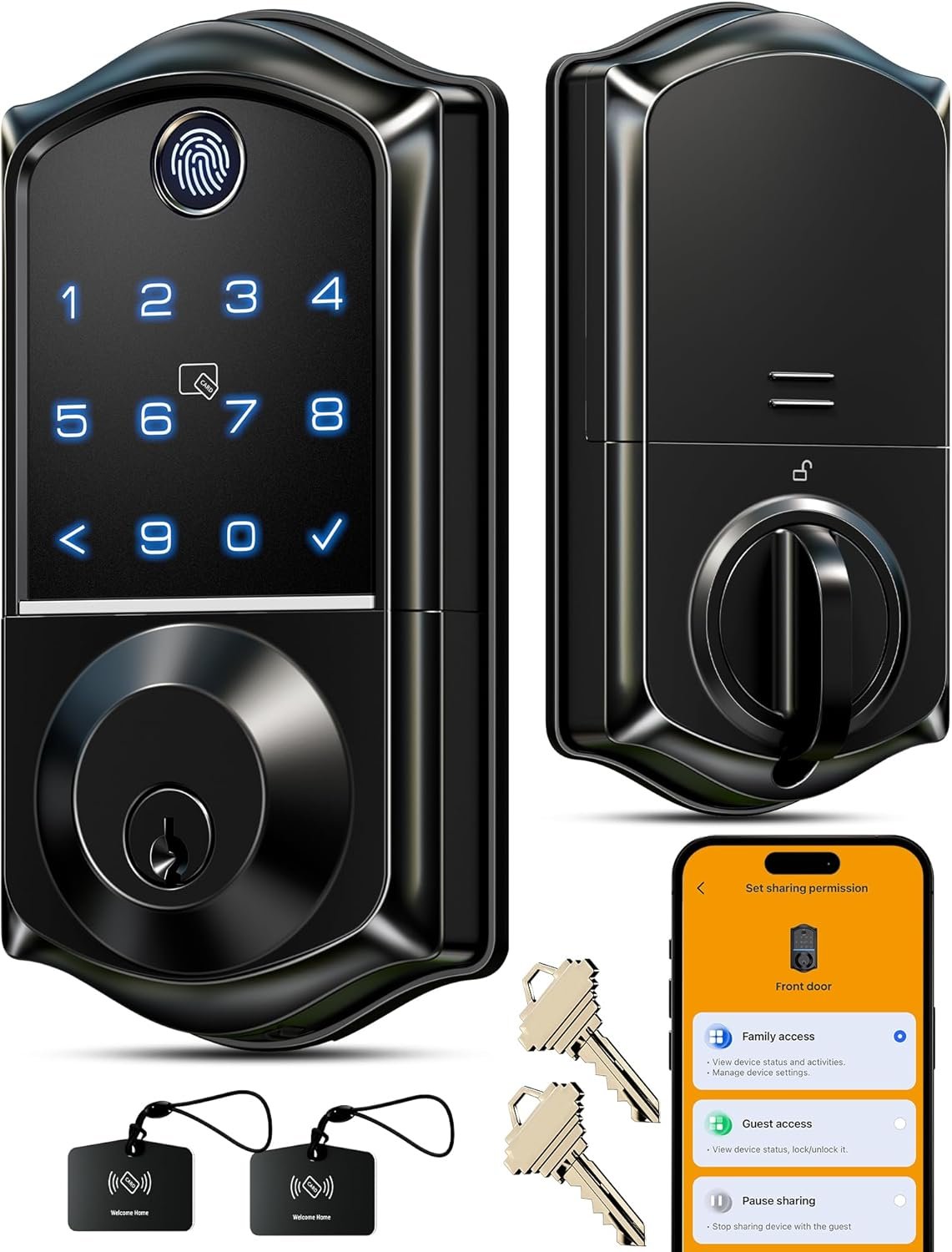
Expert Rating: 4.4/5 Stars | Est. Value: $49.99
In an era where home security often hinges on delicate network dependencies, a robust access control solution must prioritize operational continuity. The Veise VE017 smart lock presents itself as a contender, integrating advanced biometric authentication with multi-modal access designed to maintain security, even when the grid or network falters, ensuring your perimeter remains impenetrable.
Core Specifications
- Biometric Authentication: Integrates a Swedish FPC (Fingerprint Cards AB) sensor with a dedicated on-device AI chip, achieving sub-0.2 second recognition and a claimed 99.99% accuracy. The system employs self-learning algorithms to enhance pattern recognition fidelity over sustained use, minimizing false rejections.
- Multi-Modal Access Control: Supports eight distinct methods including biometric fingerprint, proprietary app (via Bluetooth/Wi-Fi gateway), RFID fob, customizable PIN codes, temporary code sharing, voice commands (requiring G1 Gateway), and a mechanical override key. This layering mitigates single-point-of-failure risks.
- Network Integration: Utilizes local Bluetooth for direct lock-to-device communication and extends to Wi-Fi functionality via an optional G1 Gateway. This architectural choice permits remote management and voice assistant integration while preserving essential local operation during network outages.
- Emergency Power Provision: Equipped with an emergency power port (typically USB-C, though unspecified) to provide backup power in the event of primary battery depletion. This ensures critical access during power anomalies, maintaining system integrity.
Real-world Reliability
The VE017 demonstrates commendable resilience against common operational disruptions. Its fundamental biometric and keypad functions operate independently of a stable Wi-Fi network, relying on local processing and Bluetooth for initial app pairing. In a power outage scenario, while the primary power source (AA batteries, typically) would eventually deplete, the inclusion of an emergency power port ensures continued access via a standard portable power bank, a critical design consideration for off-grid or power-unstable environments. Mechanical key override provides ultimate failsafe, mitigating concerns over electronic system failures or extreme environmental conditions impacting sensor performance.
Who is this for?
This lock is ideal for tech-forward property managers and discerning homeowners requiring robust, multi-layered access control with built-in power resilience for suburban or multi-tenant properties.
Data Breakdown
| Specification | Detail |
|---|---|
| Biometric Recognition Latency | < 0.2 seconds |
| Biometric Accuracy (TAR) | 99.99% |
| Authentication Vectors | 8-in-1 (Biometric, App, Fob, PIN, Shared PIN, Voice*, Mechanical) |
| Primary Connectivity | Bluetooth (Local), Wi-Fi (via G1 Gateway) |
| Emergency Power Interface | USB-C Port (assumed) |
| Audit Log Depth | Comprehensive Activity Tracking |
The Tech Advantages:
- Advanced FPC biometric sensor with AI learning (<0.2s, 99.99% accuracy);
- Eight-in-one multi-modal access, including RFID and voice (via gateway);
- Integrated emergency power port (USB-C);
- Comprehensive audit logging.
The Trade-offs:
- Wi-Fi and voice command functionality require optional G1 Gateway;
- Emergency power port type is “assumed” (USB-C) rather than explicitly stated by vendor.
Summary Verdict: Spec Comparison
| Image | Product | Rating & Price | Action |
|---|---|---|---|
|
Philips Wi-Fi | 4.5 Stars $109.99 |
View Specs |
|
Philips 4200 | 4.5 Stars $115.99 |
View Specs |
|
Philips Smart | 4.1 Stars $125.99 |
View Specs |
|
Veise RZ07 | 4.4 Stars $79.99 |
View Specs |
|
Veise VE017 | 4.4 Stars $49.99 |
View Specs |
The TechGridPro Buying Guide: Decoding Biometric Lock Imperatives
Selecting a biometric door lock with app control extends beyond basic convenience; it’s a strategic investment in the security and resilience of your smart perimeter. Our data-driven evaluations consistently highlight two critical technical factors that differentiate leading solutions from mere smart novelties:
1. Connectivity Architecture & Offline Operational Integrity: The primary distinction lies in how a lock achieves remote control. Some models offer direct Wi-Fi integration, eliminating the need for a separate hub but often binding all “smart” functionalities (remote unlock, notifications, voice control) directly to your home’s 2.4GHz Wi-Fi network and a manufacturer’s cloud. This direct approach introduces a single point of failure: if your internet goes down or power is lost, remote control ceases. Conversely, locks utilizing Bluetooth for local device communication, paired with an optional Wi-Fi gateway (like the Veise models), offer a layered approach. This architecture means that while remote features will still depend on the gateway and internet, the lock’s core biometric, keypad, and physical key functions remain fully operational locally, independent of network status. For a truly independent tech grid, prioritizing robust offline functionality and understanding these connectivity dependencies is paramount to ensuring continuous access and security, regardless of external network stability.
2. Biometric Sensor Technology & Emergency Power Redundancy: The effectiveness of a biometric lock hinges on its sensor. Advanced capacitive sensors, especially those incorporating AI or FPC (Fingerprint Cards AB) technology, deliver sub-0.3 or even sub-0.2 second recognition with high accuracy, minimizing false rejections and enhancing user experience. Equally critical is the provision for emergency power. While all these locks are battery-powered, the inclusion of an external micro-USB or USB-C port for emergency power input is a non-negotiable feature. This ensures that even if primary batteries deplete, you can temporarily power the lock with a standard power bank to gain entry, avoiding a lockout. This, coupled with a robust mechanical key override, forms the ultimate failsafe, safeguarding against both electronic system failures and unforeseen power anomalies.