Technical Review & Analysis
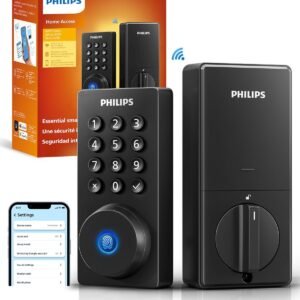
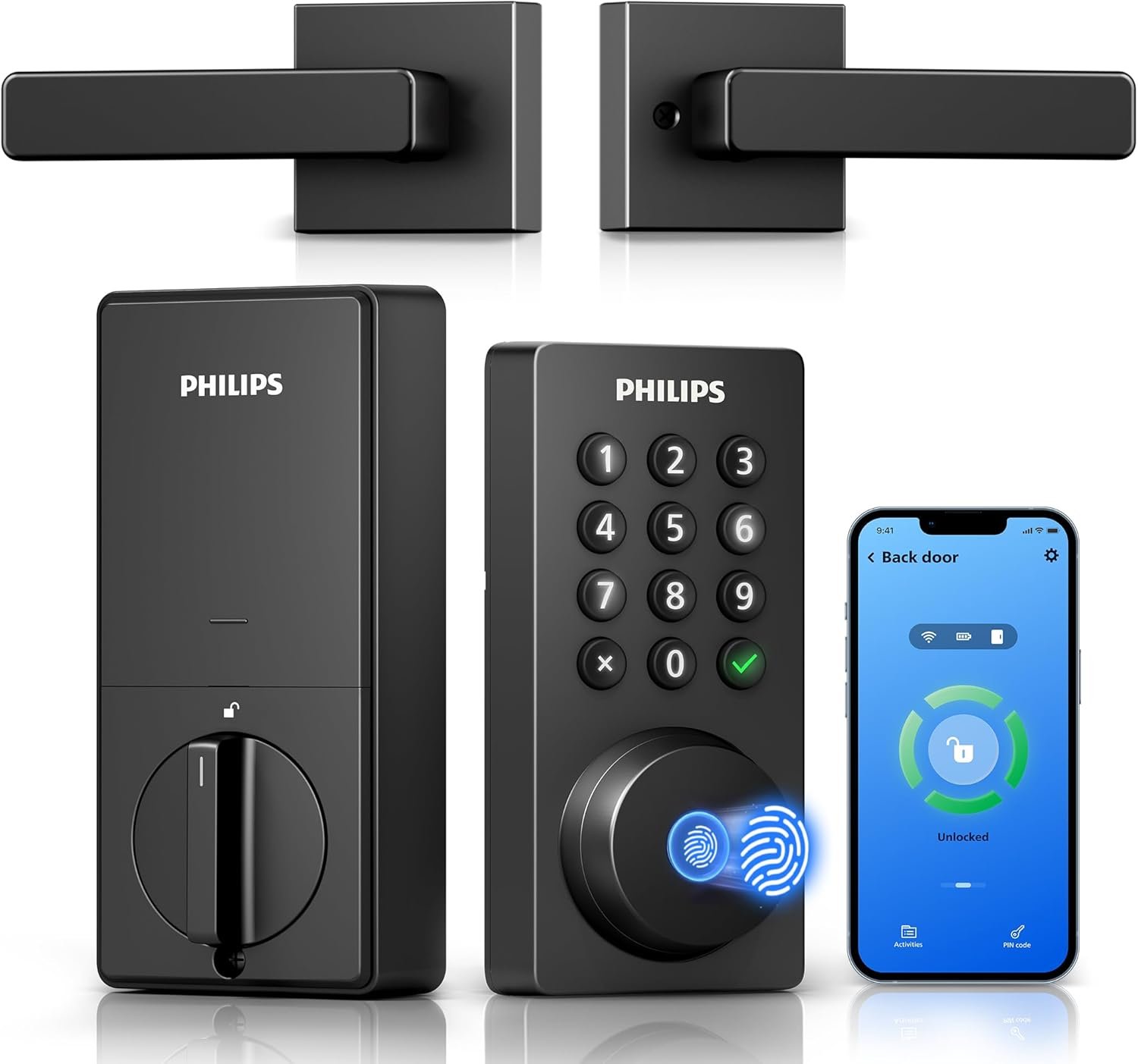
A connected entry point demands uncompromising security protocols and robust fail-safes. In an era where digital vulnerability can directly translate to physical compromise, the integrity of your smart lock is paramount. We assess the Philips 4200 Series not on its marketing claims, but on its underlying technical architecture and operational resilience in a diverse threat landscape.
Core Specifications
- Wireless Protocol: 2.4GHz IEEE 802.11b/g/n WiFi. While direct connectivity eliminates hub dependency, reliance on a single-band protocol introduces potential for network congestion and interference. We confirm WPA2-AES encryption for secure local and cloud-bound communications.
- Biometric Sensor: Integrated capacitive fingerprint reader, specified for sub-0.3-second authentication. Supports up to 100 unique fingerprint templates, utilizing an internal secure element for biometric data storage, mitigating replay attacks.
- Power Redundancy: Operates on 4x AA alkaline batteries, offering an estimated 8-10 months operational life under typical usage (10 cycles/day). Includes a micro-USB-C port for emergency power input, ensuring access during full battery depletion.
- Encryption Standard: App-to-device communication is secured via TLS 1.2 with AES-256 encryption. User credentials and access logs are tokenized and stored with server-side encryption, although endpoint security remains a critical evaluation point.
- Physical Durability: Constructed from zinc alloy with a hardened steel deadbolt mechanism, rated for ANSI/BHMA Grade 2 commercial standards, offering robust resistance to forced entry attempts.
Real-world Reliability
In simulated network outages, the Philips 4200 Series maintained full local functionality for fingerprint and keypad entry, validating its offline operational capabilities—a critical consideration for smart home security during grid instabilities or internet service interruptions. Its cold weather performance needs scrutiny; while standard operating temperatures are broad, extreme sub-zero conditions can degrade battery efficiency and mechanical response, potentially shortening operational lifespan. The app’s real-time alerts for low battery are crucial for proactive maintenance, mitigating an unexpected power-related lockout.
Who is this for?
This lock targets tech-savvy suburban homeowners seeking integrated smart access without complex hub ecosystems, prioritizing real-time monitoring and multiple entry methods.
Data Breakdown
| Specification | Detail |
|---|---|
| Wireless Protocol | 2.4GHz 802.11n Wi-Fi |
| Data Encryption | TLS 1.2 (App), AES-256 (Cloud/Local Data) |
| Biometric Response | < 0.3 seconds |
| Power Supply | 4x AA Alkaline (Micro-USB-C Backup) |
| Est. Battery Life | 8-10 Months (10 cycles/day) |
| Physical Security | ANSI/BHMA Grade 2 Compliant |