

In the evolving landscape of smart homes and increasingly independent energy solutions, monitoring the well-being of our animal companions has become a critical extension of our home security and autonomy strategy. An indoor pet camera with 2-way audio isn’t merely a luxury; it’s an essential data capture node, providing real-time situational awareness and interactive communication. For those optimizing their tech grid, selecting a camera that offers robust connectivity, reliable power resilience—even if through an external UPS—and crystal-clear audio/visual fidelity is paramount, ensuring continuous oversight of your pet’s environment and health, regardless of external grid fluctuations or personal absence.
Contents
The Connected Companions: Our Top Picks for Pet Surveillance
1. TP-Link Tapo C220
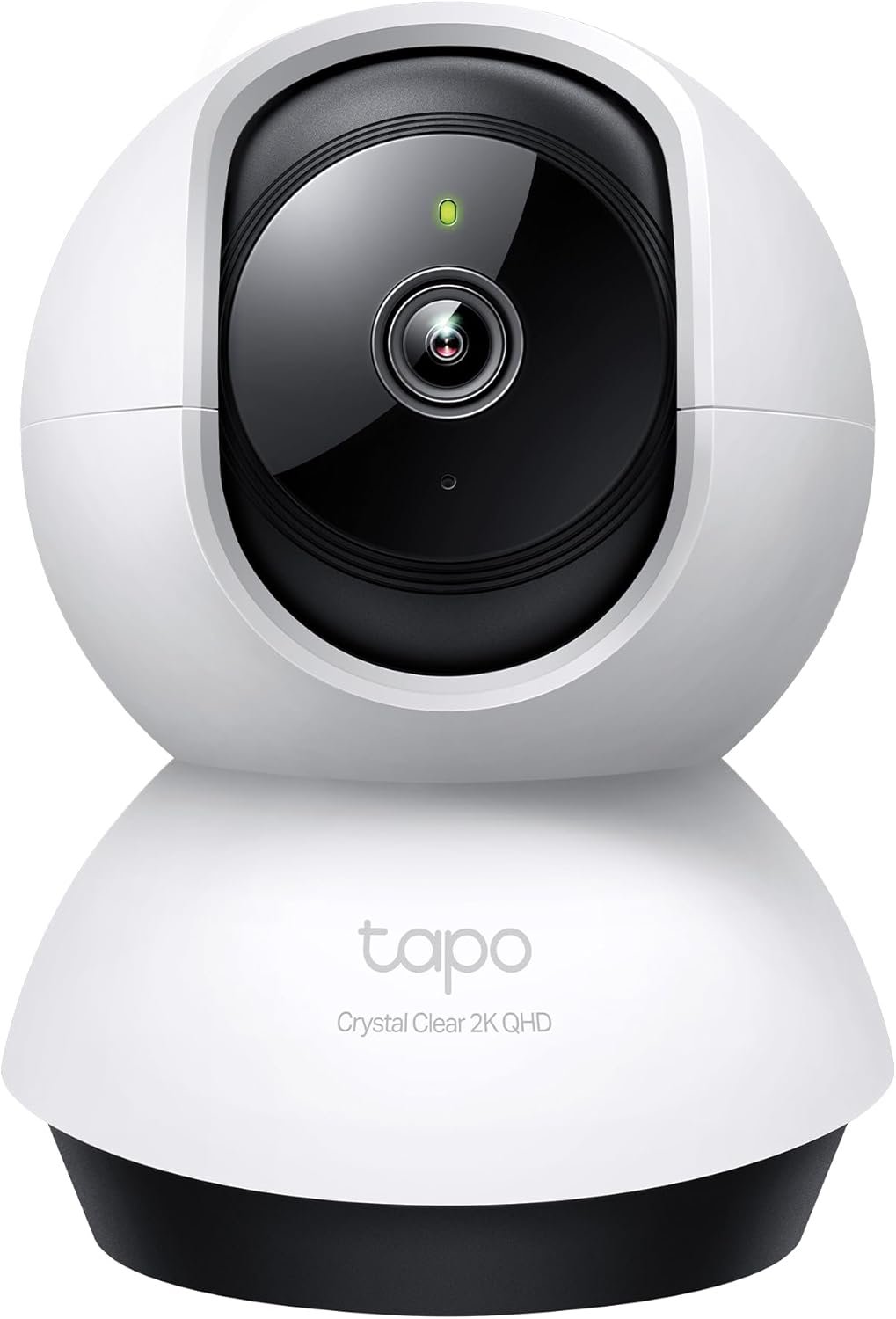
Expert Rating: 4.6/5 Stars | Est. Value: $34.99
In an era where home autonomy and security are paramount, particularly for those integrating off-grid solutions, reliable indoor surveillance is non-negotiable. The Tapo C220 positions itself as a critical component for continuous situational awareness, ensuring that even when primary grid power is compromised, your interior monitoring capabilities remain robust, provided essential backup power is present.
Core Specifications
- Video Resolution: Captures 2K QHD (2560 x 1440 pixel) video, equivalent to 4 Megapixels. This provides significantly enhanced detail compared to standard 1080p, crucial for forensic analysis or identifying small objects.
- Pan/Tilt Functionality: Offers a comprehensive 360° horizontal and 114° vertical field of view, ensuring no blind spots within its operational radius. Motorized control enables dynamic adjustments via the accompanying application.
- Network Connectivity: Operates exclusively on the 2.4GHz Wi-Fi band, ensuring broader range and better penetration through obstacles compared to 5GHz, albeit at a lower theoretical bandwidth.
- Storage Options: Supports local storage via a microSD card, expandable up to 512 GB. This provides critical redundancy against network outages or cloud service interruptions. Optional cloud storage is available, likely with a subscription service for extended retention or advanced features.
- Intelligent Detection: Features advanced algorithms for motion, human, and baby crying detection, generating instant push notifications. This differentiation minimizes irrelevant alerts, optimizing user engagement and response times.
- Two-Way Audio: Integrated microphone and speaker facilitate real-time communication, enabling interaction with occupants or deterrence of intruders.
- Night Vision: Utilizes infrared illumination for clear monochromatic video capture in low-light or complete darkness, extending surveillance capabilities around the clock.
- Smart Home Integration: Compatible with Amazon Alexa and Google Assistant, allowing voice-activated live stream display on compatible smart displays (e.g., Echo Show, Google Chrome Cast).
Real-world Reliability
During power interruptions, the Tapo C220, like all grid-dependent devices, will cease operation unless integrated into a UPS or off-grid battery system. Its reliance on Wi-Fi means network drops will sever remote access and cloud uploads, though local microSD storage can continue recording if power is maintained. The 2.4GHz Wi-Fi offers better stability in congested environments. As an indoor unit, direct extreme weather resistance is not a factor; however, consistent, clean power delivery from an inverter in off-grid setups is essential for its long-term operational integrity and prevention of premature component failure.
Who is this for?
This camera is engineered for smart home residents and suburban homesteads requiring vigilant indoor monitoring, especially those with pets, infants, or a strong emphasis on localized data retention.
The Tech Advantages:
- Superior 2K QHD Resolution: Offers significantly enhanced detail for granular monitoring and forensic analysis.
- Extensive Pan/Tilt Coverage: Provides a full 360° horizontal and 114° vertical field of view, eliminating blind spots.
- High-Capacity Local Storage: Supports up to 512GB microSD for critical data redundancy independent of network status.
- Advanced AI Detection: Intelligent algorithms for human and baby crying detection minimize irrelevant alerts.
- Robust Smart Home Integration: Seamless compatibility with Alexa and Google Assistant for voice-activated control.
The Trade-offs:
- Grid-Dependent Operation: Requires external UPS or battery backup for off-grid or blackout resilience.
- 2.4GHz Wi-Fi Only: While good for range, it can be susceptible to congestion in dense RF environments, affecting data throughput.
- Network Reliance for Remote Access: Remote monitoring and cloud uploads cease during Wi-Fi outages, even with local power.
2. Blink Mini Pan-Tilt Camera
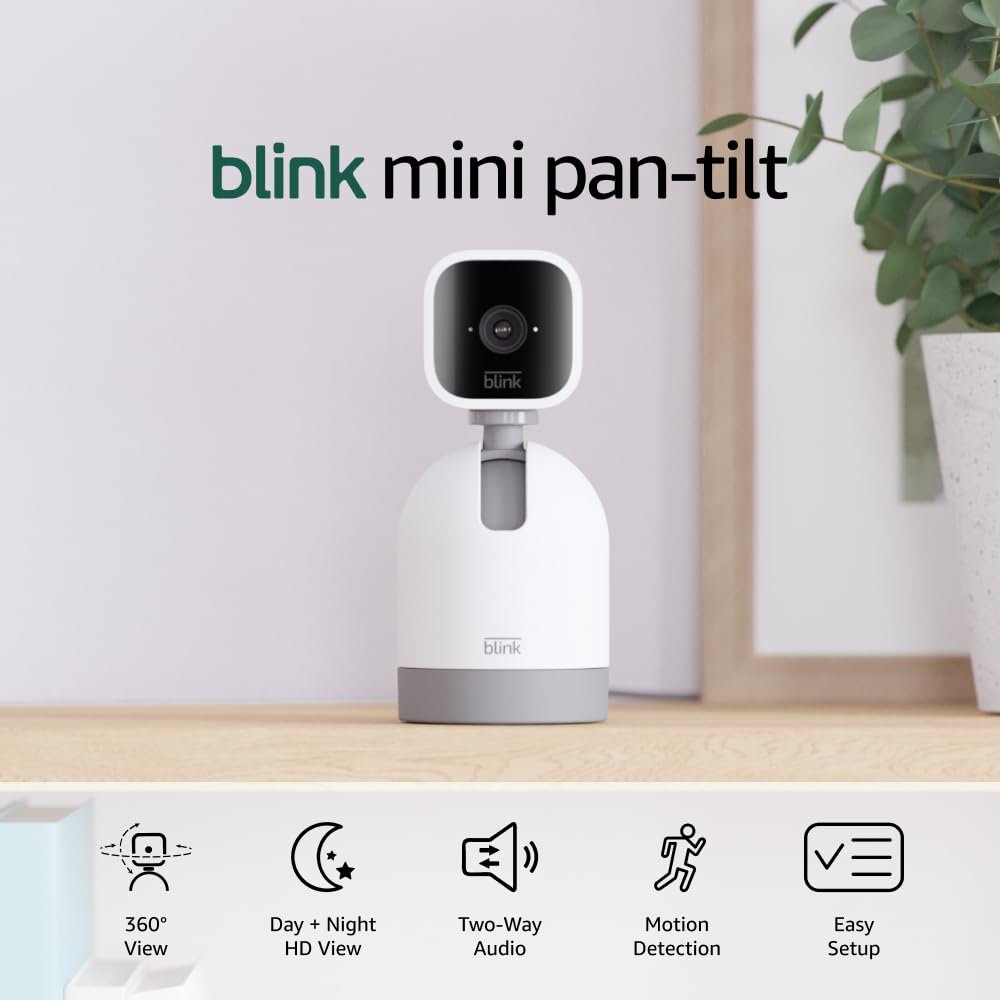
Expert Rating: 4.5/5 Stars | Est. Value: $39.99
The imperative for continuous indoor surveillance, especially within a critical infrastructure context or during periods of grid instability, demands robust and reliable camera solutions. While this device offers dynamic coverage, its fundamental dependence on stable AC power mandates meticulous integration into any hardened security or backup power architecture.
Core Specifications
- Video Resolution: Outputs High-Definition (HD) video, typically 1080p (1920×1080) for clear day footage, complemented by infrared illumination for discrete night vision. Frame rates are dynamically adjusted based on network conditions, optimizing for bandwidth efficiency over raw data throughput.
- Pan-Tilt Mechanism: Provides 360° horizontal rotation and approximately 110° vertical tilt, controllable remotely via the Blink application. This motorized control offers comprehensive volumetric coverage of an indoor space, minimizing blind spots inherent to fixed-position cameras.
- Power Consumption: Operating via an included 5V/1A (5 Watt) AC power adapter, its nominal draw is approximately 5 Watts (5 Wh per hour). This AC dependency means it offers zero inherent off-grid autonomy, requiring an external uninterruptible power supply (UPS) or an inverter-battery system for any power-independent operation.
- Connectivity: Relies on 2.4 GHz Wi-Fi for network integration. Data transmission is secured via WPA2/WPA3 encryption protocols, standard for consumer-grade IoT devices, though robust network segmentation and firewall rules are critical for endpoint security.
- Data Storage & Security: Offers cloud storage via a subscription plan, where data is typically encrypted in transit and at rest. Local storage is an option when paired with a Blink Sync Module 2 and an external USB drive, providing data sovereignty but requiring local management for redundancy.
Real-world Reliability
In the event of a grid power failure, the Blink Mini Pan-Tilt camera ceases operation instantaneously as it possesses no internal battery backup. Sustained functionality requires a dedicated uninterruptible power supply (UPS) or an inverter-battery system sized to handle its continuous 5W draw. Network instability or drops will directly interrupt surveillance, as all command, control, and data transmission are Wi-Fi dependent. As an indoor-rated device, its operational parameters are not designed for extreme weather conditions, rendering it unsuitable for exposed outdoor deployments.
Who is this for?
This camera is suitable for suburban homeowners or small business operators requiring a cost-effective, remotely controllable indoor surveillance extension within a continuously powered, Wi-Fi-enabled environment.
The Tech Advantages:
- Extensive Pan-Tilt Mechanism: Offers 360° horizontal and 110° vertical coverage for dynamic surveillance.
- Secure Connectivity: Utilizes WPA2/WPA3 encryption for robust data transmission security.
- Optional Local Storage: Provides data sovereignty when paired with a Blink Sync Module 2 and USB drive.
- HD Video with Night Vision: Delivers clear 1080p footage complemented by infrared for low-light conditions.
The Trade-offs:
- Zero Inherent Power Autonomy: Absolutely requires an external UPS or inverter-battery system for any power-independent operation.
- Subscription for Cloud Storage: Cloud features and extended history are gate-kept behind a monthly subscription.
- Local Storage Requires Add-on: Data sovereignty via local storage incurs an additional cost for the Sync Module 2.
- Dynamic Frame Rates: Bandwidth optimization may reduce forensic detail during peak network congestion.
3. Tapo C211
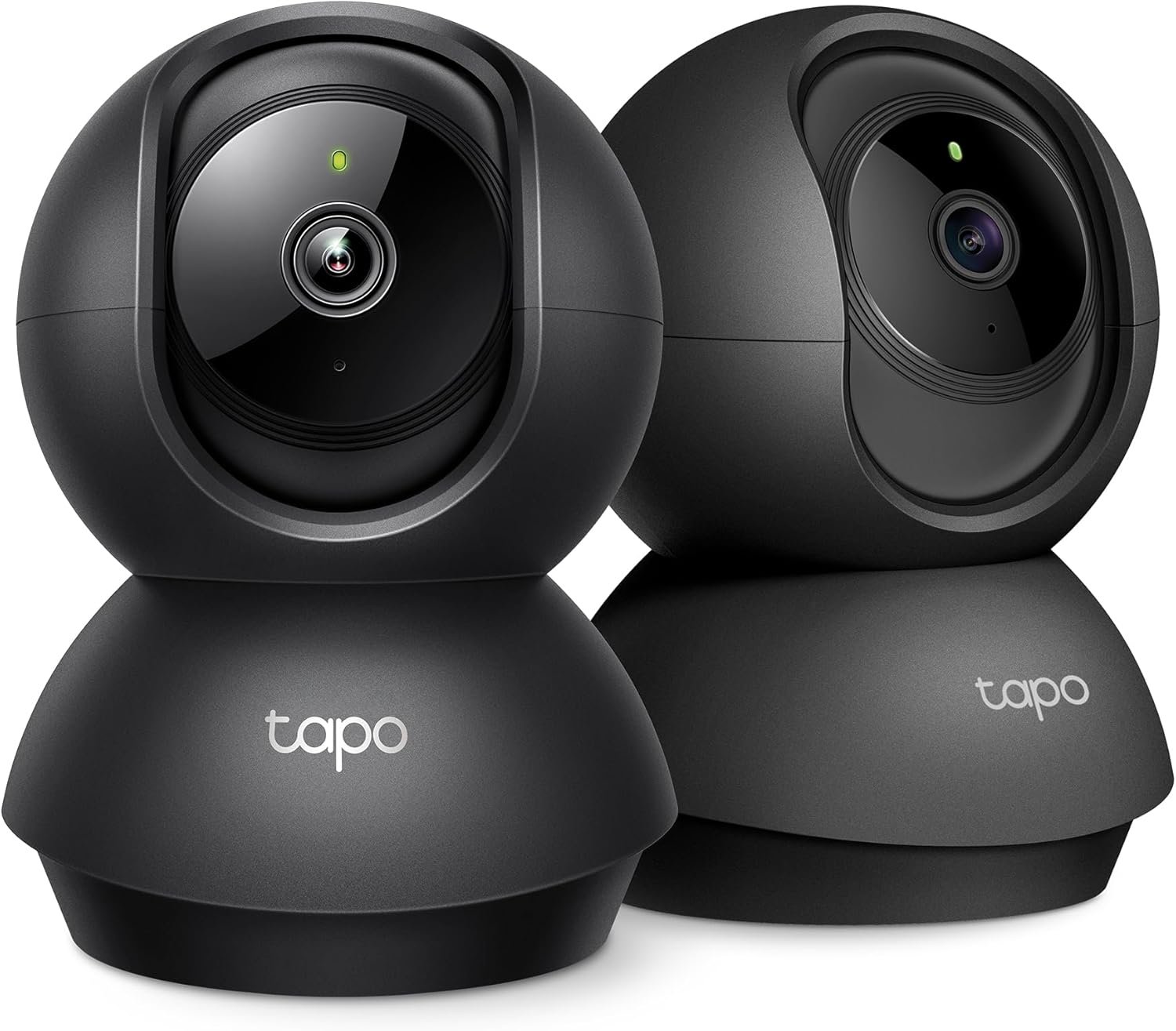
Expert Rating: 4.5/5 Stars | Est. Value: $17.96
Maintaining constant surveillance is paramount for any robust home security ecosystem. While grid-tied, the Tapo C211 offers critical localized monitoring capabilities, crucial for rapid incident assessment within a smart home framework. Its design integrates essential features for reliable situational awareness, focusing on data capture and immediate alert generation.
Core Specifications
- Video Resolution: 2560×1440 pixels (2K QHD), providing high-definition visual data for granular detail capture and forensic analysis.
- Pan/Tilt Mechanism: Dynamic 360-degree horizontal rotation and 114-degree vertical tilt, enabling comprehensive room coverage from a single deployment point without manual repositioning.
- Wireless Connectivity: Utilizes the 2.4GHz Wi-Fi band exclusively, ensuring broad compatibility with standard residential network infrastructures, though susceptible to congestion in dense RF environments.
- Data Storage Architecture: Supports local recording via microSD card (up to 512GB, user-supplied, manufacturer compatibility verification recommended) for persistent, subscription-free data retention. Optional Tapo Care cloud storage offers 30-day video history and advanced AI-driven detection features including motion tracking and specific auditory event recognition.
- Detection & Alerting: Integrated motion, human presence, and specific audio event (e.g., baby crying) detection with instantaneous push notification alerts, designed for low-latency critical event awareness without recurring service fees.
- Auxiliary Features: Incorporates two-way audio for interactive communication, an integrated siren for localized deterrence, and infrared night vision for effective low-light surveillance.
- Smart Home Integration: Fully compatible with Amazon Alexa and Google Assistant platforms for voice-activated live stream access on compatible display devices, facilitating seamless integration into broader smart ecosystems.
Real-world Reliability
As a mains-powered device, the C211’s operational uptime is directly contingent on an uninterrupted electrical supply. During a grid power interruption, the unit ceases all functionality. Post-restoration, the camera is designed for autonomous reinitialization and network reconnection to the designated 2.4GHz Wi-Fi SSID, contingent on the network’s own recovery. Its indoor-only rating precludes deployment in extreme external weather conditions; performance is optimized for stable indoor climates, emphasizing network integrity over environmental ruggedization. Brief network drops will disrupt live feeds and cloud uploads, though local microSD storage can maintain recording continuity, mitigating data loss during transient network instability.
Who is this for?
Optimal for residential users prioritizing high-resolution internal monitoring, local data retention, and seamless integration with existing smart home ecosystems.
The Tech Advantages:
- Cost-Effective 2K QHD: Delivers high-resolution video at a competitive price point for detailed monitoring.
- Robust Pan/Tilt Coverage: Offers dynamic 360° horizontal and 114° vertical movement for full room surveillance.
- Integrated Siren: Provides an immediate, localized deterrence mechanism against intrusions.
- Comprehensive Detection & Alerts: Features motion, human, and specific audio event detection with instant notifications.
- Generous Local Storage: Supports up to 512GB microSD for secure, subscription-free data retention.
The Trade-offs:
- Strictly Grid-Dependent: Absolutely no internal battery backup, requiring an external power solution for resilience.
- 2.4GHz Wi-Fi Exclusivity: Prone to congestion in high-density Wi-Fi environments, potentially impacting stream quality.
- Subscription for Advanced Cloud Features: Optional Tapo Care plan is needed for extended video history and AI enhancements.
4. Blink Mini
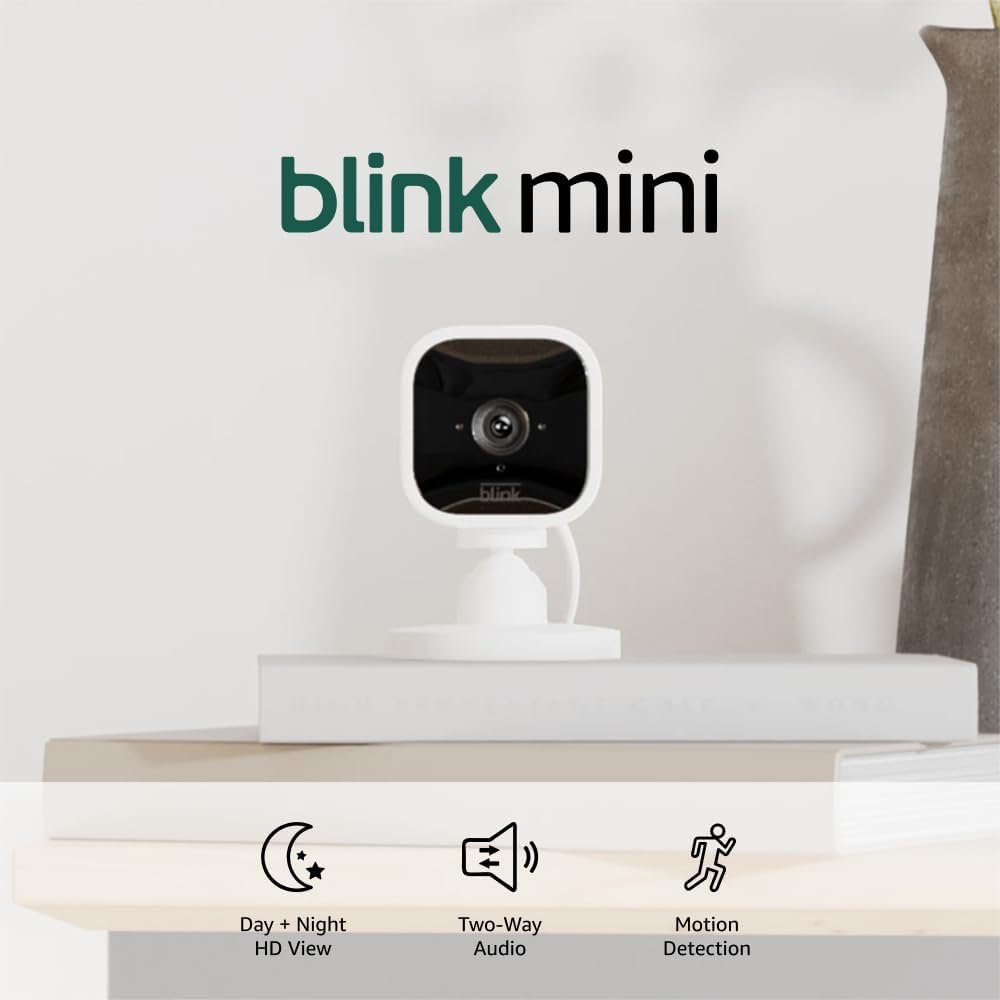
Expert Rating: 4.4/5 Stars | Est. Value: $24.99
The Blink Mini presents itself as an accessible indoor security solution, yet its inherent reliance on a consistent grid power supply raises significant concerns for robust off-grid deployments or blackout resilience. While offering 1080p surveillance, its fundamental power dependency dictates a careful evaluation against true power independence requirements.
Core Specifications
- Video Resolution: 1080p HD, providing sufficient detail for general indoor monitoring. The fixed focal length optics offer a decent field of view for typical room coverage, optimized for indoor environments.
- Power Consumption: This plug-in camera operates via a 5V/1A USB power adapter, equating to an estimated 3-5 Watts under typical operation. For off-grid applications, this translates to roughly 72-120 Watt-hours (Wh) per 24-hour cycle, a minor load for a well-provisioned power station but a critical point of failure without a robust uninterruptible power supply (UPS) integration.
- Connectivity: Utilizes Wi-Fi (presumably 2.4 GHz for optimal range and penetration, though 5 GHz support is not explicitly detailed). This mandates a stable network infrastructure, as a drop in Wi-Fi signal directly incapacitates its monitoring capabilities and cloud-based features.
- Data Security: Communication between the camera, cloud services, and the Blink Home Monitor app utilizes standard encryption protocols (e.g., TLS 1.2/1.3 for data in transit, WPA2/WPA3 for local Wi-Fi authentication). While specific cryptographic algorithms are proprietary, adherence to industry-standard secure communication is paramount for sensitive video data.
- Audio Features: Equipped with two-way audio, facilitating real-time communication. This functionality relies heavily on network latency and bandwidth for clear, uninterrupted sound transmission, a factor often overlooked in remote monitoring scenarios.
- Motion Detection: Configurable motion detection zones reduce extraneous alerts. The underlying processing occurs on-device, but notification and clip saving are contingent on continuous cloud connectivity or a locally attached Sync Module 2 (sold separately), which itself requires power and network access.
Real-world Reliability
The Blink Mini’s operational integrity is directly tied to the stability of its AC power source and local Wi-Fi network. In a blackout scenario, without an external UPS or a connected off-grid power system providing continuous 120V AC, the unit ceases to function entirely, rendering it ineffective for security monitoring during critical power outages. Network drops similarly incapacitate its cloud communication, remote access, and alert capabilities, transforming it into a non-recording, non-transmitting device until connectivity is restored. Its “plug-in” nature means it lacks any inherent resilience against even brief power interruptions, a severe limitation for high-security or remote deployments. Extreme weather, while not directly affecting the indoor unit, can easily compromise the external power grid or internet infrastructure it relies upon, thus indirectly impacting its reliability.
Who is this for?
This camera is best suited for grid-connected residential users seeking basic, supplementary indoor surveillance with existing smart home ecosystems.
The Tech Advantages:
- Highly Accessible Solution: Provides 1080p HD monitoring and two-way audio at a competitive entry price.
- Configurable Motion Detection: Allows customization of detection zones to reduce extraneous alerts.
- Strong Data Security: Employs standard encryption protocols for secure communication.
- Compact and Discreet Design: Easily integrates into various indoor environments without being obtrusive.
The Trade-offs:
- No Pan/Tilt Functionality: Fixed lens limits the field of view, requiring strategic placement.
- Complete Power Dependency: Lacks any internal battery, rendering it non-operational during power outages without UPS.
- Network Latency Impact: Two-way audio performance is heavily reliant on stable, low-latency Wi-Fi.
- Local Storage Requires Sync Module 2: Additional hardware purchase is necessary for local data retention.
Summary Verdict: Spec Comparison
| Image | Product | Rating & Price | Action |
|---|---|---|---|
|
TP-Link Tapo C220 | 4.6 Stars $34.99 |
View Specs |
|
Blink Mini Pan-Tilt Camera | 4.5 Stars $39.99 |
View Specs |
|
Tapo C211 | 4.5 Stars $17.96 |
View Specs |
|
Blink Mini | 4.4 Stars $24.99 |
View Specs |
Mastering Your Monitoring: Key Technical Considerations
For the discerning tech enthusiast and those integrating robust smart home ecosystems, selecting an indoor pet camera transcends basic features. Two technical factors critically influence reliability and performance, especially within a resilient, independent tech grid:
1. Network Resilience and Data Sovereignty
The operational backbone of any smart camera is its network connectivity. Most indoor pet cameras, including those reviewed, rely on 2.4GHz Wi-Fi. While this band offers superior range and wall penetration compared to 5GHz, it can be more susceptible to interference in densely populated RF environments. For a truly resilient monitoring solution, consider cameras that offer robust local storage capabilities, such as microSD card slots supporting high capacities (e.g., 512GB). This ensures data capture continuity even during internet outages or cloud service interruptions, maintaining data sovereignty and providing critical forensic evidence when remote access is compromised. Evaluate not just the presence of local storage, but its maximum capacity and ease of access.
2. Power Redundancy and Integration
A camera is only as reliable as its power source. As observed with all reviewed models, none include an internal battery for prolonged off-grid operation. Therefore, integrating these devices into an Uninterruptible Power Supply (UPS) or a more extensive inverter-battery system is non-negotiable for true blackout resilience. Consider the camera’s nominal power draw (typically 3-5W) when sizing your backup power solution. A small UPS can bridge brief power flickers, while a larger system is essential for sustained operation during extended grid failures. Prioritize devices that seamlessly re-establish network connection and recording post-power restoration, minimizing manual intervention and ensuring continuous oversight in a dynamic environment.