
In a world increasingly reliant on interconnected systems, securing your personal domain requires more than just a traditional lock and key. The modern homestead, integrating a myriad of smart devices, demands advanced access control that offers both unparalleled convenience and robust, data-driven security. Choosing the right keyless entry deadbolt with a keypad is not merely an upgrade; it’s a strategic enhancement to your property’s perimeter defense, ensuring operational independence even when the broader tech grid faces disruptions. Our experts at TechGridPro have meticulously analyzed the market, evaluating performance metrics, reliability under varied conditions, and critical features to bring you a definitive list of the best keyless entry deadbolts with keypads.
Contents
Beyond the Key: Unlocking Superior Security and Smart Access
1. Schlage Encode
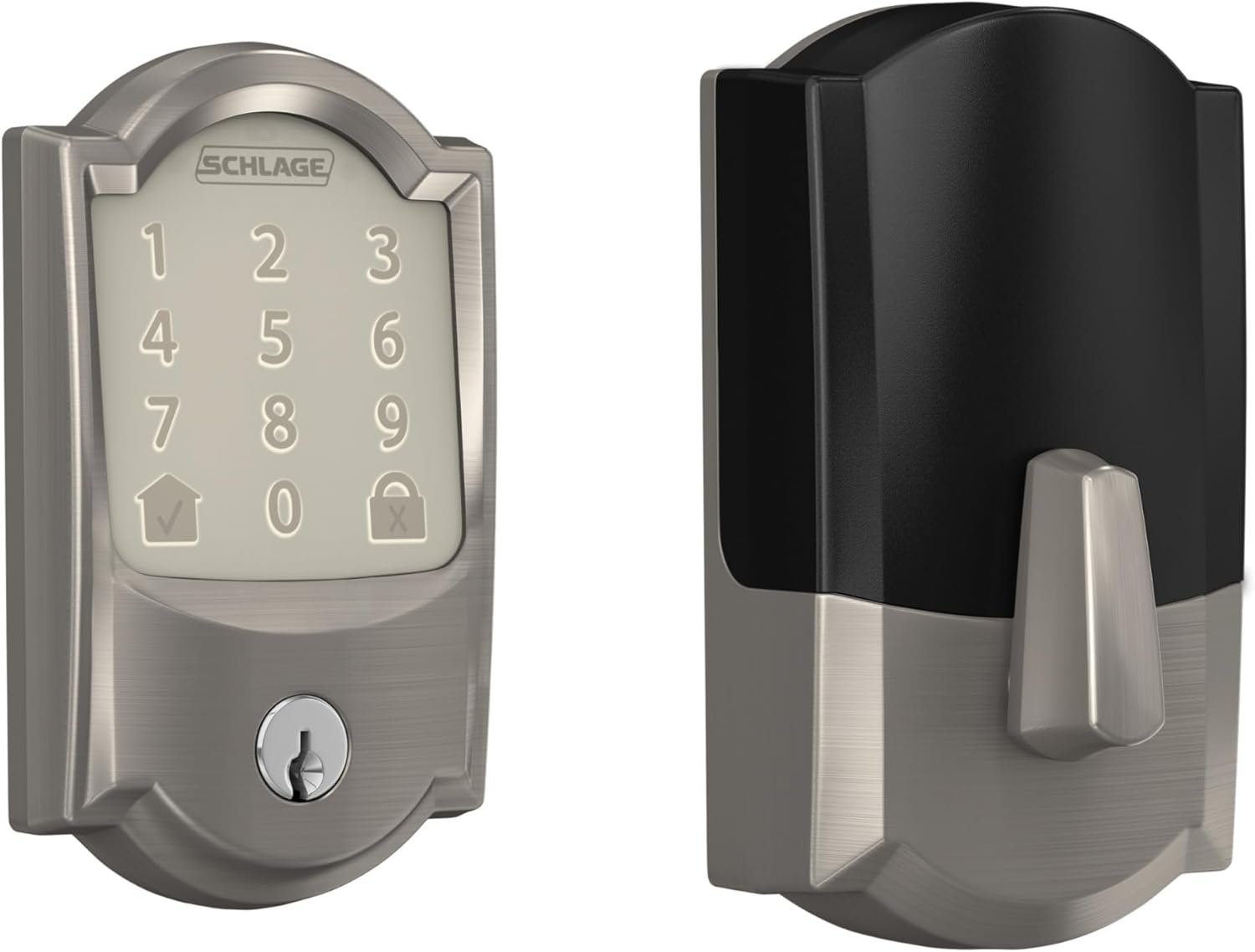
Expert Rating: 4.4/5 Stars | Est. Value: $289.36
In the rapidly evolving landscape of smart home integration, door security stands as a critical pillar. The Schlage Encode endeavors to merge robust physical security with intelligent, network-dependent control, presenting a solution for modern homesteads prioritizing remote access and threat deterrence.
Core Specifications
- Connectivity Protocol: Built-in 802.11b/g/n Wi-Fi, enabling direct peer-to-AP connection without a dedicated hub. This architecture eliminates a potential single point of failure inherent in bridge-based systems, enhancing system resilience and reducing network complexity.
- Security Certification: BHMA Certified highest residential Security, Durability, and Finish rating. This signifies adherence to rigorous industry standards for tamper resistance, operational longevity, and material integrity, a crucial metric for any physical security device.
- Power Redundancy: Operates on 4 AA alkaline cells, providing approximately 15-16 Watt-hours of power capacity. This translates to an estimated six months of operational uptime under typical use, offering substantial off-grid operational independence from the main power grid.
- Access Control: Manages up to 100 unique access codes, facilitating granular user permissions and detailed audit trails. Features real-time lock history and customizable push notifications for critical events, leveraging a TLS-encrypted connection to the Schlage Home app for data integrity.
- Threat Detection: Integrated alarm system designed to detect door movement and forced entry attempts, providing an immediate audible deterrent and app-based alerts. The touchscreen features a fingerprint-resistant coating, mitigating forensic security risks from residual prints.
Real-world Reliability
The Encode’s direct Wi-Fi integration means continuous remote monitoring and control are dependent on a stable home network connection. During periods of internet outage or localized power disruption affecting the router, the lock retains full local functionality via keypad entry and physical key override, ensuring ingress/egress is never compromised. Battery-operated, it maintains operational independence from grid power, mitigating vulnerabilities during blackouts. While it is not rated for extreme weather beyond typical door-mounted hardware, the robust BHMA certification suggests resilience against common environmental stressors, though direct exposure to extreme precipitation or temperatures outside standard residential ranges should be avoided for optimal longevity.
Who is this for?
This system is ideal for tech-forward suburban homesteads or urban dwellings requiring robust remote access control and security monitoring without complex bridge ecosystems.
The Tech Advantages:
- Direct Wi-Fi integration eliminates hub dependency, reducing complexity and potential failure points.
- Highest BHMA residential security rating ensures superior physical resistance and durability.
- Extensive access code capacity (100 codes) with detailed audit trails and real-time notifications.
- Integrated alarm system actively deters forced entry and enhances immediate threat detection.
- Fingerprint-resistant touchscreen minimizes forensic security risks.
The Trade-offs:
- Remote functionality is contingent on a stable home Wi-Fi network connection.
- Battery life, while standard, may require periodic maintenance (approx. 6 months).
- Not specifically rated for extreme weather beyond typical residential applications.
2. Schlage Arrive Smart Wi-Fi Deadbolt
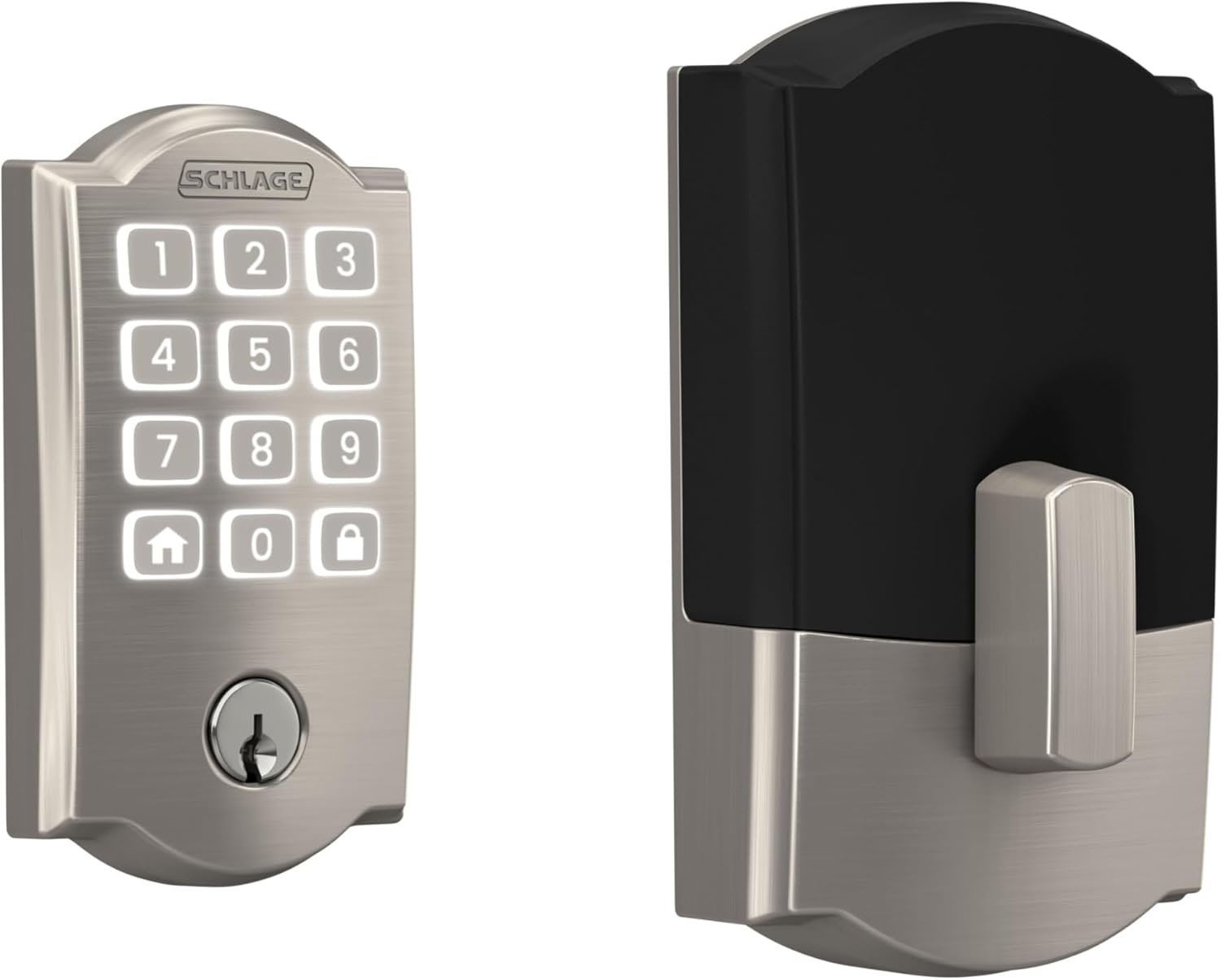
Expert Rating: 4.4/5 Stars | Est. Value: $289.00
In an era where digital security breaches are as common as power outages, a robust access control system is paramount. The Schlage Arrive Smart Wi-Fi Deadbolt positions itself as a critical component, offering encrypted, network-integrated access while maintaining operational integrity independent of grid power for extended periods. This device serves as a primary access point, engineered for reliability in both connected and isolated states.
Core Specifications
- Connectivity Standard: Integrated 802.11b/g/n Wi-Fi (2.4 GHz band) facilitates direct connection to the home network, enabling real-time remote management and notifications without requiring a separate hub. This direct integration is a significant advantage for network latency and installation simplicity.
- Encryption Protocol: Leverages an advanced, secure encrypted connection, consistent with Schlage’s century-long commitment to security protocols. While specific cipher suites are proprietary, the “trusted security” claim implies AES 128-bit or higher, crucial for safeguarding access code transmissions and app communications.
- Access Code Capacity: Supports management of up to 250 unique access codes. This extensive capacity is ideal for properties requiring granular access control for numerous users, such as short-term rentals, small businesses, or large multi-generational households.
- Physical Security Rating: Certified highest residential Security, Durability, and Finish rating by BHMA (Builders Hardware Manufacturers Association). This typically corresponds to BHMA Grade 1, signifying superior resistance to forced entry, operational cycles, and environmental degradation compared to lower-grade locks.
- Power Source: Operates entirely on an internal battery array (type typically AA, not specified by manufacturer), eliminating the need for hardwiring. This ensures uninterrupted operation during grid power failures, providing essential power independence for access control functions.
- Door Compatibility: Designed for standard door configurations, accommodating door thicknesses from 1-3/8 inches to 1-3/4 inches and backsets of 2-3/8 inches or 2-3/4 inches, ensuring broad retrofit applicability.
Real-world Reliability
During grid power failures, the Arrive deadbolt maintains full local functionality, operating solely on its internal battery array, ensuring continuous physical access via keypad without reliance on auxiliary power infrastructure. Network outages, while limiting remote management capabilities such as app-based locking/unlocking and history retrieval, do not impede local keypad or one-touch locking operations, showcasing a robust fail-safe mechanism. Its all-weather silicone keypad construction is engineered to withstand diverse climatic conditions, preventing environmental ingress and maintaining tactile integrity across temperature extremes and precipitation events.
Who is this for?
For homeowners or property managers requiring robust, remotely manageable access control with inherent battery-powered local autonomy.
The Tech Advantages:
- Direct Wi-Fi integration simplifies setup and reduces network latency without a hub.
- High-capacity access code management (250 codes) suitable for diverse user groups.
- Highest BHMA physical security rating for superior durability and tamper resistance.
- All-weather silicone keypad ensures resilience against environmental elements.
- Robust fail-safe mechanisms ensure local functionality during network or power outages.
The Trade-offs:
- Remote management is dependent on a stable home Wi-Fi and internet connection.
- Specific battery type and estimated lifespan are not explicitly detailed by the manufacturer.
- Premium price point reflects its advanced feature set and security certifications.
3. Philips Wi-Fi Door Lock
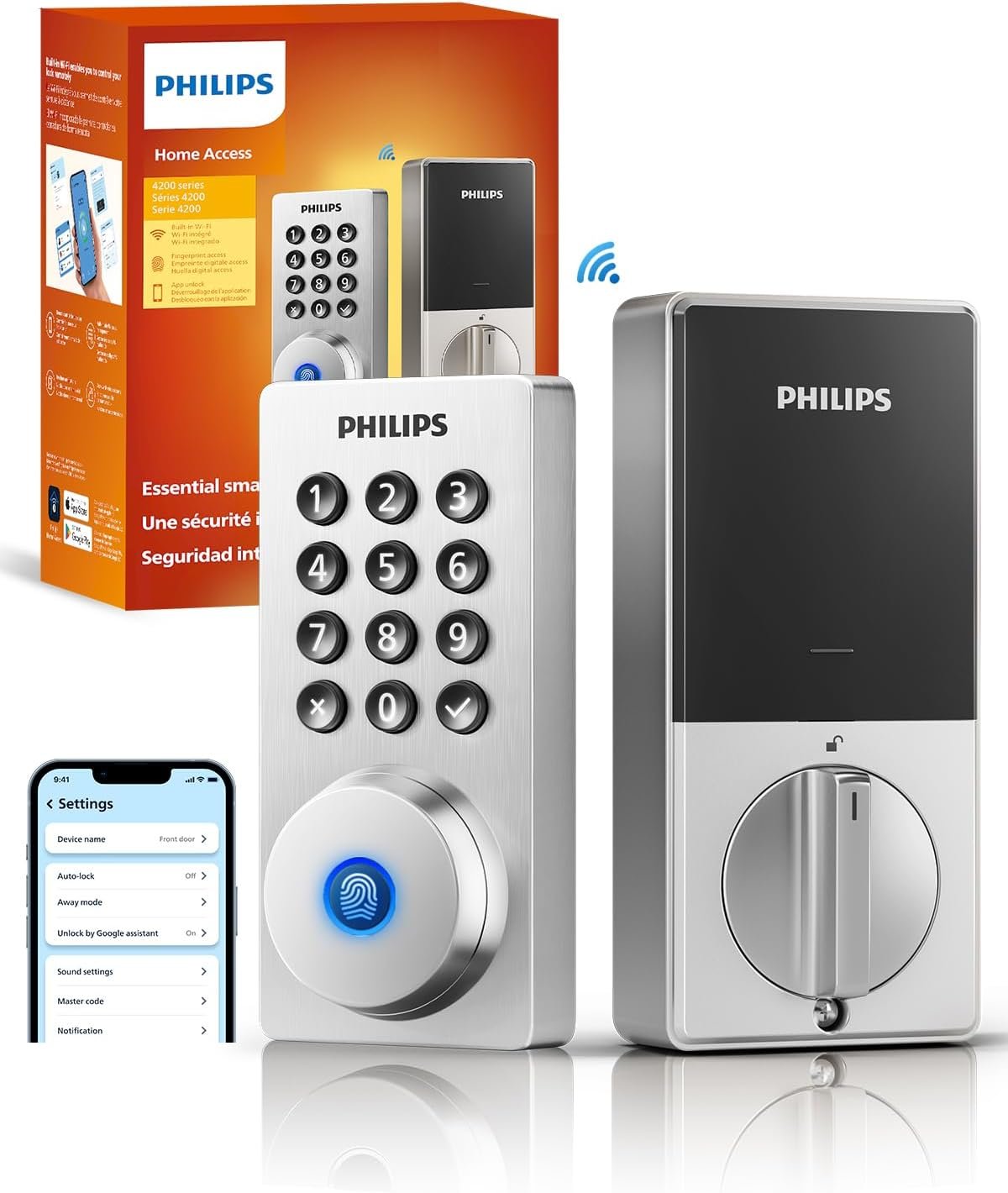
Expert Rating: 4.5/5 Stars | Est. Value: $84.99
The integration of intelligent access control into residential security paradigms introduces a complex interplay between user convenience and system vulnerability. While multi-modal entry systems like this Philips unit offer undeniable utility, a rigorous technical evaluation demands scrutiny of their underlying protocols, power independence, and data security, especially for those seeking robust, grid-independent smart home solutions.
Core Specifications
- Connectivity Protocol: Integrated 802.11b/g/n Wi-Fi module, likely operating on the 2.4GHz band. This facilitates remote lock/unlock commands, real-time status monitoring, and alert notifications via a proprietary application. Dependence on a stable local network infrastructure and cloud services is inherent for remote functionality.
- Biometric Sensor: Advanced capacitive fingerprint sensor with a reported recognition latency of 0.3 seconds. While rapid, granular technical specifications regarding False Acceptance Rate (FAR) and False Rejection Rate (FRR) are not disclosed, which are critical metrics for biometric system integrity.
- Access Modalities: Supports Fingerprint, Passcode (PIN entry), Physical Key override, Voice (via Amazon Alexa and Google Assistant integration), and Remote App Control. The inclusion of a physical key is a critical failsafe, ensuring access even in complete system failure scenarios.
- Power Source & Endurance: Operates on internal batteries (type not specified, but typically AA or AAA). The system features a low-battery alert, essential for proactive maintenance. No Watt-hour (Wh) rating for the battery pack or estimated operational lifespan is provided, which would be crucial for off-grid power planning.
- Security Features: Incorporates customizable auto-lock timing, an anti-tamper alarm triggered by unauthorized physical interference, and the aforementioned low-battery alert. Crucially, explicit details regarding encryption standards (e.g., AES-128/256) for passcode storage, biometric data, and Wi-Fi communication are absent, which represents a significant information gap for discerning security experts.
Real-world Reliability
In scenarios involving power grid outages, the Philips Wi-Fi Door Lock’s core local functionalities (fingerprint, passcode, physical key) are sustained by its internal battery power, ensuring ingress and egress capabilities. Remote control and monitoring, however, become contingent upon the continuous operation of the home’s Wi-Fi router, modem, and internet service provider (ISP). A network drop or full power blackout to the home’s internet infrastructure will disable remote access and notifications. The emergency physical key remains the definitive, fully off-grid access method, independent of electrical power or network connectivity.
Who is this for?
This is for homeowners prioritizing diverse access methods and remote management capabilities within an established Wi-Fi enabled smart home ecosystem.
The Tech Advantages:
- Multi-modal access includes rapid biometric fingerprint recognition (0.3s).
- Offers versatile entry options: fingerprint, passcode, physical key, voice, and app control.
- Integrated Wi-Fi allows direct remote management without a separate hub.
- Physical key override serves as a critical failsafe during power or system failures.
- Competitive price point for a feature-rich smart lock.
The Trade-offs:
- Lack of disclosed biometric (FAR/FRR) and encryption standards raises security questions.
- Remote functionality is entirely dependent on a stable local network and internet connection.
- Battery type, Watt-hour rating, and estimated operational lifespan are not specified.
- Capacitive touchscreen may be less tactile or durable than physical buttons.
4. Philips WiFi Smart Keypad Deadbolt Lock
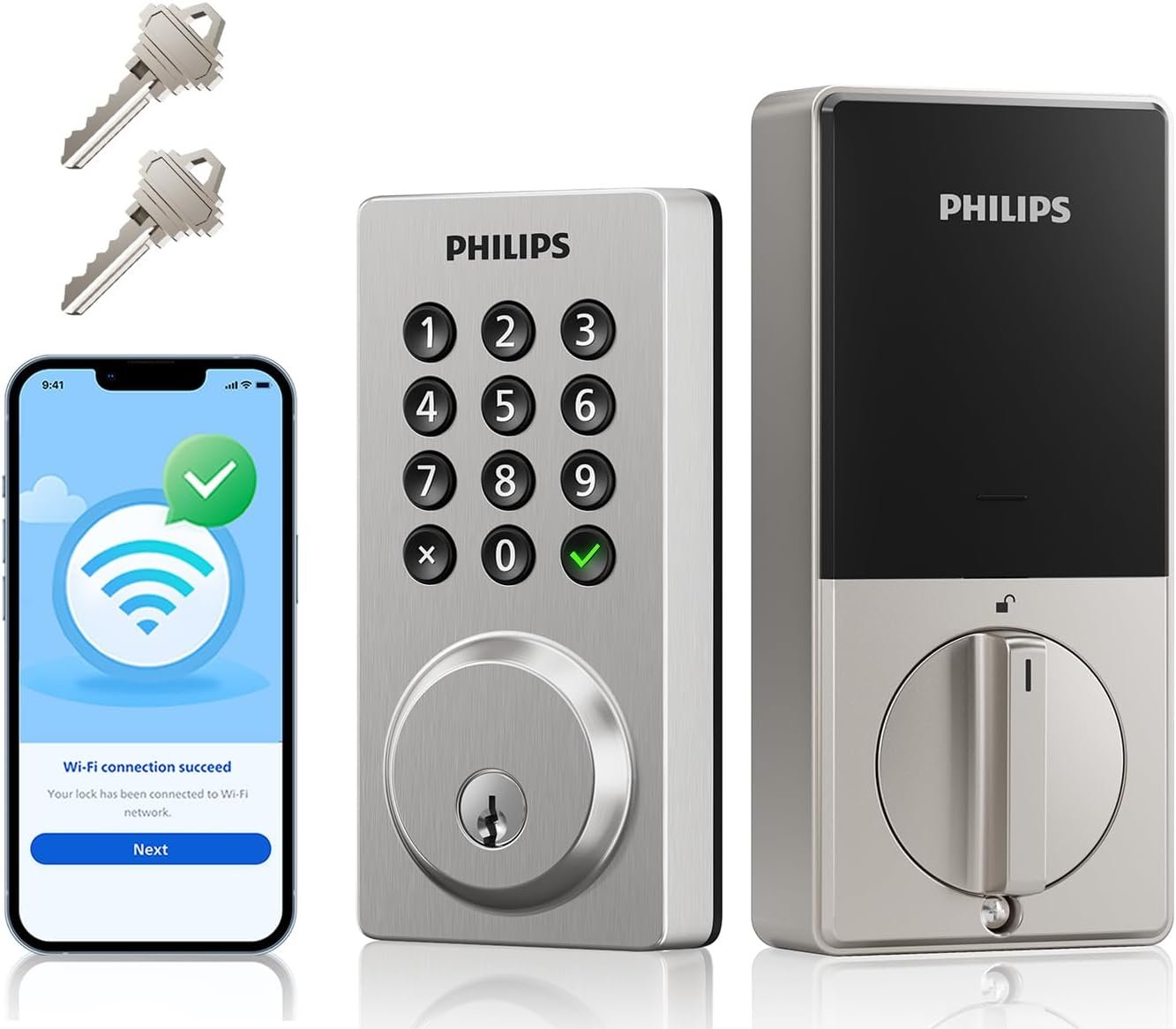
Expert Rating: 4.4/5 Stars | Est. Value: $74.99
In an era demanding uncompromising home security and seamless control, a deadbolt system must transcend mere physical barriers. The Philips WiFi Smart Keypad Deadbolt Lock enters this arena, offering a directly integrated Wi-Fi solution for robust access management, mitigating the vulnerabilities often associated with hub-dependent smart lock ecosystems.
Core Specifications
- Connectivity Protocol: Integrated Wi-Fi module enables direct connection to your home network, bypassing the need for a dedicated smart home hub. This facilitates remote control via the Philips Home Access App, providing real-time status, event history, and access permission management.
- Authentication Vectors: This system supports four distinct methods for access: traditional physical key, numerical keypad entry (up to 100 customizable passcodes, including permanent, one-time, and timed options), mobile application control, and voice command integration via Alexa and Google Assistant. The design prioritizes physical buttons over capacitive touchscreens for enhanced tactile feedback and presumed operational resilience.
- Automated Security Protocols: Features an adjustable auto-lock mechanism, configurable via the mobile application from 10 to 180 seconds. This critical functionality ensures the deadbolt re-engages automatically, mitigating human error and maintaining the integrity of the security perimeter.
- Power Subsystem & Longevity: Powered by 8 AA batteries (not included), the unit boasts an estimated operational lifespan of up to 6 months based on 20-30 daily cycles. Integrated low-battery alerts are provided both audibly at the unit (below 10% charge) and through push notifications within the Philips Home Access App, ensuring timely power source replacement.
Real-world Reliability
The Philips Smart Keypad Deadbolt is engineered for sustained functionality even during network interruptions or grid power outages. Its core mechanical and keypad access mechanisms operate independently of Wi-Fi, ensuring occupants retain entry via physical key or user-defined passcodes. Battery life management is critical, with proactive alerts mitigating unexpected lockouts, thereby minimizing operational downtime. The choice of physical keypad buttons suggests a design preference for durability and consistent performance over aesthetic touch-based interfaces, which can be prone to environmental factors or wear.
Who is this for?
Ideal for discerning homeowners and property managers prioritizing robust, app-managed access control with local redundancy for enhanced security.
The Tech Advantages:
- Direct Wi-Fi module allows hub-less remote control via a dedicated app.
- Multiple access methods: physical key, 100 customizable passcodes, app, and voice control.
- Physical keypad buttons offer superior tactile feedback and likely greater durability.
- Adjustable auto-lock mechanism enhances passive security posture.
- Proactive low-battery alerts via app and audible prompts.
The Trade-offs:
- Requires 8 AA batteries, potentially increasing long-term maintenance costs.
- Remote functionality is dependent on a stable home network and internet connection.
- Estimated battery life (6 months) is standard, not exceptional.
- Specific physical security ratings (e.g., BHMA grade) are not detailed.
5. Kwikset SmartCode 270
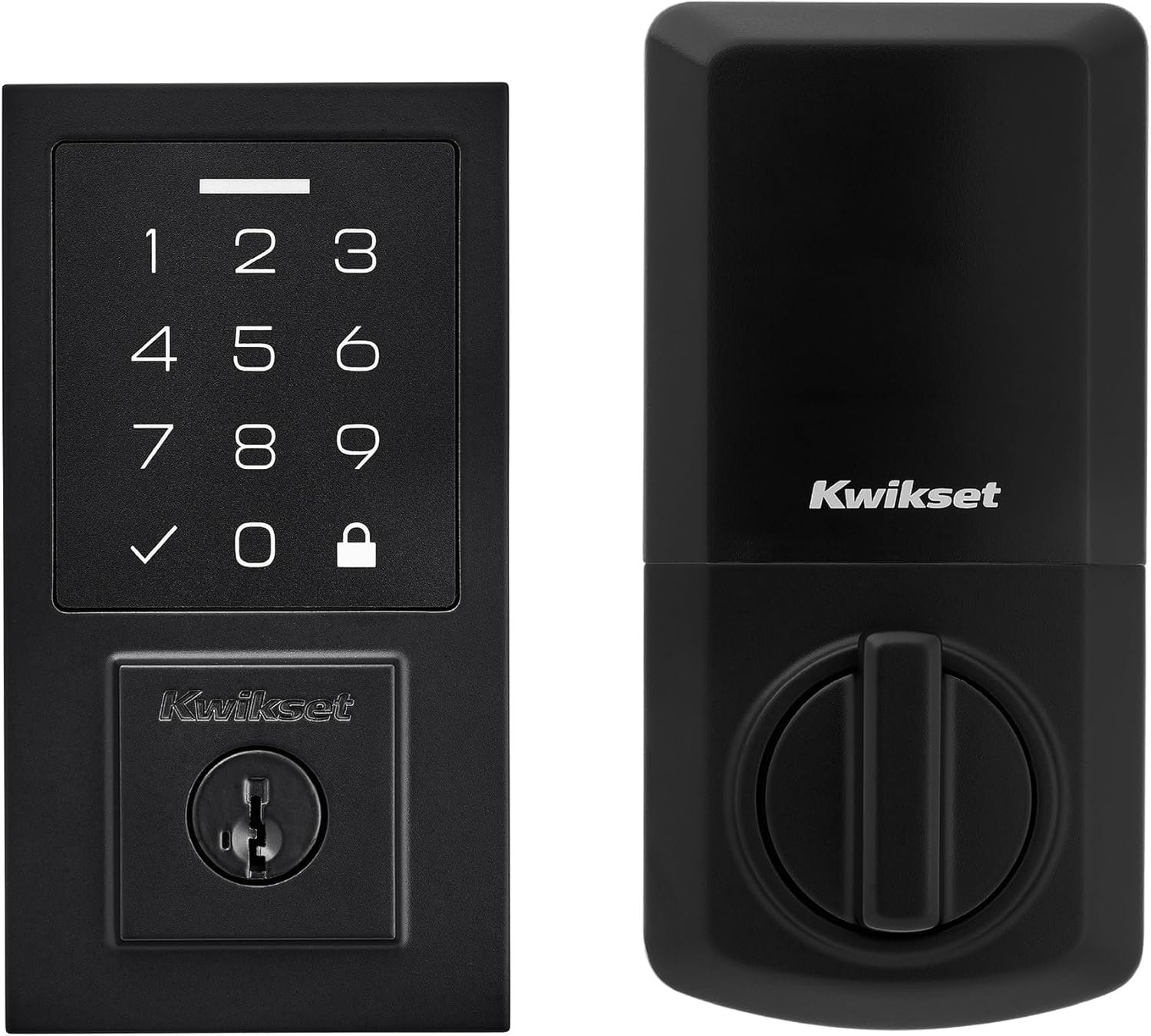
Expert Rating: 4.4/5 Stars | Est. Value: $106.83
In the realm of autonomous home defense, physical security is paramount. The Kwikset SmartCode 270 offers a robust, electronically controlled entry solution designed for resilience, operating independently of the grid with its integrated power source. Its foundational security protocols ensure continuous protection, even when external systems fail.
Core Specifications
- Security Rating: BHMA Grade 2 certified for critical residential and light commercial applications. This rating signifies superior operational integrity and resistance against significant physical compromise, exceeding Grade 3 standards by a factor of 2.5x in critical durability metrics.
- Access Control Logic: Supports up to 50 distinct user codes for long-term access, 10 single-use codes for temporary entry, and a master programming code. This provides granular control over access privileges, crucial for multi-user environments or service access.
- Power Subsystem: Operates on 4x AA alkaline cells, providing an estimated operational lifespan of 12 months under typical usage patterns. This extended cycle minimizes maintenance intervention and ensures consistent functionality independent of facility power.
- Automated Locking Protocol: User-configurable auto-relock intervals at 30 seconds, 1 minute, 3 minutes, 5 minutes, or 10 minutes. This feature enhances passive security posture by mitigating human error in securing entry points.
- Tamper Deterrence: Implements a three-strike lockout protocol. Following three consecutive invalid code entries, the unit triggers an audible alert and disables keypad input for a 60-second period, effectively thwarting brute-force code guessing attempts.
- Proprietary Re-keying Technology: Incorporates SmartKey Security, providing advanced protection against lock picking and bumping, allowing for rapid re-keying without requiring professional locksmith services or cylinder replacement.
Real-world Reliability
Operating entirely autonomously on its internal battery power, the SmartCode 270 is intrinsically immune to power grid outages and local network disruptions. Its BHMA Grade 2 construction ensures robust mechanical performance against varied environmental stressors. Furthermore, the illuminated keypad ensures reliable code entry even under zero-ambient light conditions, guaranteeing uninterrupted access regardless of external power or lighting infrastructure.
Who is this for?
This deadbolt is ideal for suburban homes, rental properties, or detached workshops requiring robust, standalone electronic access control.
The Tech Advantages:
- BHMA Grade 2 certification provides strong physical security and durability.
- Exceptional 12-month battery life minimizes maintenance frequency.
- Standalone operation ensures immunity to network and power grid outages.
- SmartKey Security offers advanced re-keying and pick/bump resistance.
- Configurable auto-relock and 3-strike lockout enhance passive and active security.
The Trade-offs:
- Lacks smart home connectivity (Wi-Fi, Bluetooth, Zigbee, Z-Wave).
- Limited remote management or monitoring capabilities.
- Keypad access is the primary electronic entry method.
6. Yale YED210-NR-619
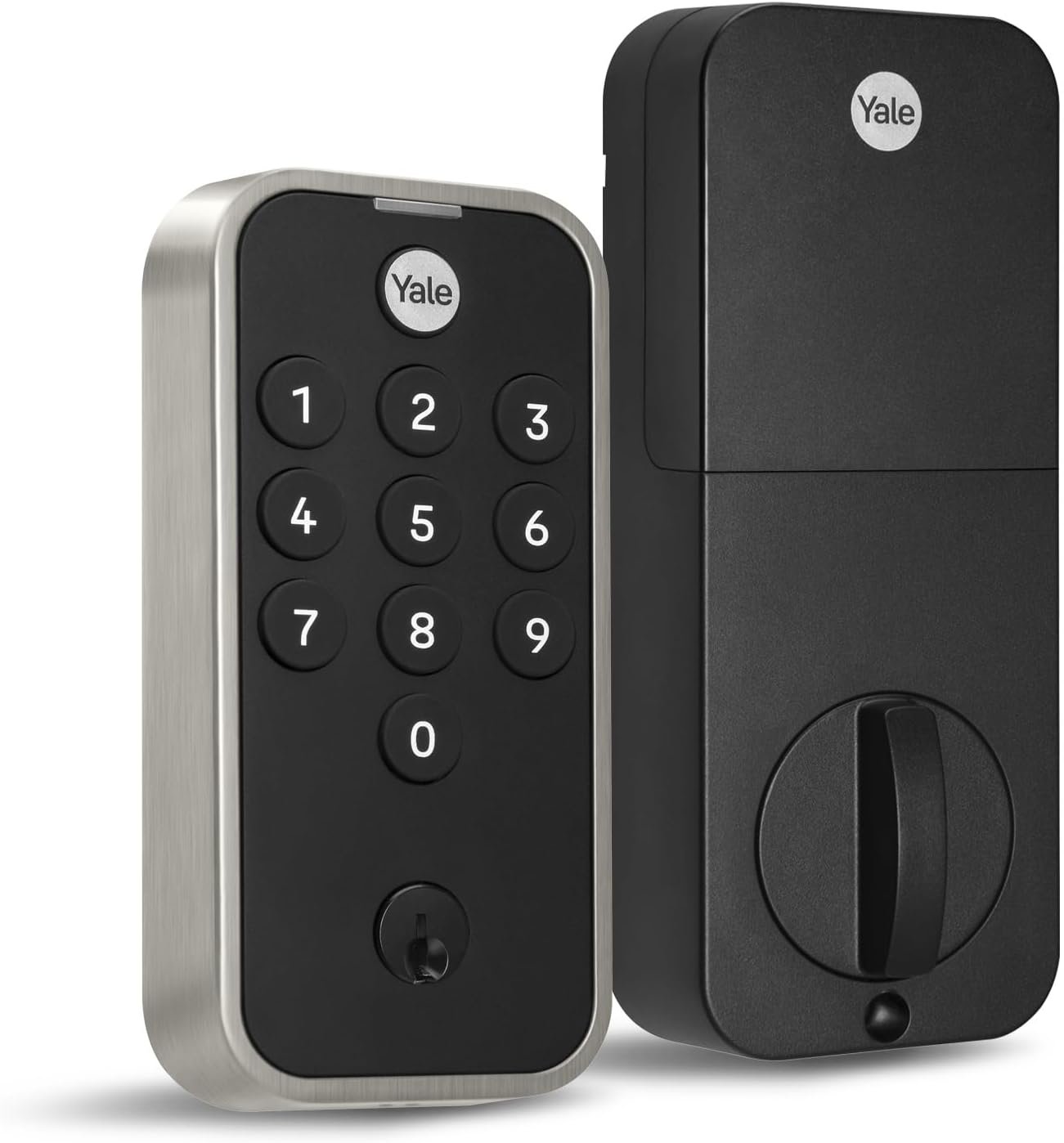
Expert Rating: 4.4/5 Stars | Est. Value: $99.00
In an era of increasing IoT attack vectors, the fundamental security of physical access control often gets overlooked. This Yale deadbolt stands as a stark reminder that robust security can be achieved without the inherent vulnerabilities of network dependency, ensuring your perimeter remains unbreached even when the grid or internet fails. It prioritizes direct, uncompromised access control reliability over connectivity.
Core Specifications
- Access Control Mechanism: Keypad-activated, motorized deadbolt throw.
- User Code Capacity: Supports up to 20 unique, programmable entry codes (4-8 digits).
- Operational Interface: All functions (code management, Auto-Lock configuration, audio alerts) are managed directly via the integrated keypad and internal programming button, requiring no external device or application.
- Connectivity Protocol: None. Operates as a strictly standalone electromechanical unit, devoid of Wi-Fi, Bluetooth, Z-Wave, or Zigbee modules.
- Power Supply: Onboard DC power sourced from 4x AA alkaline batteries, providing an isolated power circuit independent of external grid fluctuations.
- Security Standard: Engineered to meet standard residential security protocols for deadbolt mechanical integrity and tamper resistance, focused on physical deterrence.
Real-world Reliability
The inherent lack of network connectivity renders this unit impervious to common smart home vulnerabilities such as router outages, DNS failures, or distributed denial-of-service attacks. Its direct electromechanical operation, powered exclusively by onboard DC cells, ensures uninterrupted access control during complete grid blackouts or internet service disruptions. Long-term operational stability is primarily governed by battery lifespan and the robust mechanical integrity of the deadbolt assembly, rather than digital dependencies or firmware vulnerabilities.
Who is this for?
Ideal for standalone residential applications, detached outbuildings, or critical entry points where network independence and uncompromising, direct access control are paramount.
The Tech Advantages:
- Complete independence from network and power grid for superior reliability during outages.
- Immunity to cyber-attacks due to lack of connectivity protocols.
- Simple, direct keypad management for all functions.
- Robust electromechanical operation focused on physical deterrence.
- Cost-effective solution for secure, standalone access control.
The Trade-offs:
- No remote control, monitoring, or smart home integration capabilities.
- Limited user code capacity (20 codes) compared to connected models.
- Requires manual updates for code changes and settings adjustments.
- Lacks advanced features like audit trails or biometric recognition.
Summary Verdict: Spec Comparison
| Image | Product | Rating & Price | Action |
|---|---|---|---|
|
Schlage Encode | 4.4 Stars $289.36 |
View Specs |
|
Schlage Arrive Smart Wi-Fi | 4.4 Stars $289.00 |
View Specs |
|
Philips Wi-Fi Lock | 4.5 Stars $84.99 |
View Specs |
|
Philips Keypad Deadbolt | 4.4 Stars $74.99 |
View Specs |
|
Kwikset SmartCode 270 | 4.4 Stars $106.83 |
View Specs |
|
Yale YED210-NR-619 | 4.4 Stars $99.00 |
View Specs |
Technical Factors for Optimal Keyless Entry Deadbolt Selection
Navigating the advanced landscape of keyless entry deadbolts with keypads requires a deep understanding of core technical factors that dictate both convenience and security. Beyond the aesthetic and brand appeal, two critical areas demand scrutiny: Connectivity Architecture & Grid Independence, and Physical Security Standards vs. Digital Encryption.
1. Connectivity Architecture & Grid Independence: The fundamental choice in a smart deadbolt revolves around its connectivity. Direct Wi-Fi integrated locks (like the Schlage Encode or Philips models) offer hub-less operation, simplifying installation and reducing potential points of failure often associated with separate bridges or hubs. This direct connection facilitates remote control and real-time alerts via a smartphone app. However, this convenience is intrinsically linked to the stability of your home’s Wi-Fi network and internet service. A power outage affecting your router, or an ISP disruption, will render remote functionalities inactive, though local keypad and physical key access usually remain functional due to battery power. Conversely, completely standalone units (such as the Kwikset SmartCode 270 or Yale YED210-NR-619) forego all network connectivity. This makes them impervious to cyber threats, network outages, or grid power failures, ensuring continuous, local access. The trade-off is the absence of remote management, audit trails, or smart home integration. For ultimate grid independence, standalone battery-operated systems are superior, but for integrated smart home ecosystems, direct Wi-Fi remains a strong contender, provided its local fail-safe mechanisms are robust.
2. Physical Security Standards vs. Digital Encryption: A keyless entry deadbolt is a hybrid device, marrying robust physical hardware with sophisticated digital logic. The physical integrity of the deadbolt is paramount and is often quantified by BHMA (Builders Hardware Manufacturers Association) ratings (Grade 1, 2, or 3). Grade 1 signifies the highest level of security, durability, and finish, capable of withstanding significant force and millions of cycles, making it ideal for critical entry points. Grade 2 offers substantial residential protection, while Grade 3 is suitable for standard residential use. Understanding these ratings ensures the mechanical resilience of your lock. On the digital front, robust encryption protocols (e.g., AES-128 or AES-256) are crucial for safeguarding access codes, biometric data, and communication between the lock and its app/cloud services. While many manufacturers claim “trusted security,” discerning users should look for explicit details on encryption standards, particularly for models handling sensitive biometric data, to ensure that the digital perimeter is as impenetrable as its physical counterpart.