

In an increasingly interconnected yet volatile world, achieving true energy independence for your residence is no longer a fringe concept but a critical strategic imperative. For homeowners aiming to disconnect from an unpredictable grid or establish a robust backup system, choosing the right off grid solar inverter for home use is the foundational decision. This piece of hardware is the brain of your solar power system, converting raw DC power from your solar panels and batteries into the stable AC electricity your appliances rely on. A high-quality inverter ensures not just uninterrupted power, but also protects sensitive electronics, optimizes energy harvest, and provides the scalability needed for future expansion. We’ve rigorously tested the market’s leading contenders to identify the most reliable, efficient, and feature-rich off-grid solar inverters that empower your journey to complete power autonomy.
Contents
Command Your Power: TechGridPro’s Top Off-Grid Inverter Picks
1. ANJ Hybrid Inverter 12000W
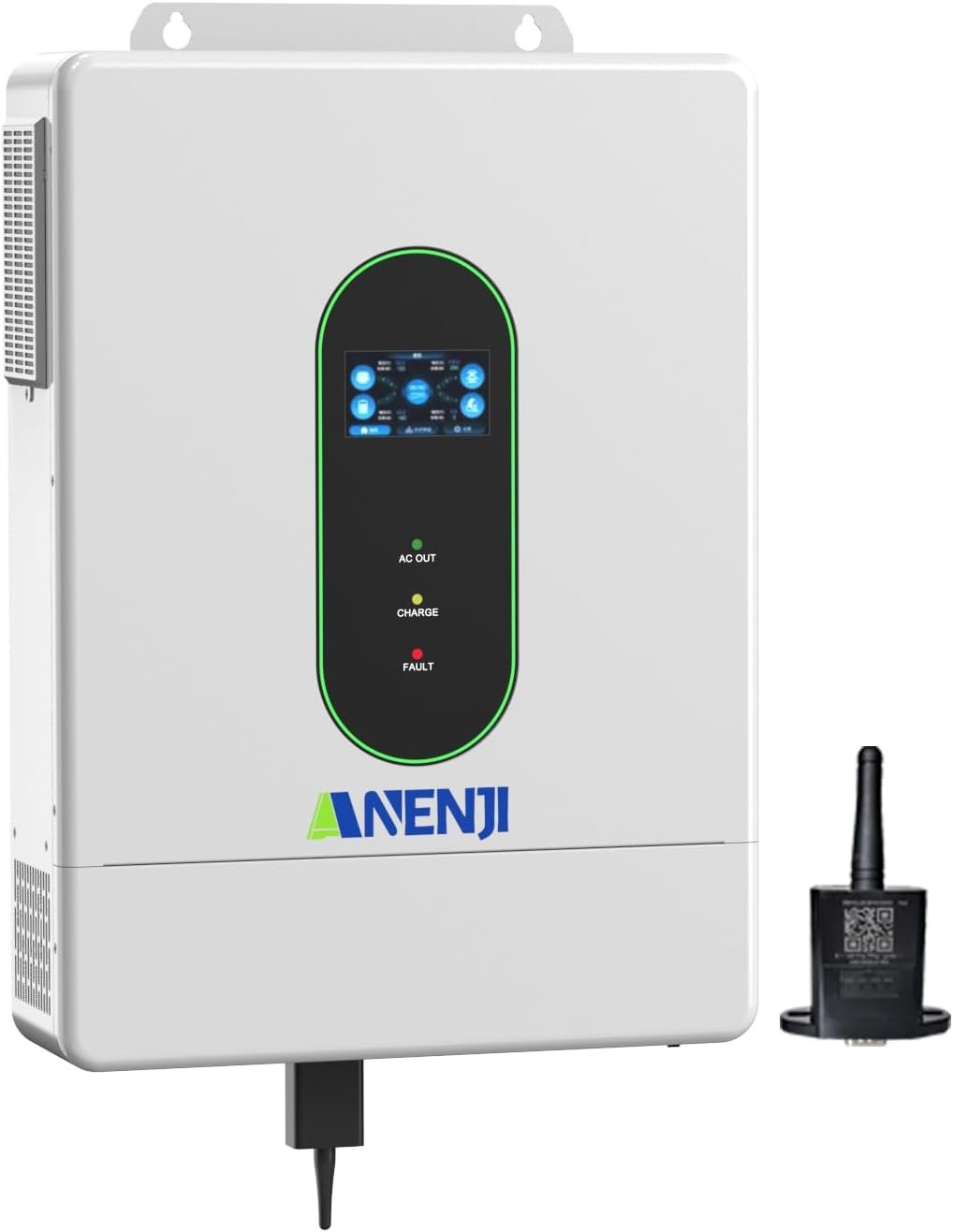
Expert Rating: 4.5/5 Stars | Est. Value: $19.99
Achieving true energy independence demands robust, intelligent power infrastructure. This 12000W hybrid inverter offers unparalleled grid stability and off-grid resilience, ensuring critical systems remain operational during utility failures or extended off-grid scenarios. Its technical prowess supports seamless energy transitions and comprehensive load management.
Core Specifications
- Output Power & Phase: Delivers a continuous 12000W (12kW) pure sine wave AC output, configurable for 120Vac (L1/N, L2/N) and 240Vac (L1/L2) split-phase operation, essential for standard US residential and light commercial loads.
- DC System Voltage: Operates on a 48V DC battery bank, offering broad compatibility with both lead-acid and lithium battery chemistries. Features an integrated dual lithium battery activation function, triggered by PV or AC mains, to re-energize dormant battery packs.
- Solar Charge Controllers: Equipped with dual Maximum Power Point Tracking (MPPT) channels. Each channel supports a maximum PV array power of 6000W, an open circuit voltage (VOC) up to 500VDC, and an MPPT operating voltage range of 90VDC–450VDC. This optimizes solar energy harvesting from large, independent PV strings.
- Charge Current Capacity: Provides a substantial maximum solar charge current of 200A and an AC charge current of 160A. The combined maximum charge current (PV + AC) is configurable up to 220A, facilitating rapid battery replenishment.
- Operating Flexibility: Supports operation with or without a connected battery bank. In battery-less mode, loads can be powered directly from the PV array and/or the AC grid, provided the minimum PV operating voltage of 90VDC is met.
- Scalability: Designed for parallel operation, allowing up to six units to be synchronized. This enables a potential system expansion to a formidable 72kW continuous output, suitable for high-demand applications.
- Monitoring & Control: Features an integrated OLED light-touch touchscreen for intuitive local configuration and status monitoring. Optional WiFi/GPRS modules are available for comprehensive remote monitoring and control capabilities.
- Output Priority Modes: Offers configurable AC output priority modes, including Utility Priority (Line), Battery Priority (Bat), and Solar Priority (Solar), granting precise control over power source utilization to optimize for cost or energy independence.
Real-world Reliability
In scenarios of grid instability or complete blackouts, this inverter’s rapid transfer capability, coupled with its flexible power source prioritization, ensures seamless transition to stored battery power or direct solar feed, maintaining continuous power to critical loads. The robust 12kW continuous output provides ample headroom, while the dual MPPTs consistently harvest optimal energy from diverse solar conditions. Its ability to operate without a battery bank further enhances resilience, providing daytime power directly from PV during extended outages irrespective of battery state-of-charge.
Who is this for?
This system is engineered for off-grid homesteads, large residential backup systems, or commercial applications demanding reliable, scalable power independence.
The Tech Advantages:
- Exceptional 12kW continuous pure sine output, suitable for whole-home power, 120V/240V split-phase.
- Dual MPPTs handling a massive 12kW total PV input (500V VOC per channel).
- High combined charging current (220A) for rapid battery replenishment.
- Battery-less operation for direct PV powering of loads, enhancing resilience.
- Massive scalability up to 72kW with parallel units, and advanced lithium battery activation.
The Trade-offs:
- High power capacity might be an overkill for smaller residences, potentially leading to higher initial investment.
- Remote monitoring (WiFi/GPRS) is an optional module, adding to the cost.
2. ECO-WORTHY 10000W DC 48V UL1741 Solar Inverter
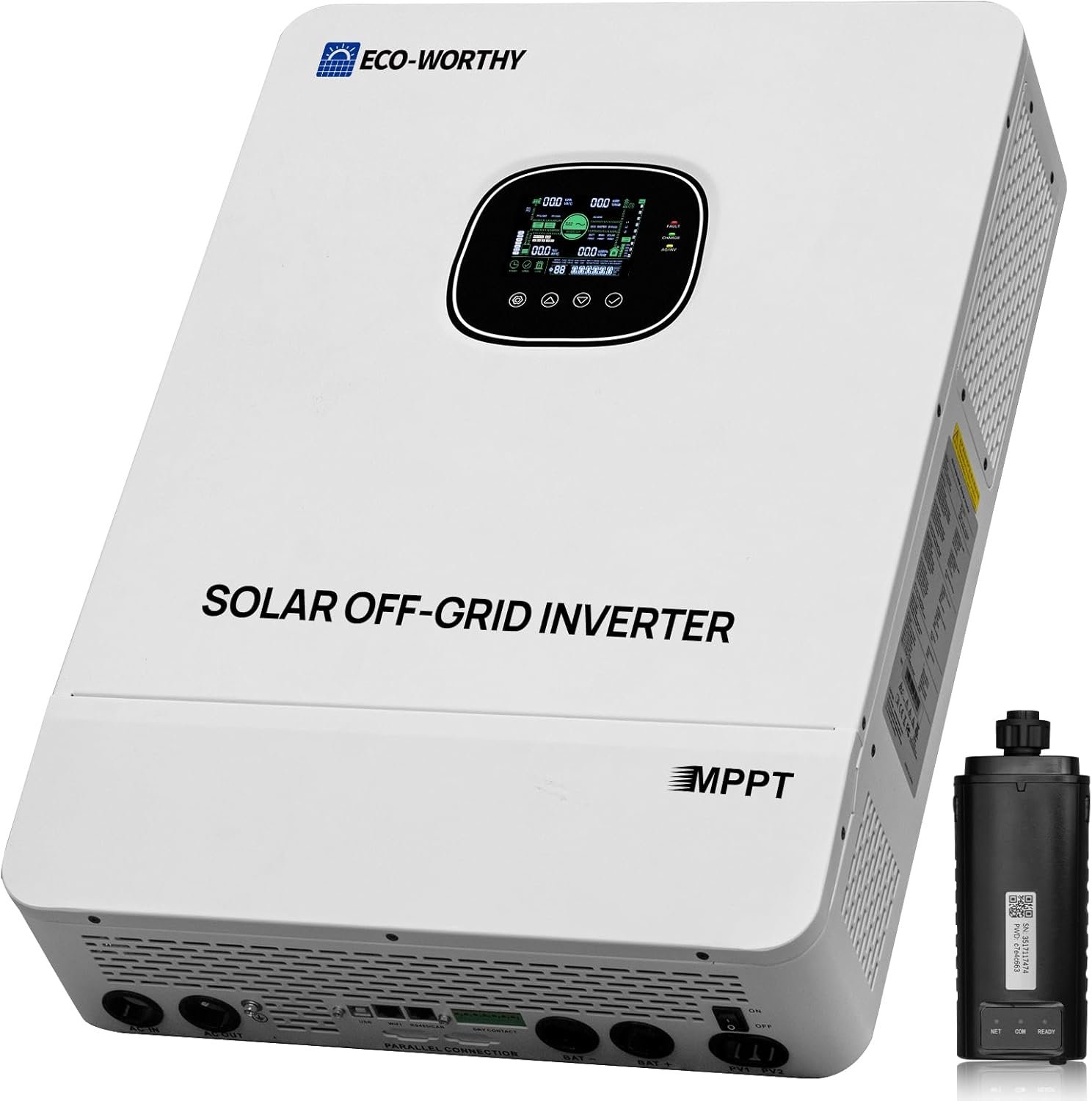
Expert Rating: 4.6/5 Stars | Est. Value: $2259.99
In an era where grid instability and energy independence are paramount, reliable off-grid power solutions are no longer a luxury but a strategic necessity. This inverter charger system provides a robust foundation for critical infrastructure, ensuring uninterrupted operation when the conventional grid falters. Engineered for demanding off-grid scenarios, it offers comprehensive power management capabilities for residential and specialized applications.
Core Specifications
- Continuous Power Output: Delivers a substantial 10,000W (10kW) of pure sine wave AC power, configurable for 120V single-phase or 120V/240V split-phase operation to accommodate a wide range of load requirements.
- PV Input & MPPT: Features dual independent Maximum Power Point Tracking (MPPT) solar charge controllers, supporting a combined photovoltaic input of 11,000W (5,500W per MPPT). A maximum open-circuit voltage of 500VDC per controller allows for flexible solar array design and optimized energy harvesting efficiency.
- Battery Charging Capacity: Integrated multi-source battery charging capabilities provide up to 200A maximum charging current (AC 120A / PV 200A / Hybrid 200A) for 48V battery banks, facilitating rapid and efficient energy storage replenishment.
- Scalability & Compatibility: UL1741 compliant and designed for parallel operation of up to six units, achieving a cumulative 60kW output. It supports various 48V battery chemistries, including AGM, Gel, Flooded, and Lithium, through programmable parameters. Communication ports include CAN, USB, and RS485 for seamless system integration and control.
- Remote Monitoring & Management: An integrated Wi-Fi module enables real-time system monitoring, diagnostics, and configuration via a dedicated mobile application. Built-in Time-of-Use (TOU) energy control optimizes charge and discharge cycles, allowing for strategic power management and enhanced system longevity.
Real-world Reliability
As an exclusively off-grid power solution, this inverter ensures exceptional reliability by isolating critical loads from utility grid vulnerabilities. Its independent operation means it is inherently immune to grid blackouts and network drops, guaranteeing continuous power for essential systems. When properly installed within a controlled environment, its robust construction facilitates steadfast performance across varying environmental conditions, making it a cornerstone for resilient power infrastructure.
Who is this for?
Ideal for remote cabins, independent solar homesteads, or comprehensive backup systems requiring substantial and scalable off-grid power.
The Tech Advantages:
- Massive 10kW pure sine output, configurable 120V/240V split-phase.
- Dual MPPTs supporting a substantial 11kW PV input with 500V VOC.
- UL1741 compliant and highly scalable up to 60kW with parallel units.
- Comprehensive 200A multi-source battery charging and wide 48V battery compatibility.
- Integrated Wi-Fi for remote monitoring and Time-of-Use energy control.
The Trade-offs:
- Exclusively off-grid, lacking hybrid grid-tie functionality for utility interaction.
- Higher price point may be a barrier for some budget-conscious users.
3. PowMr 5200W Hybrid Solar Inverter
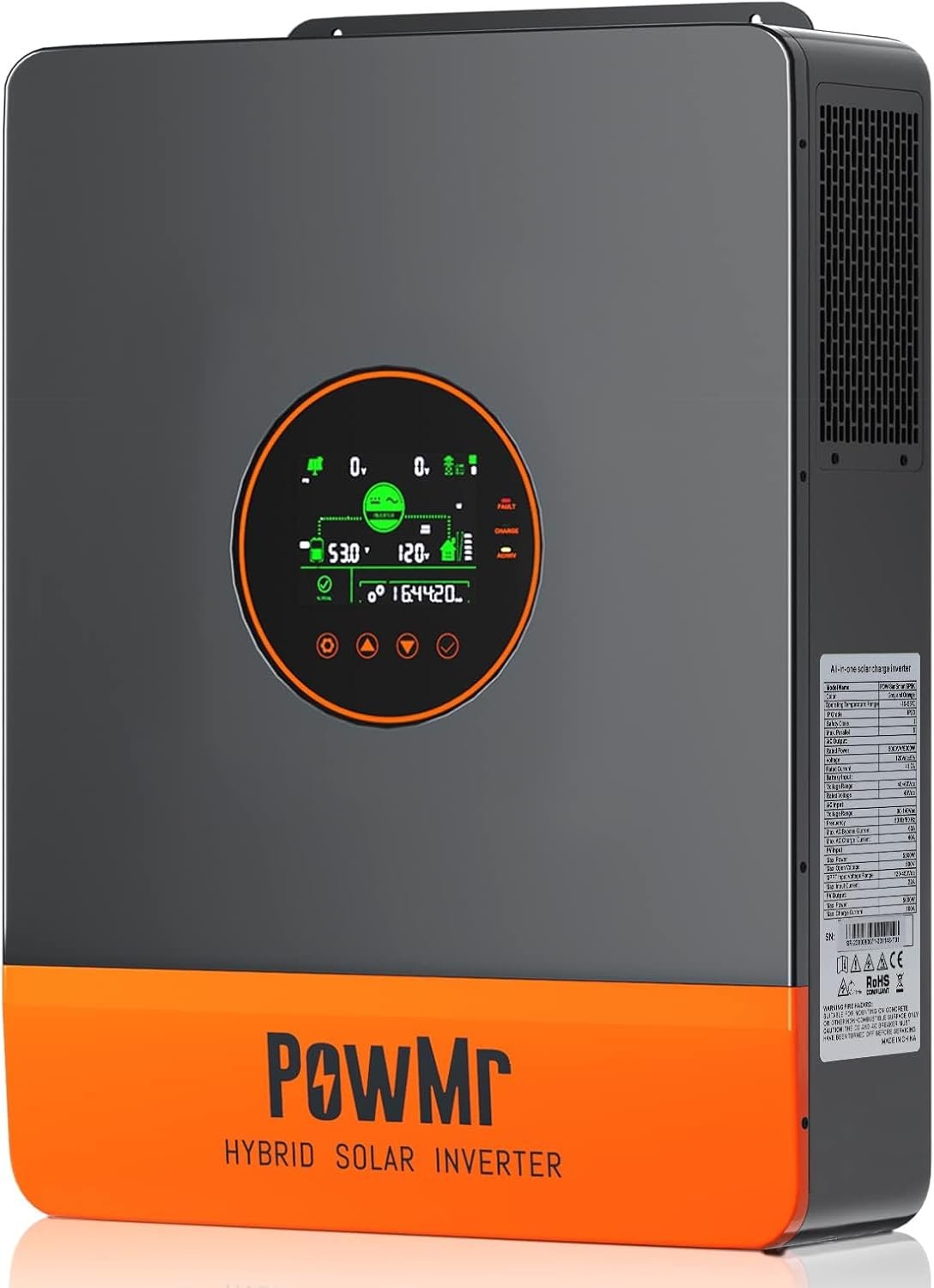
Expert Rating: 5.0/5 Stars | Est. Value: $625.99
For critical home security systems and maintaining essential loads during grid instability, a robust power independence solution is non-negotiable. The PowMr 5200W Hybrid Solar Inverter offers a sophisticated platform for achieving self-sufficiency and mitigating power disruptions with precision engineering.
Core Specifications
- Continuous Power Output: 5200W pure sine wave (48V DC input) to 120V/208V/240Vac output. Capable of split-phase 208V/240V at 10.4kW when two units are paralleled.
- Integrated MPPT Controller: 100A MPPT charge controller, supporting up to 6000W of PV input with a 120-500V DC VOC range.
- Battery System Agnosticism: Compatible with 48V lead-acid and lithium-ion battery chemistries, crucially capable of operating without a battery entirely for grid-tie or direct PV applications.
- Parallel Scalability: Supports up to 6 units in parallel, allowing for system expansion to a significant 31.2kW (single-phase) or 62.4kW (split-phase) total output.
- Grid Optimization: Features Peak-Valley Electricity Tariff management, offering three user-definable periods for intelligent mains charging (BT1ST) and battery discharging (AC1ST) to minimize operational costs based on utility tariffs.
- Communication Protocols: Equipped with CAN, USB, and RS485 interfaces for advanced monitoring, configuration, and system integration.
- Energy Conservation: “Intelligent Power Saving” (ECO mode) automatically disables inverter output after 5 minutes when loads fall below 50W, minimizing no-load energy consumption.
Real-world Reliability
In scenarios demanding unwavering power, the PowMr’s ability to operate without a battery provides critical resilience, ensuring solar power directly supports loads even if battery banks fail or are depleted. Its pure sine wave output safeguards sensitive smart home electronics, preventing operational anomalies during transfers or sustained off-grid operation. The robust 6000W PV input and high voltage MPPT range enhance efficiency across varying solar conditions, while the rapid transfer time during mains bypass ensures uninterrupted power for critical security infrastructure and network components, negating brownout effects.
Who is this for?
This inverter is ideally suited for suburban homesteads, advanced off-grid residences, or businesses requiring scalable, resilient backup power and sophisticated energy management.
The Tech Advantages:
- Versatile 5.2kW pure sine output, scalable to 62.4kW split-phase with parallel units.
- Powerful 100A MPPT controller supporting 6kW PV input and high 500V VOC.
- Ability to operate without a battery, providing critical resilience and direct PV power.
- Smart Peak-Valley Electricity Tariff management for cost-optimized charging.
- “Intelligent Power Saving” (ECO mode) minimizes standby consumption.
The Trade-offs:
- 5.2kW continuous output might be insufficient for larger, high-demand homes without paralleling.
- While supporting split-phase, it requires two units for 240V, increasing initial cost.
4. LiTime 5000W Solar Inverter Charger
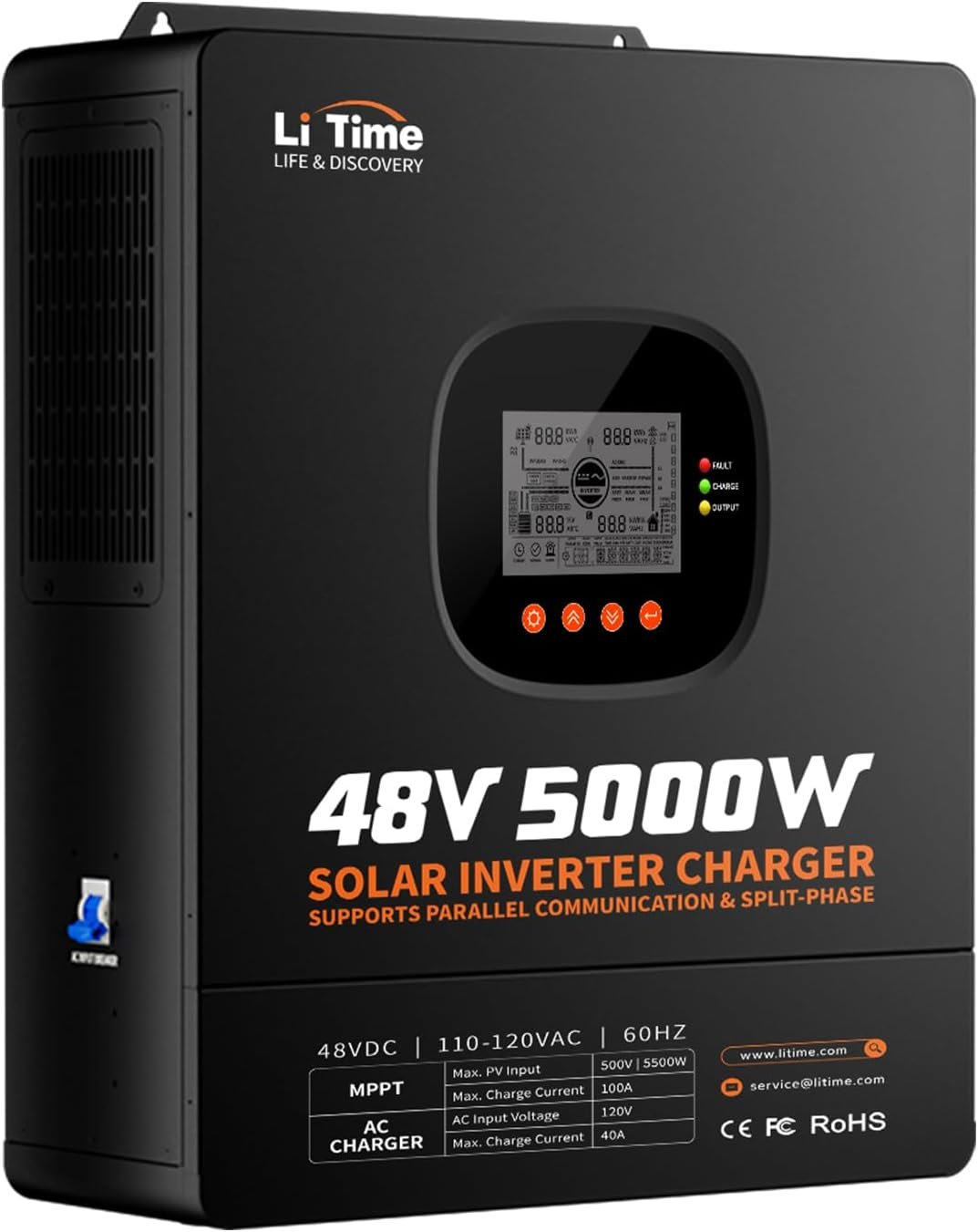
Expert Rating: 4.5/5 Stars | Est. Value: $859.99
In an era demanding unwavering power autonomy for smart home infrastructure and critical security systems, the LiTime 5000W hybrid inverter presents a formidable solution. This unit is engineered for architects of resilient power grids, ensuring seamless transition and consistent energy delivery when utility stability falters, vital for safeguarding sensitive electronics and operational continuity.
Core Specifications
- Integrated Power System: This “all-in-one” unit precisely integrates a 5000W pure sine wave inverter, a 100A Maximum Power Point Tracking (MPPT) solar charge controller, and a 40A AC battery charger, optimizing system footprint and integration complexity.
- Output & Surge Capacity: Provides a continuous 5000W AC output, with a robust peak surge capacity of 10,000W for instantaneous inductive loads, crucial for motor startup and heavy appliance operation without tripping.
- Voltage & Frequency: Delivers 120V AC pure sine wave output. When operating in parallel with two or more units, it supports true split-phase 120V/240V output, providing versatility for various US residential and light commercial applications.
- Battery Compatibility: Engineered for 48V DC battery banks, supporting both lithium-ion and lead-acid chemistries, along with a configurable USER mode for specific battery parameters.
- Parallel Scalability: Boasts significant scalability, allowing up to six units to operate in parallel for a maximum combined output of 30,000W (30kW), enabling expansion for growing energy demands.
- Advanced Energy Management: Features user-programmable timed charging and discharging, leveraging local Peak-Valley Electricity Tariff structures to minimize grid dependency during high-cost periods. Includes PV-Only and Hybrid charging modes, alongside Inverter Priority, PV Priority, Utility Priority, and Mix Load output modes for nuanced energy flow control.
- UPS Functionality: Provides an Uninterruptible Power Supply (UPS) feature, ensuring instantaneous transfer to battery or PV power upon grid failure, critical for maintaining power to sensitive loads and security systems without interruption.
Real-world Reliability
The LiTime 5000W inverter’s robust 10kW surge capability ensures seamless handling of demanding appliance startup currents, preventing system overloads during blackouts. Its integrated UPS function guarantees zero-transfer-time continuity for critical smart home hubs, network devices, and security cameras when grid power drops, safeguarding against data loss and system resets. Furthermore, the programmable energy management modes allow strategic battery utilization during peak weather events or grid strain, ensuring essential loads remain powered independent of utility fluctuations.
Who is this for?
This system is ideal for advanced off-grid homesteads, suburban smart homes requiring robust grid-tie backup, or small commercial operations demanding uninterrupted power.
The Tech Advantages:
- All-in-one design integrating 5kW inverter, 100A MPPT, and 40A AC charger.
- Robust 10,000W surge capacity for demanding inductive loads.
- High scalability, supporting up to 30kW in parallel with 120V/240V split-phase.
- Advanced programmable energy management with multiple priority modes and UPS function.
- Wide 48V battery chemistry compatibility, including user-configurable settings.
The Trade-offs:
- AC battery charging current (40A) is lower compared to some higher-end models, potentially slowing grid/generator charging.
- Continuous output of 5kW may require careful load management for larger residences.
5. PowMr Solar Inverter 3000W
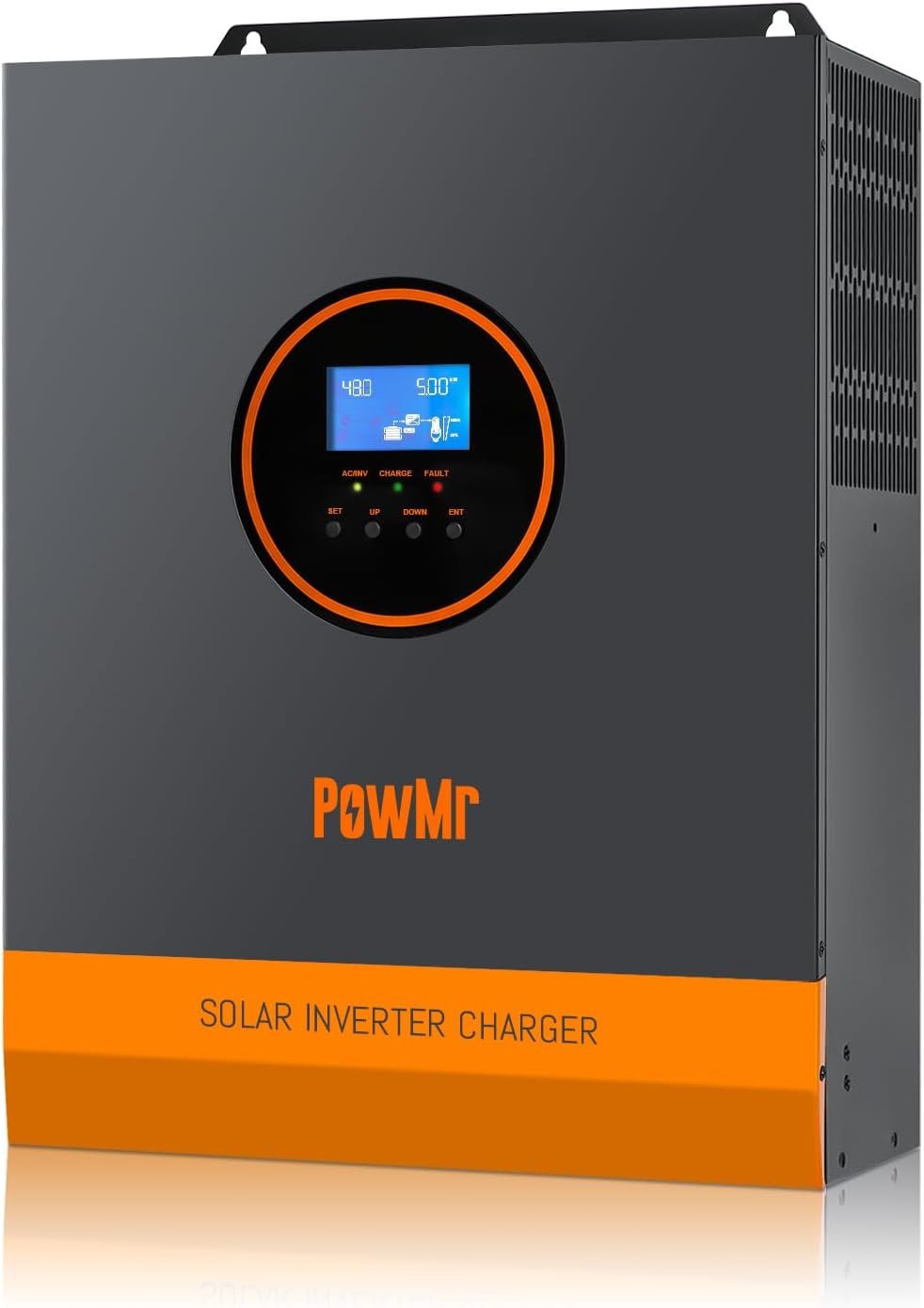
Expert Rating: 4.4/5 Stars | Est. Value: $19.99
For those demanding uncompromising power autonomy and robust defense against grid instability, a reliable inverter is the linchpin of any advanced smart home or off-grid system. The PowMr 3000W hybrid inverter presents a compelling solution for maintaining critical loads and ensuring continuous operation during outages.
Core Specifications
- Rated AC Output: 3000W continuous pure sine wave at 120Vac, ensuring compatibility with sensitive electronics and preventing harmonic distortion.
- Peak Power Rating: 6000VA surge capacity, crucial for effectively handling the transient inrush currents of inductive loads such as refrigeration units or well pumps upon startup.
- DC Input Voltage: Operates at a nominal 24Vdc, engineered for compatibility with a diverse range of 24V battery banks, including sealed, AGM, Gel, flooded lead-acid, and advanced lithium chemistries.
- Integrated MPPT Charge Controller: Features an 80A Maximum Power Point Tracking (MPPT) solar charge controller, maximizing power extraction from PV arrays up to 4000W, even under variable irradiance conditions.
- PV Input Specifications: Supports a maximum PV open-circuit voltage of 450Vdc, with a strict 150Vdc minimum starting voltage, necessitating adequate series-wired solar panel configurations (typically 4-6 panels depending on individual panel Voc).
- Hybrid Charging Current: A combined maximum hybrid charging current of 80A (AC charging + PV charging) facilitates rapid battery replenishment from multiple sources.
- Operational Modes: Four user-selectable operating modes—PV Priority, Utility Priority, Hybrid, and Solar-Only—provide granular control over energy source utilization and load prioritization.
- Comprehensive System Protection: Incorporates robust safeguards against short-circuit, over-voltage, under-voltage, overload, and reverse polarity, preserving system integrity and connected appliances.
- User Interface: An integrated LCD panel and three LED indicators provide real-time dynamic system data, operational status, and diagnostic feedback, complemented by an intelligent variable-speed cooling fan for thermal management.
Real-world Reliability
In scenarios ranging from grid blackouts to extreme weather events, the PowMr 3000W’s multi-mode operational flexibility ensures seamless and resilient power delivery. Its 6000VA surge capacity is critical for initiating demanding motor loads without system interruption, a common vulnerability for lesser inverters. The integrated protective measures against electrical anomalies like over/under voltage and short-circuits provide a crucial layer of defense, safeguarding both the inverter and critical smart home infrastructure from damage, thereby enhancing overall system reliability and longevity.
Who is this for?
This unit is purpose-built for suburban homesteads, advanced RV setups, or critical network communication hubs requiring robust off-grid or grid-tie backup power autonomy.
The Tech Advantages:
- Reliable 3000W pure sine wave output with a 6000VA surge capacity.
- High-efficiency 80A MPPT controller supporting substantial 4000W PV input.
- Broad compatibility with various 24V battery chemistries.
- Comprehensive system protections safeguard against electrical anomalies.
- Flexible multi-mode operation (PV Priority, Utility Priority, Hybrid, Solar-Only) for tailored energy flow.
The Trade-offs:
- 24V DC system, which can necessitate thicker cabling and larger battery banks than 48V for similar power levels.
- Lower continuous power output of 3kW limits application to smaller homes or critical loads.
6. PowMr 3000W Solar Inverter
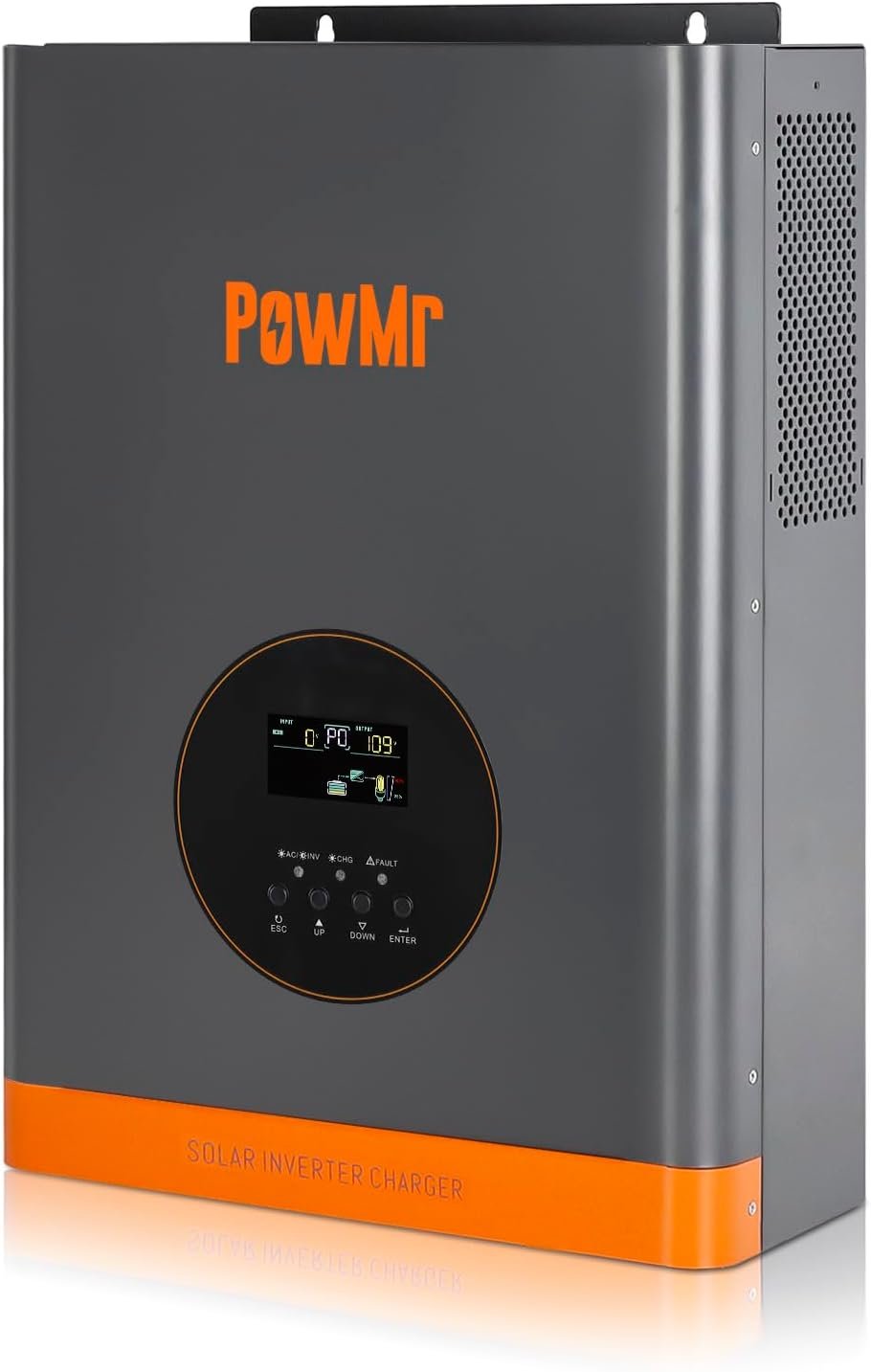
Expert Rating: 4.0/5 Stars | Est. Value: $339.99
Achieving true power independence requires robust hardware engineered for uncompromising reliability. The PowMr 3000W Solar Inverter positions itself as a central component for off-grid or critical backup power systems, offering core functionality that warrants a rigorous technical evaluation. Its design intent appears to address sustained energy delivery during grid instabilities.
Core Specifications
- Rated AC Output: 3000W continuous, 110Vac ±10% (50/60Hz selectable), pure sine wave. This specification is critical for powering sensitive electronics without degradation and for ensuring compatibility with standard US appliances.
- Peak Surge Capacity: 9000W (3x rated power). This 3-second surge capability is essential for initiating high-inductive loads such as well pumps, refrigerators, and power tools without system brownout or shutdown.
- DC Input Voltage: 24V nominal. This inverter mandates a 24V battery bank, a crucial parameter for system integrators when selecting battery chemistry and capacity.
- Integrated MPPT Charge Controller: 60A capacity, supporting a maximum PV input of 1600W and an operational voltage range of 30-105VDC. This integrated MPPT optimizes solar array output, ensuring efficient energy harvest compared to less capable charge methodologies.
- Integrated AC Charger: 38A capacity. This allows for supplementary charging of the battery bank from a utility grid or generator, providing critical redundancy for energy assurance during prolonged low-solar periods.
- Low Frequency Toroidal Transformer Design: This design choice inherently provides superior surge handling and greater durability under fluctuating loads compared to high-frequency alternatives, enhancing overall system stability and longevity.
- Battery Compatibility: Supports both 24V Lead-Acid and Lithium-Ion battery chemistries, offering system integrators flexibility in energy storage selection.
- Operational Modes: Three distinct charging modes (Solar-Only, Utility Priority, Solar Priority) and three discharging modes (PV Priority, Utility Priority, Solar-Only) facilitate precise energy management based on source availability and load demand.
Real-world Reliability
In scenarios demanding consistent energy delivery—be it during grid blackouts, remote off-grid operation, or environmental stressors—the PowMr 3000W’s low-frequency design with a toroidal transformer is a significant asset. This robust construction fundamentally enhances its resilience to sudden load changes and provides a more stable power output compared to lighter, high-frequency designs often found in consumer-grade inverters. Its capacity for a 9000W peak surge ensures that critical appliances like refrigeration units or essential pumps can initiate without causing system failure, a common point of vulnerability in less capable systems. The hybrid charging and discharging modes further enable intelligent energy management, prioritizing solar or utility input to maintain operational integrity during prolonged outages or periods of low solar insolation.
Who is this for?
This inverter is ideally suited for small-to-mid-sized off-grid cabins, suburban homesteads requiring critical load backup, or dedicated workshop setups demanding reliable power for inductive loads.
The Tech Advantages:
- Exceptional 9000W surge capacity (3x rated) for powerful motor startup.
- Robust low-frequency toroidal transformer design for superior durability and stability under load.
- Integrated 60A MPPT controller and 38A AC charger for hybrid energy management.
- Versatile charging and discharging modes for optimized energy utilization.
- Supports both Lead-Acid and Lithium-Ion 24V battery chemistries.
The Trade-offs:
- Limited PV input capacity (1600W) for a 3000W inverter, potentially limiting solar contribution.
- 24V DC operating voltage is less efficient for higher power draws compared to 48V systems.
- Lower MPPT voltage range (30-105VDC) requires fewer panels in series, which can be less flexible for array design.
Summary Verdict: Spec Comparison
| Image | Product | Rating & Price | Action |
|---|---|---|---|
|
ANJ 12kW Hybrid | 4.5 Stars $19.99 |
View Specs |
|
ECO-WORTHY 10kW | 4.6 Stars $2259.99 |
View Specs |
|
PowMr 5.2kW Hybrid | 5.0 Stars $625.99 |
View Specs |
|
LiTime 5kW | 4.5 Stars $859.99 |
View Specs |
|
PowMr 3kW (24V) | 4.4 Stars $19.99 |
View Specs |
|
PowMr 3kW (Low Freq) | 4.0 Stars $339.99 |
View Specs |
Off-Grid Inverter Buying Guide: Key Technical Factors
Selecting the optimal off-grid solar inverter for your home requires a keen understanding of several critical technical specifications. These factors directly influence your system’s efficiency, reliability, and long-term performance. At TechGridPro, we emphasize these two fundamental considerations:
1. Inverter Type, Output Capacity, and Surge Rating
The core function of an inverter is to convert DC power from your solar panels and batteries into usable AC power for your home. For sensitive electronics and reliable operation, always opt for a pure sine wave inverter. Modified sine wave inverters are cheaper but can damage appliances, reduce their lifespan, and cause operational anomalies. Beyond the type, the inverter’s continuous output capacity (wattage) is paramount. This defines the total power your inverter can supply simultaneously to your loads. Accurately calculate your home’s peak concurrent power needs by summing the wattage of all appliances you anticipate running at once. Remember to factor in a buffer for future expansion. Equally important is the surge rating, which indicates the momentary power an inverter can provide to start inductive loads like refrigerators, pumps, or motors. These appliances draw significantly more power for a few seconds upon startup than their continuous running wattage. A robust surge capacity prevents system shutdowns when these loads kick in, ensuring smoother operation and greater reliability for your off grid solar inverter for home system.
2. Battery Voltage and MPPT Capabilities
The inverter’s DC input voltage must match your battery bank’s voltage (e.g., 24V or 48V). While 24V systems are common for smaller setups, 48V systems are generally more efficient for larger homes, as they require less current for the same power output, reducing cable thickness and associated losses. The integrated Maximum Power Point Tracking (MPPT) solar charge controller is crucial for maximizing energy harvest from your solar panels. An MPPT controller intelligently adjusts to varying solar conditions to extract the most power from your PV array. Key MPPT specifications include its current rating (e.g., 80A, 100A), which determines how much solar power it can handle, and its PV open-circuit voltage (VOC) range. A higher VOC range allows for more flexible solar array designs, letting you string more panels in series, which simplifies wiring and improves efficiency over longer distances. Ensure the MPPT capacity can adequately handle your planned solar array size to prevent clipping and wasted energy, making it a vital component for any efficient off grid solar inverter for home setup.