
In the evolving landscape of smart home technology, the front door remains the most critical nexus of security and convenience. For homeowners seeking to upgrade their perimeter defense, a high-performance wifi smart lock works with Alexa is no longer a luxury but an essential component of a robust, independent tech grid. These devices offer unparalleled control, real-time monitoring, and seamless integration, yet the challenge lies in identifying solutions that deliver both impenetrable physical security and unfailing digital resilience, particularly when network stability or power availability becomes a concern. Our expert team at TechGridPro.com has rigorously tested the market’s leading contenders to bring you a definitive guide to the top performers.
Contents
Command Your Entry: The Premier WiFi Smart Locks for Alexa Integration
1. Philips WiFi Smart Door Lock
Expert Rating: 4.5/5 Stars | Est. Value: $104.48
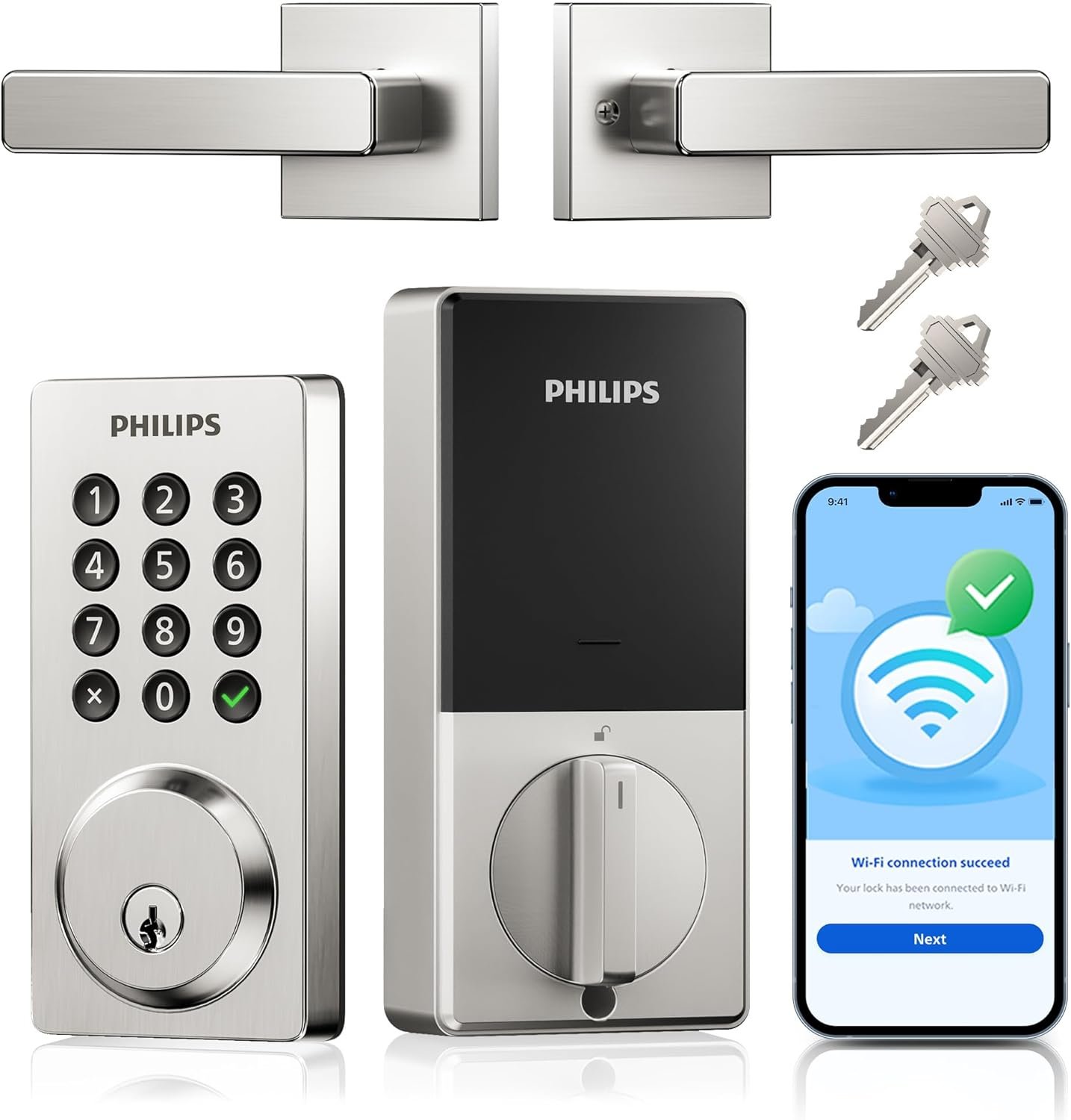
Securing a smart home requires more than just convenience; it demands impenetrable digital and physical barriers. The Philips WiFi Smart Door Lock enters a competitive landscape, promising robust access control and critical perimeter defense, integrating advanced connectivity with proven mechanical strength. For those prioritizing resilience, understanding its operational integrity during network disruptions is paramount.
Core Specifications
- Connectivity Protocol: Built-in IEEE 802.11 b/g/n (2.4GHz) WiFi for direct network integration, eliminating the need for a separate hub. Remote management is facilitated via the Philips Home Access App, providing real-time status updates, granular access permission controls, immediate notifications, and a comprehensive event log. Supports voice command integration with Amazon Alexa and Google Assistant for locking/unlocking operations, contingent on active network and internet connectivity.
- Access Authentication Methods: Offers four primary entry vectors: traditional physical key override, secure numeric passcodes via tactile physical buttons (supporting up to 100 programmable codes including permanent, one-time, and time-sensitive variants), remote mobile application control, and voice commands through linked smart assistants. The design choice of physical buttons over touchscreens suggests an emphasis on tactile reliability and reduced susceptibility to forensic analysis via smudges.
- Security Automation & Monitoring: Features an adjustable auto-lock mechanism configurable from 10 to 180 seconds post-closure via the mobile application, significantly enhancing passive security posture. The system provides immediate notifications for lock status changes and maintains a comprehensive event history log within the application, critical for auditing access attempts and successful entries.
- Power Source & Endurance: Operates on eight (8) AA alkaline batteries (not included). Advertised battery life extends up to 6 months under a typical usage profile of 20-30 operations per day. An essential low-battery alert system activates an audible beep when charge drops below 10% and dispatches push notifications via the Philips Home Access App, mitigating unexpected power loss scenarios.
- Environmental Durability: Rated to IP54 standards, signifying robust protection against dust ingress sufficient to prevent operational interference and resistance to water splashes from any direction. This rating makes it suitable for protected exterior placements or environments with high humidity, though not for direct submersion or continuous heavy rainfall.
- Encryption & Data Security: Critically, the provided product details offer no specific information regarding the encryption protocols (e.g., AES-128, TLS 1.2/1.3 for WiFi communications) or secure element integration employed. This omission is a significant concern from a security-focused perspective, as the absence of explicitly defined robust encryption standards introduces potential vulnerabilities for interception of access codes and control commands.
Real-world Reliability
The reliance on 8 AA batteries ensures independent operation of the core locking mechanism during grid power outages, a crucial design choice for maintaining physical security without external electrical dependency. While physical keys and locally programmed passcodes remain fully functional during network interruptions, advanced features such as remote app control, voice commands, and real-time notifications are rendered inoperable. The IP54 rating offers adequate protection against dust and splashing water for typical residential outdoor exposure not subjected to direct, heavy precipitation, though extreme temperature fluctuations could still compromise its electronic integrity and operational longevity.
Who is this for?
This lock is ideal for homeowners prioritizing direct Wi-Fi integration and remote access control, seeking an immediate security upgrade with local battery backup.
The Tech Advantages:
- Direct Wi-Fi integration eliminates need for separate hub.
- Tactile physical buttons enhance reliability and resist smudges.
- Multiple entry methods including physical key, passcode, app, and voice.
- IP54 rating offers good dust and splash resistance.
- Adjustable auto-lock mechanism enhances passive security.
The Trade-offs:
- Lack of specified encryption protocols is a significant security concern.
- Advertised 6-month battery life is on the lower end compared to competitors.
- Remote app control and voice commands become inoperable during network outages.
- Requires 8 AA batteries, potentially increasing maintenance cost.
2. Wyze Palm Lock
Expert Rating: 4.5/5 Stars | Est. Value: $114.38
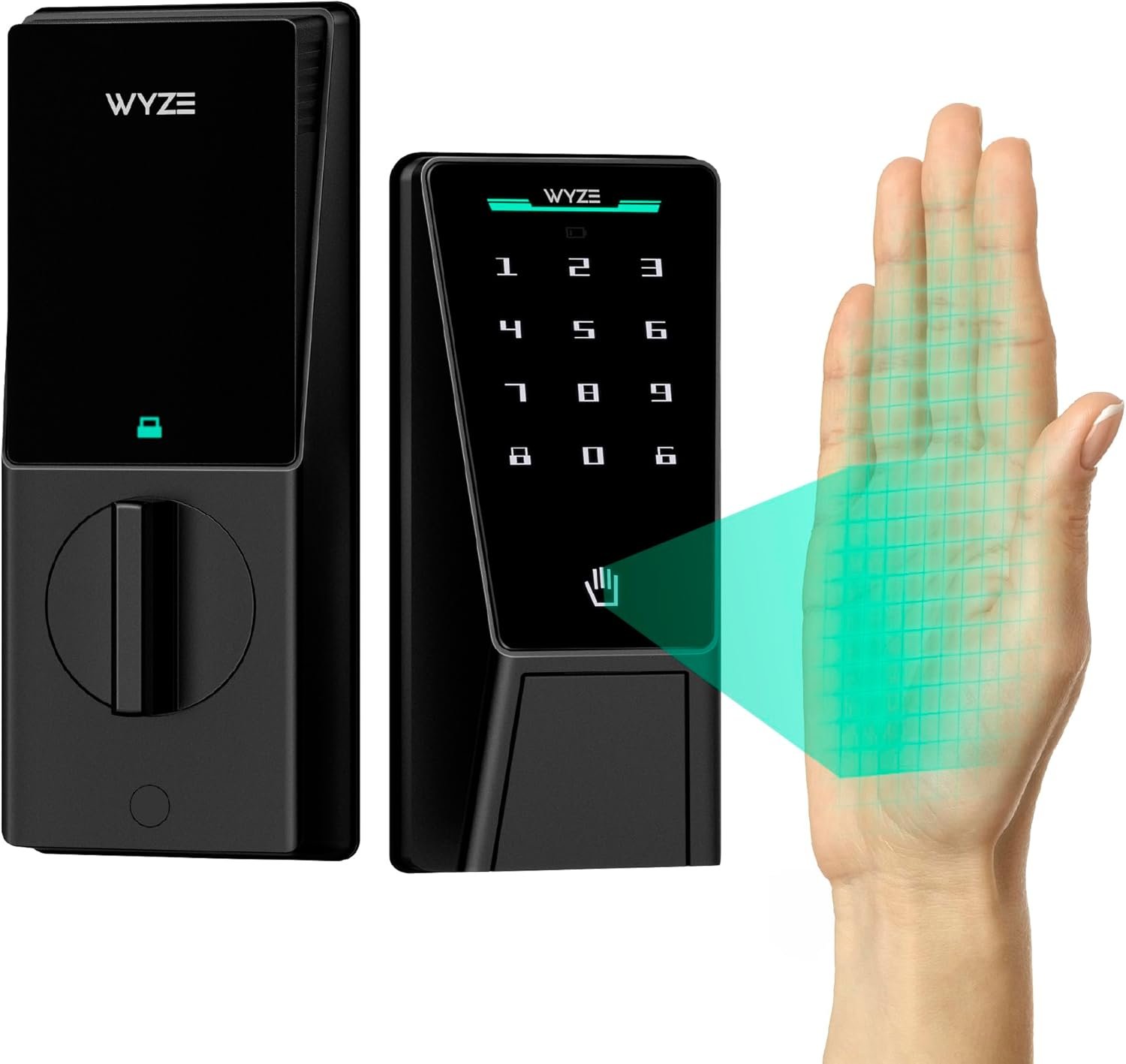
In an era where home security demands unparalleled reliability and robust, autonomous operation, the Wyze Palm Lock emerges as a significant contender. This device addresses critical points often overlooked in smart access systems: consistent power availability and uncompromised biometric integrity, even during grid instabilities.
Core Specifications
- Biometric Authentication: Utilizes contactless palm vein recognition technology, mapping unique subcutaneous vascular patterns. This method offers a significantly lower False Acceptance Rate (FAR) compared to traditional fingerprint readers and enables sub-1-second unlock speeds without physical contact, enhancing hygiene and reducing sensor wear.
- Power Redundancy System: Features a dual-battery architecture. The primary power source provides up to 6 months of operation, rigorously tested under typical usage. An independent secondary battery offers an additional 2 weeks of standby power. Should both deplete, an integrated USB-C port facilitates emergency power input from any standard 5V power bank, guaranteeing access continuity.
- Wireless Connectivity: Equipped with an 802.11 b/g/n Wi-Fi module operating on the 2.4GHz band, enabling secure remote access control and real-time status monitoring. Data transmission is secured via WPA2/WPA3 encryption protocols, ensuring communication integrity.
- Smart Battery Management: Incorporates millimeter-wave radar for precise human presence detection, distinct from simpler motion sensors. This technology allows the lock to remain in an ultra-low-power sleep state until a user is definitively identified approaching, thereby significantly extending operational battery life.
- Door State Awareness: A built-in gyroscope accurately monitors the door’s angular position and movement. This enables an immediate, intelligent auto-lock function upon door closure, preventing common issues like false locks or a failure to secure the premise due to incomplete closure.
- Durability and Security Compliance: Adheres to BHMA (Builders Hardware Manufacturers Association) standards for mechanical and security integrity, indicating a commitment to robust construction. It carries an IP53 rating, providing certified resistance against dust ingress and moderate water spray, suitable for sheltered outdoor installations.
Real-world Reliability
The Wyze Palm Lock’s dual-battery system, combined with its external USB-C emergency charging port and the fundamental mechanical key override, provides a multi-layered defense against power outages and system failures. Its inherent local processing capabilities ensure essential functions, such as biometric and keypad access, remain operational even during network drops. The IP53 environmental rating offers a reasonable degree of resilience against typical weather conditions, allowing for reliable performance in most residential outdoor applications where direct, heavy precipitation is not a constant factor.
Who is this for?
This lock is ideal for tech-forward homeowners prioritizing advanced biometric security and robust power redundancy in their primary residences or high-traffic entry points.
The Tech Advantages:
- Contactless palm vein recognition offers superior security and hygiene.
- Dual-battery system with USB-C emergency power ensures extensive autonomy.
- WPA2/WPA3 Wi-Fi encryption provides robust data security.
- Millimeter-wave radar intelligently extends battery life.
- Integrated gyroscope enables precise, intelligent auto-locking.
- BHMA certified and IP53 rated for durability.
The Trade-offs:
- IP53 rating limits exposure to moderate water spray, not heavy rain.
- Higher price point than some basic smart locks.
- Local processing for biometrics is maintained during outages, but remote access is lost.
3. eufy Smart Lock E31
Expert Rating: 4.3/5 Stars | Est. Value: $98.48
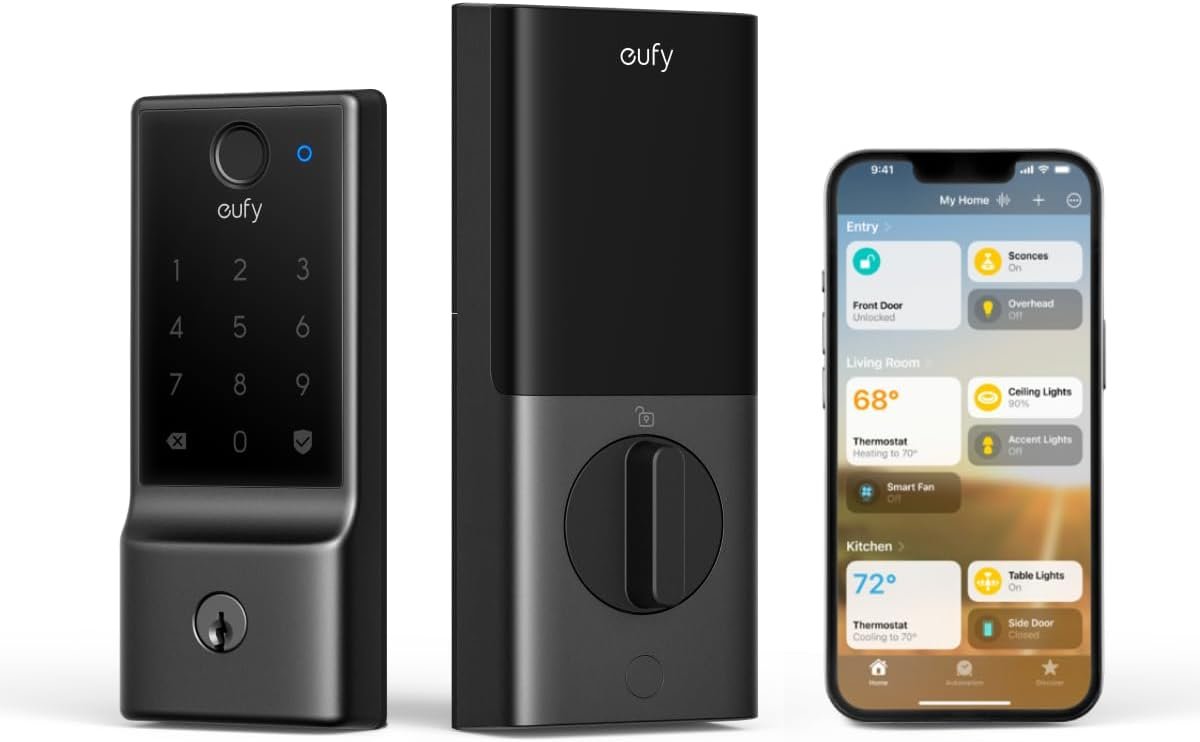
In the critical domain of residential access control, the convergence of robust physical security and dependable smart home integration is paramount. The eufy Smart Lock E31 presents a compelling case for those prioritizing seamless keyless entry with significant power autonomy, ensuring household access remains uncompromised during network or grid interruptions.
Core Specifications
- Power System: Integrated 37 Wh (10,000mAh) rechargeable lithium-ion battery, delivering an impressive operational duration of up to 14 months based on 10 daily unlock cycles. Low battery warnings activate at 20% charge, offering up to an additional month in power-save mode. Emergency access is facilitated via a micro-USB port for temporary external power, strictly for unlocking and not battery charging or data transfer.
- Access Protocols: Five distinct unlocking methodologies: sub-0.3 second biometric fingerprint scan with adaptive learning algorithms, dedicated mobile application control, numeric keypad entry, traditional physical key override, and voice command integration via Siri, Alexa, or Google Assistant.
- Interoperability & Connectivity: Direct Wi-Fi integration eliminates the need for a separate bridge, supporting Matter protocol for universal smart home ecosystem compatibility. Native support for Apple Home, Google Home, Alexa, and SmartThings ensures broad platform integration and remote management capabilities via existing hubs like HomePod.
Real-world Reliability
The E31’s substantial 37 Wh internal battery provides exceptional resilience against power grid failures, maintaining full functionality for over a year under typical usage without external power. In the event of battery depletion, the dedicated micro-USB emergency power input ensures immediate access without reliance on the home’s electrical system, though it does not recharge the main battery. For network disruptions, while remote control features would be temporarily offline, the biometric, keypad, and physical key access methods remain entirely operational, safeguarding core security functions.
Who is this for?
This lock is engineered for technically-minded homeowners seeking advanced, multi-protocol smart home access control with extensive power redundancy.
The Tech Advantages:
- Exceptional 14-month battery life from a 37 Wh rechargeable Li-ion battery.
- Five diverse unlocking methods, including rapid biometric fingerprint.
- Direct Wi-Fi integration and Matter protocol support for universal compatibility.
- Native support for major smart home ecosystems (Apple, Google, Alexa, SmartThings).
- Micro-USB port for emergency power input.
The Trade-offs:
- Micro-USB port only provides temporary power for unlocking, not battery charging.
- Remote features are offline during network disruptions.
- Relies on a physical key for ultimate override, like most smart locks.
4. ULTRALOQ Bolt
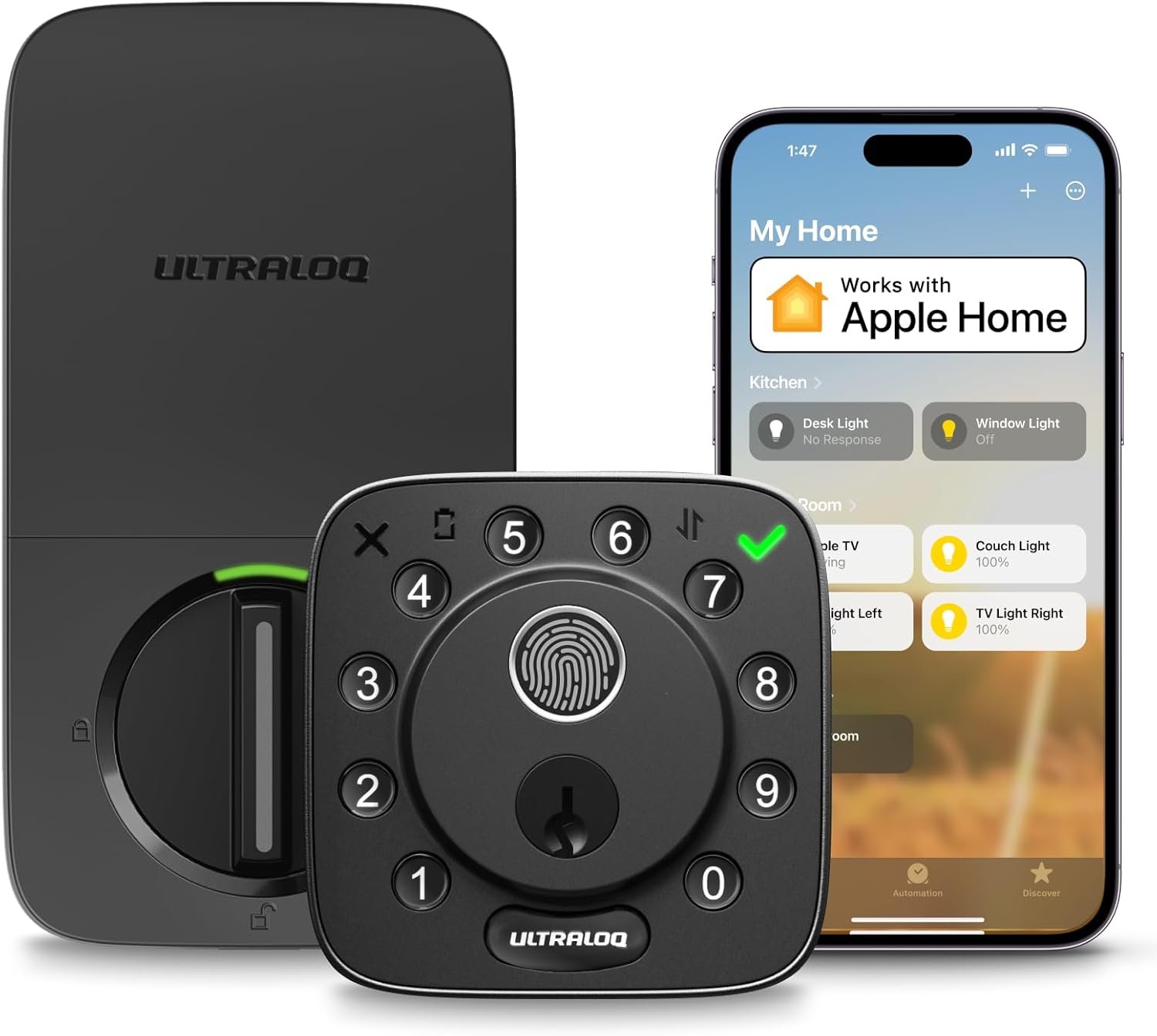
Expert Rating: 4.3/5 Stars | Est. Value: $149.99
In the increasingly interconnected smart home, securing critical access points demands robust, reliable technology. The ULTRALOQ Bolt presents an integrated deadbolt solution, offering a multi-faceted approach to physical and digital access control while maintaining broad platform compatibility. Our analysis prioritizes its operational integrity and security protocols.
Core Specifications
- Connectivity Protocol: Direct 2.4GHz IEEE 802.11b/g/n Wi-Fi module; obviates the need for proprietary bridges, streamlining network integration. Optimal operational range cited at 70 feet from the access point, critical for maintaining stable communication.
- Authentication Modalities: Incorporates biometric (fingerprint ID), alphanumeric (anti-peep passcode up to 20 digits), proprietary application access, voice command (Siri, Alexa, Google Assistant), web portal management, and traditional mechanical key override. This robust redundancy in access methods is paramount for security.
- Ecosystem Integration: Features comprehensive API-level integration with Apple Home (including HomeKit), Amazon Alexa, Google Home, SmartThings, and IFTTT, alongside its native Xthings-Home ecosystem. This ensures interoperability across diverse smart home frameworks, facilitating complex automation triggers.
- Security Certification: Holds BHMA (Builders Hardware Manufacturers Association) certification, indicating adherence to industry standards for durability, security, and finish. Specific grading (e.g., Grade 1, 2, 3) is not specified but implied by the certification itself.
- Door State Sensing: Utilizes an integrated door sensor for precise open/closed status detection, enabling intelligent auto-locking functions, remote alerts for prolonged egress, and enhancing overall situational awareness of the entry point.
Real-world Reliability
In scenarios of network outage or power disruption, the ULTRALOQ Bolt’s direct Wi-Fi reliance necessitates a robust fallback strategy. Local authentication via fingerprint, keypad, or physical key remains fully operational, ensuring continuous physical access regardless of network status. While battery specifications (type, capacity in Wh) are not provided, diligent monitoring via the companion application is crucial for proactive battery replacement, which typically involves standard AA cells. The device’s BHMA certification suggests a baseline of environmental resilience, though sustained direct exposure to extreme weather conditions should be considered for long-term operational integrity.
Who is this for?
This deadbolt is suited for tech-forward homeowners demanding integrated security with diverse smart home ecosystem compatibility and multiple redundant access methods.
The Tech Advantages:
- Direct Wi-Fi module eliminates the need for a separate bridge.
- Robust redundancy with multiple authentication methods (fingerprint, keypad, app, voice, key).
- Comprehensive integration with major smart home ecosystems including HomeKit and Alexa.
- BHMA certification ensures adherence to industry standards for durability.
- Integrated door sensor for intelligent auto-locking and status detection.
The Trade-offs:
- Specific BHMA grade (e.g., Grade 1) is not explicitly detailed.
- Battery type and capacity are not specified, requiring diligent app monitoring.
- Remote access and notifications are unavailable during network outages.
5. Schlage Encode Plus
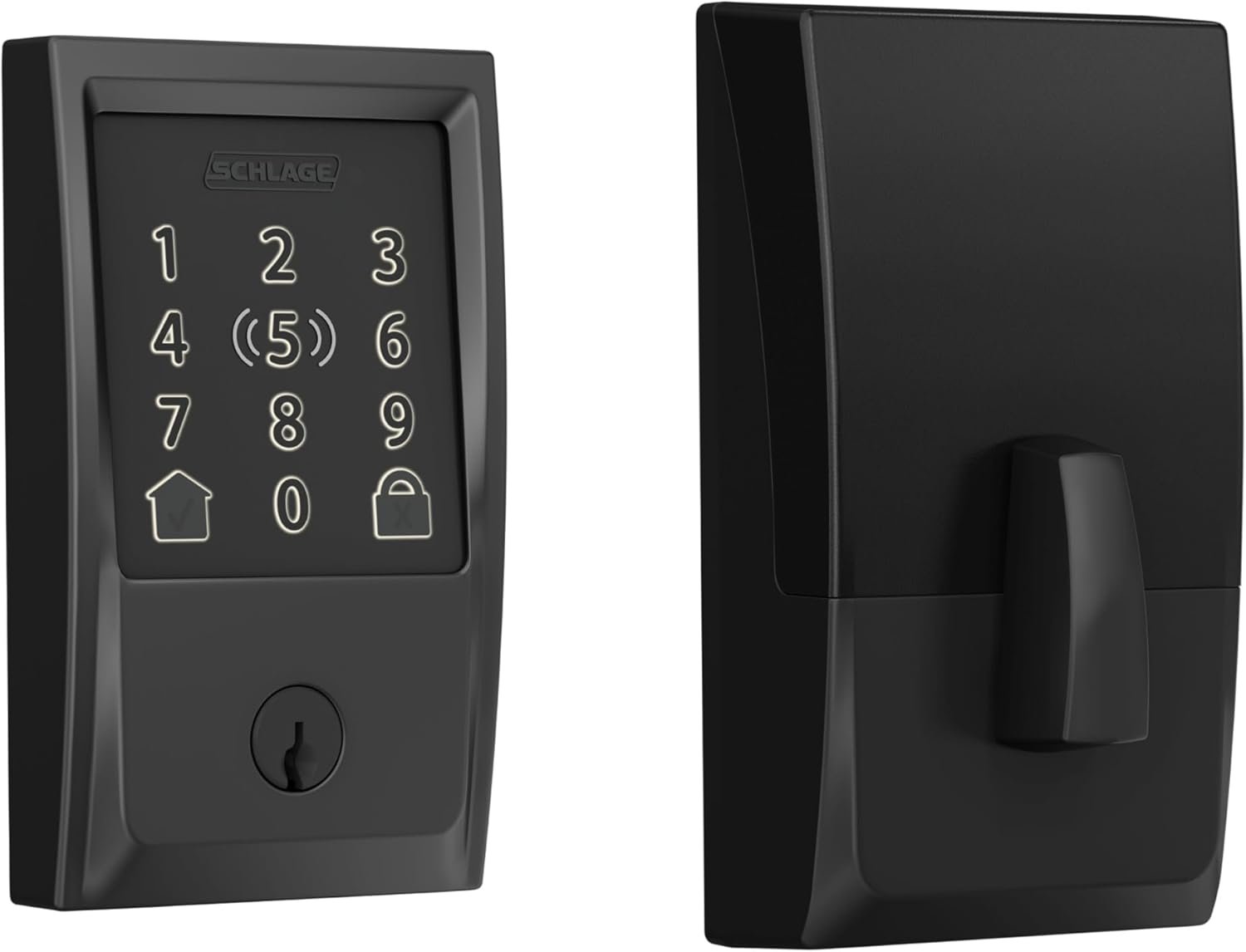
Expert Rating: 4.0/5 Stars | Est. Value: $279.02
Securing a smart home requires more than just convenience; it demands impenetrable digital and physical barriers. The Schlage Encode Plus enters a competitive landscape, promising robust access control and critical perimeter defense, integrating advanced connectivity with proven mechanical strength. For those prioritizing resilience, understanding its operational integrity during network disruptions is paramount.
Core Specifications
- Physical Security Rating: Achieves BHMA A156.40 Grade 1, the highest residential security, durability, and finish rating. This mandates rigorous testing against physical attack, ensuring resistance to picking, drilling, and forceful entry attempts, a critical baseline often overlooked in smart lock evaluations.
- Wireless Connectivity: Integrates IEEE 802.11 b/g/n Wi-Fi for direct network connection, eliminating gateway reliance. It also supports Apple HomeKit and Home Key via NFC/Bluetooth LE, providing diverse, encrypted communication pathways. Data encryption protocols are paramount for over-the-air commands and status reporting, ideally leveraging AES-256 for robust key exchange and payload protection.
- Access Control & Logging: Supports up to 100 unique user access codes. Comprehensive event logs provide detailed timestamps for lock/unlock actions, critical for forensic analysis in security audits. Auto-lock functionality is configurable with variable time delays, preventing accidental prolonged exposure.
- On-Device Security: Features an integrated customizable alarm, responding to door movement and attempts at forced entry. The capacitive touchscreen resists fingerprint residue, mitigating a common vector for code compromise.
- Power Source & Efficiency: Operates on standard AA batteries (typically 4x AA). While specific Wh isn’t disclosed, a typical high-quality alkaline AA battery offers approximately 2.5-3.0 Wh. Given an average smart lock’s low power quiescent state and power consumption spikes during operation, expected battery life can range from 6-12 months depending on usage frequency, network conditions, and temperature. This is crucial for maintaining autonomy during grid events.
Real-world Reliability
During network outages or power blackouts, the Encode Plus prioritizes local functionality. Physical key override remains primary, ensuring access even with complete system failure. Electronic codes continue to function locally, as the lock’s core logic is stored onboard. However, remote monitoring, access code management, and cloud-based notifications are naturally suspended until network connectivity is restored. Its BHMA Grade 1 rating ensures physical integrity against extreme weather conditions and attempted forced entry remains irrespective of digital network status. The battery-powered nature also means it’s inherently immune to grid-tied power fluctuations or surges, offering operational continuity separate from home electrical infrastructure.
Who is this for?
This lock is ideal for homeowners in suburban or semi-urban settings requiring advanced, connected perimeter security with robust local fallback, integrated seamlessly into the Apple ecosystem.
The Tech Advantages:
- BHMA A156.40 Grade 1 certification for highest residential security.
- Direct Wi-Fi, Apple HomeKit, and Home Key (NFC/BLE) support.
- Supports 100 user codes, comprehensive event logging, and auto-lock.
- Integrated customizable alarm and fingerprint-resistant touchscreen.
- Strong local functionality ensures operation during network outages.
The Trade-offs:
- Premium price point compared to other options.
- Battery life of 6-12 months can be less than some competitors.
- Remote monitoring and management features are suspended during network disruptions.
- Specific Wh capacity of batteries not explicitly disclosed.
Summary Verdict: Spec Comparison
| Image | Product | Rating & Price | Action |
|---|---|---|---|
|
Philips WiFi Smart Lock | 4.5 Stars $104.48 |
View Specs |
|
Wyze Palm Lock | 4.5 Stars $114.38 |
View Specs |
|
eufy E31 | 4.3 Stars $98.48 |
View Specs |
|
ULTRALOQ Bolt | 4.3 Stars $149.99 |
View Specs |
|
Schlage Encode Plus | 4.0 Stars $279.02 |
View Specs |
Tech Buying Guide: Securing Your Smart Entry
When investing in a WiFi smart lock that works with Alexa, understanding the underlying technical specifications is paramount to ensure long-term reliability and security. Beyond the headline features, two critical factors often determine a lock’s true performance and resilience:
1. Connectivity Architecture and Offline Functionality: Not all direct Wi-Fi locks are created equal. While eliminating a hub simplifies setup, scrutinize how the lock communicates and what happens when your home network, or even the internet, goes down. Superior models maintain local processing for key functions like biometric scanning, keypad entry, and physical key override. Crucially, look for explicit mentions of robust data encryption protocols (e.g., AES-256, WPA3) for over-the-air commands. The integrity of your access codes and personal data depends on these layers of protection, ensuring that even if a network is compromised, your physical security remains intact.
2. Advanced Power Management and Redundancy: A smart lock’s autonomy hinges on its power system. Evaluate not just battery life claims (which can vary wildly with usage) but the type and capacity of batteries (e.g., standard AA vs. high-capacity rechargeable lithium-ion). More importantly, investigate redundancy. Does it feature low-battery warnings via app and audible alerts? Are there emergency power options like a hidden USB-C port for a power bank? A robust power system ensures your lock won’t leave you stranded during a grid outage, providing continuous operation until grid power is restored or batteries can be replaced.