Technical Review & Analysis
In an era where home security hinges on robust connectivity, the Philips WiFi Smart Door Lock presents a direct-to-network solution. However, integrating critical access control systems directly to a residential Wi-Fi network demands scrutiny regarding its inherent vulnerabilities and resilience against common household grid interruptions. This technical review dissects its capabilities and limitations.
Core Specifications
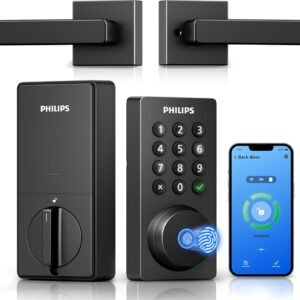
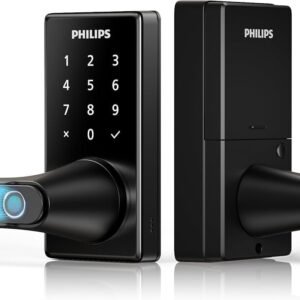
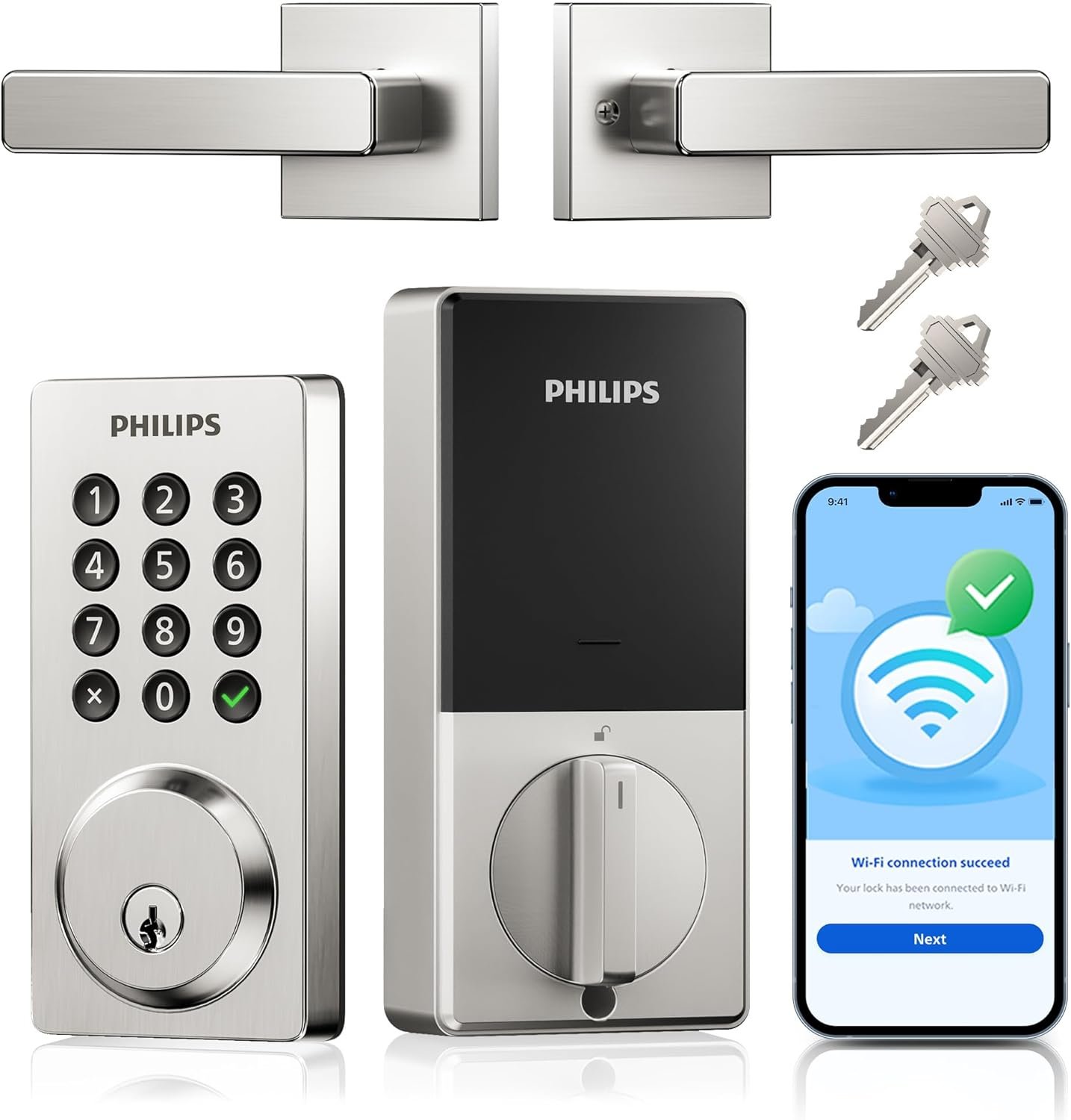
- Connectivity Protocol: Built-in IEEE 802.11 b/g/n (2.4GHz) WiFi for direct network integration, eliminating the need for a separate hub. Remote management is facilitated via the Philips Home Access App, providing real-time status updates, granular access permission controls, immediate notifications, and a comprehensive event log. Supports voice command integration with Amazon Alexa and Google Assistant for locking/unlocking operations, contingent on active network and internet connectivity.
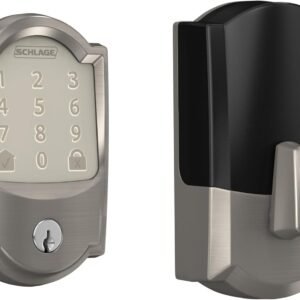
- Access Authentication Methods: Offers four primary entry vectors: traditional physical key override, secure numeric passcodes via tactile physical buttons (supporting up to 100 programmable codes including permanent, one-time, and time-sensitive variants), remote mobile application control, and voice commands through linked smart assistants. The design choice of physical buttons over touchscreens suggests an emphasis on tactile reliability and reduced susceptibility to forensic analysis via smudges.
- Security Automation & Monitoring: Features an adjustable auto-lock mechanism configurable from 10 to 180 seconds post-closure via the mobile application, significantly enhancing passive security posture. The system provides immediate notifications for lock status changes and maintains a comprehensive event history log within the application, critical for auditing access attempts and successful entries.
- Power Source & Endurance: Operates on eight (8) AA alkaline batteries (not included). Advertised battery life extends up to 6 months under a typical usage profile of 20-30 operations per day. An essential low-battery alert system activates an audible beep when charge drops below 10% and dispatches push notifications via the Philips Home Access App, mitigating unexpected power loss scenarios.
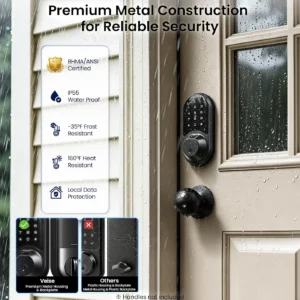
- Environmental Durability: Rated to IP54 standards, signifying robust protection against dust ingress sufficient to prevent operational interference and resistance to water splashes from any direction. This rating makes it suitable for protected exterior placements or environments with high humidity, though not for direct submersion or continuous heavy rainfall.
- Encryption & Data Security: Critically, the provided product details offer no specific information regarding the encryption protocols (e.g., AES-128, TLS 1.2/1.3 for WiFi communications) or secure element integration employed. This omission is a significant concern from a security-focused perspective, as the absence of explicitly defined robust encryption standards introduces potential vulnerabilities for interception of access codes and control commands.
Real-world Reliability
The reliance on 8 AA batteries ensures independent operation of the core locking mechanism during grid power outages, a crucial design choice for maintaining physical security without external electrical dependency. While physical keys and locally programmed passcodes remain fully functional during network interruptions, advanced features such as remote app control, voice commands, and real-time notifications are rendered inoperable. The IP54 rating offers adequate protection against dust and splashing water for typical residential outdoor exposure not subjected to direct, heavy precipitation, though extreme temperature fluctuations could still compromise its electronic integrity and operational longevity.
Who is this for?
This lock is ideal for homeowners prioritizing direct Wi-Fi integration and remote access control, seeking an immediate security upgrade with local battery backup.