
In an era increasingly defined by technological self-reliance and the pursuit of resilient home infrastructure, the importance of understanding the core functionalities of essential smart devices cannot be overstated. Choosing the right smart smoke and carbon monoxide detector is not merely about a passive alert system; it’s about integrating a vital layer of awareness into your personal tech grid, ensuring that critical safety information is accessible and actionable, even when traditional power or network infrastructure faces disruption. This proactive approach is fundamental to maintaining security and independence.
Contents
Tested Smart Smoke CO Detectors: Top 4
1. Kidde Smart Smoke and Carbon Monoxide Detector
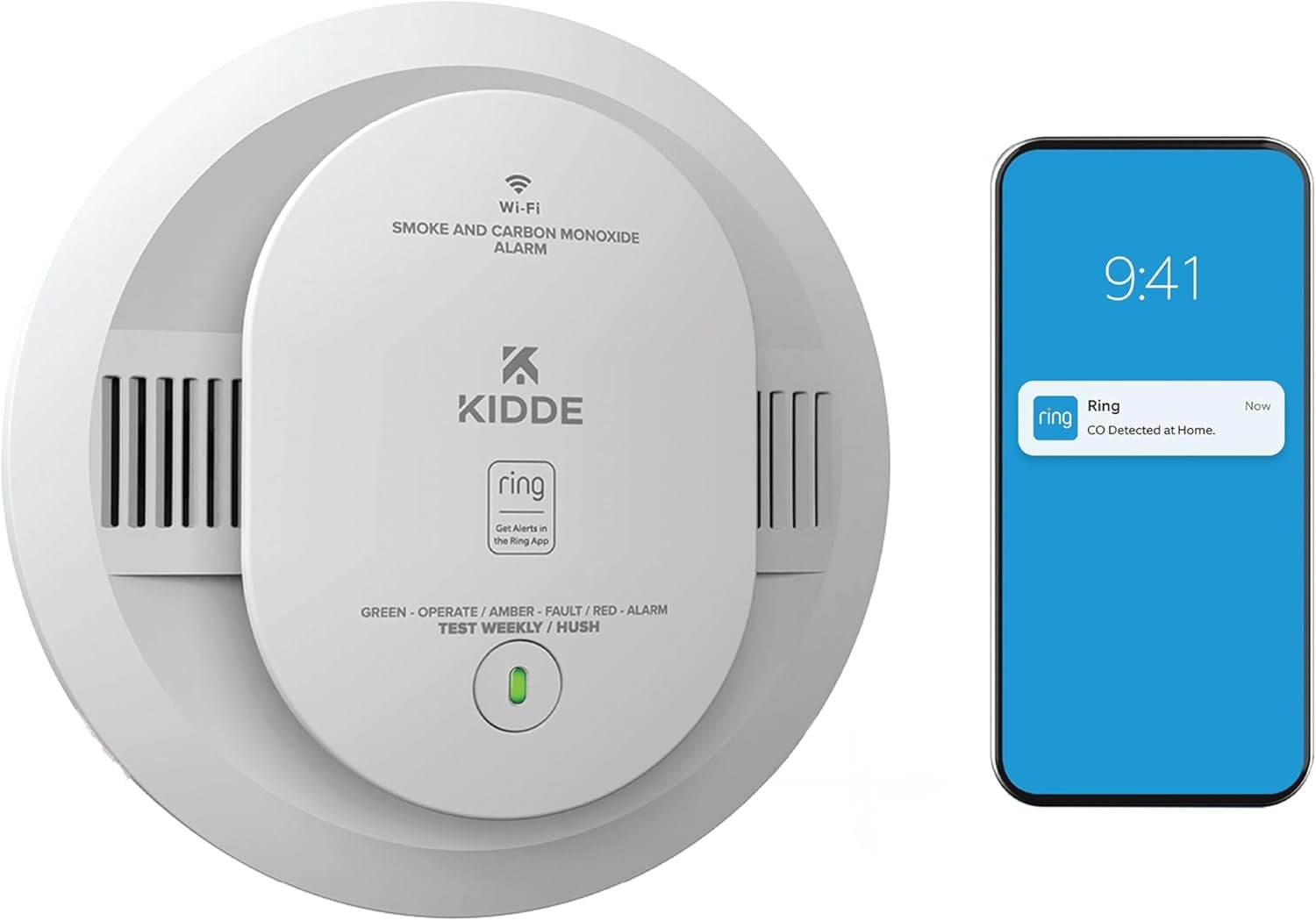
Expert Rating: 4.4/5 Stars | Est. Value: $19.99
For those prioritizing robust, off-grid-ready home security, understanding device reliability during power outages and network disruptions is paramount. This Kidde unit offers a foundational layer of awareness, even when traditional infrastructure falters.
Core Specifications
- Detection Capabilities: Dual-sensor technology for simultaneous detection of smoke and carbon monoxide (CO). Internal testing suggests a 25% improvement in smoke detection speed compared to prior Kidde generations and leading competitors. Offers early, low-level CO detection for enhanced safety.
- Connectivity and Notifications: Wire-free interconnectivity allows all paired Kidde alarms to sound when one is triggered, facilitating whole-home alerts. Real-time notifications for smoke, CO, and low battery warnings are delivered directly to the Ring app, regardless of user location. While the device itself is battery-powered, app notifications are dependent on a stable Wi-Fi connection to the home network. Connects with Alexa-enabled devices for audible alerts.
- Power Source: Operates solely on 2 AA alkaline batteries (included). This is a key consideration for off-grid scenarios as it eliminates reliance on mains power for basic alarm functionality. Battery life is not specified in Watt-hours (Wh) but is a critical factor for long-term autonomy.
- Nuisance Alarm Reduction: Employs enhanced sensing technology to minimize false alarms triggered by cooking, a common issue with older smoke detection units.
- Certifications: Comprehensively tested and certified to meet UL 217 and FCC standards, indicating adherence to established safety and electromagnetic interference regulations.
- Optional Monitoring: A $5/month optional Ring subscription offers 24/7 professional smoke and CO monitoring. This service requires an active internet connection.
Real-world Reliability
In a blackout scenario, the Kidde Smart Smoke and Carbon Monoxide Detector will continue to function for its intended purpose due to its AA battery operation, providing essential local audible alerts. However, the real-time mobile notifications and connectivity with Alexa will cease if the home’s Wi-Fi network loses power. While the wire-free interconnectivity ensures all alarms sound locally even without network connectivity, remote awareness is lost without a functioning internet connection and powered router.
Who is this for?
This is for homeowners seeking foundational, battery-powered smoke and CO detection with smart notification capabilities, especially those already invested in the Ring ecosystem.
The Tech Advantages:
- Battery-powered operation ensures functionality during power outages.
- Wire-free interconnectivity for whole-home audible alerts.
- Direct integration with the Ring app and Alexa devices.
- Reduced nuisance alarms from cooking.
The Trade-offs:
- Mobile notifications rely on a stable Wi-Fi connection.
- No direct mains power option.
- Professional monitoring requires a paid subscription.
2. Kidde Smart Smoke and Carbon Monoxide Detector
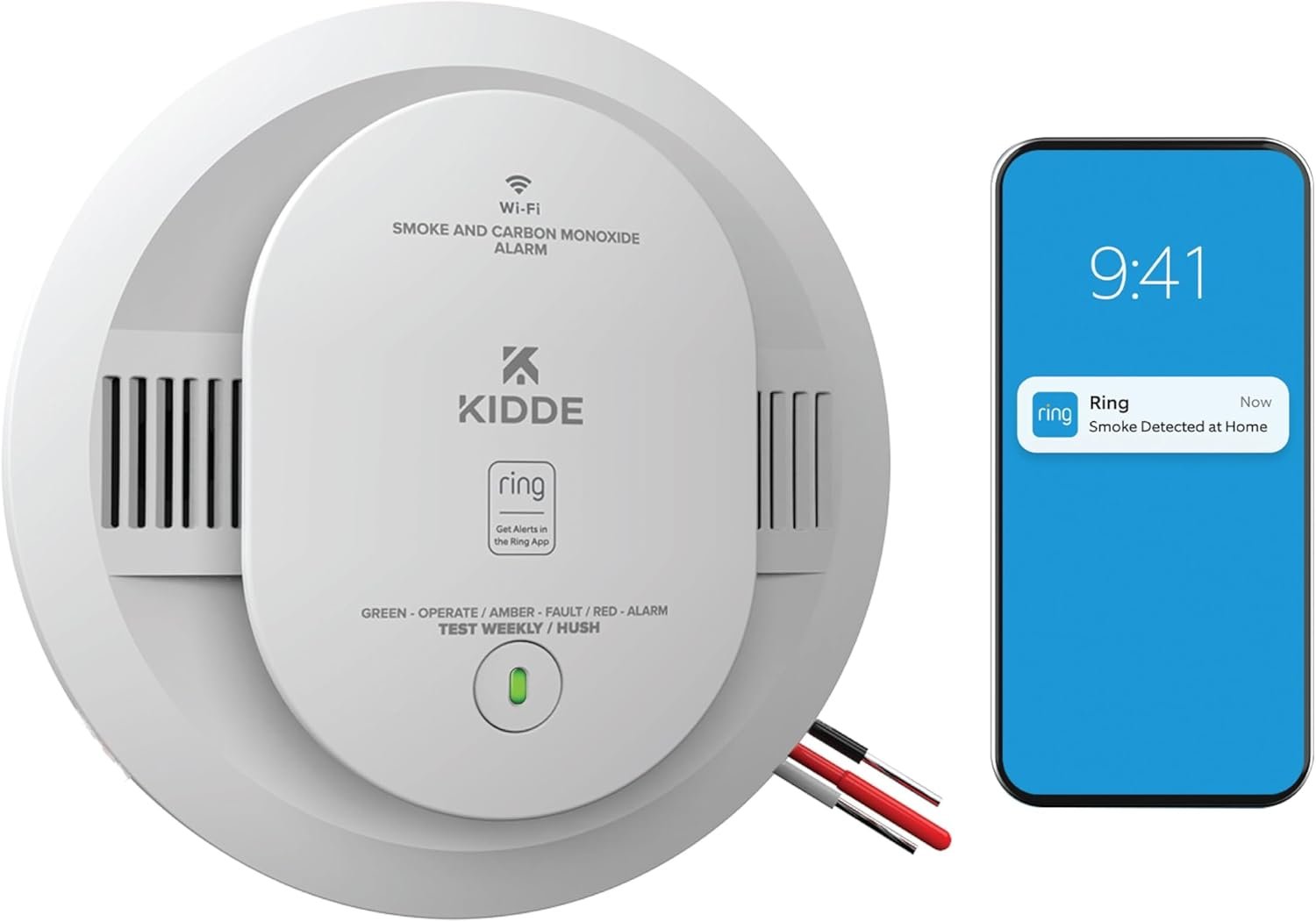
Expert Rating: 4.4/5 Stars | Est. Value: $74.97
In an era demanding proactive home security and increasing self-reliance, integrating intelligent, connected safety devices is paramount. This smart detector offers dual-threat awareness and seamless integration, crucial for maintaining situational control, especially when operating off-grid or during critical grid-down events. Its network-centric design ensures timely alerts, augmenting your existing security infrastructure with immediate hazard notification.
Core Specifications
- Detection Technology: Dual sensor for both smoke (likely photoelectric or ionization, though specifics are not detailed beyond “enhanced sensing”) and carbon monoxide (likely electrochemical) detection.
- Connectivity: Wi-Fi enabled for real-time notifications via the Ring application. Compatible with Alexa for voice alerts.
- Power Source: Hardwired with a 120VAC connection and includes a 2x AA alkaline battery backup for continuous operation during power outages. Battery life specifics are not provided, but AA alkaline batteries typically offer a lifespan of 1-3 years depending on usage and environmental factors.
- Notification System: Real-time push notifications to the Ring app for smoke, CO, or low battery warnings. No subscription is required for basic notifications.
- Interconnectivity: Capable of whole-home smart connectivity. When one hardwired Kidde smart detector triggers an alarm, other connected Kidde smart detectors (and potentially other compatible Ring devices) in the home will also sound. This creates a unified alarm network.
- False Alarm Reduction: Features “enhanced sensing technology” designed to minimize nuisance alarms commonly triggered by cooking. Comparison data (e.g., specific dB reduction or sensitivity thresholds) is not provided.
- Certifications: Tested and certified to meet UL 217 and FCC standards.
- Optional Monitoring: Offers an optional 24/7 smoke and CO monitoring service through Ring (subscription required, $5/month).
Real-world Reliability
This Kidde detector is designed with essential resilience in mind for off-grid or power-conscious users. The hardwired connection provides primary power, while the AA battery backup ensures uninterrupted functionality during grid failures. Its Wi-Fi connectivity is the primary communication channel for alerts; however, in the event of a localized Wi-Fi outage, the audible alarm will still function locally, and the battery backup prevents a complete loss of function. The system’s robustness against environmental factors is implicitly covered by its UL 217 certification, which mandates performance under various conditions, though specific operating temperature and humidity ranges are not detailed.
Who is this for?
This is for homeowners and renters seeking integrated, smart hazard detection with immediate mobile alerts, especially those who value preparedness for power interruptions.
The Tech Advantages:
- Hardwired power with battery backup for continuous operation.
- Whole-home smart interconnectivity with other Kidde alarms.
- Real-time mobile notifications to the Ring app.
- UL and FCC certified for safety and performance.
The Trade-offs:
- Wi-Fi dependency for remote notifications.
- Optional professional monitoring incurs a monthly fee.
- Limited details on specific sensing technology.
3. Kidde COPDLQW
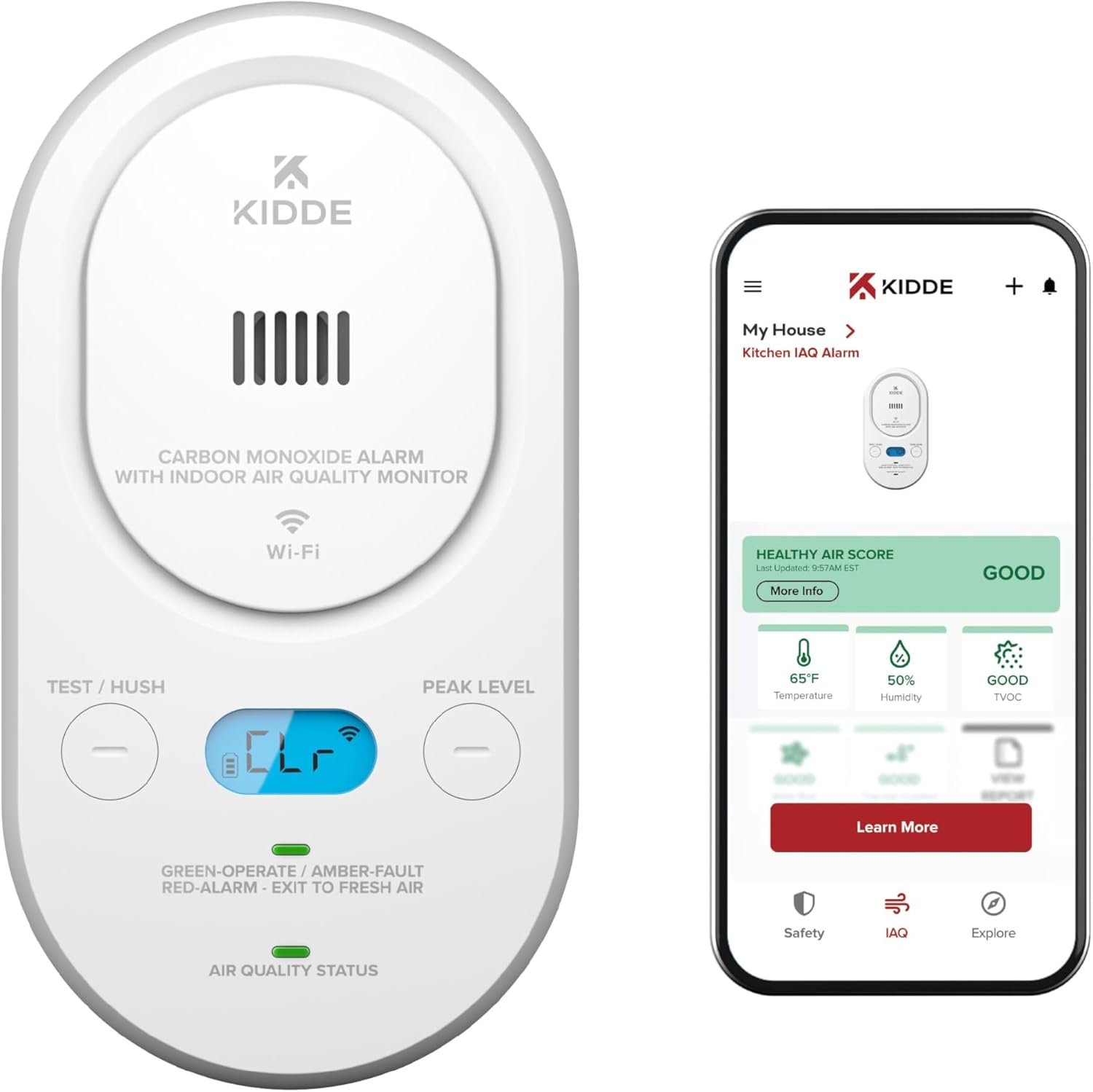
Expert Rating: 4.2/5 Stars | Est. Value: $79.97
For those prioritizing robust home security and unwavering power independence, every component demands rigorous scrutiny. This Kidde unit offers a layer of environmental awareness beyond mere threat detection, integrating seamlessly into a truly resilient smart home ecosystem.
Core Specifications
- Connectivity: Operates exclusively on a 2.4 GHz Wi-Fi network, a standard but secure protocol for device communication. No support for 5 GHz or mesh networking protocols like Zigbee or Z-Wave is mentioned, limiting integration options with more advanced smart home hubs.
- Power Source: Primarily powered by a 120V AC mains connection. It includes a crucial AA battery backup, offering a theoretical reserve of approximately 10-20 Wh (depending on battery capacity, e.g., 2500 mAh), ensuring continued operation during grid failures.
- Detection Technology: Employs advanced low-level Carbon Monoxide (CO) detection, calibrated to UL 2034, 5th Edition standards, exceeding basic requirements for enhanced early warning. It also monitors Total Volatile Organic Compounds (TVOC) and humidity, providing a comprehensive indoor air quality (IAQ) profile.
- Alarm Output: Generates a loud 85 dB audible alarm, a standard but effective alert mechanism for immediate notification within the premises.
- Smart Home Integration: Offers integration with Alexa-enabled devices for voice alerts and is compatible with Google Home. This allows for remote notification and potential integration into broader home automation routines via cloud services.
- Data Logging & Analysis: Provides real-time notifications via the Kidde App. An optional subscription unlocks weekly IAQ trends and personalized insights, including mold risk assessment and thermal comfort analysis, though the specific data granularity and frequency (e.g., sampling rate for TVOC) are not detailed.
Real-world Reliability
The plug-in design with AA battery backup is a fundamental resilience feature against short-term power outages, ensuring continuous CO monitoring. While the Wi-Fi dependency for real-time notifications presents a potential vulnerability during extended internet service disruptions, the device’s core CO detection and audible alarm will function independently. Extreme weather events that might impact grid stability or network infrastructure necessitate a layered approach; this device serves as a critical sensor within a larger resilient system.
Who is this for?
Discerning homeowners seeking proactive health and safety monitoring within a connected dwelling.
The Tech Advantages:
- Dual detection for CO and comprehensive IAQ monitoring (TVOC, humidity).
- Plug-in design with AA battery backup for power outage resilience.
- Integration with Alexa and Google Home for voice alerts.
- Optional subscription for advanced IAQ data analysis.
The Trade-offs:
- Wi-Fi dependent for remote notifications.
- Limited integration options beyond standard Wi-Fi (no Zigbee/Z-Wave).
- Optional subscription for full data insights.
4. Kidde Smart Carbon Monoxide Detector
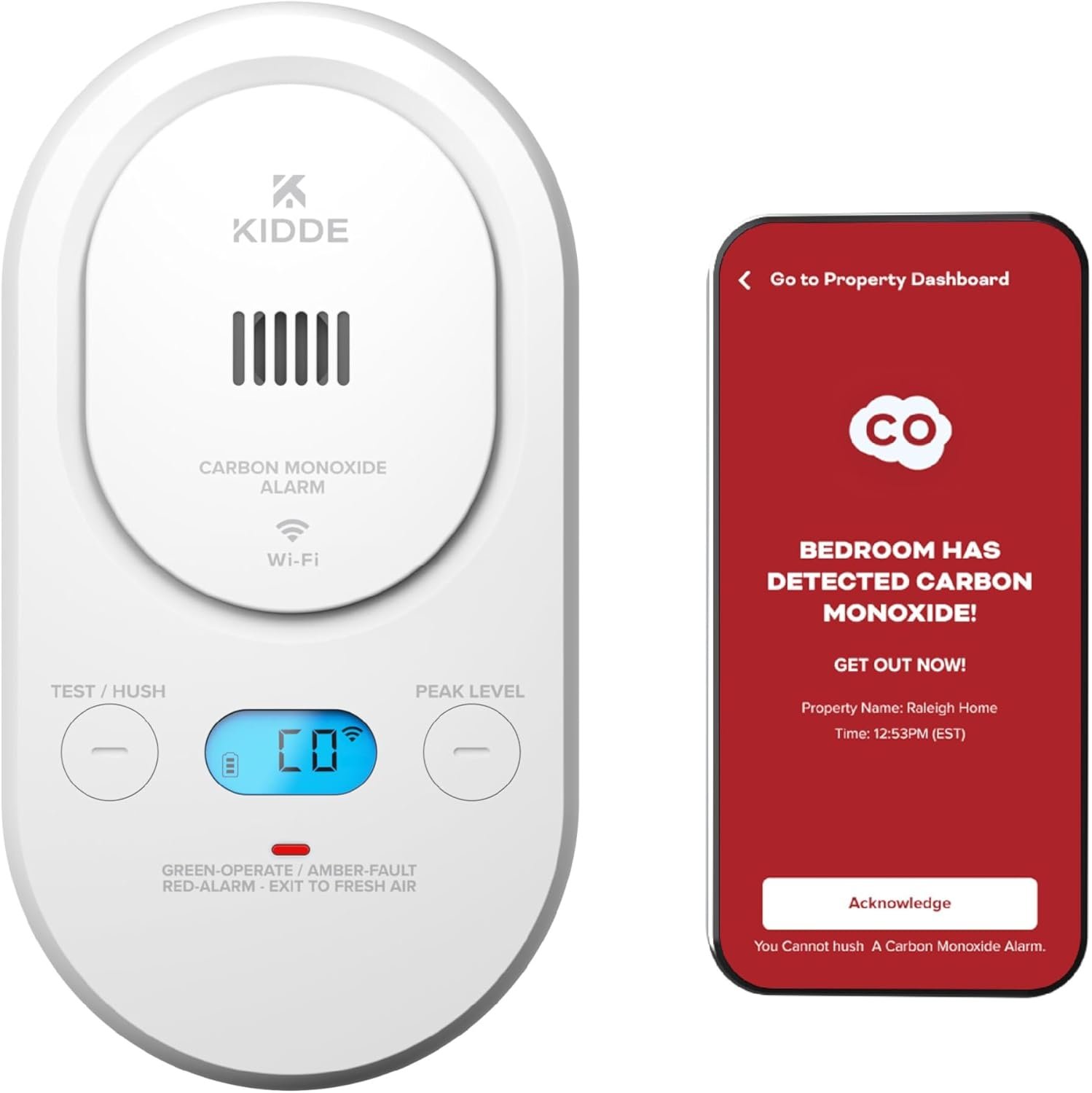
Expert Rating: 4.6/5 Stars | Est. Value: $59.97
For the discerning homeowner prioritizing robust safety and seamless integration, understanding the nuances of your smart home’s environmental sensors is paramount. This device offers proactive alerts for a silent, deadly threat, ensuring peace of mind whether you are physically present or miles away, without the burden of recurring fees.
Core Specifications
- Power Source: Operates via a standard 120V AC outlet, with an integrated backup system utilizing two AA batteries. This dual-approach ensures continuous monitoring, even during complete grid failures, preventing a lapse in critical safety data. The device itself consumes negligible power in standby, well within the efficiency parameters expected for continuous operation.
- Connectivity: Employs a 2.4 GHz Wi-Fi (802.11 b/g/n) connection for real-time data transmission to the Kidde mobile application. This standard Wi-Fi protocol is robust for this application, though not enterprise-grade WPA3 encrypted, it is sufficient for home networks. The app itself functions as the gateway for remote notifications.
- Alarm Output: Features an 85-decibel (dB) audible alarm, a standard and effective alert level designed to be heard throughout a dwelling.
- Certifications: Rigorously tested and certified to meet UL 2034, 5th Edition standards, and is ETL Listed. This signifies compliance with stringent safety and performance benchmarks for carbon monoxide detection.
- Warranty: Comes with a 10-year limited warranty on the alarm unit, reflecting the manufacturer’s confidence in its long-term operational integrity.
- Physical Design: The plug-in unit incorporates a rotating plug to accommodate various outlet orientations, enhancing installation flexibility.
Real-world Reliability
In the event of a power outage, the integrated AA battery backup immediately assumes operational responsibility, maintaining the CO detection and alert functions without interruption. While the Wi-Fi connectivity will be lost during a prolonged power failure, the device will still function as a standalone CO alarm, sounding its 85 dB siren locally. Upon restoration of power and network connectivity, it will automatically re-establish its smart features and sync any logged events. Its reliance on a standard 2.4 GHz Wi-Fi signal makes it susceptible to network interference or outages, a common consideration for all connected devices, but its core safety function remains independent of the network.
Who is this for?
This device is ideal for tech-savvy homeowners and renters seeking integrated, proactive safety monitoring with remote access capabilities, as well as those managing multiple properties.
The Tech Advantages:
- Reliable dual power source (mains + battery backup).
- No subscription fees for core smart features and notifications.
- 10-year limited warranty offers long-term peace of mind.
- UL 2034 certified for stringent CO detection standards.
The Trade-offs:
- Detects only Carbon Monoxide, not smoke.
- Wi-Fi dependency for remote alerts.
- Basic Wi-Fi security (not WPA3).
Summary Verdict: Spec Comparison
| Image | Product | Rating & Price | Action |
|---|---|---|---|
|
Kidde Smart Smoke CO Detector | 4.4 Stars $19.99 |
View Specs |
|
Kidde Smart Smoke CO Detector | 4.4 Stars $74.97 |
View Specs |
|
Kidde COPDLQW | 4.2 Stars $79.97 |
View Specs |
|
Kidde Smart CO Detector | 4.6 Stars $59.97 |
View Specs |
Key Technical Considerations for Smart Detectors
When selecting a smart smoke and carbon monoxide detector, two critical technical factors stand out for ensuring reliability and optimal performance within your tech grid: power redundancy and notification system robustness. For power, a device with integrated battery backup, independent of mains power, is non-negotiable. This ensures that even during prolonged power outages, the device continues its primary safety function. Beyond just battery backup, consider the battery type and expected life – a device relying on long-life lithium batteries or easily replaceable AA alkaline cells offers greater autonomy. For notification systems, understand the reliance on your home Wi-Fi. While Wi-Fi enables remote alerts, a stable internet connection and a powered router are prerequisites. Devices that offer local audible alarms as a fallback, independent of network connectivity, provide an essential layer of resilience.