Technical Review & Analysis
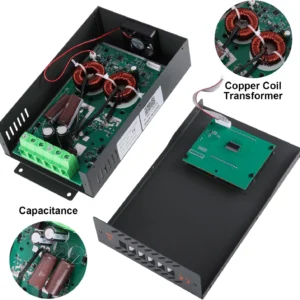
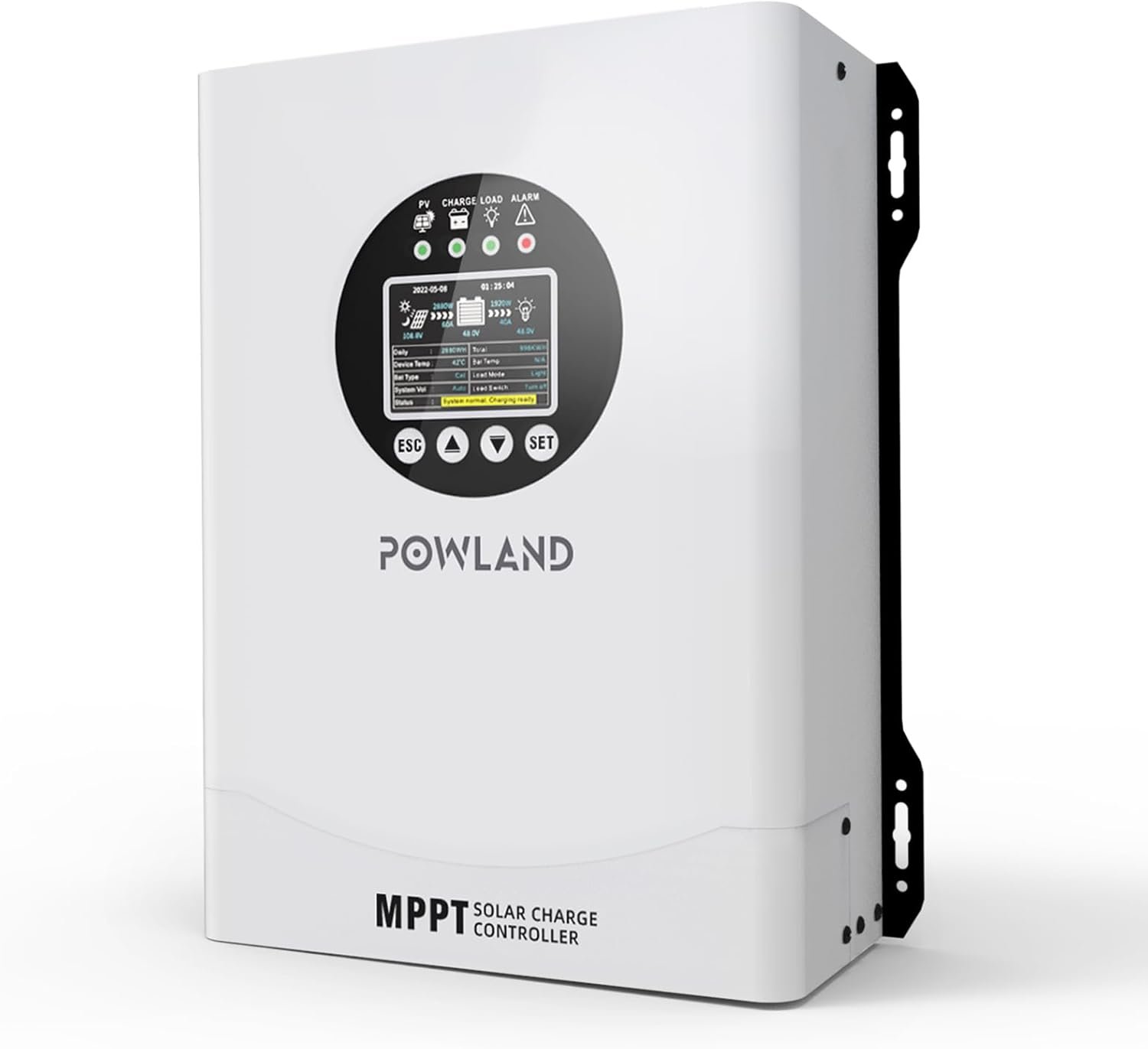
In critical off-grid and backup power applications, the charge controller is the foundational component for energy security and system longevity. Sub-optimal components can lead to catastrophic power failures and premature battery degradation. This analysis scrutinizes the POWLAND 120A MPPT controller’s technical merits for demanding installations.
Core Specifications
- Charging Capacity: The POWLAND 120A MPPT controller boasts a substantial 120-amp charging capacity, accommodating diverse off-grid power requirements. When operating at its lowest 12V nominal system voltage, this translates to a continuous charge output of up to 1440 Watts (1.44 kW). At its maximum 96V nominal system voltage, the output scales impressively to 11,520 Watts (11.52 kW), demonstrating significant power throughput for large-scale energy storage systems.
- Voltage Compatibility: This unit features an auto-sensing voltage range from 12V to 96V DC, encompassing 12V, 24V, 36V, 48V, 60V, 72V, 84V, and 96V nominal battery banks. This broad compatibility streamlines inventory for integrators and offers unparalleled flexibility for system design.
- MPPT Efficiency: Leveraging an advanced Maximum Power Point Tracking (MPPT) algorithm, the controller achieves up to 98% conversion efficiency. This translates to an energy harvest increase of approximately 30% compared to traditional Pulse Width Modulation (PWM) controllers under varying solar irradiance and temperature conditions, directly contributing to greater Watt-hour yield from the PV array.
- PV Input Voltage: The specified maximum input voltage of 230V (likely Open Circuit Voltage, Voc) for the solar array allows for more flexible PV string configurations, potentially reducing cable gauge requirements and associated line losses over longer distances.
- Battery Chemistry Support: The intelligent 3-stage charging protocol (bulk, absorption, float) is pre-configured for optimal performance and lifespan extension across a critical range of battery chemistries, including LiFePO4 (Lithium Iron Phosphate), AGM (Absorbed Glass Mat), GEL, and conventional flooded lead-acid batteries. This adaptability is crucial for systems where battery technology evolution or specific operational parameters dictate chemistry choice.
- Integrated Protections: Comprehensive internal safeguards include reverse polarity protection to prevent damage from incorrect wiring, overload protection to manage excessive current demands, and open-circuit protection to secure the system when PV modules are disconnected. These features are critical for system integrity and operational safety, minimizing downtime and hardware failure risks.
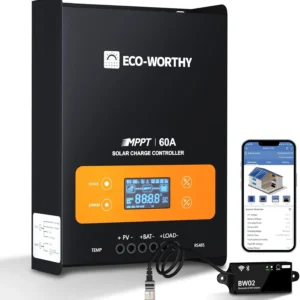
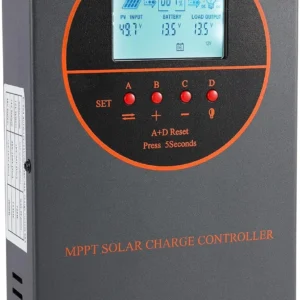
- Monitoring Interface: A high-resolution LCD provides real-time operational data, including PV input voltage and current, current charging mode/stage, and crucial system warnings or diagnostics. This on-site visibility is indispensable for proactive system management and troubleshooting, reducing reliance on external monitoring solutions.
Real-world Reliability
In scenarios demanding unwavering power, such as extended blackouts or isolated off-grid deployments, the POWLAND controller’s robust design and multi-stage charging algorithms contribute significantly to system stability. Its comprehensive protection suite mitigates common failure points, ensuring continuous battery charging even under variable environmental conditions or user error during maintenance. The intrinsic nature of an MPPT controller means it optimizes energy harvest despite fluctuating solar input, enhancing resilience against intermittent cloud cover or seasonal variations. While direct network connectivity for remote diagnostics is not specified, its on-device LCD offers sufficient real-time data for local system health assessments, crucial when external communication infrastructure is absent.
Who is this for?
This controller is ideally suited for medium to large-scale off-grid residences, professional RV solar power systems, and mission-critical mobile power stations requiring high power throughput and robust battery management.