In the rapidly evolving landscape of smart home technology, true autonomy and uncompromised security hinge on selecting the right central controller. As the Matter standard rapidly reshapes interoperability, discerning homeowners are seeking a smart home hub compatible with Matter that doesn’t just connect devices, but fortifies their digital perimeter. We dive deep into the crucial technical nuances, assessing how these hubs deliver local control, safeguard privacy, and ensure resilient operation, irrespective of external network fluctuations. Building an independent tech grid starts with a foundation that can withstand the unexpected, guaranteeing your smart home functions on your terms, always.
Contents
Forging Your Autonomous Grid: The Apex of Matter-Compatible Hubs
1. Home Assistant Green
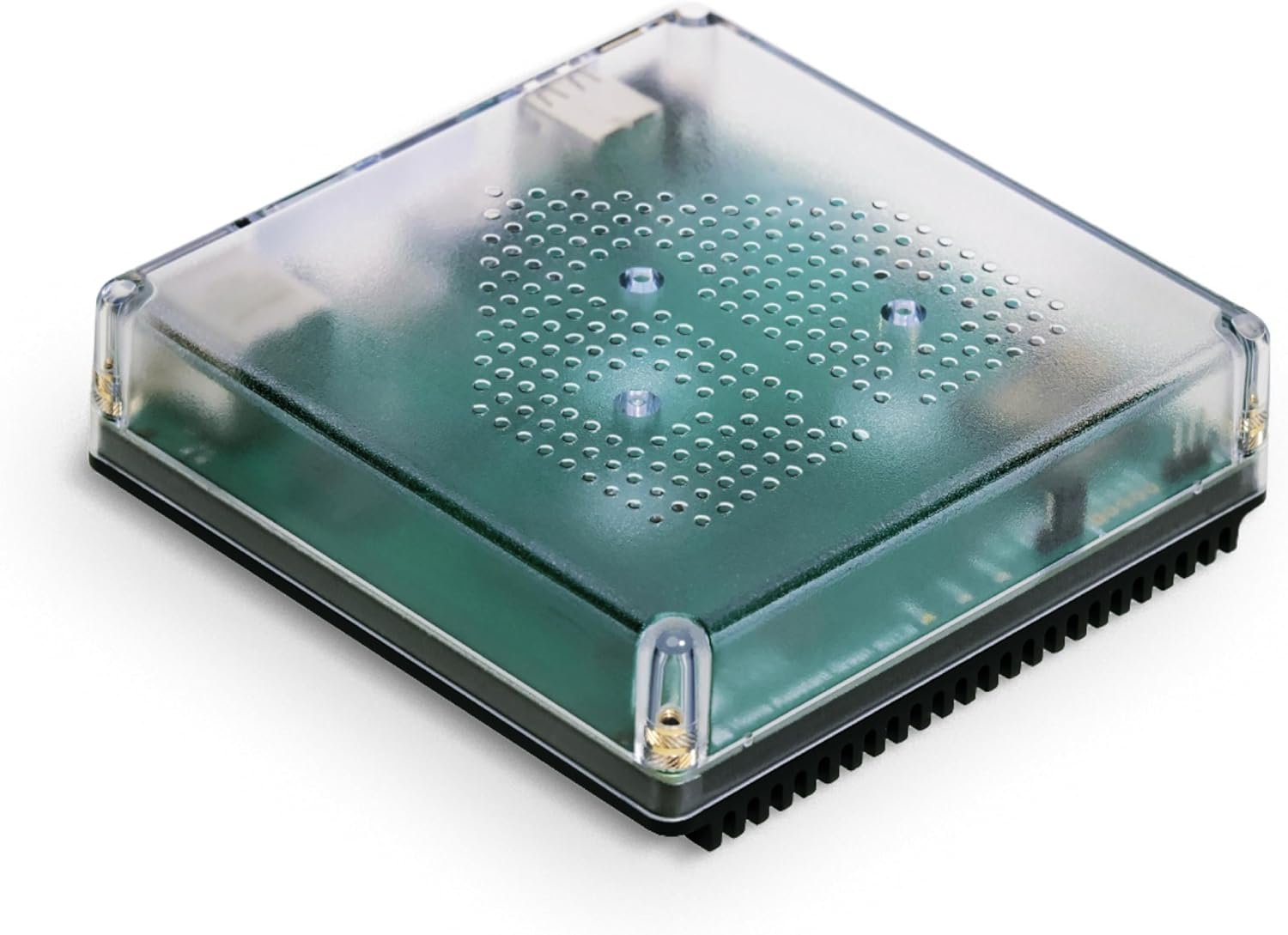
Expert Rating: 4.5/5 Stars | Est. Value: $219.00
In an era where digital privacy is paramount and energy independence increasingly critical, the Home Assistant Green emerges as a formidable local control plane for smart homes. This device establishes an uncompromised perimeter for your residential data, ensuring sensitive operational metrics remain within your physical domain. For off-grid installations, its exceptional power efficiency presents a compelling argument for self-sufficient, secure automation.
Core Specifications
- Processing Unit: Quad-core ARM System-on-Chip (SoC) paired with 4GB LPDDR4 RAM, delivering ample computational overhead for concurrent automation routines and data processing without performance degradation. This ensures responsive execution of complex scripting and sensor aggregation.
- Storage Architecture: Integrated 32GB eMMC flash storage provides a robust, low-latency platform for the Home Assistant OS and local databases. This capacity is sufficient for extensive logging and operational data without cloud dependency, enhancing data sovereignty.
- Power Consumption: Operating at an extremely efficient baseline of approximately 3 Watts under typical load. This translates to an annual power draw of roughly 26.28 kWh, making it exceptionally viable for solar-powered or battery-backed off-grid deployments where every Watt-hour (Wh) is critical.
- Network Interface: Equipped with a Gigabit Ethernet port for high-throughput, low-latency network communication, essential for critical security camera streams or rapid device command execution. The absence of integrated Wi-Fi minimizes potential wireless attack vectors by prioritizing wired security.
- Connectivity Expansion: Features multiple USB 2.0/3.0 ports for integrating dedicated Z-Wave, Zigbee, and Thread radio dongles. This allows for localized, secure mesh network formation, crucial for maintaining critical sensor data and actuator commands independently of internet connectivity.
- Data Residency & Encryption: Mandates strictly local data storage, preventing the egress of sensitive household operational data to third-party cloud servers. While specific encryption protocols for data at rest are implementation-dependent (via Home Assistant OS), TLS 1.3 is standard for secure remote access, ensuring confidentiality and integrity.
Real-world Reliability
Designed without active cooling components, the Home Assistant Green exhibits superior long-term reliability by eliminating mechanical failure points associated with fans. In scenarios involving grid instability or complete blackouts, its minimal power footprint (3W continuous) makes it an ideal candidate for integration with a small-scale Uninterruptible Power Supply (UPS) or direct DC battery power, maintaining critical security automations and local control for extended durations. Network drops are mitigated by its inherent local processing capability, ensuring device-to-device communication within the mesh networks (Z-Wave, Zigbee, Thread) remains operational even without external internet access, a critical feature for fail-safe security systems.
Who is this for?
This hub is essential for privacy-conscious homeowners, off-grid enthusiasts, and advanced users demanding robust local control over their smart home ecosystem.
The Tech Advantages:
- Powerful Quad-core ARM SoC with 4GB RAM for complex, responsive automations.
- Ultra-low 3W power consumption, making it ideal for off-grid or UPS-backed systems.
- Gigabit Ethernet for secure, high-throughput wired network communication.
- Highly expandable with USB ports for dedicated Z-Wave, Zigbee, and Thread dongles.
- Strictly local data storage ensures paramount privacy and data sovereignty.
The Trade-offs:
- Requires separate USB dongles for Z-Wave/Zigbee/Thread functionality.
- Best suited for advanced users due to extensive customization options and steeper learning curve.
- Absence of integrated Wi-Fi may limit placement flexibility for some users.
2. Aqara Smart Home Hub M3
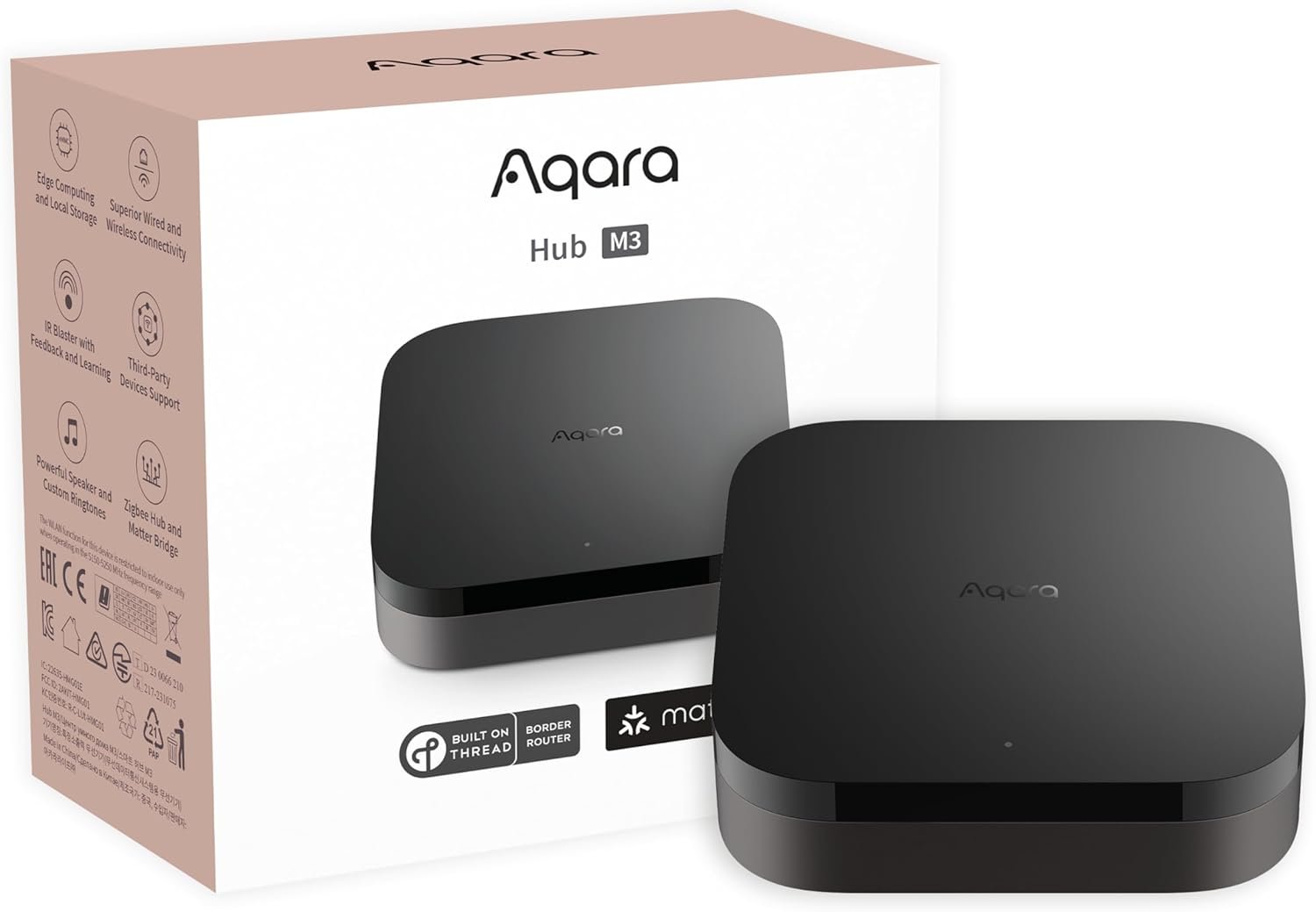
Expert Rating: 4.1/5 Stars | Est. Value: $159.99
In a volatile digital landscape where system dependencies can compromise critical security and operational continuity, a robust smart home foundation is paramount. The Aqara M3 hub aims to deliver this by emphasizing local execution and diverse connectivity, thereby reducing reliance on external cloud infrastructure – a crucial step towards true home autonomy and resilience. This device provides the architectural bedrock for sophisticated, self-sustaining intelligent environments.
Core Specifications
- Multi-Protocol & Matter Bridging: The M3 functions as a comprehensive multi-protocol gateway, incorporating a Matter bridge for unified control across disparate ecosystems. It supports the latest Thread protocol alongside Zigbee, capable of managing up to 127 Aqara Zigbee devices and an equivalent number of Thread devices (with necessary repeaters). This breadth ensures future-proofing and robust mesh networking capabilities, critical for stable sensor and actuator communication without excessive Wi-Fi channel congestion.
- Local Automation & Edge Processing: Operating as an Edge Hub, the M3 prioritizes on-device processing for automations, dramatically reducing latency and eliminating reliance on external cloud servers for core functionality. This architecture ensures security-critical triggers and responses remain operational even during internet service interruptions. Device migration from legacy Aqara hubs is supported, consolidating an existing ecosystem into a more resilient, locally-managed architecture.
- Network Resilience & Security: Connectivity is delivered via dual-band 2.4/5 GHz Wi-Fi, fortified with WPA3 encryption for enhanced network security, resisting advanced brute-force and dictionary attacks. Crucially, Power over Ethernet (PoE) capability offers a single-cable deployment solution for both power and data, minimizing wiring complexity and providing a robust, uninterruptible power source when paired with a compatible PoE switch or injector, vital for maintaining operational integrity during localized power anomalies or for installations requiring stringent power redundancy.
- Integrated IR Control with Feedback: A 360° IR blaster is integrated, capable not only of transmitting commands but also of providing feedback on traditional remote usage, a unique feature. It can expose IR-controlled AC units to the Matter ecosystem, functioning as an AC thermostat when coupled with an Aqara temperature sensor, though current Matter specifications limit exposure to a single AC device per hub instance.
Real-world Reliability
With its emphasis on local automation, the M3 significantly mitigates vulnerabilities inherent in cloud-dependent systems. Automations persist during internet outages, crucial for security protocols like motion detection and door lock triggers. The inclusion of Power over Ethernet (PoE) further enhances resilience, providing a single cable solution for both power and data, reducing points of failure during localized grid fluctuations or for deliberate network segmentation in secure environments. Its WPA3 Wi-Fi encryption safeguards against wireless intrusion, maintaining network integrity even under targeted cyber threats.
Who is this for?
This hub is engineered for discerning prosumers and system integrators demanding a resilient, multi-protocol automation backbone for advanced smart home and security deployments.
The Tech Advantages:
- Comprehensive multi-protocol support with Matter, Thread, and Zigbee bridging.
- Edge processing enables ultra-low latency local automations, reducing cloud dependency.
- Power over Ethernet (PoE) provides robust, single-cable power and data connectivity.
- Integrated 360° IR blaster with feedback, capable of exposing IR devices to Matter.
- Dual-band Wi-Fi with WPA3 encryption for enhanced network security.
The Trade-offs:
- Zigbee device limit of 127 devices may be restrictive for very extensive setups.
- Matter AC integration is currently limited to a single device per hub instance.
- Reliance on Wi-Fi (even with PoE) can introduce congestion in dense wireless environments.
3. Homey Pro mini
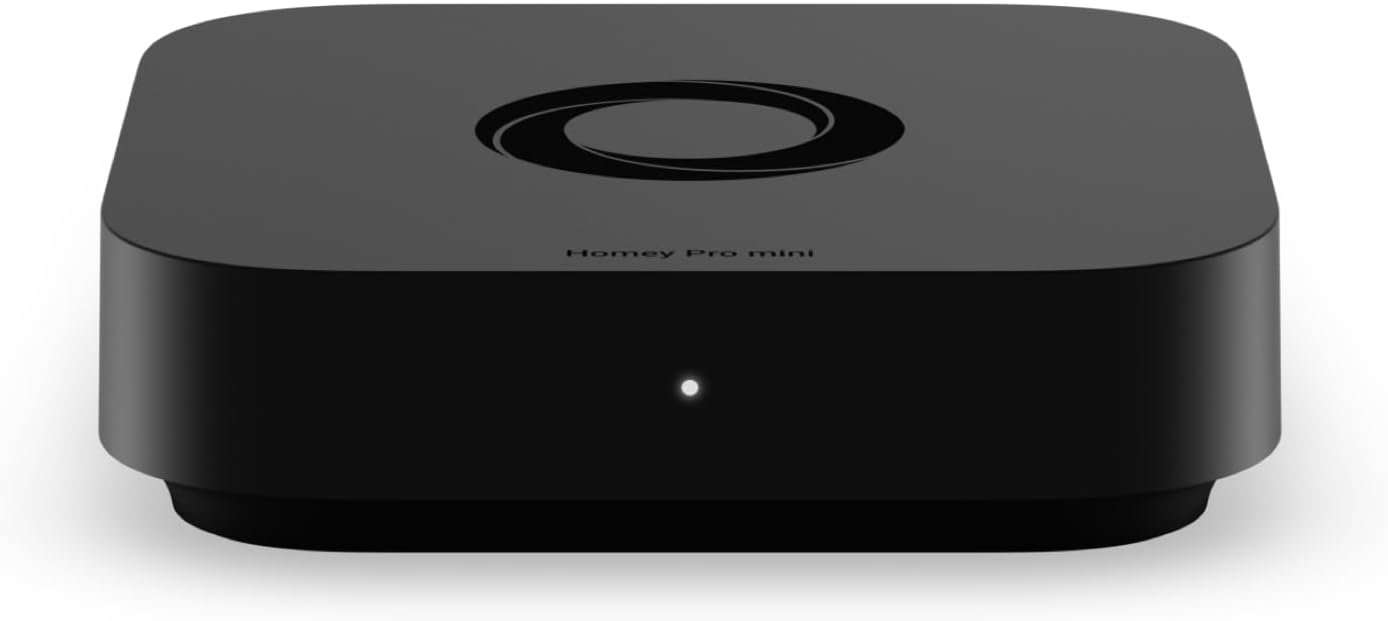
Expert Rating: 4.1/5 Stars | Est. Value: $199.00
The integrity of a smart home system hinges on its resilience against external network failures and its commitment to data sovereignty. A central hub capable of local processing and robust, multi-protocol communication is not merely a convenience, but a foundational requirement for true operational security and independence from transient cloud outages.
Core Specifications
- Connectivity Protocols: Supports Zigbee 3.0, Matter, Thread, and 100/1000BASE-T Ethernet natively. This comprehensive suite ensures broad compatibility with current and future IoT ecosystems. For extended protocol support including Z-Wave, Bluetooth, and Infrared, the Homey Bridge (sold separately) integrates seamlessly, expanding device reach. The inclusion of Matter and Thread is critical for future-proofing deployments.
- Local Processing & Execution: Core automations and device commands are processed locally, ensuring continued functionality during internet service provider (ISP) outages. This eliminates cloud latency and provides a critical layer of operational resilience, directly impacting system responsiveness and reliability.
- Data Security & Backup: Emphasizing a “Privacy First” approach, user data and automation settings can be backed up locally or encrypted to the cloud. This dual-redundancy model provides robust data protection and facilitates rapid system restoration, critical for maintaining configuration integrity.
- Energy Monitoring Integration: While not a power source, the hub’s capability to monitor energy usage from connected devices provides granular data for power consumption analysis, an essential feature for optimizing energy efficiency in any smart environment.
Real-world Reliability
In scenarios ranging from brief network drops to extended regional power outages (assuming auxiliary UPS power for the hub), the Homey Pro mini’s local processing engine ensures that predefined automations and device states persist. This localized execution prevents system degradation or complete operational failure due to external network dependency. Data integrity is maintained through secure local storage and encrypted cloud backup options, safeguarding configurations against unforeseen events and ensuring consistent performance even under degraded network conditions.
Who is this for?
For discerning homeowners and off-grid enthusiasts demanding resilient, privacy-centric smart home automation with minimal cloud dependency.
The Tech Advantages:
- Native support for key protocols: Zigbee 3.0, Matter, Thread, and Ethernet.
- Robust local processing ensures continued operation during internet outages.
- “Privacy First” approach with options for local or encrypted cloud data backup.
- Integrated energy monitoring provides granular data for power consumption analysis.
- Expandable with the Homey Bridge for additional protocols like Z-Wave and Bluetooth.
The Trade-offs:
- Z-Wave, Bluetooth, and Infrared protocols require the separate Homey Bridge.
- “Mini” designation might imply reduced processing power compared to the full Homey Pro.
- Setup and customization can be more involved for users unfamiliar with the Homey ecosystem.
4. Hubitat Elevation C-8 Pro
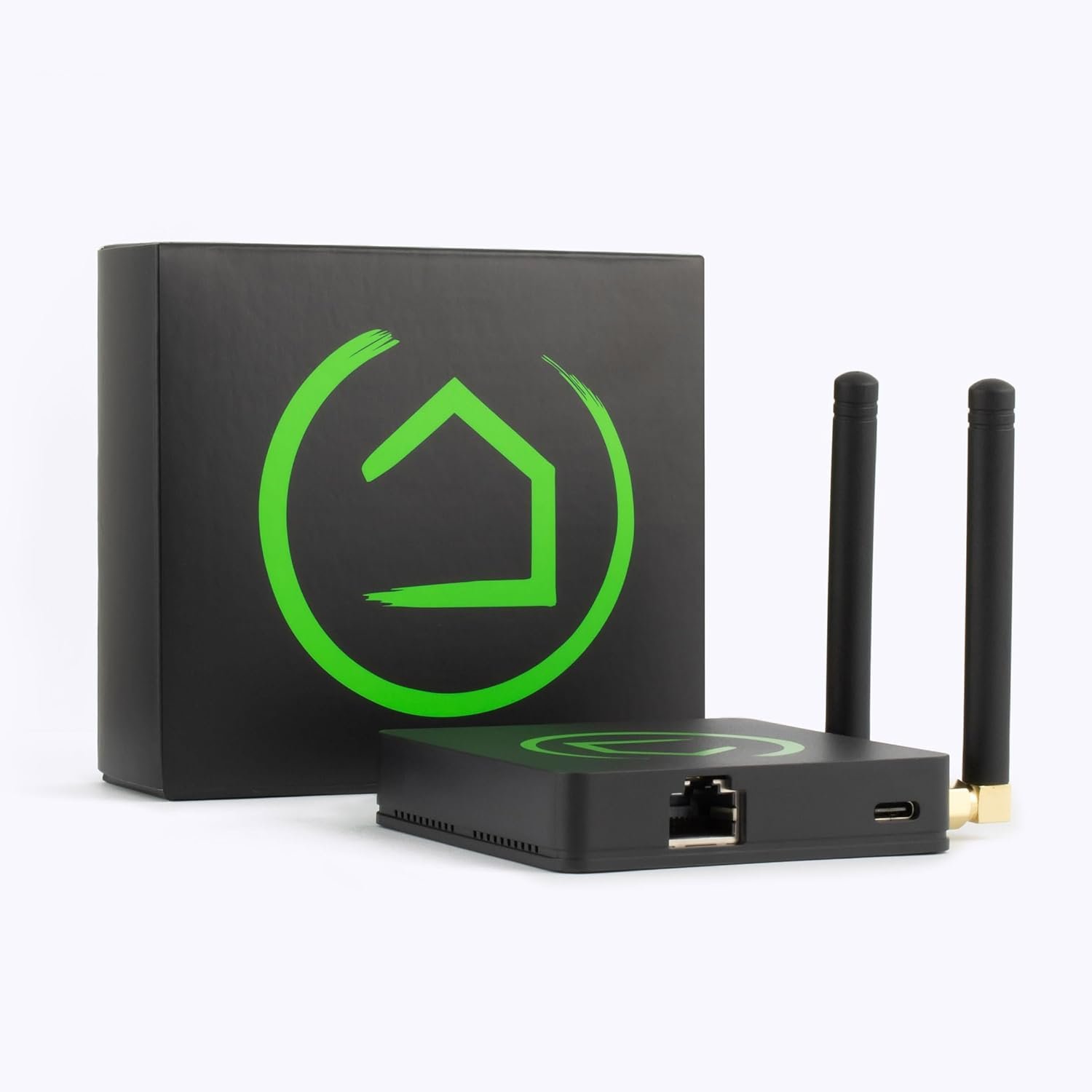
Expert Rating: 4.0/5 Stars | Est. Value: $169.95
In an era where home automation often signifies cloud dependency, the Hubitat Elevation C-8 Pro emerges as a critical component for true smart home sovereignty. It prioritizes local control, ensuring your security protocols and environmental controls remain operational regardless of external network stability or grid fluctuations. This is not merely convenience; it is operational resilience.
Core Specifications
- Local Processing Architecture: Employs an on-device automation engine, obviating the need for external cloud servers. This significantly reduces latency for critical security automations and ensures system functionality even during ISP outages, a fundamental differentiator for security and off-grid scenarios.
- Multi-Protocol RF Stack: Integrates Z-Wave 800 Series with Long Range (LR) capability for expanded network reach and enhanced signal robustness across larger properties, Zigbee 3.0 for broad device compatibility and mesh stability, Matter 1.5 for future-proofing and interoperability across ecosystems, and Bluetooth for localized accessory pairing.
- Security Protocol Integration: Supports local execution of security rules, allowing for robust, offline triggering of alarms, lock states, and lighting responses without reliance on potentially vulnerable cloud services, fortifying your perimeter against network failures.
- Continuous Platform Updates: Receives iterative software enhancements for expanded device compatibility and new protocol support (e.g., Matter 1.5, AI-assisted routines), extending hardware longevity and system adaptability without requiring new physical hardware.
Real-world Reliability
The Hubitat C-8 Pro’s core strength lies in its unyielding operational resilience. Its local processing architecture means that critical automations, from motion-activated lighting to door lock sequencing, execute without interruption during internet blackouts or degraded WAN conditions. This decentralized approach fundamentally mitigates the risks associated with cloud service dependencies, safeguarding both security systems and essential environmental controls against external network instability, a crucial factor often overlooked in consumer-grade smart home solutions. It ensures continuous functionality when network access is compromised, a non-negotiable for true smart home security.
Who is this for?
This hub is engineered for discerning users demanding robust, private, and resilient smart home automation, particularly those with critical security needs or partial off-grid power solutions.
The Tech Advantages:
- Dedicated local processing architecture ensures true smart home sovereignty and resilience.
- Advanced multi-protocol stack: Z-Wave 800 LR, Zigbee 3.0, Matter 1.5, and Bluetooth.
- Robust local execution of security protocols, independent of internet connectivity.
- Continuous platform updates extend hardware longevity and expand compatibility.
- Enhanced Z-Wave Long Range offers expansive coverage for larger properties.
The Trade-offs:
- User interface can have a steeper learning curve for beginners compared to more consumer-friendly options.
- Primarily community-driven support may be less direct than manufacturer-backed services.
- Relies solely on Ethernet for network connection, lacking integrated Wi-Fi for flexible placement.
Summary Verdict: Spec Comparison
| Image | Product | Rating & Price | Action |
|---|---|---|---|
|
HA Green | 4.5 Stars $219.00 |
View Specs |
|
Aqara M3 | 4.1 Stars $159.99 |
View Specs |
|
Homey Pro Mini | 4.1 Stars $199.00 |
View Specs |
|
Hubitat C-8 Pro | 4.0 Stars $169.95 |
View Specs |
The Architect’s Guide: Key Technical Factors for Your Matter Hub
Choosing a smart home hub compatible with Matter is more than just about connecting devices; it’s about building a robust, secure, and future-proof ecosystem. Our expert evaluation highlights two critical technical factors that dictate the long-term viability and performance of your smart grid:
1. Local Processing Architecture and Edge Computing
The fundamental distinction between a consumer-grade hub and a professional-grade solution lies in its processing architecture. A truly resilient smart home hub prioritizes local processing, meaning that core automations, security protocols, and device commands are executed directly on the device, not reliant on external cloud servers. This “edge computing” paradigm ensures your smart home remains fully functional even during internet outages or degraded network conditions. For mission-critical functions like security systems, environmental controls, or accessibility features, local processing eliminates latency, enhances responsiveness, and crucially, maintains operational sovereignty. When evaluating a smart home hub compatible with Matter, scrutinize its commitment to local execution as a non-negotiable feature for true independence and reliability.
2. Multi-Protocol Connectivity and Matter Bridging Efficiency
The Matter standard is designed to unify disparate smart home ecosystems, but the underlying communication protocols remain vital. An elite Matter home hub should offer a comprehensive multi-protocol stack, natively supporting Zigbee, Z-Wave (ideally 800 Series with Long Range), and Thread, in addition to its Matter capabilities. The efficiency of its Matter bridging is paramount, as it dictates how seamlessly non-Matter legacy devices are exposed to the broader Matter ecosystem. Look for hubs that clearly articulate their support for various protocols, their capacity for managing a large number of devices across different networks, and their ability to bridge these effectively. This ensures broad device compatibility, reduces vendor lock-in, and future-proofs your investment against the inevitable evolution of smart home technology, allowing your independent tech grid to scale and adapt.