
In the ever-evolving landscape of smart home technology, the backbone of your connected ecosystem is its ability to communicate reliably and securely. Choosing the right zigbee motion sensor for smart home isn’t just about detecting movement; it’s about building a resilient, independent tech grid that prioritizes your privacy and operational autonomy. For those who demand robust security, energy efficiency, and seamless integration, Zigbee sensors offer a compelling solution, forming a low-power, mesh network that can function even when internet connectivity falters.
Contents
Data-Driven: 4 Top Zigbee Sensors for Your Smart Home
1. Aqara Motion Sensor P1
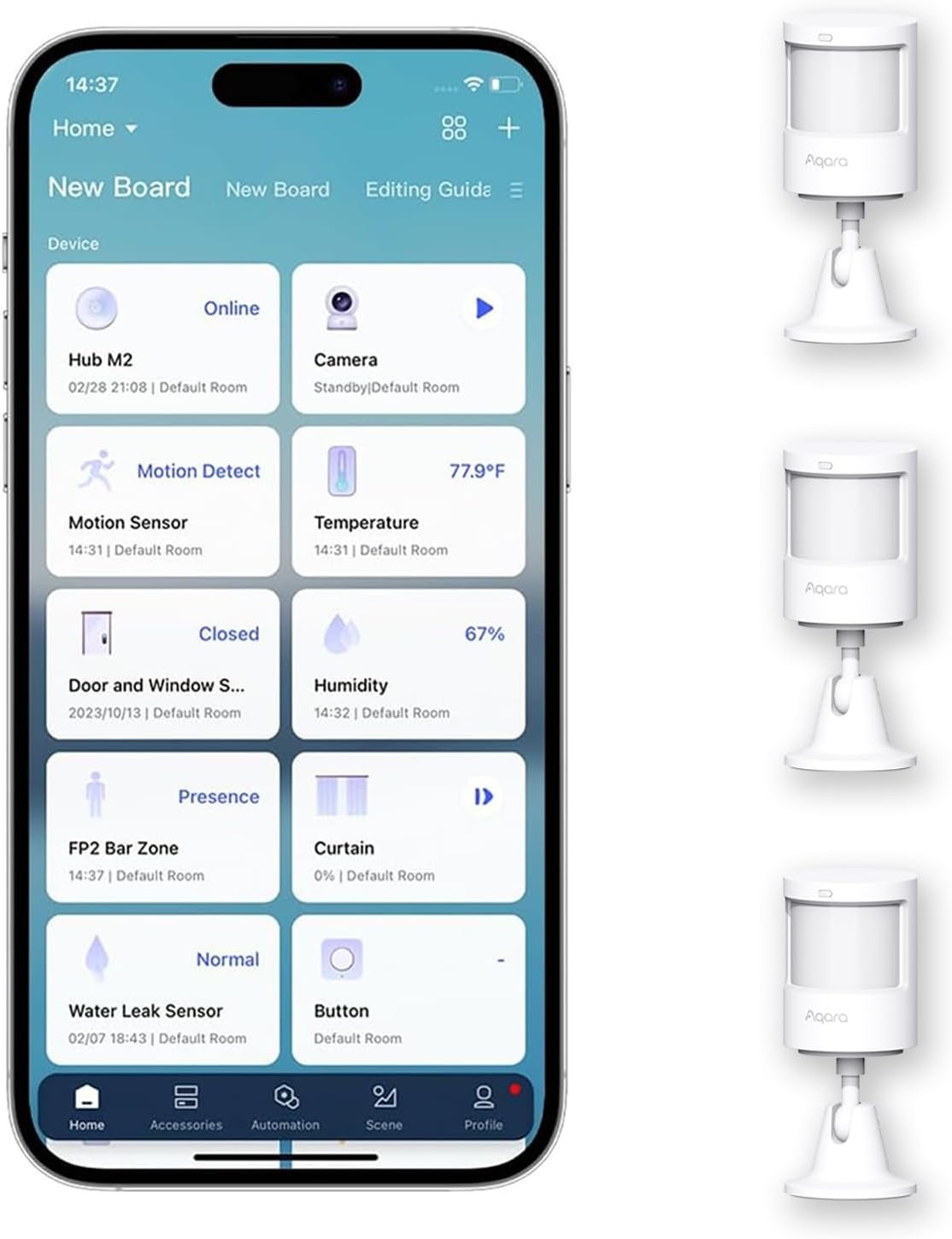
Expert Rating: 4.3/5 Stars | Est. Value: $52.99
Robust perimeter security mandates unwavering detection. The Aqara Motion Sensor P1 delivers precision environmental monitoring, critical for fortifying both digital and physical security postures within any advanced smart home ecosystem. Its technical specifications position it as a foundational component for reliable automation and threat response.
Core Specifications
- Wireless Protocol: Utilizes Zigbee 3.0, ensuring a robust, low-power mesh network. Requires an Aqara Zigbee 3.0 hub (e.g., M2, M1S, E1, M1S Gen2, G2H Pro, G2H, G3) for operation; not compatible with generic Zigbee hubs. Hubs require a secured 2.4 GHz Wi-Fi connection (G3 supports 2.4/5 GHz), with the M2 hub additionally supporting a wired Ethernet RJ45 connection for enhanced network stability. Unofficial third-party Zigbee dongle support (e.g., Zigbee2MQTT) may result in limited functionality.
- Power Source & Longevity: Engineered for extended operational periods, boasting an impressive 5-year battery life. This design choice minimizes maintenance cycles, critical for remote or low-access installations. Performance is maintained across a range of temperatures, supporting consistent functionality in varied climates.
- Detection Field & Customization: Offers a wide 170° field of view (FoV) up to 4 meters, narrowing to 150° FoV for distances up to 7 meters. The sensor integrates with a flexible 360° stand, permitting precise angular adjustment to optimize coverage and mitigate false positives.
- Configurable Detection Parameters: Detection timeout is precisely adjustable via the Aqara Home application, ranging from 1 to 200 seconds, enabling fine-tuning for energy conservation or rapid event capture. Three sensitivity levels (high, medium, low) are available to calibrate detection distance to environmental requirements.
- System Integration: Natively compatible with Aqara Home, HomeKit, Alexa, IFTTT, and Home Assistant. Note that ambient light sensitivity functionality is currently unavailable when integrated with HomeKit and Alexa. Optimal performance necessitates regular hub firmware updates.
- Physical Dimensions: Compact form factor measuring approximately 37mm (D) x 55mm (W) x 70mm (H), facilitating discreet placement.
Real-world Reliability
Operating on Zigbee 3.0, the Motion Sensor P1 maintains local communication with its Aqara hub during Wi-Fi or internet outages, provided the hub supports local automations. This ensures critical security triggers and local smart home routines persist even when external network dependencies fail. The exceptional 5-year battery life, coupled with robust performance in low-temperature conditions, mitigates maintenance burdens and enhances operational resilience, a key factor for sustained security monitoring in off-grid or remote applications. The M2 hub’s Ethernet option further hardens the system against wireless network instability.
Who is this for?
Ideal for homeowners integrating robust, localized motion detection into a secure, multi-protocol smart home automation framework.
The Tech Advantages:
- Zigbee 3.0 for a stable, low-power mesh network.
- Exceptional 5-year battery life reduces maintenance.
- Wide and adjustable field of view for precise coverage.
- Local automations remain active during internet outages.
- Extensive integration with popular smart home platforms.
The Trade-offs:
- Requires a specific Aqara Zigbee hub; not universally compatible with all Zigbee hubs.
- Ambient light sensitivity may be limited with certain integrations (HomeKit, Alexa).
- Third-party dongle support can be restricted.
2. Aeotec SmartThings Motion Sensor
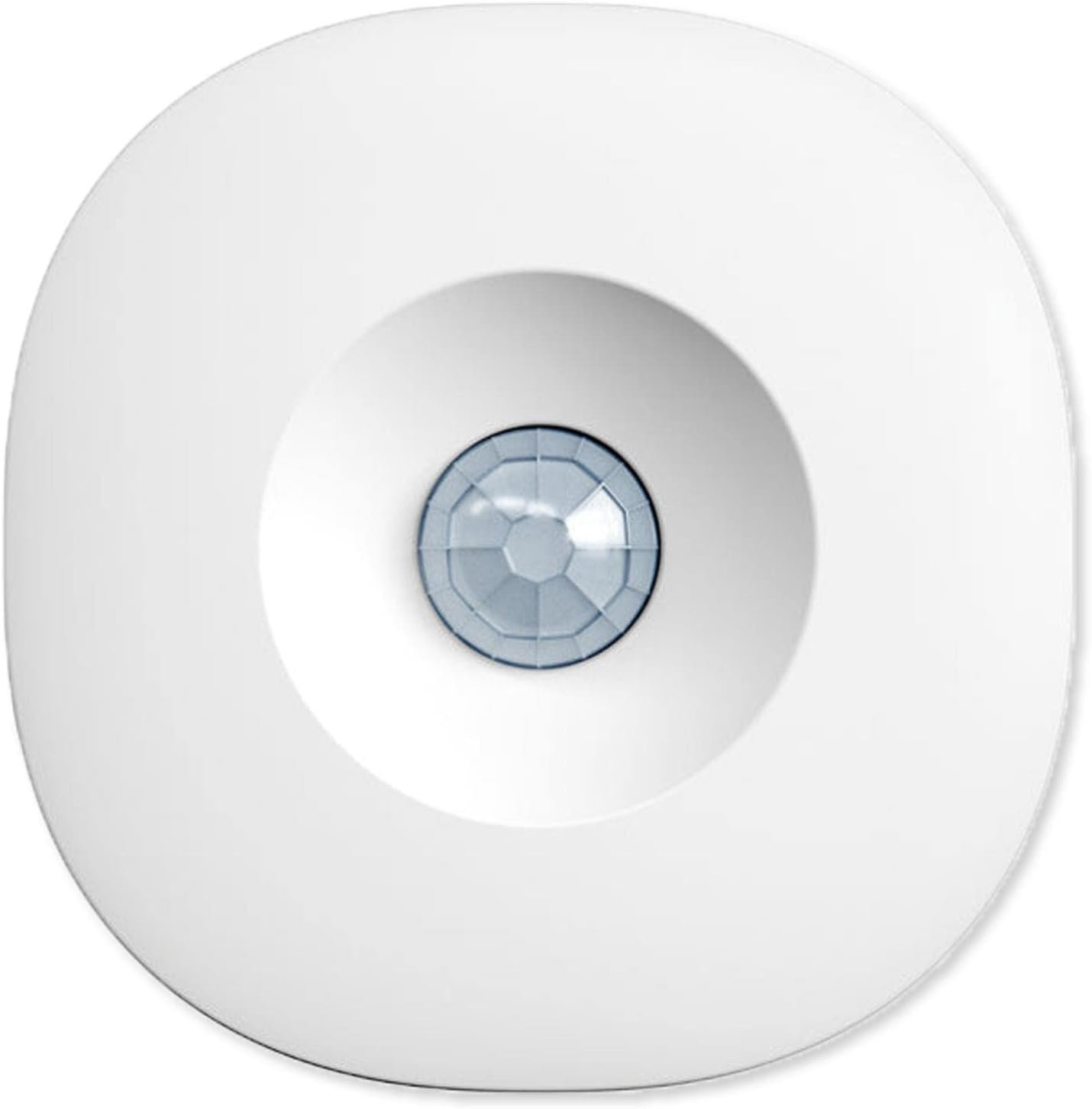
Expert Rating: 4.6/5 Stars | Est. Value: $48.99
In an era where digital vigilance is paramount, a reliable motion sensor forms the bedrock of an intelligent security ecosystem. For off-grid installations, every milliwatt counts, and precise occupancy detection can significantly extend operational independence by intelligently managing loads.
Core Specifications
- Wireless Protocol: Utilizes the Zigbee 3.0 standard, ensuring low-power, robust mesh networking capabilities essential for distributed sensor deployments.
- Detection Envelope: Offers a specified radial detection range of up to 15 feet (approximately 4.57 meters) complemented by a 120-degree horizontal angular field of view, providing broad area coverage.
- Mounting Mechanism: Features an articulated magnetic sphere mount, allowing for precise angular adjustment and environmental calibration to optimize detection zones.
- System Integration: Demands a dedicated Zigbee 3.0 compliant hub for operation, with verified interoperability across Aeotec and Samsung SmartThings ecosystems, as well as other compatible Zigbee coordinators.
- Power Management: Engineered for ultra-low quiescent current draw, typical of modern Zigbee sensors, facilitating prolonged operational periods on standard battery cells, thereby minimizing maintenance cycles.
Real-world Reliability
As a battery-powered Zigbee endpoint, the sensor’s operational continuity is intrinsically tied to its coordinating hub. During a grid power outage, while the sensor itself maintains detection capability, its ability to communicate status updates and trigger automations ceases if the central hub loses power or network connectivity. Within a properly configured Zigbee mesh, network stability generally exhibits resilience to minor disruptions; however, a complete network failure or hub isolation renders the sensor functionally inert. For environmental resilience, adequate ingress protection (IP rating) would be critical for any outdoor deployment, a specification typically absent for standard indoor sensors, implying its design for conditioned interior spaces.
Who is this for?
This device is suited for technical users implementing secure, energy-efficient automation in modern residential or small commercial indoor environments integrated with a robust Zigbee hub.
The Tech Advantages:
- Zigbee 3.0 for reliable low-power mesh networking.
- Magnetic sphere mount allows for flexible positioning.
- Designed for energy efficiency, ensuring long battery life.
- Good interoperability within Aeotec and SmartThings ecosystems.
The Trade-offs:
- Requires a compatible Zigbee hub; does not operate standalone.
- Detection range (15 feet) is moderate.
- Functionality is dependent on the hub’s power and network status.
- Primarily designed for indoor use.
3. SONOFF SNZB-06P
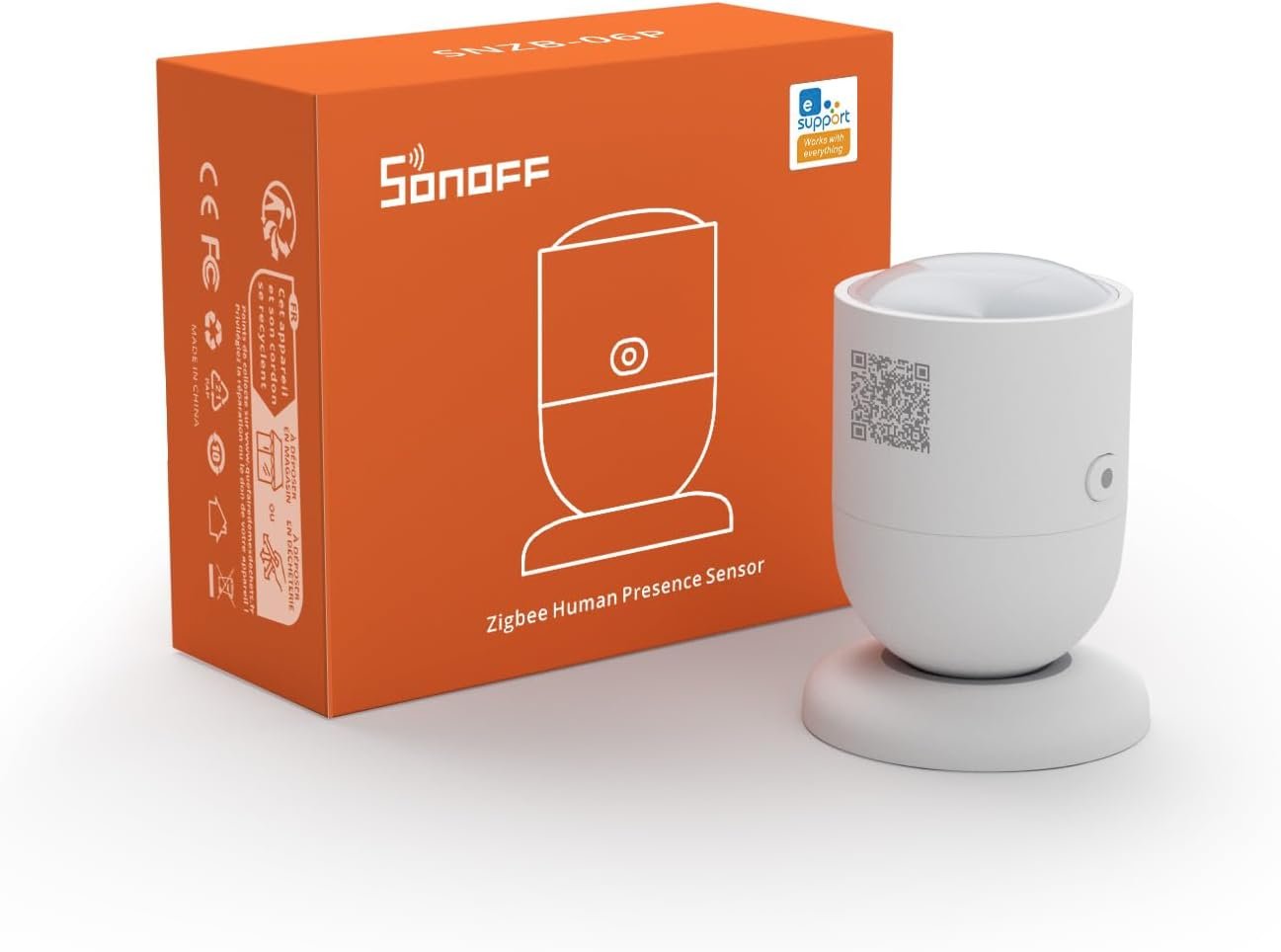
Expert Rating: 4.0/5 Stars | Est. Value: $49.99
In critical smart home and off-grid scenarios, reliable, localized presence detection is paramount for both security protocols and energy load management. The SONOFF SNZB-06P offers a robust solution, leveraging advanced radar technology to ensure accurate occupancy monitoring, directly impacting operational efficiency and resource conservation.
Core Specifications
- Detection Technology: Utilizes a 5.8GHz centimeter-wave (cmWave) radar array, enabling highly granular detection of both dynamic motion and static human presence, a significant advancement over traditional Passive Infrared (PIR) sensors.
- Connectivity Protocol: Adheres to the Zigbee 3.0 standard, ensuring broad compatibility with a range of certified Zigbee coordinators including SONOFF’s iHost and ZBBridge Pro, alongside third-party hubs like the Echo Plus 2nd Gen. This facilitates a robust mesh network architecture.
- Integrated Sensing: Incorporates an ambient light sensor, allowing for intelligent automation rules where presence-triggered actions (e.g., illumination) are conditional upon prevailing light levels, thereby optimizing energy consumption.
- Local Scene Processing: Supports direct, hub-based Zigbee scene execution. This critical feature ensures that pre-configured automation sequences, such as lighting control based on presence, remain fully operational irrespective of internet WAN connectivity.
Real-world Reliability
The SNZB-06P’s reliance on the Zigbee 3.0 protocol and its inherent local scene processing capabilities provides a significant advantage in maintaining system integrity. During grid power interruptions or internet service outages, localized Zigbee scenes continue to function autonomously, ensuring critical automation—such as security zone monitoring or essential lighting control—remains active without external dependencies. Its 5.8GHz radar is notably less susceptible to environmental factors like minor temperature fluctuations compared to passive infrared sensors, enhancing operational stability across varied conditions.
Who is this for?
This device is ideal for users implementing resilient smart home security, advanced energy management in off-grid cabins, or commercial light automation.
The Tech Advantages:
- Advanced 5.8GHz cmWave radar for precise presence detection (including static).
- Integrated ambient light sensor for smarter automations.
- Local scene processing ensures functionality during internet outages.
- Zigbee 3.0 compatibility for broad hub support.
- Less affected by temperature changes than PIR sensors.
The Trade-offs:
- Requires a Zigbee hub to operate.
- Radar technology might require careful placement to avoid unwanted detection.
- Rating is lower than other sensors on this list.
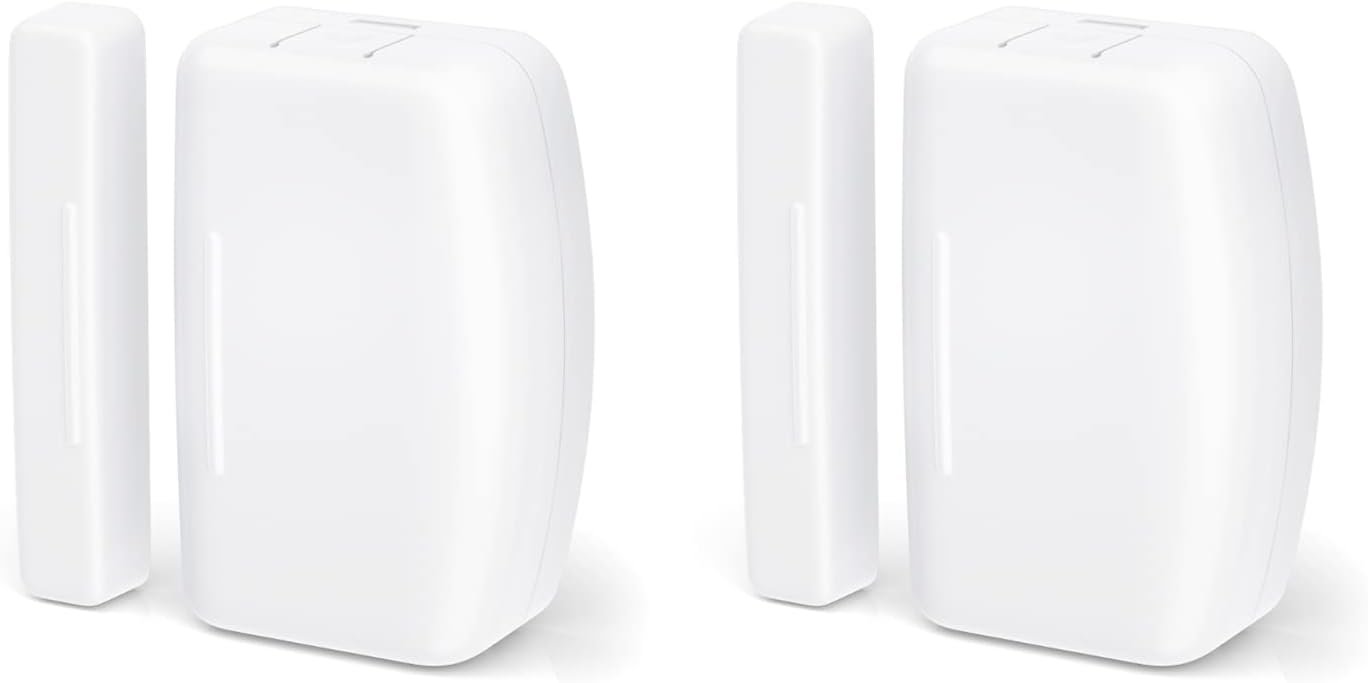
4. THIRDREALITY Zigbee Contact Sensor 2 Pack
Expert Rating: 4.4/5 Stars | Est. Value: $13.90
Robust perimeter security is the cornerstone of any resilient smart home. The THIRDREALITY Zigbee Contact Sensor presents itself as a foundational component for monitoring ingress points, offering crucial event triggers for integrated security protocols. Its reliance on the Zigbee standard promises interoperability essential for true system redundancy and effective anomaly detection.
Core Specifications
- Connectivity Protocol: Utilizes the robust Zigbee (IEEE 802.15.4) wireless standard, ensuring broad compatibility with a multitude of certified Zigbee hubs and gateways, including prominent ecosystems like SmartThings, Home Assistant, and Amazon Echo devices with integrated Zigbee radios. This leverages the mesh network topology inherent to Zigbee for enhanced signal propagation and redundancy within a properly deployed smart home network.
- Power Source & Longevity: Powered by two 1.5V AAA alkaline batteries, providing an estimated operational life of up to two years. This translates to an approximate total energy capacity of 2.4-3.0 Watt-hours, engineered for ultra-low power consumption to minimize maintenance cycles.
- Environmental & Installation Constraints: Rated for indoor use only. Critical operational note: Prohibits installation on metallic surfaces, which can significantly attenuate Zigbee radio frequency signals, impairing reliable communication and compromising security monitoring integrity.
- Security Integration: Functions as a binary state sensor (open/closed) directly feeding into security automation routines. This allows for immediate trigger actions such as activating audible alarms, initiating push notifications, or engaging other networked defensive countermeasures via compatible smart home platforms, leveraging Zigbee’s inherent AES-128 encryption for secure data transmission within the local mesh network.
Real-world Reliability
Operating on the local Zigbee mesh, the sensor itself remains functional during typical internet service disruptions, continuously transmitting its state to the local hub. However, its effectiveness in triggering alerts or automations is entirely dependent on the operational status of the primary Zigbee gateway and any associated notification infrastructure. While the sensor is battery-powered, ensuring its individual resilience during grid power outages, a downed smart home hub or a non-redundant local network can compromise its ability to communicate critical security events, underscoring the necessity for a robust, uninterruptible power supply (UPS) for the central hub and networking equipment to maintain full security posture.
Who is this for?
Ideal for homeowners deploying a foundational, low-power perimeter security layer within a robust, hub-centric Zigbee smart home ecosystem.
The Tech Advantages:
- Excellent value, offered in a 2-pack.
- Wide compatibility with most Zigbee hubs.
- Long battery life (up to 2 years).
- Provides crucial perimeter breach alerts.
- Secure Zigbee communication with AES-128 encryption.
The Trade-offs:
- This is a contact sensor, not a motion sensor.
- Indoor use only.
- Must not be installed on metal surfaces.
- Reliability depends heavily on the central hub’s status.
Summary Verdict: Spec Comparison
| Image | Product | Rating & Price | Action |
|---|---|---|---|
|
Aqara Motion Sensor P1 | 4.3 Stars $52.99 |
View Specs |
|
Aeotec SmartThings Motion | 4.6 Stars $48.99 |
View Specs |
|
SONOFF SNZB-06P | 4.0 Stars $49.99 |
View Specs |
|
THIRDREALITY Contact Sensor | 4.4 Stars $13.90 |
View Specs |
Key Technical Considerations for Your Smart Home Sensors
When selecting a zigbee motion sensor for smart home or any smart device, understanding core technical specifications is paramount. Firstly, consider the Wireless Protocol and Hub Compatibility. While Zigbee 3.0 is widely adopted, some sensors require specific manufacturer hubs (like Aqara’s) for full functionality, limiting interoperability with generic Zigbee coordinators. Ensure the sensor and your chosen hub support the necessary Zigbee profiles and profiles for advanced features like local automations.
Secondly, evaluate the Detection Technology and Coverage Area. Traditional Passive Infrared (PIR) sensors are common but can be affected by temperature fluctuations. Advanced technologies like SONOFF’s cmWave radar offer more precise presence detection, including for stationary individuals, and may have different environmental resilience. Understand the sensor’s field of view (FoV), detection range, and any adjustable sensitivity settings to ensure it meets the specific needs of the area you intend to monitor, preventing false positives and ensuring reliable triggers for your automations.