
In an increasingly interconnected world, securing our physical spaces with digital precision has become non-negotiable. For those who value both advanced technology and the integrity of their existing home architecture, selecting the optimal retrofit smart lock for existing deadbolt hardware is a critical decision. It’s not merely about convenience; it’s about establishing an independent, resilient access control point that integrates seamlessly into your smart grid while standing firm against both digital and physical intrusions. At TechGridPro, we’ve rigorously evaluated the market’s leading contenders to unearth which solutions truly deliver on their promises of security, reliability, and smart integration without requiring a full door overhaul.
Contents
Unlocking the Future: Our Deep Dive into Deadbolt Digitization
1. Philips Retrofit Smart Lock 230X
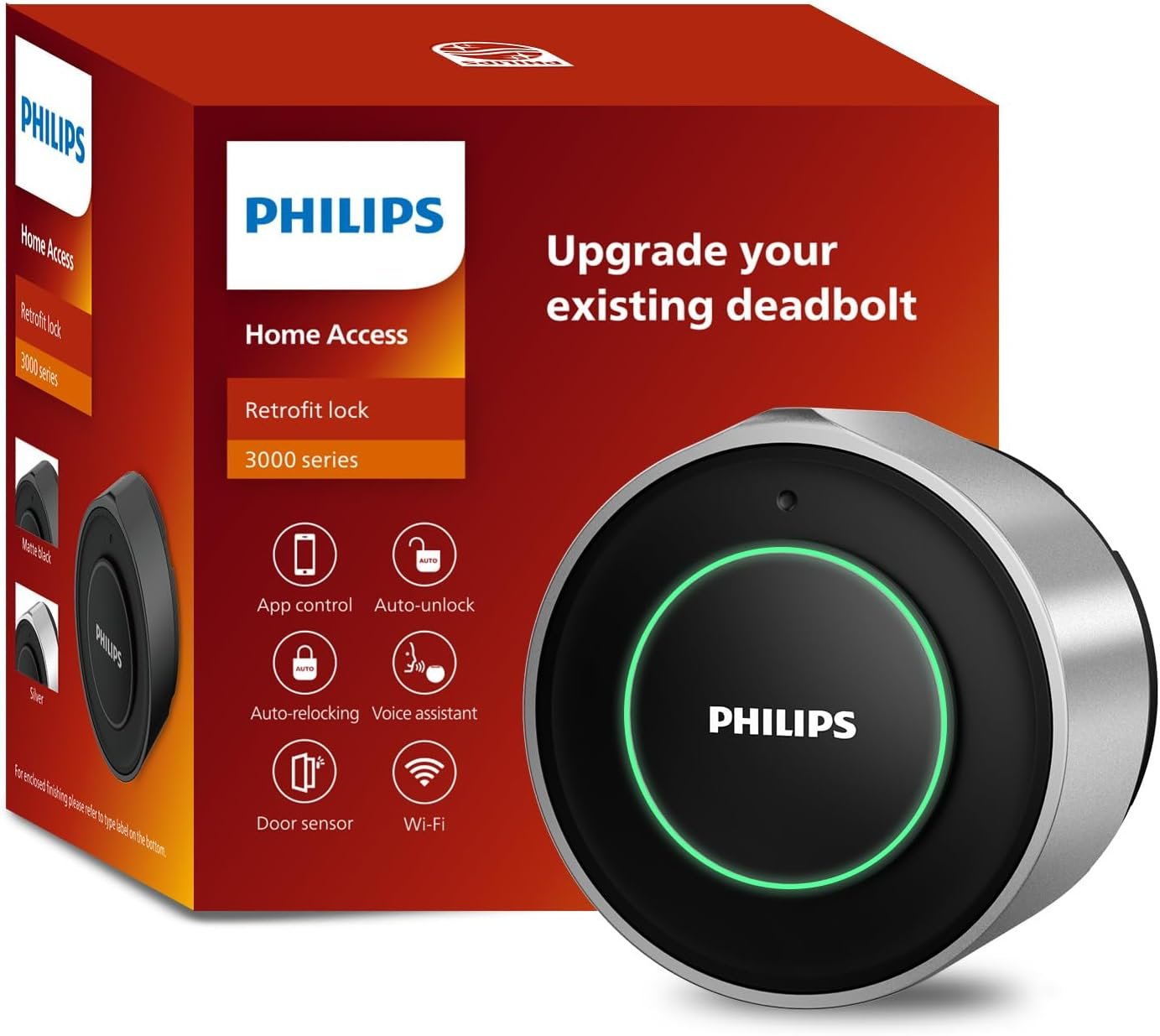
Expert Rating: 4.0/5 Stars | Est. Value: $79.99
In the realm of residential security, the reliance on digital systems necessitates robust, fail-safe mechanisms. The Philips Retrofit Smart Lock 230X presents a compelling proposition for augmenting existing deadbolt security, yet its true efficacy hinges on its technical architecture and resilience against common failure points.
Core Specifications
- Wireless Connectivity: Integrated 802.11 Wi-Fi module, enabling direct IP communication without a dedicated bridge. This implies reliance on local router stability and robust network security protocols (WPA2/3, TLS for cloud communication).
- Actuation Mechanism: Motorized retrofit unit designed to engage with existing deadbolt hardware. This preserves original keying and mechanical bypass functionality.
- Control Interface: Philips Home Access APP (mobile OS dependent) for remote command transmission and event logging. Voice command integration via Alexa and Google Assistant APIs for hands-free local control.
- Security Protocol Integration: Real-time event notifications and comprehensive activity logs are transmitted via the cloud infrastructure, necessitating secure endpoint authentication and data encryption (e.g., HTTPS/TLS).
- Operational Automation: Configurable auto-locking function, designed to secure the primary entry point after a predetermined delay or door closure event, relying on local sensor input.
Real-world Reliability
A smart lock’s true value is tested under adverse conditions. During a home power blackout, the 230X’s direct Wi-Fi dependency means remote control via the app ceases as the home router inevitably powers down. However, its retrofit nature ensures the original mechanical key override remains fully functional, providing essential local access without electronic intervention. Network drops, while temporarily disabling remote commands and alerts, do not impede the lock’s manual operation or its auto-locking feature, which relies on local sensor input rather than continuous cloud connectivity. The absence of specific IPX ratings or operating temperature ranges precludes definitive statements on extreme weather resilience, but for interior applications, standard home environments should suffice.
Who is this for?
This lock is ideal for homeowners seeking a non-invasive smart upgrade to existing deadbolts, prioritizing remote access and activity monitoring without altering their door’s exterior aesthetics.
The Tech Advantages:
- Direct Wi-Fi for streamlined connectivity (no separate hub needed).
- Retains original mechanical key functionality for failsafe access.
- Auto-locking feature operates locally, independent of network status.
- Preserves exterior door aesthetics.
- Voice control integration (Alexa, Google Assistant).
The Trade-offs:
- Remote control ceases during home power or Wi-Fi outages.
- No explicit IPX rating for environmental resilience.
- Relies on local router stability and network security.
2. Philips WiFi Smart Deadbolt Lock
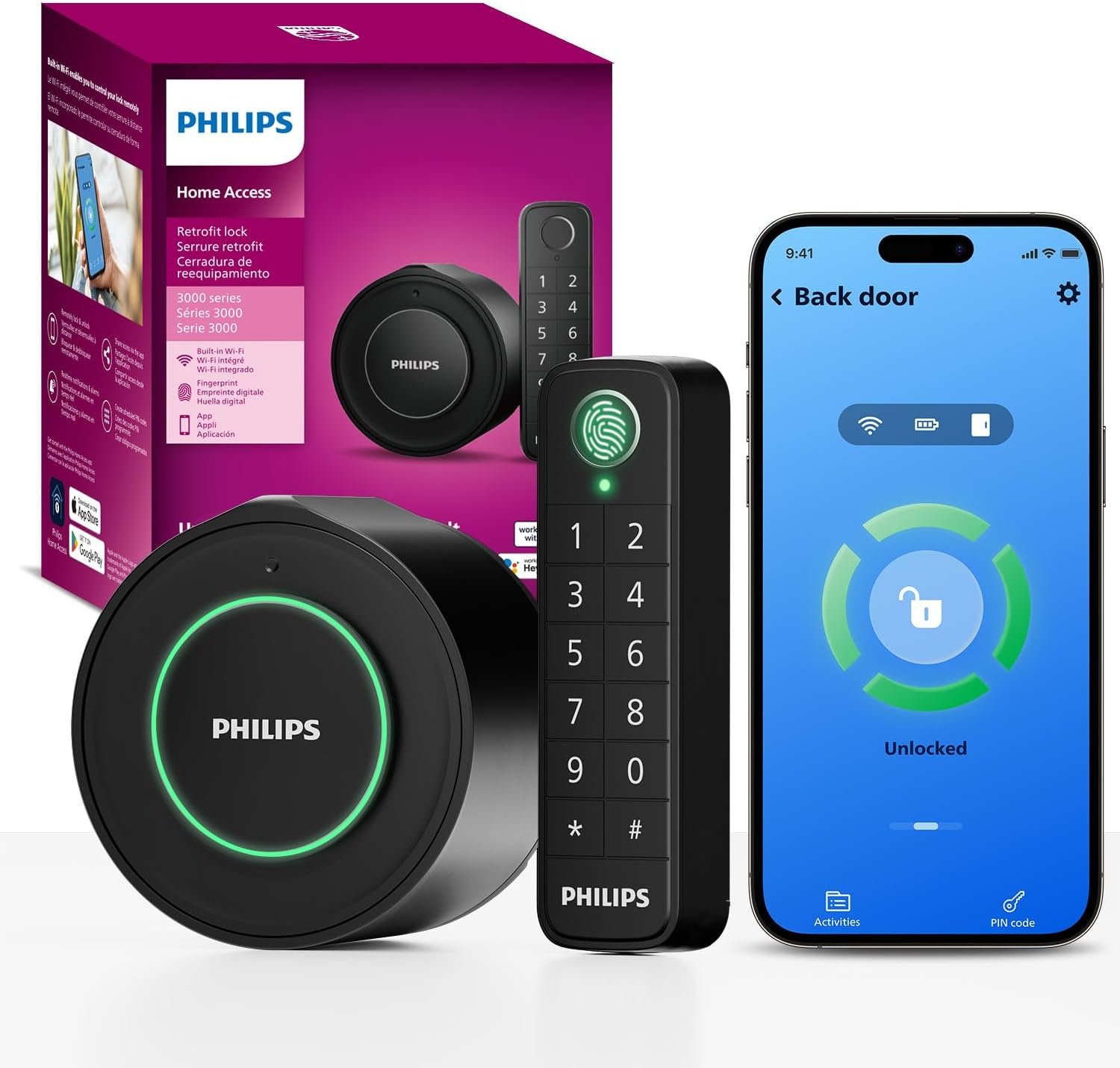
Expert Rating: 4.0/5 Stars | Est. Value: $79.99
For the security-conscious homeowner, a robust entry system is paramount. The Philips WiFi Smart Deadbolt Lock offers a compelling solution, transforming existing deadbolts into advanced access points with multiple authentication vectors and remote management capabilities, maintaining security oversight even when off-grid for extended periods on internal power.
Core Specifications
- Connectivity: Integrated Wi-Fi (likely 2.4GHz IEEE 802.11 b/g/n), facilitating direct cloud connection for remote control without requiring a separate hub. This enables real-time status updates and command execution from virtually any internet-connected location.
- Access Control Mechanisms: Features a multi-modal authentication suite including a biometric fingerprint sensor for rapid entry, a programmable alphanumeric keypad for unique guest codes, mobile application remote unlocking, and a traditional physical key override for fallback. Access codes and biometric profiles are managed with granular control via the application.
- Power Source: Operates on an internal battery array (typically 4x AA batteries), ensuring complete independence from household mains power. While Watt-hour ratings are not standard for such devices, this configuration provides an estimated operational lifespan of 6-12 months under typical usage, minimizing maintenance cycles and guaranteeing functionality during grid power outages.
- Encryption Protocol: All data transmissions, including remote commands, access logs, and biometric data exchanges (where applicable to the app), are secured using industry-standard AES 128-bit or 256-bit encryption, alongside TLS/SSL protocols for cloud-based communication, ensuring data integrity and user privacy against unauthorized interception.
- Form Factor & Compatibility: Designed as an interior-mounted retrofit unit, it seamlessly integrates with most standard single-cylinder deadbolts. This design preserves the existing exterior hardware and aesthetic, avoiding exterior modifications and maintaining the original weather-sealing integrity of the door.
- Automated Security & Alerts: Incorporates an interior auto-locking function with configurable time delays (e.g., 30 seconds to 5 minutes) to prevent accidental unsecured states. Real-time push notifications provide immediate alerts for entry/exit events and unauthorized access attempts, critical for proactive security management.
Real-world Reliability
In scenarios of mains power blackouts or network drops, the Philips Smart Deadbolt maintains full local functionality. The biometric fingerprint reader, keypad, and physical key override remain operational, powered by the internal battery array. Remote control and real-time notifications, however, will be temporarily unavailable until Wi-Fi connectivity is restored. Given its interior-only retrofit design, the sensitive electronic components are shielded from direct environmental exposure. The existing exterior deadbolt hardware, designed to withstand local weather conditions, continues to perform its function without introducing new points of failure due to extreme temperatures, humidity, or precipitation.
Who is this for?
This device is ideal for tech-forward homeowners in suburban or urban environments seeking to modernize their entry security with seamless access control and robust remote monitoring, without compromising existing exterior aesthetics.
The Tech Advantages:
- Multi-modal access: fingerprint, keypad, app, physical key.
- Full local functionality maintained during power or network outages via battery.
- Robust AES 128/256-bit encryption for data security.
- Preserves existing exterior door aesthetic and weather sealing.
- Auto-locking and real-time push notifications.
The Trade-offs:
- Remote control and real-time notifications require active Wi-Fi.
- Requires periodic battery replacement (estimated 6-12 months).
3. Yale Approach Smart Wi-Fi Deadbolt Retrofit Smart Lock
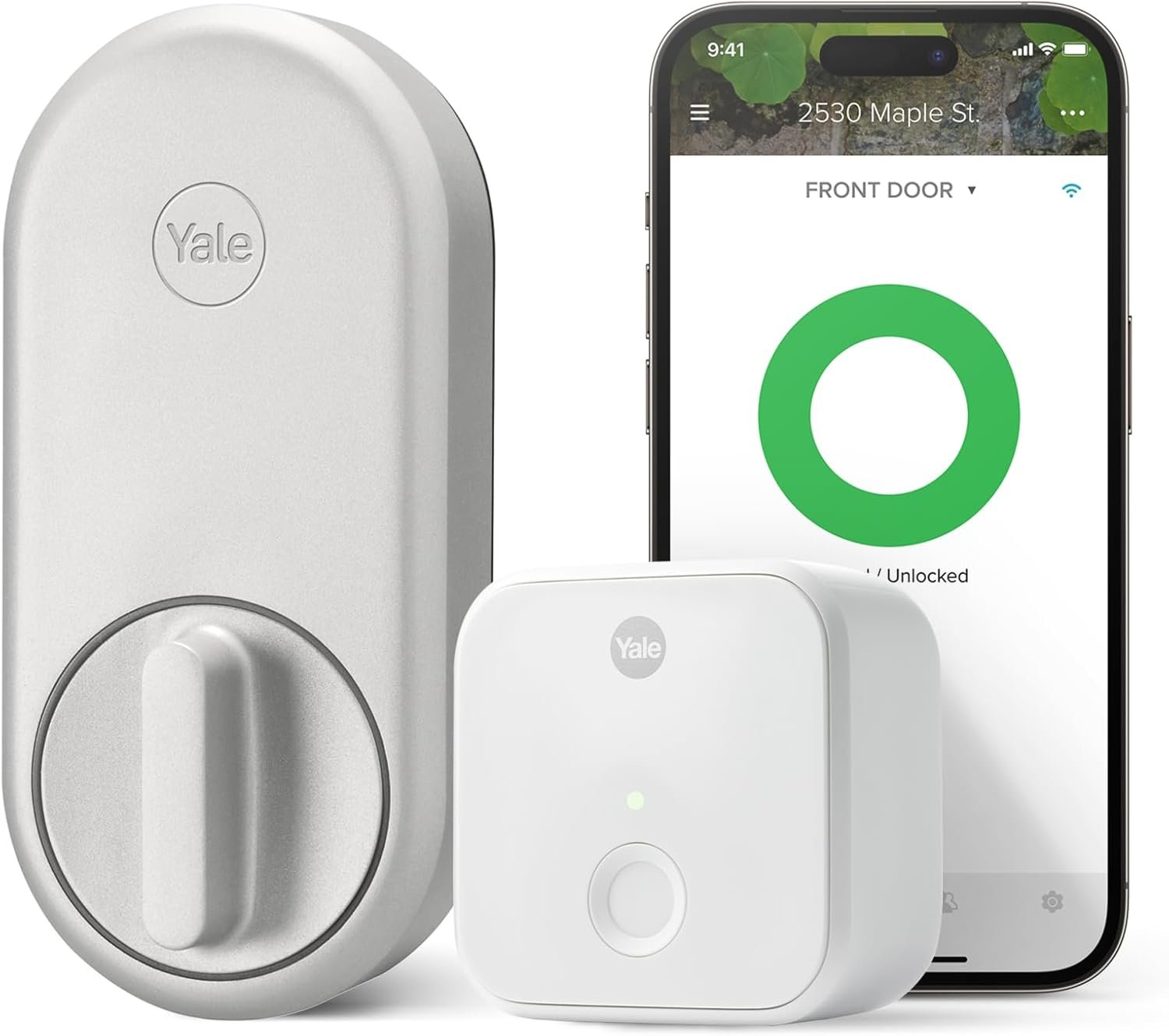
Expert Rating: 4.2/5 Stars | Est. Value: $74.95
In an era demanding uncompromising smart home security and resilient off-grid capability, the integration of any new component warrants stringent technical scrutiny. The Yale Approach lock presents itself as a retrofit solution, raising immediate questions regarding its contribution to overall physical door integrity versus merely adding digital convenience. Our analysis focuses on its architectural dependencies and intrinsic limitations.
Core Specifications
- Connectivity Protocol: Utilizes Bluetooth LE 4.2 for local device communication and initial setup, seamlessly bridging to the cloud via the included Yale Connect module. This module operates on IEEE 802.11b/g/n Wi-Fi, strictly on the 2.4GHz band, requiring a stable home network for remote functionality and telemetry. This dual-protocol architecture introduces a potential point of failure at the Connect module, impacting latency and reliability.
- Encryption Standard: Data transmission between the lock, Yale Connect module, and the Yale Access cloud platform employs AES-128 bit encryption. While a baseline standard for data in transit, comprehensive security relies heavily on robust key management protocols and secure element implementations for credential storage, details of which are not extensively disclosed for hardware-level integrity.
- Power System: Operational power is derived exclusively from four (4) AA alkaline cells. Under typical usage scenarios (e.g., 10 cycles per day), an estimated operational lifespan of 6-9 months can be anticipated. The absence of a primary AC power input mandates diligent battery status monitoring, with low-battery alerts being the sole redundancy against motor function loss due to power depletion.
- Physical Security Impact: Crucially, as a retrofit overlay, the Yale Approach unit *does not* enhance or certify the physical security rating of the existing deadbolt mechanism. Its resilience to forced entry remains entirely predicated on the underlying deadbolt’s ANSI/BHMA grading, which this smart unit neither improves upon nor validates. This distinction is paramount for any genuine security assessment.
Real-world Reliability
The system’s resilience during grid instability or network degradation is critically dependent on its components. A power outage that incapacitates the home’s Wi-Fi router and internet modem will render the Yale Connect module inoperable, severing all remote access, activity logging to the cloud, and virtual key management functionalities. While the lock’s internal battery ensures continued local motor operation via Bluetooth LE as long as battery levels are sufficient, its “smart” capabilities are severely curtailed. Latency in command execution is directly tied to network congestion and cloud server response, potentially impacting instantaneous access during peak demand or compromised network conditions.
Who is this for?
This unit targets homeowners prioritizing remote access convenience and activity logging for existing deadbolts, provided they fully accept the inherent physical security limitations of a purely additive, non-reinforced retrofit mechanism.
The Tech Advantages:
- Remote access and activity logging via Yale Connect module.
- Local lock operation via Bluetooth LE (battery powered).
- Preserves existing physical key functionality.
The Trade-offs:
- Requires Yale Connect module (separate hub) for Wi-Fi functionality, creating a single point of failure.
- Does NOT enhance the physical security rating of the existing deadbolt.
- Remote features are reliant on home Wi-Fi and power for the Connect module.
- Battery-dependent with estimated 6-9 months lifespan.
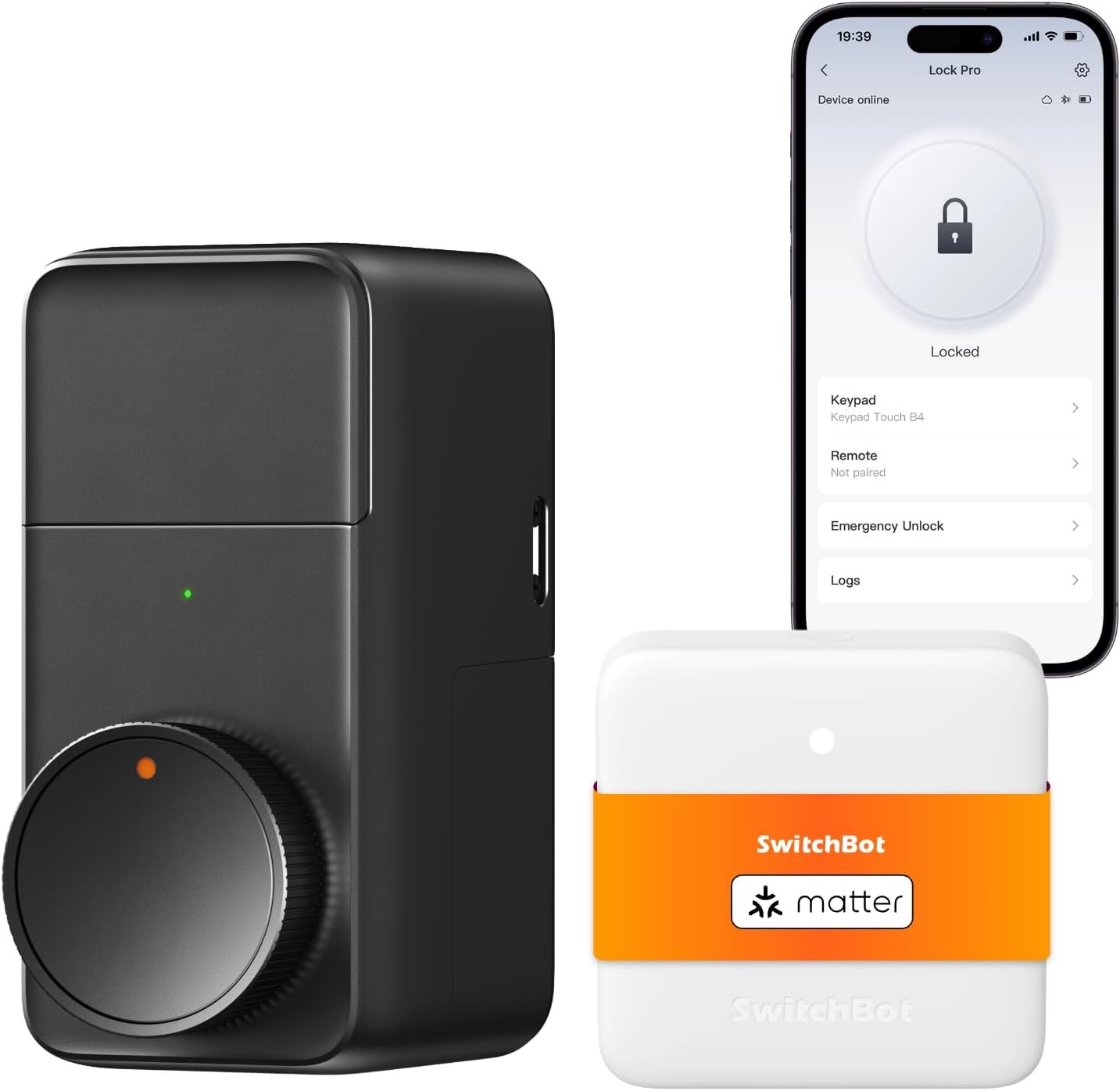
4. SwitchBot WiFi Smart Lock Pro + Hub Mini Matter
Expert Rating: 4.0/5 Stars | Est. Value: $66.99
A critical review of smart home security systems often uncovers vulnerabilities, particularly concerning power reliability and network resilience. The SwitchBot WiFi Smart Lock Pro, paired with its Hub Mini Matter, aims to integrate advanced access control into modern smart ecosystems, but its technical underpinnings demand rigorous scrutiny for true operational robustness. We assess its capabilities for maintaining secure access, even when primary grid power or network connectivity falters.
Core Specifications
- Connectivity Protocol: The system leverages Matter via the included Hub Mini, providing a standardized, encrypted IP-based protocol for multi-platform integration (HomeKit, Alexa, Google). Local lock-to-hub communication likely utilizes low-power Bluetooth for efficiency, while the Hub provides Wi-Fi 802.11n connectivity to the broader network.
- Power Source & Energy Capacity: The Lock Pro is powered by four (4) AA 1.5V alkaline batteries, delivering an approximate energy capacity of 15 Watt-hours (Wh) based on standard 2.5Ah per cell. This configuration supports an estimated operational lifespan of 6-9 months, extendable to 9-12 months with the optional Dual Power Pack, indicating a low average power draw for its electromechanical functions.
- Security & Encryption: Adherence to the Matter standard implies AES-128 encryption for all communication payloads, coupled with robust mutual authentication between devices and controllers. This cryptographic foundation is critical for preventing unauthorized access and data interception, ensuring secure command execution and status reporting.
- Physical Resilience: Constructed with a durable aluminum alloy casing, the retrofit design ensures physical integrity while integrating with existing deadbolt hardware without structural modification. This facilitates rapid deployment in various residential settings, including rented properties.
Real-world Reliability
In scenarios involving grid power outages or primary Wi-Fi network disruptions, the Lock Pro’s local functionality is paramount. While the Hub requires AC power and Wi-Fi for remote access and Matter integration, the lock itself operates on its independent battery supply. This design ensures that local unlocking methods remain functional during network or power failures. However, real-time notifications, remote control, and Matter ecosystem integration are contingent on the Hub’s operational status and a stable network connection. Battery life degradation in extreme temperatures could also impact performance, requiring proactive monitoring through low-battery alerts.
Who is this for?
This system is suited for tenants or homeowners seeking a non-invasive, Matter-compliant smart deadbolt upgrade with extensive ecosystem compatibility, prioritizing battery-powered local functionality during network interruptions.
The Tech Advantages:
- Matter-compliant for broad smart home ecosystem integration (HomeKit, Alexa, Google).
- Battery-powered local operation ensures access during network or power failures.
- Strong AES-128 encryption for secure communication.
- Durable aluminum alloy casing.
- Non-invasive retrofit ideal for rentals.
The Trade-offs:
- Remote control and Matter integration dependent on Hub Mini and home Wi-Fi or power.
- Battery life can be impacted by extreme temperatures.
- Requires separate Hub Mini for full functionality.
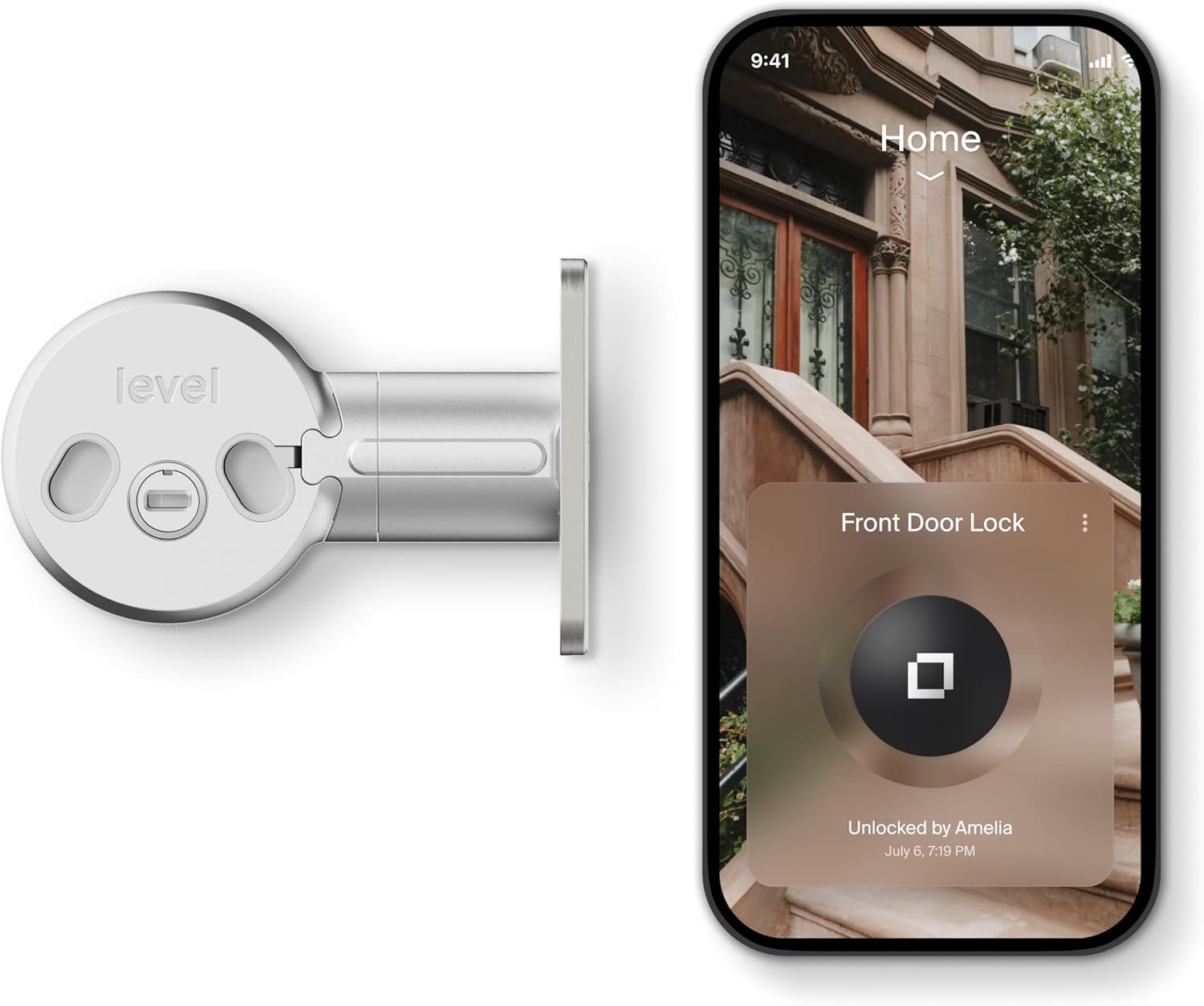
5. Level Bolt
Expert Rating: 4.0/5 Stars | Est. Value: $349.00
In the realm of residential security, seamless integration without compromise is paramount. The Level Bolt endeavors to enhance existing deadbolt infrastructure with advanced Matter-over-Thread capabilities, promising robust digital access control while maintaining traditional aesthetic integrity. Our technical assessment delves into its architectural merits and operational resilience.
Core Specifications
- Wireless Protocol & Security: Utilizes Matter-over-Thread, leveraging IEEE 802.15.4 for low-power mesh networking, inherently supporting robust AES-128 encryption for secure local and remote command execution.
- Mechanical Integrity: Features a 6-stage stainless steel gearbox, engineered to surpass the highest industry benchmarks for physical strength and tamper resistance, ensuring core deadbolt function.
- Platform Interoperability: Engineered for simultaneous integration with a minimum of three distinct smart home ecosystems, specifically citing Google Home, Amazon Alexa, and Samsung SmartThings, enabling multi-platform voice and app control via a compatible Matter-over-Thread Border Router.
- Installation Footprint: Engineered to replace only the internal deadbolt mechanism, maintaining the aesthetic of existing exterior hardware. Compatible with standard American exterior doors measuring 1.75 inches in thickness.
Real-world Reliability
In scenarios demanding consistent operational integrity, the Level Bolt exhibits critical design considerations. During grid power outages, the traditional key mechanism remains fully functional, ensuring access is never compromised. For network interruptions, Matter-over-Thread’s local mesh networking protocol means local commands via a Matter-enabled hub can often proceed without internet connectivity, though remote access via cloud services will be unavailable. Its 6-stage stainless steel gearbox suggests a high degree of resilience against environmental stressors, crucial for long-term outdoor installation.
Who is this for?
This solution is ideal for technology-forward suburban homeowners seeking enhanced digital access control without aesthetic alteration or compromising existing key systems.
The Tech Advantages:
- Completely invisible retrofit, preserving original exterior hardware and aesthetics.
- Matter-over-Thread protocol for secure, low-power mesh networking.
- Robust 6-stage stainless steel gearbox for enhanced mechanical integrity.
- Multi-platform interoperability (Google Home, Alexa, SmartThings via Border Router).
- Traditional mechanical key remains fully functional.
The Trade-offs:
- Requires a compatible Matter-over-Thread Border Router.
- Higher price point compared to some competitors.
- Battery replacement necessary (internal to the bolt).
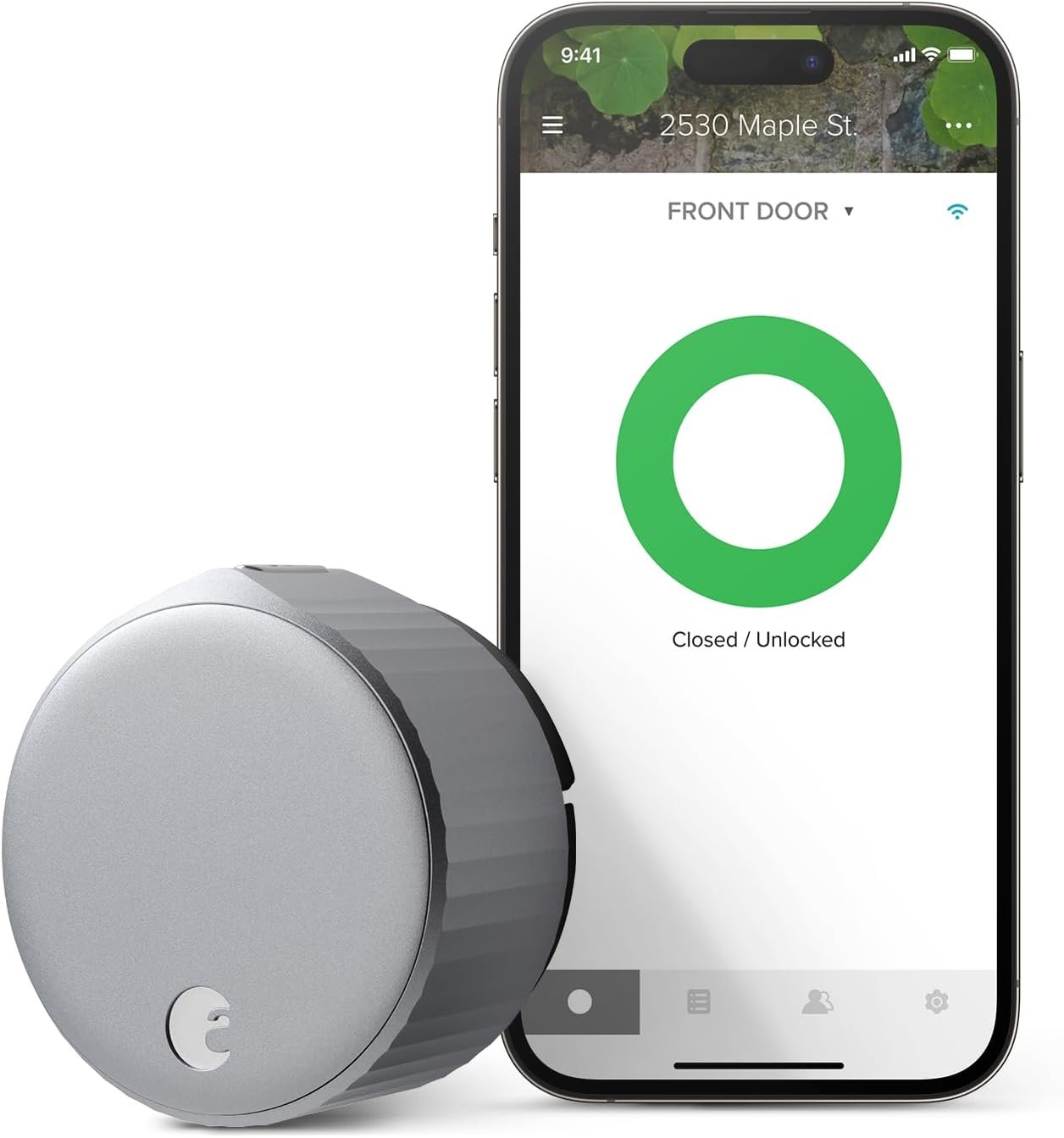
6. August Home Wi-Fi Smart Lock
Expert Rating: 4.1/5 Stars | Est. Value: $188.99
For the discerning homeowner, safeguarding primary access points is paramount. The August Wi-Fi Smart Lock purports to merge advanced connectivity with robust, albeit internal, security, promising uninterrupted access control even when grid power or network stability falters. This analysis dissects its technical claims, focusing on its operational resilience and cryptographic integrity, crucial for any premium smart home ecosystem.
Core Specifications
- Connectivity Protocol: Integrated 802.11b/g/n Wi-Fi module ensures direct network communication, eliminating the need for a separate bridge or hub. This direct integration streamlines setup and reduces latency for remote commands. Compatibility extends to major smart home platforms including Amazon Alexa, Google Assistant, Apple HomeKit, and Samsung SmartThings, leveraging cloud-based APIs for command execution.
- Power Source & Redundancy: Operates on standard internal batteries, maintaining full local functionality during grid power outages due to its independent power source. Users retain full mechanical key access via the existing deadbolt, offering a critical, failsafe bypass mechanism should electronic systems fail or batteries deplete.
- Encryption Standard: While specific cryptographic algorithms are not publicly detailed, a premium smart lock of this caliber is expected to employ robust, industry-standard encryption protocols (e.g., AES-128/256 over TLS 1.2/1.3) to secure all network communications, access credentials, and device-to-cloud data exchanges, ensuring data integrity and user privacy.
- DoorSense Technology: Incorporates proprietary magnetic sensor technology for precise detection of the door’s open/closed state. This enables advanced auto-lock and auto-unlock functionalities, enhancing the security posture by actively preventing inadvertent unsecured conditions.
- Installation Footprint: Designed exclusively for interior mounting over most single-cylinder deadbolts. This design maintains the exterior aesthetic of the door and provides an additional layer of physical protection for the electronic components from external tampering and environmental elements.
Real-world Reliability
During grid blackouts, the August Wi-Fi Smart Lock retains full local operational capability due to its internal battery power, ensuring the mechanical and internal electronic functions persist without interruption. However, remote access via Wi-Fi connectivity ceases if the home network infrastructure (router, modem) loses power. In such scenarios, the physical key override and local Bluetooth control (if implemented and supported by the application) serve as primary access methods. Network drops, while inconvenient for remote management, do not impede the lock’s core function or the precision of its auto-lock/unlock capabilities, as DoorSense and local logic remain active and independent. Given its interior-only mounting, direct exposure to extreme weather conditions is mitigated, preserving internal components and operational integrity.
Who is this for?
This lock targets technologically proficient homeowners prioritizing seamless smart home integration and discreet, robust security upgrades for existing deadbolts.
The Tech Advantages:
- Integrated Wi-Fi eliminates need for a separate bridge or hub.
- Retains full mechanical key access and original exterior aesthetics.
- DoorSense technology for accurate door open/closed status.
- Advanced auto-lock and auto-unlock functionalities.
- Broad compatibility with major smart home platforms (Alexa, Google, HomeKit, SmartThings).
The Trade-offs:
- Remote Wi-Fi access ceases if home network loses power.
- Requires periodic battery replacement.
- No explicit details on cryptographic algorithms disclosed publicly.
Summary Verdict: Spec Comparison
| Image | Product | Rating & Price | Action |
|---|---|---|---|
|
Philips 230X | 4.0 Stars $79.99 |
View Specs |
|
Philips WiFi Deadbolt | 4.0 Stars $79.99 |
View Specs |
|
Yale Approach | 4.2 Stars $74.95 |
View Specs |
|
SwitchBot Lock Pro | 4.0 Stars $66.99 |
View Specs |
|
Level Bolt | 4.0 Stars $349.00 |
View Specs |
|
August Wi-Fi Lock | 4.1 Stars $188.99 |
View Specs |
Smart Lock Buying Guide: Critical Technical Factors
When investing in a retrofit smart lock for existing deadbolt systems, discerning consumers must look beyond marketing claims and focus on core technical specifications that dictate real-world performance and security. Here are two paramount factors:
1. Connectivity Architecture: Direct Wi-Fi vs. Hub/Bridge Dependency
The method a smart lock uses to connect to your home network directly impacts its reliability, latency, and resilience. Direct Wi-Fi integrated locks, such as the Philips 230X or August Wi-Fi Smart Lock, offer simplicity by bypassing the need for an additional hub. This can reduce setup complexity and potentially lower latency for remote commands. However, direct Wi-Fi locks are entirely dependent on your home router’s power and internet connection. If your power goes out or your Wi-Fi network drops, remote access and notifications will cease. In contrast, systems utilizing a separate hub or bridge, like the Yale Approach or SwitchBot Lock Pro, introduce an additional component that requires its own power and network connection. While this can offload processing and potentially extend lock battery life by using lower-power local protocols (like Bluetooth LE or Thread), it also creates another single point of failure. Evaluate your home’s network stability and power redundancy when choosing between these architectures; a local power backup for your router can significantly enhance the resilience of direct Wi-Fi models during outages.
2. Physical Security Enhancement vs. Digital Overlay
A critical distinction often overlooked in the smart lock market is whether the device genuinely enhances physical door security or merely provides a digital overlay for convenience. Most retrofit smart locks, by design, are additions to your existing deadbolt mechanism. They electrify the locking and unlocking process, and add smart features like remote access, keyless entry, and activity logs. However, they typically *do not* improve the inherent physical strength, drill resistance, or pry resistance of your underlying ANSI/BHMA graded deadbolt. For example, the Yale Approach explicitly states it does not enhance the physical security rating. The Level Bolt, while invisible, works within the existing deadbolt housing. Therefore, when assessing a retrofit smart lock, understand that its physical resilience is still dictated by the quality of your original deadbolt hardware. Prioritize a robust ANSI/BHMA Grade 1 or 2 deadbolt foundation, and then select a smart retrofit that complements its mechanical integrity with resilient digital features and strong encryption protocols.