
In an era where digital dependency often equates to vulnerability, the independent integrity of your physical perimeter remains paramount. For those safeguarding expansive properties, rural estates, or critical infrastructure, the choice of a best wireless driveway alarm system isn’t merely about convenience; it’s a strategic decision for persistent security and operational autonomy. We dissect the top contenders, focusing on their engineering robustness, signal resilience, and power independence, ensuring your tech grid—and your peace of mind—remains uncompromised, even when conventional networks falter.
Contents
Unveiling the Vanguard: Our Top 5 Picks for Unwavering Perimeter Awareness
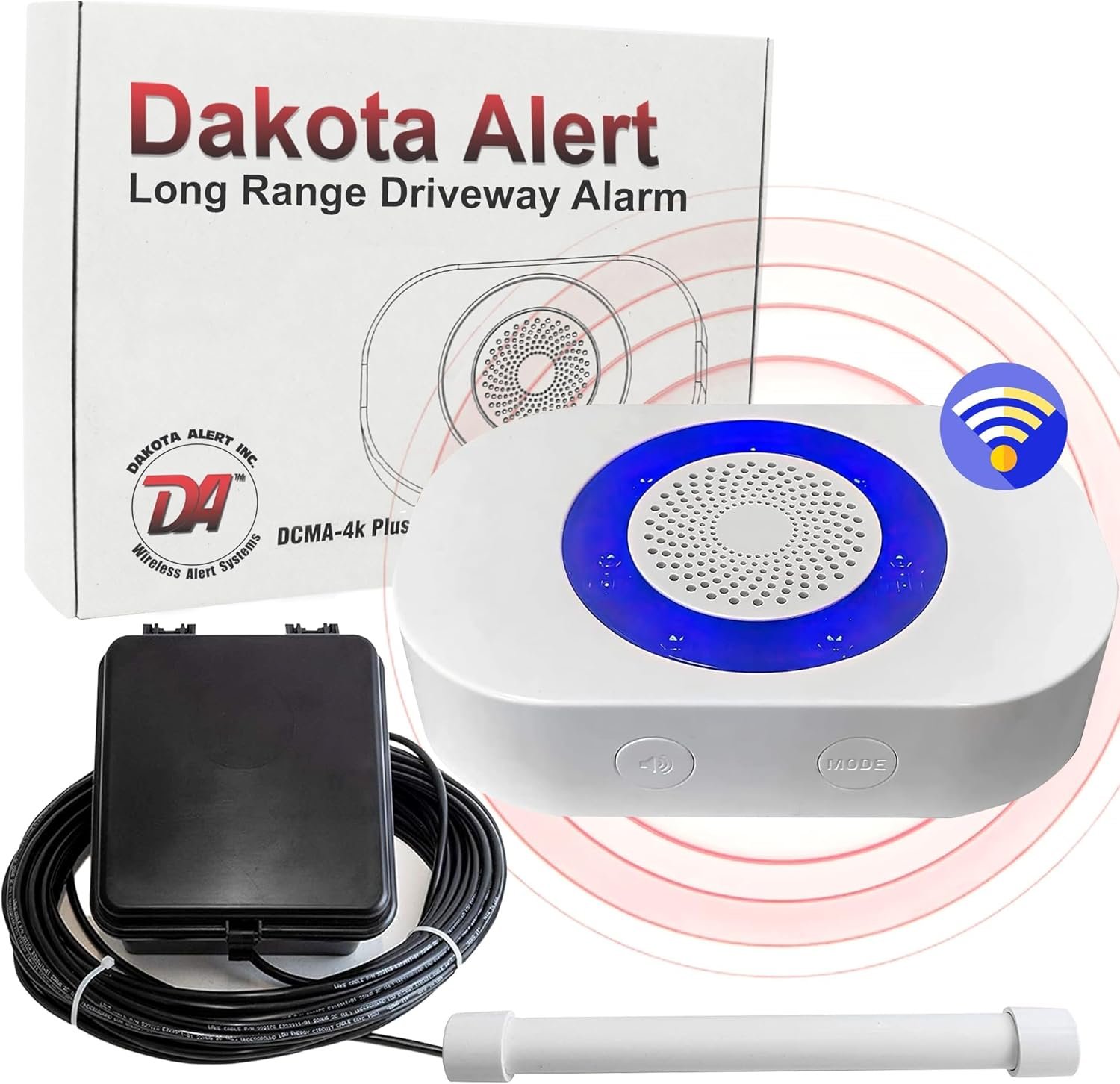
1. Dakota Alert DCPA-4k Plus
Expert Rating: 4.7/5 Stars | Est. Value: $74.99
For critical perimeter security where conventional smart home infrastructure may fail or be impractical, an autonomous detection system is paramount. The Dakota Alert DCPA-4k Plus provides a robust, self-contained solution, leveraging an impressive wireless link and independent power to ensure persistent vigilance against vehicular intrusion. This system prioritizes operational independence, a crucial factor for ensuring security during grid outages or network disruptions.
Core Specifications
- RF Link Budget & Wireless Range: The system boasts a 1-mile (approximately 1.6 km) wireless line-of-sight (LOS) range between the DCPT-4000 vehicle sensor and the RE-4k Plus receiver. This extended range significantly enhances signal integrity, minimizing environmental attenuation and maximizing reliability compared to typical sub-kilometer consumer-grade wireless offerings. This robust RF performance is critical for expansive properties.
- Power Source & Operational Autonomy: The DCPT-4000 sensor is powered by three CR-123 lithium batteries, delivering an estimated operational lifespan exceeding one year. This independent power architecture eliminates reliance on grid power or dedicated low-voltage wiring for sensor deployment, making it ideal for remote or off-grid installations where power infrastructure is limited.
- Vehicle Detection Methodology: The system employs a buried vehicle-detecting probe that operates on magnetic inductive principles. This specialized detection method effectively differentiates between large metallic objects (vehicles) and non-metallic, non-vehicular mass (animals, debris), significantly reducing false positives inherent in passive infrared (PIR) or microwave-based sensors.
- Receiver Output Integration: The RE-4k Plus receiver offers two discrete Form C relay outputs and one 12VDC output. These outputs facilitate direct integration with auxiliary security systems, access control panels, or smart home automation platforms, enabling triggers for lighting, camera activation, or gate control based on detection events.
Real-world Reliability
The DCPA-4k Plus exhibits high reliability due to its engineered independence from primary grid power and home network infrastructure. Operating autonomously on long-life batteries, the system is impervious to localized power outages, ensuring continuous perimeter monitoring during blackouts. Its dedicated RF wireless link negates reliance on Wi-Fi or cellular networks, preventing service interruptions due to network drops or cyber-physical compromises. Furthermore, its weatherproof design and buried probe methodology ensure consistent performance across diverse environmental conditions, from extreme temperatures to heavy precipitation, minimizing maintenance and maximizing uptime.
Who is this for?
This system is ideal for remote agricultural operations, expansive rural homesteads, or industrial sites requiring robust, autonomous perimeter vehicle detection without reliance on grid power or integrated network infrastructure.
Data Breakdown
| Specification | Value |
|---|---|
| Wireless Range (LOS) | 1.6 km (1 mile) |
| Sensor Power Source | 3x CR-123 Lithium Batteries |
| Typical Sensor Battery Life | >1 Year |
| Receiver Outputs | 2x Form C Relays, 1x 12VDC |
| Max Sensors per Receiver | 16 Units |
| Detection Methodology | Magnetic Inductive Probe (Vehicle-Specific) |
The Tech Advantages:
- Exceptional 1-mile wireless range for expansive properties.
- Magnetic inductive probe minimizes false positives from wildlife.
- Autonomous operation with 1+ year battery life, impervious to power outages.
- Relay outputs for direct integration with existing security systems.
The Trade-offs:
- Higher initial investment compared to basic PIR systems.
- Lacks direct smart home app integration.
- Sensor requires specific burial for optimal performance.
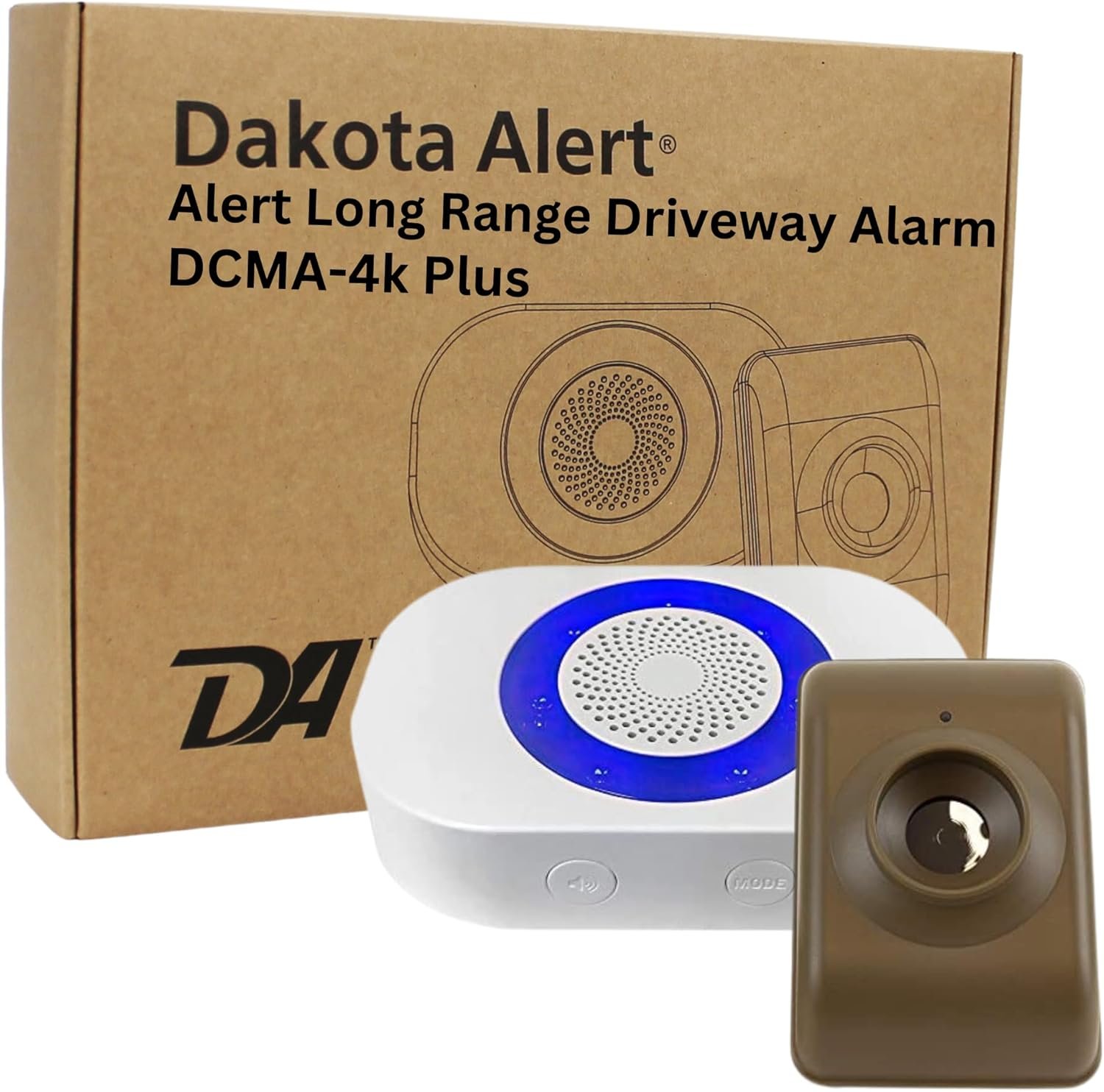
2. Dakota Alert DCMA-4k Plus RE-4k Plus
Expert Rating: 4.1/5 Stars | Est. Value: $74.99
For large properties demanding a robust, standalone perimeter detection capability, the Dakota Alert DCMA-4k Plus system presents a dedicated solution. This system operates as an independent security layer, prioritizing range and power independence over integrated smart home ecosystems, a critical distinction for mission-critical off-grid or remote applications.
Core Specifications
- Wireless Connectivity: Utilizes a proprietary sub-GHz radio frequency (RF) protocol, typically operating in the 900 MHz band, to achieve its stated 1-mile (1.6 km) line-of-sight (LOS) wireless range. This dedicated link mitigates reliance on congested Wi-Fi networks but necessitates a self-contained alert mechanism.
- Sensor Power Module: The DCMT-4000 transmitter is powered by a single 9V battery, delivering approximately 5-6 Watt-hours (Wh) of energy storage (assuming an alkaline cell with ~500-600 mAh capacity). This ensures extended operational autonomy, quoted at over a year, significantly reducing maintenance cycles.
- Detection Mechanism: Employs passive infrared (PIR) technology for motion detection, reacting to changes in ambient infrared radiation. While effective, environmental factors like rapid temperature shifts or direct sunlight can influence detection accuracy and false alarm rates.
- System Scalability: Supports a robust multi-point architecture, allowing up to 16 individual sensors to be paired with a single RE-4k Plus receiver unit. Conversely, a single sensor can propagate alerts to an unlimited number of receivers, providing comprehensive, localized notification without IP network dependencies.
- Receiver Output: The RE-4k Plus receiver offers customizable audio alerts across four distinct volume levels, indicating its function as an immediate, audible warning system rather than a silent, integrated notification gateway.
Real-world Reliability
The DCMA-4k Plus system’s reliance on a proprietary RF link provides inherent resilience against common smart home network failures, such as Wi-Fi outages or internet service provider (ISP) blackouts. Its battery-operated sensors are entirely independent of grid power, making them ideal for sustained operation during extended power interruptions. However, extreme temperatures can impact 9V battery longevity and PIR sensor performance. While robust against network drops, its susceptibility to RF interference from other high-power wireless devices or significant physical obstructions across the 1-mile LOS range must be factored into deployment planning. The lack of IP connectivity means no remote monitoring or configuration is possible, an architectural decision prioritizing simplicity and reliability in isolated environments.
Who is this for?
This system is purpose-built for property owners managing extensive perimeters, particularly those with remote access points or off-grid homesteads requiring a highly reliable, non-networked alert system.
Data Breakdown
| Specification | Detail |
|---|---|
| Wireless Protocol | Proprietary RF (Sub-GHz) |
| Effective Range | 1.6 km (1 Mile) LOS |
| Sensor Power (Type) | 9V Battery (~5-6 Wh) |
| Sensor Battery Life | 1+ Year (Estimated) |
| Max Sensors per Receiver | 16 Units |
| Detection Type | Passive Infrared (PIR) |
The Tech Advantages:
- Robust 1-mile proprietary RF range, independent of Wi-Fi/cellular networks.
- Extensive battery life for sensors, ideal for off-grid operations.
- Scalable to 16 sensors, suitable for complex perimeter coverage.
- Audible alerts with customizable volume levels.
The Trade-offs:
- PIR detection can be susceptible to environmental false alarms.
- No IP connectivity for remote monitoring or smart home integration.
- 9V battery performance may vary in extreme temperatures.
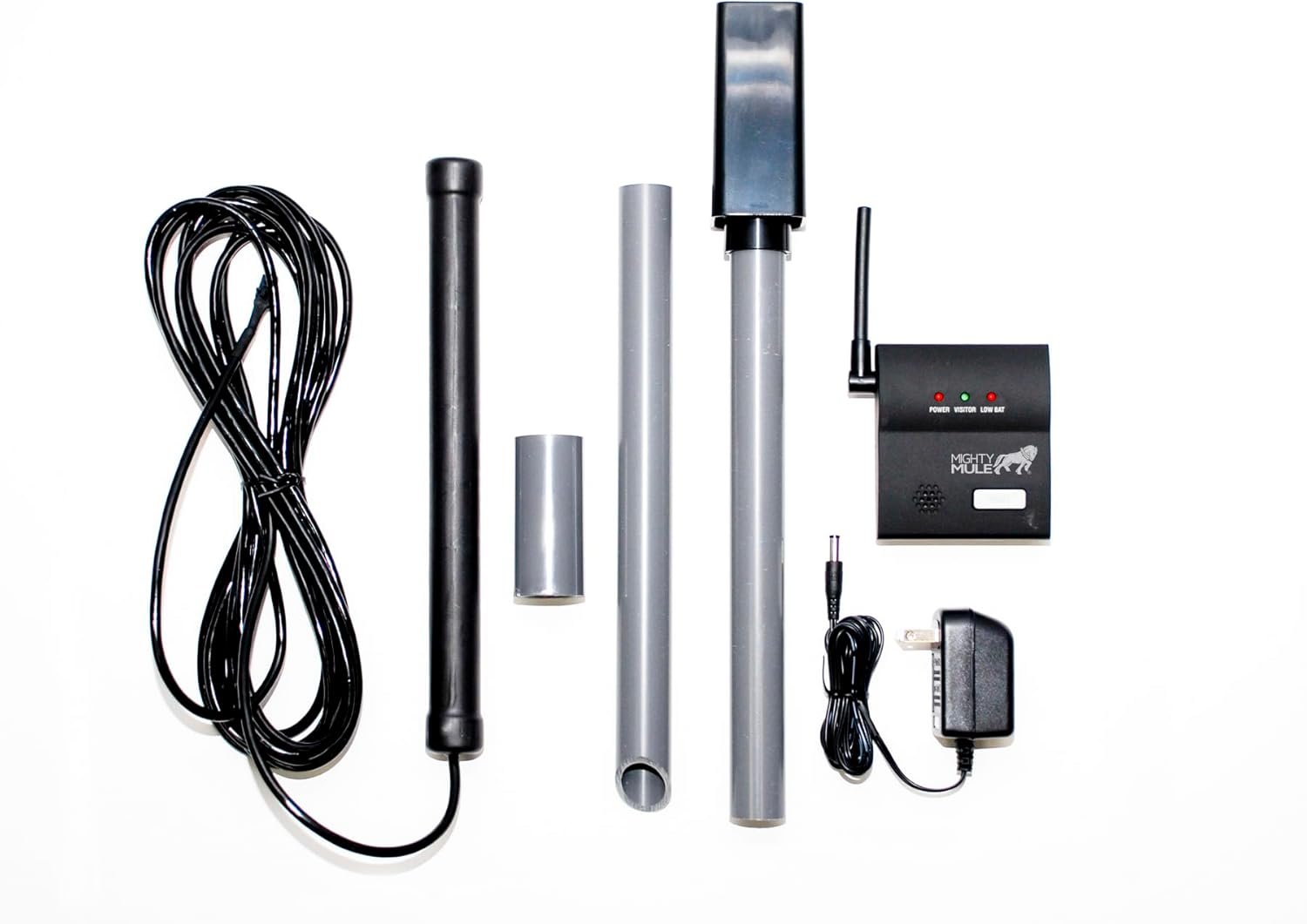
3. Mighty Mule FM231
Expert Rating: 4.1/5 Stars | Est. Value: $68.13
For homesteads and estates prioritizing immediate perimeter awareness without reliance on grid infrastructure, a robust vehicle detection system is paramount. The Mighty Mule FM231 Wireless Driveway Alarm presents a straightforward solution designed for autonomous operation, offering critical alerts independent of conventional network or power dependencies.
Core Specifications
- Detection Methodology: Utilizes a subterranean electromagnetic sensor array, precisely calibrated to detect the ferrous mass of vehicles traversing the monitored zone. This passive detection mechanism minimizes false positives from wildlife or pedestrians.
- Wireless Protocol & Range: Employs a proprietary 433MHz RF wireless link, providing a robust communication range of up to 400 feet (122 meters) from the buried transmitter to the indoor receiver. Note: This is an unencrypted, basic RF transmission.
- Power Autonomy: The external sensor unit operates on 2x AA batteries, providing an estimated 5 Watt-hours (Wh) of power capacity, contingent on cell chemistry. A low-battery indicator is integrated for predictive maintenance, ensuring continuous operational readiness.
- Alert Mechanism: The indoor receiver generates an audible chime upon vehicle detection, providing immediate, localized notification. This system operates entirely independently of internet connectivity or smart home platforms.
- System Architecture: Designed as a point-to-point wireless system, expandable with additional indoor receiver units (model FRM231-R) for multi-location alerting within the property’s bounds.
Real-world Reliability
The FM231’s operational paradigm offers distinct advantages in challenging environments. Its reliance on local electromagnetic detection and a dedicated RF link means it is completely impervious to internet outages, Wi-Fi network drops, or cellular service disruptions. While the buried sensor unit is inherently shielded from direct weather impacts, extreme ambient temperature fluctuations could subtly affect battery lifespan. Its lack of reliance on grid power for the primary sensor ensures continued function during blackouts, a critical consideration for security resilience.
Who is this for?
This system is ideal for remote properties, off-grid homesteads, or extensive suburban estates requiring reliable, autonomous vehicle entry alerts without digital integration.
Data Breakdown
| Specification | Detail |
|---|---|
| Detection Type | Electromagnetic Vehicle Detection (Passive) |
| Wireless Range | 400 ft (122 m) LOS |
| Sensor Power Source | 2 x AA Batteries (approx. 5 Wh capacity) |
| Alert Mechanism | Audible Chime (Indoor Receiver) |
| Network Dependency | None (Fully Autonomous RF System) |
| Encryption Protocol | None (Basic RF Transmission) |
The Tech Advantages:
- Subterranean electromagnetic sensor for highly accurate, vehicle-specific detection.
- Completely independent of internet/Wi-Fi, offering robust resilience.
- Low power consumption with AA batteries and low-battery indicator.
- Affordable and straightforward installation.
The Trade-offs:
- Limited wireless range (400 ft) compared to other systems.
- Basic, unencrypted RF transmission.
- Audible chime only, no smart notifications.
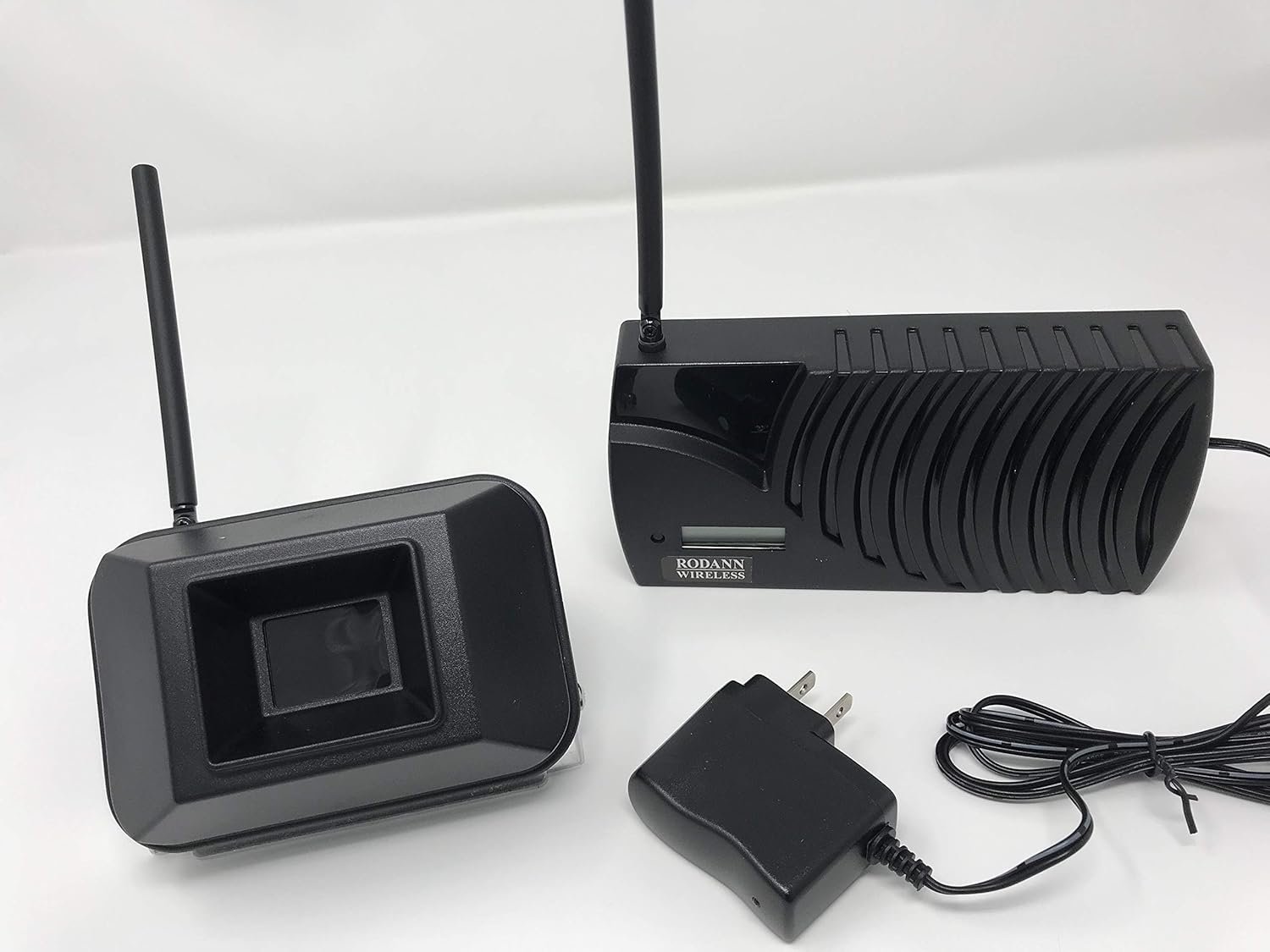
4. Rodann Electronics Wireless Driveway Alarm System
Expert Rating: 4.5/5 Stars | Est. Value: $129.19
In an increasingly connected world, robust perimeter security often relies on reliable, unencumbered communication. The Rodann Electronics Wireless Driveway Alarm System promises foundational intrusion detection, particularly for properties where conventional wired or Wi-Fi-dependent solutions falter. We assess its capabilities for maintaining critical awareness at your property’s ingress points.
Core Specifications
- Wireless Transmission Range: This system boasts a substantial maximum line-of-sight range of 1000 feet (approximately 304.8 meters). While impressive for general perimeter coverage, actual operational range will be subject to Fresnel zone clearance and absorption losses from intervening structures and dense vegetation.
- Signal Penetration Capability: A key differentiator is its advertised ability to penetrate heavily wooded areas, diverse terrain, and structural walls. This strongly indicates the use of a robust, lower-frequency radio protocol (likely in the 315-433 MHz range), which inherently offers superior diffraction and reduced attenuation compared to higher-frequency, short-wavelength transmissions. This design choice prioritizes signal integrity in challenging environments.
- Detection Technology: Based on the product type, it most likely utilizes Passive Infrared (PIR) technology for motion detection. While effective for detecting heat signatures, this typically requires careful sensor placement to mitigate false alarms from wildlife or environmental factors like direct sunlight or wind-blown debris.
Real-world Reliability
Operating independently of Wi-Fi or cellular networks, the Rodann system fundamentally avoids vulnerabilities tied to broadband outages or network congestion. Its claimed signal penetration capabilities imply a robust architecture against environmental interference and physical obstructions, crucial for consistent performance in challenging outdoor conditions and varying weather. However, without explicit details on its operating frequency, output power, or specific modulation techniques, a precise assessment of its immunity to localized RF interference or propensity for false positives remains speculative. The unspecified battery life for the outdoor sensor is also a critical operational parameter for sustained reliability.
Who is this for?
This system is ideal for rural homeowners, expansive estates, or small commercial properties requiring standalone, long-range perimeter entry detection without reliance on complex smart home ecosystems.
Data Breakdown
| Specification | Detail |
|---|---|
| Detection Technology | Passive Infrared (PIR) (Inferred) |
| Wireless Protocol | Proprietary Low-Frequency RF (Inferred, optimized for penetration) |
| Maximum Wireless Range | 1000 ft (304.8 m) Line of Sight |
| Signal Penetration | High; Effective through dense foliage, varied terrain, and structural barriers |
| Power Source (Sensor) | Battery-operated (Inferred, standard for outdoor autonomy) |
| Operating Temperature | Undisclosed; Critical for outdoor durability |
The Tech Advantages:
- Exceptional 1000 ft range with strong signal penetration through obstacles.
- Reliable standalone operation, unaffected by network failures.
- Good for properties with dense foliage or varied terrain.
- No complex smart home integration required.
The Trade-offs:
- Inferred PIR detection may be prone to false alarms from wildlife or weather.
- Specific battery life and type for sensors are not explicitly detailed.
- Higher price point than basic driveway alarms.
- Lacks advanced smart features or remote monitoring.
5. eMACROS Pro 3 Smart Solar Driveway Alarm System

Expert Rating: 4.1/5 Stars | Est. Value: $55.99
In the realm of perimeter defense, reliable, off-grid solutions are paramount. The eMACROS Pro 3 seeks to provide immediate awareness without grid dependency, a critical factor for securing expansive properties or ensuring operational continuity during power disruptions. Its design promises autonomy and robust outdoor performance, vital considerations for serious security deployments.
Core Specifications
- Wireless Protocol: Operates on the 2.4GHz Wi-Fi band for network integration, with a robust 433MHz-like proprietary RF link for sensor-to-receiver communication, providing a stated maximum open-air range of 2600 feet (0.5 miles). Bluetooth LE is employed for initial pairing.
- Power Management: The outdoor motion sensor integrates a solar panel and an internal rechargeable battery. Specific battery capacity in Watt-hours (Wh) is not disclosed, which is a notable omission for assessing true off-grid endurance under variable insolation. The indoor receiver requires constant AC power.
- Detection Mechanics: Utilizes passive infrared (PIR) technology, adjustable to High (30 feet) or Low (20 feet) sensitivity, designed to filter out smaller animals. This system is strictly an alert mechanism, devoid of any integrated video capture capabilities.
- Notification System: Leverages the My Hosmart mobile application to push real-time alerts upon motion detection. The underlying data transmission security, specifically encryption protocols (e.g., TLS versions, end-to-end encryption), is not detailed in the product specifications.
- Environmental Rating: Sensor unit is rated as weatherproof, engineered to maintain operational integrity across varied environmental stressors including heavy precipitation and snow, essential for persistent outdoor deployment.
- Surge Protection: This device type, primarily a low-power sensor and receiver, does not typically incorporate significant surge capacity. Direct electrical surge protection measures are not integral to its design and would rely on external infrastructure.
Real-world Reliability
The eMACROS Pro 3 system’s reliance on solar charging for its outdoor sensor provides a critical degree of autonomy, mitigating the impact of grid blackouts on its perimeter detection function. The receiver’s 2.4GHz Wi-Fi connectivity makes it susceptible to local network drops, though the direct RF link to the sensor would remain operational, preventing sensor data loss to the receiver. Its specified weatherproof design and signal penetration capabilities for extreme conditions, including heavy rain and snow, suggest a robust operational profile for diverse climate zones, ensuring consistent performance even when external conditions are challenging.
Who is this for?
This system targets owners of large rural or suburban properties, small ranches, and homesteads requiring autonomous perimeter alerts.
Data Breakdown
| Specification | Detail |
|---|---|
| Wireless Range (RF) | 1/2 Mile (2600 ft) Open Air |
| Wi-Fi Connectivity | 2.4GHz Only (IEEE 802.11 b/g/n) |
| Motion Detection Range (PIR) | Adjustable: 20 ft (Low) / 30 ft (High) |
| Power Source (Sensor) | Integrated Solar Panel & Rechargeable Battery (Wh unspecified) |
| Video Capability | None (Alert System Only) |
| App Notification Encryption | Undisclosed |
The Tech Advantages:
- Integrated solar panel for continuous, autonomous power to sensors.
- Long 2600 ft proprietary RF range for extensive coverage.
- Mobile app notifications via Wi-Fi for remote alerts.
- Weatherproof design for robust outdoor deployment.
The Trade-offs:
- Receiver requires constant AC power, limiting placement.
- Relies on 2.4GHz Wi-Fi for smart features, susceptible to network issues.
- PIR detection can still be sensitive to environmental factors.
- Undisclosed battery capacity for solar sensor.
Summary Verdict: Spec Comparison
| Image | Product | Rating & Price | Action |
|---|---|---|---|
|
Dakota DCPA-4k Plus | 4.7 Stars $74.99 |
View Specs |
|
Dakota DCMA-4k Plus | 4.1 Stars $74.99 |
View Specs |
|
Mighty Mule FM231 | 4.1 Stars $68.13 |
View Specs |
|
Rodann Driveway Alarm | 4.5 Stars $129.19 |
View Specs |
|
eMACROS Pro 3 Solar | 4.1 Stars $55.99 |
View Specs |
Tech Buying Guide: Decisive Factors for Driveway Alarm Systems
Selecting the best wireless driveway alarm system requires a forensic examination of critical technical specifications, extending beyond mere range claims. For TechGridPro readers, two factors stand paramount: the detection methodology and the robustness of the wireless communication protocol.
1. Detection Methodology & False Positive Mitigation: The core of any reliable alarm lies in its ability to accurately differentiate legitimate threats from environmental noise. Systems primarily employ one of two methods: Passive Infrared (PIR) or Magnetic Inductive Probes. PIR sensors, like those in the Dakota Alert DCMA-4k Plus and eMACROS Pro 3, detect changes in infrared radiation (heat signatures). While effective, they are inherently susceptible to false positives triggered by sun glare, rapidly changing temperatures, moving vegetation, or even large animals. For applications demanding utmost precision, magnetic inductive probes (e.g., Dakota Alert DCPA-4k Plus, Mighty Mule FM231) are superior. These subterranean sensors detect changes in the Earth’s magnetic field caused by large ferrous objects—specifically vehicles. This specialized detection drastically reduces false alarms from wildlife or wind-blown debris, offering a significantly higher signal-to-noise ratio in perimeter monitoring.
2. Wireless Protocol & Range Resilience: The effectiveness of a wireless system hinges on its communication link. Different systems utilize various RF protocols, impacting range, penetration, and interference resistance. Proprietary sub-GHz RF protocols (e.g., 433MHz, 900MHz bands used by Dakota Alert and Mighty Mule) often excel in long-range, line-of-sight performance and better signal penetration through obstacles like dense foliage or structural walls compared to higher frequency bands (e.g., 2.4GHz Wi-Fi). These dedicated links are also independent of your home’s Wi-Fi network or cellular service, ensuring alerts persist even during internet outages or grid disruptions – a critical consideration for operational independence. While some systems, like the eMACROS Pro 3, offer 2.4GHz Wi-Fi for app connectivity, this introduces a dependency that can compromise real-time alerts if your local network fails. Always prioritize the sensor-to-receiver RF link’s robustness over secondary internet-dependent features for foundational security.