
In an increasingly digitized and interconnected world, the quest for robust security infrastructure often collides with the rising tide of recurring subscription fees. For the discerning technologist or the proactive homeowner building an independent tech grid, a smart home security camera without subscription isn’t just a preference; it’s a strategic imperative. Our rigorous data-driven analysis at TechGridPro.com cuts through the marketing fluff, focusing on devices that offer uncompromised surveillance, resilient local data retention, and genuine autonomy from ongoing cloud service charges. This deep dive empowers you to select a security solution that stands alone, delivering peace of mind without perpetual financial tethering.
Contents
Beyond the Cloud: Unlocking True Surveillance Autonomy
1. aosu WirelessCam Pro System
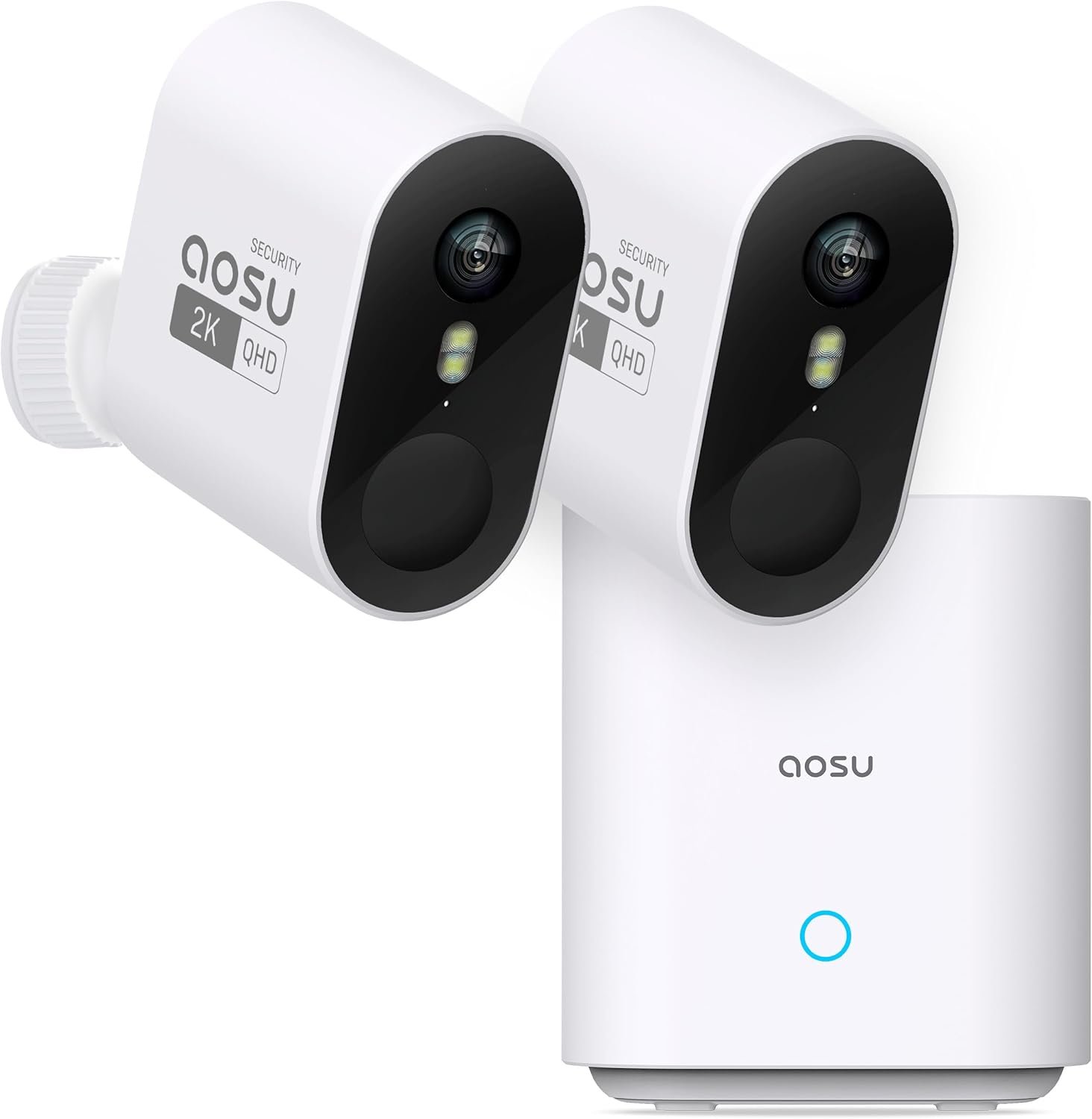
Expert Rating: 4.4/5 Stars | Est. Value: $49.99
In an era where grid stability is increasingly uncertain, the demand for truly autonomous home security solutions has never been higher. The aosu WirelessCam Pro system offers a compelling proposition: high-definition surveillance coupled with remarkable power independence and secure local data handling, minimizing reliance on external infrastructure.
Core Specifications
- Video Resolution: Employs True 2K HD (2560x1440p) imaging, delivering 60% more pixel data than standard 1080p. This ensures superior forensic detail, critical for subject identification day or night, particularly with its advanced night vision capabilities.
- Field of View (FoV): A 166-degree ultra-wide-angle lens system, comprising 7 advanced optical elements, provides expansive property coverage. Crucially, it integrates sophisticated algorithmic correction to mitigate fisheye distortion, preserving image fidelity at the periphery.
- Power Autonomy: Engineered for extreme longevity, each camera boasts up to 240 days of operation on a single charge, based on 40 daily events of 10-second recordings. This significant power independence reduces maintenance cycles and enhances resilience during prolonged power disruptions, suggesting a high-capacity, efficiently managed internal power source.
- Local Data Security: Features an integrated 32GB local storage capacity within the aosuBase, providing 240-360 days of video archives without mandatory cloud subscriptions. All recorded data is subject to encryption protocols prior to local storage, ensuring data sovereignty and mitigating third-party access risks.
- Wireless Connectivity: Supports dual-band Wi-Fi (2.4 GHz and 5 GHz), ensuring robust and flexible network integration across various home network topologies, optimizing for both range and bandwidth where necessary.
- Intelligent Alerting: Utilizes advanced motion detection algorithms to differentiate between people, transient activity, and persistent presence. Alerts are paired with quick preview images, enabling rapid threat assessment and reducing false positives.
Real-world Reliability
The aosu WirelessCam Pro system demonstrates robust resilience in diverse operational scenarios. Its industry-leading battery life ensures continuous surveillance coverage even during prolonged grid power outages, a critical feature for off-grid or vulnerable installations. Local 32GB encrypted storage on the aosuBase maintains data integrity and accessibility irrespective of external internet connectivity disruptions, safeguarding evidence. While specific IP ratings are not provided, its designation as an ‘outdoor home system’ implies design for environmental endurance against typical weather fluctuations, though users in extreme climates should verify specific temperature tolerances.
Who is this for?
Ideal for remote property owners, off-grid homesteads, or suburban residences demanding autonomous, high-definition surveillance with robust local data handling.
Data Breakdown
| Specification | Detail |
|---|---|
| Video Resolution | True 2K HD (2560x1440p) |
| Field of View (FoV) | 166° Ultra-Wide-Angle |
| Max. Battery Autonomy | 240 Days (40 events/day, 10s recording) |
| Local Storage Capacity | 32GB (aosuBase, encrypted) |
| Wireless Connectivity | Dual-band 2.4/5GHz Wi-Fi |
| Data Encryption | Local, on aosuBase |
The Tech Advantages:
- True 2K HD resolution for superior forensic detail.
- Exceptional 240-day battery life for robust power autonomy.
- Dedicated aosuBase with 32GB encrypted local storage for data sovereignty.
- Wide 166-degree FoV with distortion correction.
- Dual-band Wi-Fi for flexible, reliable connectivity.
The Trade-offs:
- Requires an aosuBase, increasing initial system complexity.
- Specific environmental IP rating for extreme climates is not explicitly detailed.
- Higher upfront cost compared to single cameras.
2. WYZE Cam v4
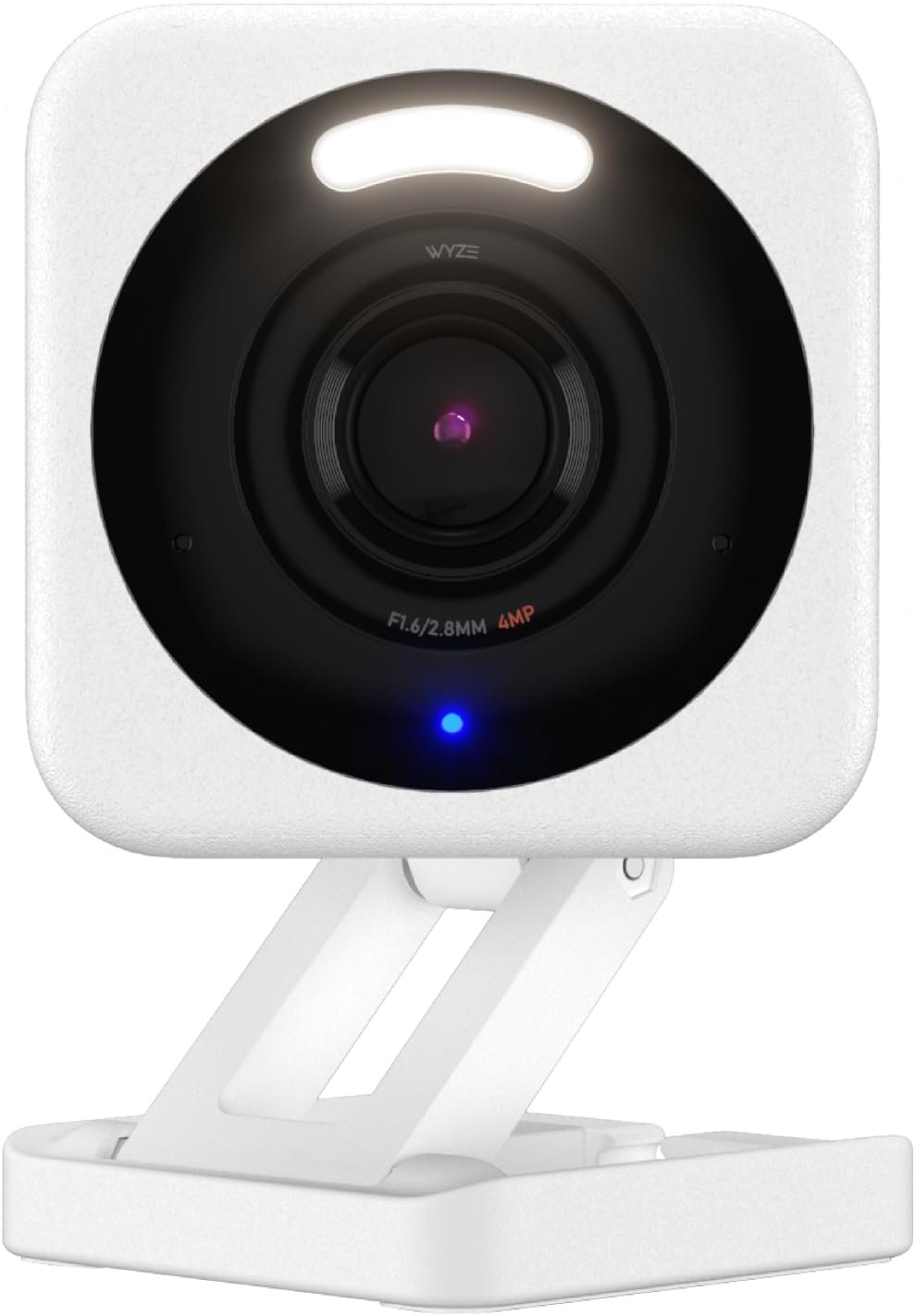
Expert Rating: 4.4/5 Stars | Est. Value: $35.97
The integrity of a smart home security perimeter hinges on robust visual capture and unwavering operational resilience. The WYZE Cam v4 presents as a contender, but its true utility for security independence, especially in environments prone to power flux, warrants rigorous technical scrutiny.
Core Specifications
- Video Resolution: 2.5K Quad High-Definition (2560x1440p) ensures a high pixel density for forensic detail extraction, exceeding standard 1080p surveillance streams.
- Weather Resistance: Certified IP65, indicating dust-tight ingress protection and resistance to low-pressure water jets, suitable for exposed outdoor deployment when paired with the manufacturer’s outdoor power adapter.
- Night Vision: Utilizes an enhanced sensor and processing for full-color night vision, maintaining crucial chromatic data in low-light conditions where monochrome vision loses discriminative detail.
- Dynamic Range: Features Wide Dynamic Range (WDR) technology, mitigating over-exposure in bright areas and under-exposure in shadows, crucial for capturing detail in challenging lighting contrasts typical of entryways.
- Power Input: Operates via a 100-240V AC power adapter, converting to low-voltage DC for the device. Estimated power consumption is approximately 3-5W, making it suitable for integration with localized UPS or off-grid DC-to-AC inverter systems.
- Audio Capabilities: Incorporates an upgraded amplifier and microphone for bi-directional audio communication, useful for interaction or auditory deterrence.
- Connectivity: Connects over Wi-Fi 2.4 GHz (IEEE 802.11 b/g/n), ensuring broad compatibility but susceptible to congestion in dense wireless environments.
- Security Protocols: While not explicitly detailed by the manufacturer, data transmission over Wi-Fi typically employs AES-128 bit encryption within a TLS/SSL tunnel, crucial for mitigating interception risks.
Real-world Reliability
Continuous operation during grid instability mandates integration with an uninterruptible power supply (UPS) or a dedicated solar-battery off-grid system, as the camera relies on its 100-240V AC adapter. Its IP65 rating provides a baseline for environmental resilience against dust and rain, but sustained exposure to extreme temperatures or direct, high-pressure water jets could compromise long-term integrity. Network drops will incapacitate remote monitoring and cloud storage, necessitating robust local storage options and a resilient wireless network infrastructure.
Who is this for?
This device is suited for suburban residences or small business deployments prioritizing enhanced visual fidelity, provided robust network infrastructure and power contingency solutions are in place.
Data Breakdown
| Specification | Detail |
|---|---|
| Video Resolution | 2560x1440p (2.5K QHD) |
| Weather Resistance | IP65 Certified |
| Night Vision | Full-Color, Enhanced |
| Connectivity | Wi-Fi 2.4 GHz (802.11 b/g/n) |
| Power Input | 100-240V AC (via adapter) |
| Operating Power (Est.) | 3-5 Watts |
| Audio | Two-way, Enhanced Microphone/Amplifier |
The Tech Advantages:
- Superior 2.5K QHD resolution for detailed captures.
- IP65 weather resistance allows for outdoor deployment.
- Full-color night vision for enhanced low-light identification.
- Wide Dynamic Range (WDR) improves image quality in varying light.
- Low power consumption suitable for UPS integration.
The Trade-offs:
- Wired power supply requires continuous AC power or UPS.
- Reliance on 2.4GHz Wi-Fi makes it susceptible to congestion.
- Local storage (microSD) needs to be manually installed.
- Outdoor use requires a specific outdoor power adapter.
3. Kasa EC70
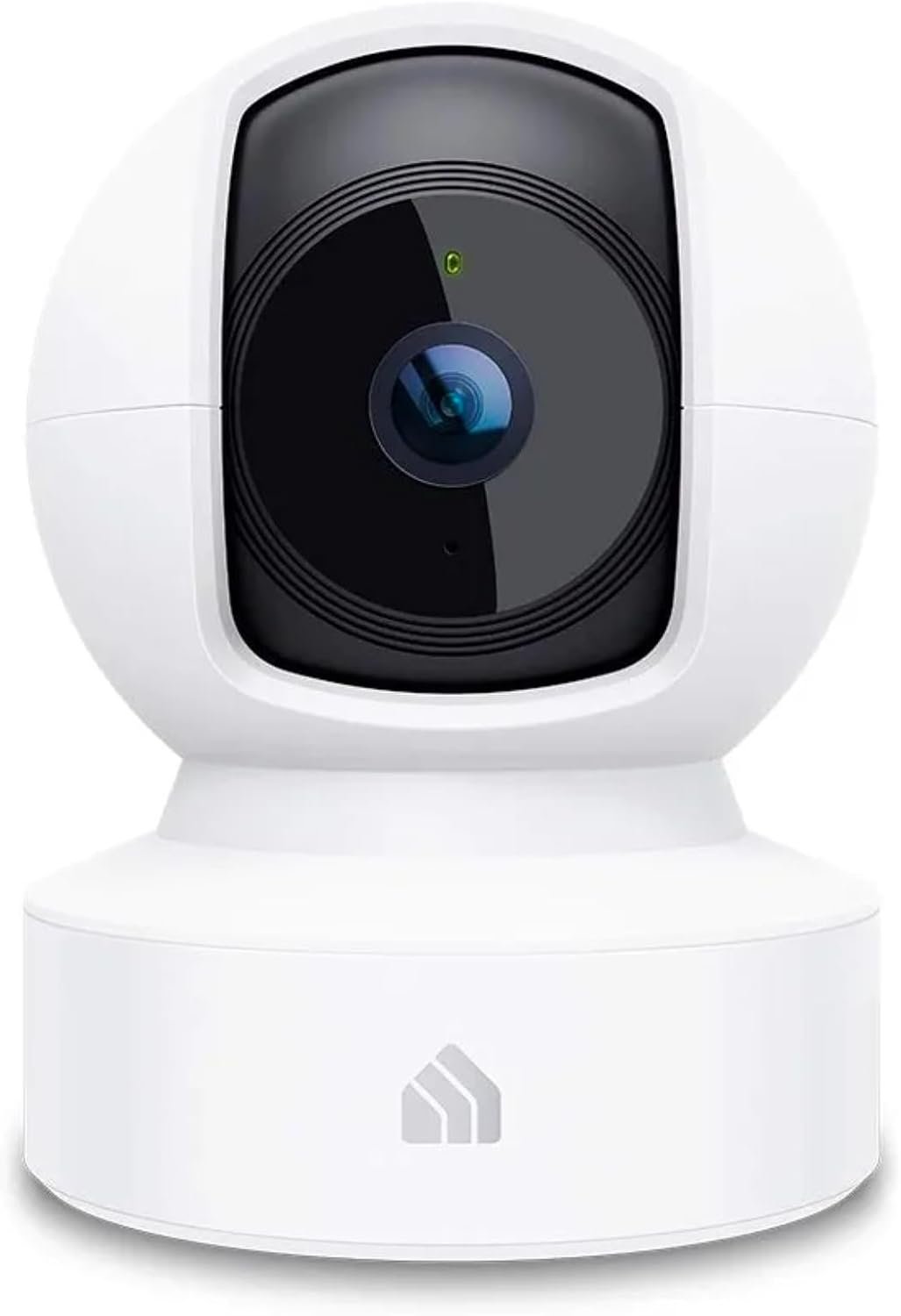
Expert Rating: 4.4/5 Stars | Est. Value: $25.99
In an era where personal security hinges on reliable data capture and resilient infrastructure, the Kasa EC70 presents itself as a contender for indoor surveillance. For systems striving for power independence or robust grid backup, evaluating its inherent wired dependency and data handling is paramount. Our technical review delves into its operational parameters and potential integration challenges.
Core Specifications
- Video Resolution: 1080p Full HD (1920×1080 pixels), typically delivering 15-30 frames per second (fps). This resolution provides sufficient detail for identification within typical indoor viewing distances.
- Pan/Tilt Mechanism: Features a mechanical pan range of 360° horizontal and a tilt range of 113° vertical. This comprehensive field of view (FoV) eliminates blind spots in a single-unit deployment.
- Power Consumption: Operates on a 5V DC input via an AC adapter, with an estimated continuous draw of approximately 5 Watts (W). This translates to a daily energy consumption of roughly 120 Watt-hours (Wh), a critical metric for sizing uninterruptible power supplies or off-grid battery backup systems.
- Wireless Connectivity: Utilizes 2.4 GHz 802.11n Wi-Fi, ensuring compatibility with most home networks and offering reasonable range. However, this band is susceptible to interference and congestion in dense environments, potentially impacting stream stability.
- Local Storage Capacity: Supports MicroSD cards up to 256 GB (sold separately), providing a subscription-free local recording solution. This capacity typically accommodates 10-14 days of continuous 1080p footage, dependent on motion events and compression algorithms.
- Data Encryption: Employs industry-standard WPA2/WPA3 protocols for wireless network authentication and data transport. While cloud-stream encryption specifics are not detailed, secure local storage ensures data privacy at the edge.
Real-world Reliability
The EC70’s wired power requirement establishes a direct vulnerability to AC grid instability. During blackouts, sustained operation demands integration with an appropriately sized Uninterruptible Power Supply (UPS) capable of delivering a consistent 5W load, or direct DC conversion from a low-voltage battery bank in off-grid scenarios. Network reliability is equally paramount; while local storage safeguards recorded data during Wi-Fi outages, live streaming, push notifications, and remote control cease functionality. Given its indoor specification, the device is designed for controlled ambient conditions and lacks environmental hardening for extreme temperatures, high humidity, or direct weather exposure, necessitating a climate-controlled enclosure for any non-standard deployment.
Who is this for?
This device is engineered for suburban smart homes or grid-tied small businesses requiring robust indoor surveillance with emphasis on local data retention capabilities.
Data Breakdown
| Specification | Detail |
|---|---|
| Video Resolution | 1080p Full HD (1920×1080) |
| Power Input | 5V DC (via AC adapter) |
| Est. Daily Energy Use | ~120 Wh |
| Wireless Standard | 2.4 GHz 802.11n Wi-Fi |
| Storage Capacity | MicroSD up to 256 GB (local) |
| Night Vision Range | 30 feet (9 meters) IR |
| Pan/Tilt FoV | 360° Horizontal / 113° Vertical |
The Tech Advantages:
- Comprehensive 360° Pan and 113° Tilt for full room coverage.
- 1080p Full HD resolution provides clear identification.
- Supports up to 256 GB local microSD storage, ample for extensive recordings.
- Uses WPA2/WPA3 for secure wireless communication.
- Relatively low power consumption (5W) for UPS integration.
The Trade-offs:
- Wired power dependency necessitates backup for grid outages.
- Limited to 2.4 GHz Wi-Fi, prone to interference in dense networks.
- Indoor-only design restricts deployment environments.
- Remote access and notifications cease without internet connectivity.
4. Tapo C201
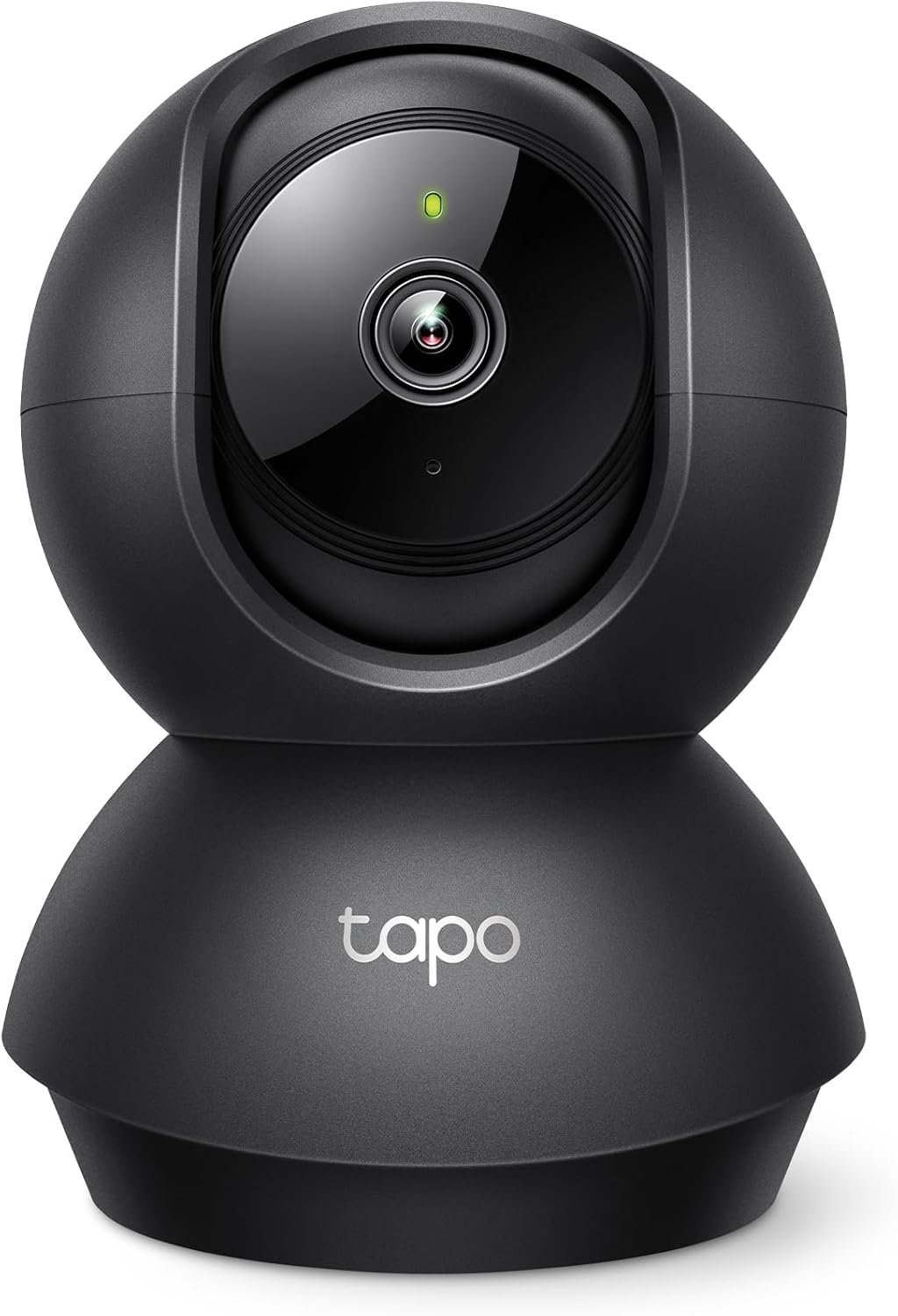
Expert Rating: 4.5/5 Stars | Est. Value: $17.96
In an increasingly interconnected smart home ecosystem, the fundamental requirement for robust surveillance remains paramount, especially during grid instabilities. A wired camera solution, while forfeiting wireless power independence, anchors its operation to a stable power source, a critical design choice for uninterrupted security monitoring that demands careful consideration for off-grid resilience planning.
Core Specifications
- Video Resolution: The C201 provides 1080P Full HD video capture, delivering adequate clarity for general indoor activity monitoring. While sufficient for identifying individuals or larger objects, pixel density may prove insufficient for granular detail such as facial recognition at distance or precise object identification within a crowded scene, a limitation inherent to this resolution class.
- Pan/Tilt Mechanism: This unit offers a motorized pan of 360° horizontally and a tilt of 114° vertically. This expansive field of view is mechanically actuated, enabling dynamic surveillance zone adjustments. The reliability of such a mechanism is subject to its motor and gear longevity under continuous operation.
- Night Vision System: Integrated infrared (IR) emitters facilitate up to 30 feet of black-and-white night vision. This range is typical for indoor applications, leveraging non-visible spectrum light for low-light conditions, ensuring continuous visibility in complete darkness, albeit without color fidelity.
- Connectivity Protocol: Operation relies exclusively on the 2.4GHz Wi-Fi band (IEEE 802.11 b/g/n). While offering broader penetration through obstacles compared to 5GHz, this band is susceptible to congestion in environments with numerous wireless devices, potentially impacting stream stability and latency. Direct Ethernet connectivity is notably absent.
- Data Storage Architecture: Local storage is supported via a microSD card slot, accommodating up to 512GB. This permits continuous loop recording, offering a resilient data retention strategy independent of cloud subscription. An optional Tapo Care cloud service provides 30-day video history and enhanced detection algorithms, indicating a hybrid storage model.
- Detection Capabilities: The camera incorporates motion, human, and baby crying detection algorithms. These are processed either on-device for basic motion or off-device (cloud-assisted) for advanced analytics like baby crying and person detection (with Tapo Care), delivering instant push notifications for identified events.
Real-world Reliability
The Tapo C201, as a wired device, inherently demands a continuous 5V DC power supply (typically via USB adapter). In an off-grid or power-unstable environment, this mandates integration with an uninterruptible power supply (UPS) or a direct 5V DC feed from a battery bank to maintain operational continuity during grid failures. Its reliance on 2.4GHz Wi-Fi means network stability is paramount; dropped signals or congested airwaves will result in surveillance interruptions, which a robust network infrastructure is critical to mitigate. As an indoor-rated device, environmental resilience against extreme temperatures or moisture is not within its design parameters.
Who is this for?
This camera targets home users seeking fundamental indoor area monitoring with local storage redundancy, integrated into a stable grid-tied network.
Data Breakdown
| Specification | Technical Detail |
|---|---|
| Video Resolution | 1080P Full HD |
| Pan/Tilt Range | 360° Horizontal, 114° Vertical |
| Night Vision | 30 ft (IR LED) |
| Local Storage | Up to 512GB microSD (Class 10 minimum recommended) |
| Wireless Connectivity | 2.4GHz Wi-Fi (IEEE 802.11 b/g/n) |
| Detection Types | Motion, Person, Baby Crying (select features cloud-dependent) |
The Tech Advantages:
- Motorized 360° Pan and 114° Tilt for dynamic area coverage.
- Supports massive 512GB microSD local storage for extensive recording.
- 1080P Full HD resolution provides adequate clarity.
- Includes motion, human, and baby crying detection.
- Highly accessible price point.
The Trade-offs:
- Wired 5V DC power dependency requires continuous power or UPS.
- 2.4GHz Wi-Fi only, prone to congestion and stability issues.
- Indoor-rated only, lacks environmental resilience.
- Advanced detection features may rely on optional cloud service.
- No Ethernet connectivity.
5. TP-Link Tapo C100
Expert Rating: 4.4/5 Stars | Est. Value: $15.96
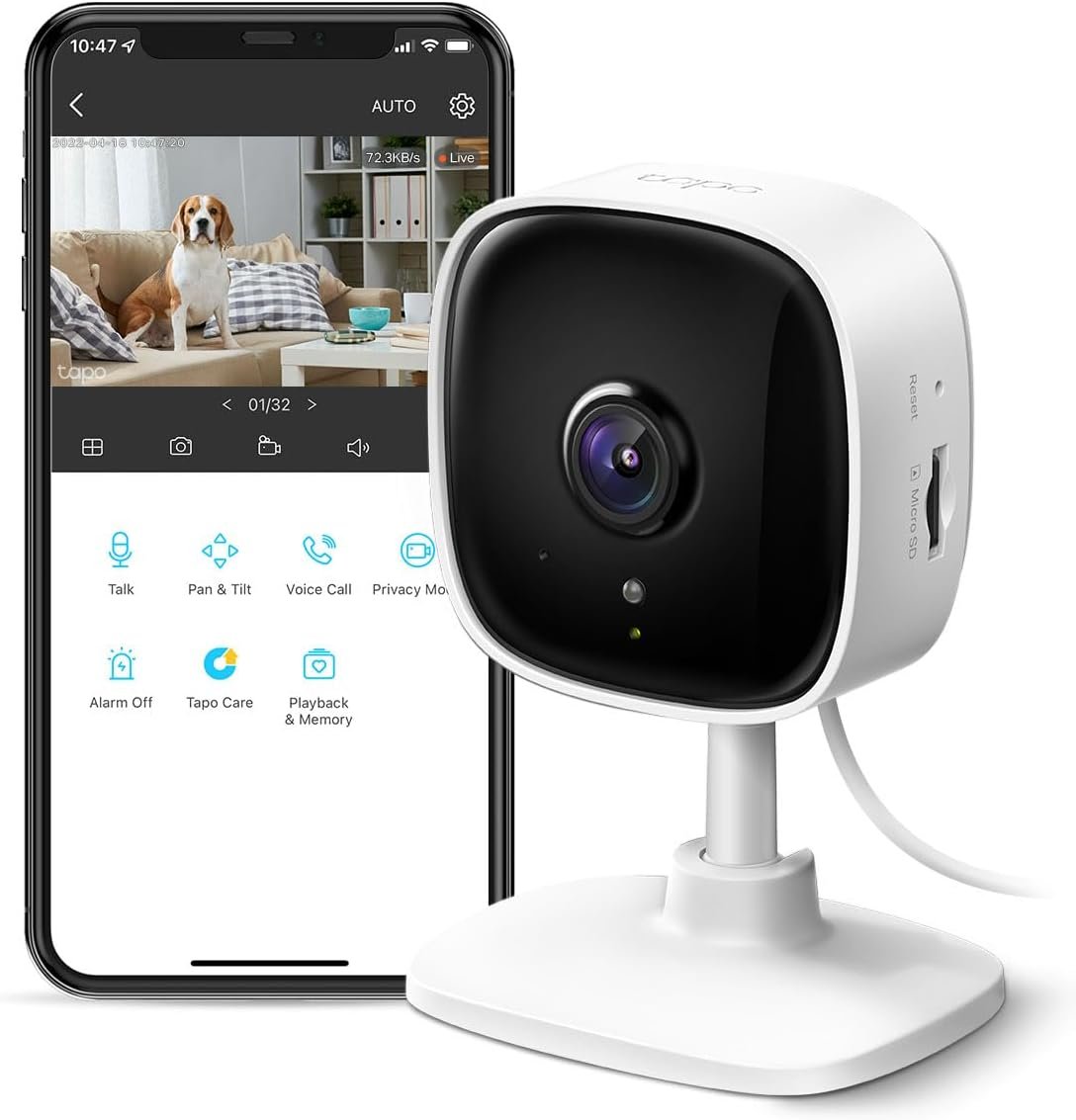
In the domain of smart home security, ensuring uncompromised surveillance integrity and operational resilience is paramount. The TP-Link Tapo C100 positions itself as an accessible indoor monitoring solution, designed to provide consistent visual oversight and immediate threat notification within a structured residential environment, albeit with inherent dependencies on stable network infrastructure and continuous power.
Core Specifications
- Video Resolution: The camera captures footage in 1080P Full High Definition (FHD), delivering a pixel density sufficient for discerning facial features or object details within its field of view, critical for post-incident analysis.
- Intelligent Detection Suite: Equipped with algorithms capable of differentiating general motion from human presence or specific acoustic signatures like a baby crying. This advanced filtering significantly reduces non-critical notifications, enhancing alert relevance.
- Integrated Communication & Deterrence: Features two-way audio for real-time vocal interaction, alongside an integrated siren function. This allows for both comforting occupants or pets and actively deterring potential unauthorized access.
- Infrared Spectral Illumination: An integrated IR emitter provides night vision capabilities extending up to 30 feet, ensuring continuous visual monitoring even in complete darkness, automatically adapting light conditions.
- Dual-Path Data Redundancy: Supports both local storage via an SD card slot (up to 128GB) and subscription-based cloud storage, offering data retention flexibility and redundancy against physical camera compromise.
- Wireless Connectivity Protocol: Operates exclusively on the 2.4GHz Wi-Fi band, which, while offering greater range and wall penetration, has a lower bandwidth ceiling compared to 5GHz, impacting peak live stream quality over congested networks.
- Cross-Platform Integration: Full compatibility with Amazon Alexa and Google Assistant ecosystems facilitates voice-activated live stream display on compatible smart screens, streamlining access to surveillance feeds.
- Nominal Power Draw: Designed for low power consumption via an AC/DC adapter, typically in the 5V/1A range, making it suitable for integration with localized uninterruptible power supply (UPS) systems for extended operational continuity during grid outages.
- Security Protocol Adherence: While specific encryption details are not extensively published, devices like the Tapo C100 typically utilize WPA2/WPA3 for Wi-Fi security and TLS 1.2+ for secure cloud data transmission, providing baseline data integrity.
Real-world Reliability
Operational resilience of the Tapo C100 is inherently tied to its power and network dependencies. During grid blackouts, the unit will cease function unless integrated with a dedicated Uninterruptible Power Supply (UPS) capable of sustaining its low DC power draw. In the event of Wi-Fi network instability or drops, the device is engineered for automatic reconnection upon network restoration, minimizing surveillance gaps. However, continuous footage recording during network outages relies solely on local SD card storage, underscoring the importance of redundant power and network infrastructure for sustained security integrity and robustness against minor power fluctuations.
Who is this for?
This device is ideally suited for residential occupants requiring basic, feature-rich indoor surveillance and alert capabilities within a controlled environment.
Data Breakdown
| Specification | Detail |
|---|---|
| Video Resolution | 1080P Full HD |
| Night Vision Range | 30 feet (Infrared) |
| Wireless Protocol | Wi-Fi 2.4GHz |
| Storage Options | Local (SD Card) & Cloud |
| Audio Features | 2-Way Audio, Built-in Siren |
| Detection Capabilities | Motion, Person, Baby Crying |
| Power Requirement | Low DC (AC Adapter) |
The Tech Advantages:
- Affordable entry point for smart home security.
- 1080P Full HD video with 30ft night vision.
- Intelligent detection (motion, person, baby crying) reduces false alerts.
- Two-way audio and built-in siren for communication and deterrence.
- Compatible with Alexa and Google Assistant.
- Low power draw for easy UPS integration.
The Trade-offs:
- Fixed field of view (no pan/tilt).
- Wired power supply requires stable grid or backup.
- Local storage limited to 128GB microSD.
- 2.4GHz Wi-Fi only, susceptible to network congestion.
- Optional cloud storage implies some features are subscription-dependent.
Summary Verdict: Spec Comparison
| Image | Product | Rating & Price | Action |
|---|---|---|---|
|
aosu Pro System | 4.4 Stars $49.99 |
View Specs |
|
WYZE Cam v4 | 4.4 Stars $35.97 |
View Specs |
|
Kasa EC70 | 4.4 Stars $25.99 |
View Specs |
|
Tapo C201 | 4.5 Stars $17.96 |
View Specs |
|
Tapo C100 | 4.4 Stars $15.96 |
View Specs |
TechGridPro’s Guide: Critical Factors for Subscription-Free Security
Selecting a smart home security camera without subscription demands a discerning eye for technical specifications that ensure sustained performance and data autonomy. At TechGridPro, we emphasize two core factors:
1. Local Storage Architecture & Capacity: True subscription-free operation hinges on robust local storage. This isn’t just about having a microSD slot; it’s about the maximum supported capacity, the reliability of the storage medium, and how footage is managed without cloud intervention. Cameras that support larger microSD cards (e.g., 256GB or 512GB) or integrate dedicated base stations with internal storage (like the aosu system) offer superior data retention. Evaluate whether the device encrypts local recordings, providing an essential layer of privacy and security against physical tampering or unauthorized access. A camera with insufficient local storage will quickly overwrite critical events, undermining its primary purpose. Always verify if essential features like event history, smart detection, or clip downloading are genuinely local-only or if they subtly push you towards a cloud plan after an initial trial.
2. Power Autonomy & Resilience: A security camera is useless if it’s offline during a critical event, especially during power outages. Assess the power source meticulously. Battery-powered cameras, particularly those with extended battery life (like the aosu with 240 days), offer unparalleled freedom from grid dependency and simplify installation. For wired cameras, consider their power draw (measured in Watts) and plan for uninterruptible power supply (UPS) integration. A low power draw (e.g., 3-5W) makes a wired camera more efficient for backup battery solutions. While wired connections generally offer more stable power and data, battery-powered units provide a critical fail-safe against grid instability, ensuring your surveillance remains active when traditional power fails. Always confirm the power input type (AC adapter vs. direct DC) for compatibility with your existing or planned off-grid power infrastructure.