
In an era where the resilience of our personal tech infrastructure is paramount, especially for those embracing off-grid living or seeking robust home security independent of constant connectivity, the choice of standalone smart window door alarms is more critical than ever. These devices form the foundational layer of any intelligent security system, providing crucial alerts and peace of mind. Unlike complex, wired systems, standalone units offer flexibility, ease of installation, and often, a more accessible entry point for bolstering your home’s defenses. For the discerning user focused on a secure, independent tech grid, understanding the nuances of connectivity, power management, and notification reliability is key to making an informed decision that aligns with their specific needs and environment.
Contents
Engineered for Autonomy: Our Top Standalone Smart Alarms Tested
1. tolviviov WiFi Door Alarm System
Expert Rating: 4.2/5 Stars | Est. Value: $59.99
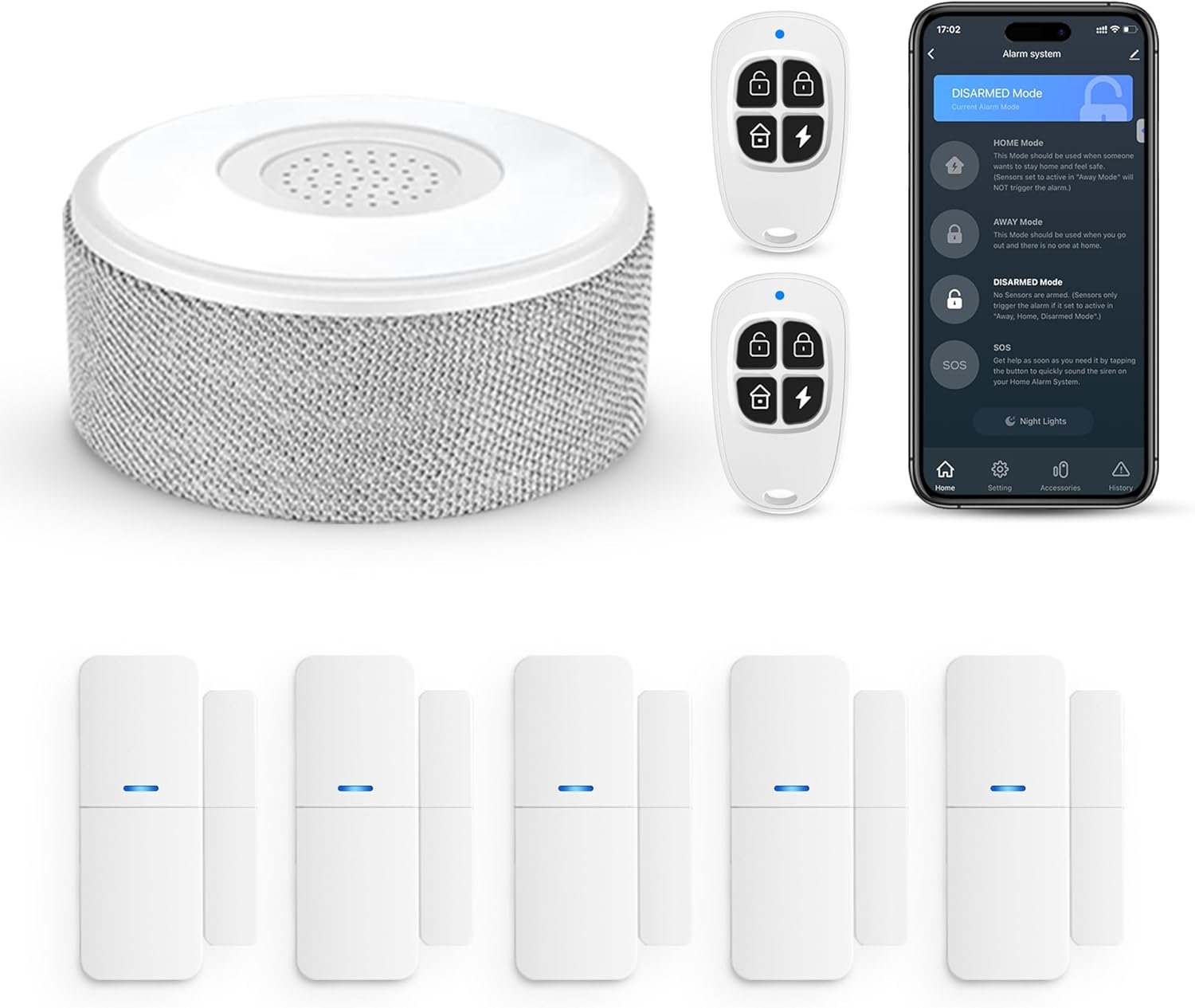
For the discerning homeowner seeking a layered security approach without the commitment of a professional service, the tolviviov WiFi Door Alarm System presents an accessible, albeit entry-level, solution. Its reliance on standard Wi-Fi and integration with voice assistants offers a degree of smart home synergy, but its limitations in robust power management and advanced encryption warrant careful consideration for true off-grid or high-security applications.
Core Specifications
- Connectivity: Operates exclusively on 2.4GHz Wi-Fi networks. Does not support 5GHz bands. Data transmission security protocols are not specified, raising concerns for sensitive environments.
- Power: The main alarm siren station requires continuous AC power. A built-in backup battery provides approximately 8 hours of operation in the event of AC power loss, functioning solely as an emergency buffer rather than a sustainable off-grid solution.
- Expansion Capability: Supports the addition of up to 20 additional sensors (door/window, motion, water detectors, wireless doorbell) and 5 remote controls or keypads to the central alarm station.
- System Components (8-Piece Kit): Includes 1 alarm siren station, 5 door/window sensors, and 2 remote controls.
- Voice Integration: Compatible with Amazon Alexa and Google Assistant for voice control of Away, Disarm, and Home modes.
Real-world Reliability
In scenarios of prolonged power outages, the 8-hour backup battery for the siren station offers minimal sustained protection. The system’s reliance on Wi-Fi means that any disruption to the home’s internet service will render remote monitoring and instant app notifications inoperable, compromising its “smart” functionality. Extreme environmental conditions impacting Wi-Fi signal strength or sensor operation are also potential vulnerabilities not addressed by detailed environmental ratings.
Who is this for?
This system is best suited for renters or budget-conscious homeowners prioritizing basic intrusion detection and app-based alerts within a stable Wi-Fi environment.
The Tech Advantages:
- Voice assistant integration for convenient control.
- Expandable system to accommodate additional sensors.
- Includes multiple sensors and remote controls in the starter kit.
The Trade-offs:
- Primary siren requires AC power.
- Limited backup battery life during power outages.
- Wi-Fi dependency can disable smart features during internet downtime.
- Unspecified data security protocols.
2. YoLink LoRa Smart Door Sensor Starter Kit
Expert Rating: 4.5/5 Stars | Est. Value: $59.59
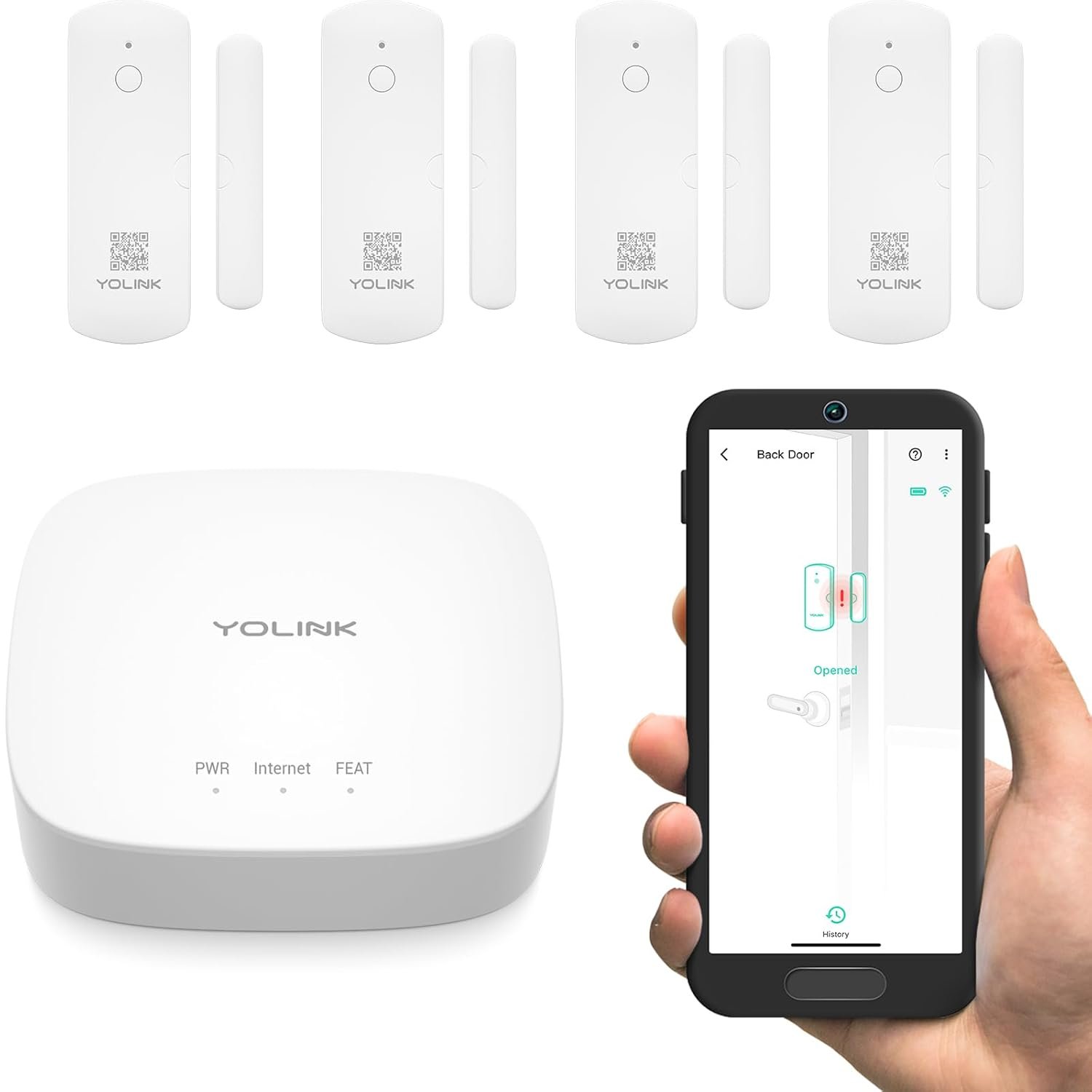
For the discerning homeowner prioritizing both security and independence, the YoLink LoRa Smart Door Sensor Starter Kit offers a compelling, fee-free approach to critical monitoring. This system leverages long-range LoRa communication to ensure persistent awareness of your property’s perimeter and internal access points, even in challenging off-grid scenarios or during power outages.
Core Specifications
- Connectivity: Proprietary LoRaWAN variant for extended range (up to 1/4 mile in open air), bridging to Wi-Fi via the included YoLink Hub for cloud connectivity.
- Sensor Type: Magnetic reed switch for door/window contact detection.
- Power Source: Each sensor utilizes a single CR2450 lithium battery, rated for approximately 5 years of operation under typical usage patterns. The YoLink Hub requires a standard AC power outlet connection.
- Alerting Mechanisms: Supports SMS/text messages, email notifications, and in-app alerts. Integration with Alexa, IFTTT, and Home Assistant is available for custom automation and audible alerts via the optional SpeakerHub.
- Range: LoRaWAN’s inherent superior penetration and range compared to typical Wi-Fi or Zigbee sensors, making it suitable for larger properties or multi-unit dwellings where signal obstruction is a concern.
- Battery Life: Advertised 5 years for sensors, minimizing maintenance and ensuring continuous operation without frequent battery replacements.
Real-world Reliability
The YoLink system’s reliance on LoRa communication provides a significant advantage in off-grid or unstable network environments. Unlike purely Wi-Fi dependent sensors that cease functioning during an internet outage, the LoRa sensors communicate directly with the YoLink Hub. If the Hub also loses its Wi-Fi connection, the system can still maintain local functionality and trigger alerts via its SMS gateway (requiring cellular service on the Hub if that feature is utilized, or an alternative notification path if not). The battery-driven nature of the sensors ensures they remain operational during power failures, providing a critical layer of security when it’s needed most.
Who is this for?
This kit is ideal for homeowners, small businesses, or anyone seeking robust, fee-free perimeter and access monitoring with exceptional range and long battery life, particularly those in areas with intermittent internet or power.
The Tech Advantages:
- Exceptional LoRa range for large properties.
- Long sensor battery life (approx. 5 years).
- Multiple alert options including SMS.
- Minimal maintenance due to battery-powered sensors.
- Works independently of Wi-Fi for basic functionality.
The Trade-offs:
- Requires a dedicated YoLink Hub.
- Hub still relies on Wi-Fi for cloud connectivity.
- SMS alerts may require a cellular plan on the hub for certain configurations.
- Proprietary LoRaWAN variant may limit third-party integration beyond stated options.
3. Tapo T31 KIT
Expert Rating: 4.3/5 Stars | Est. Value: $149.99
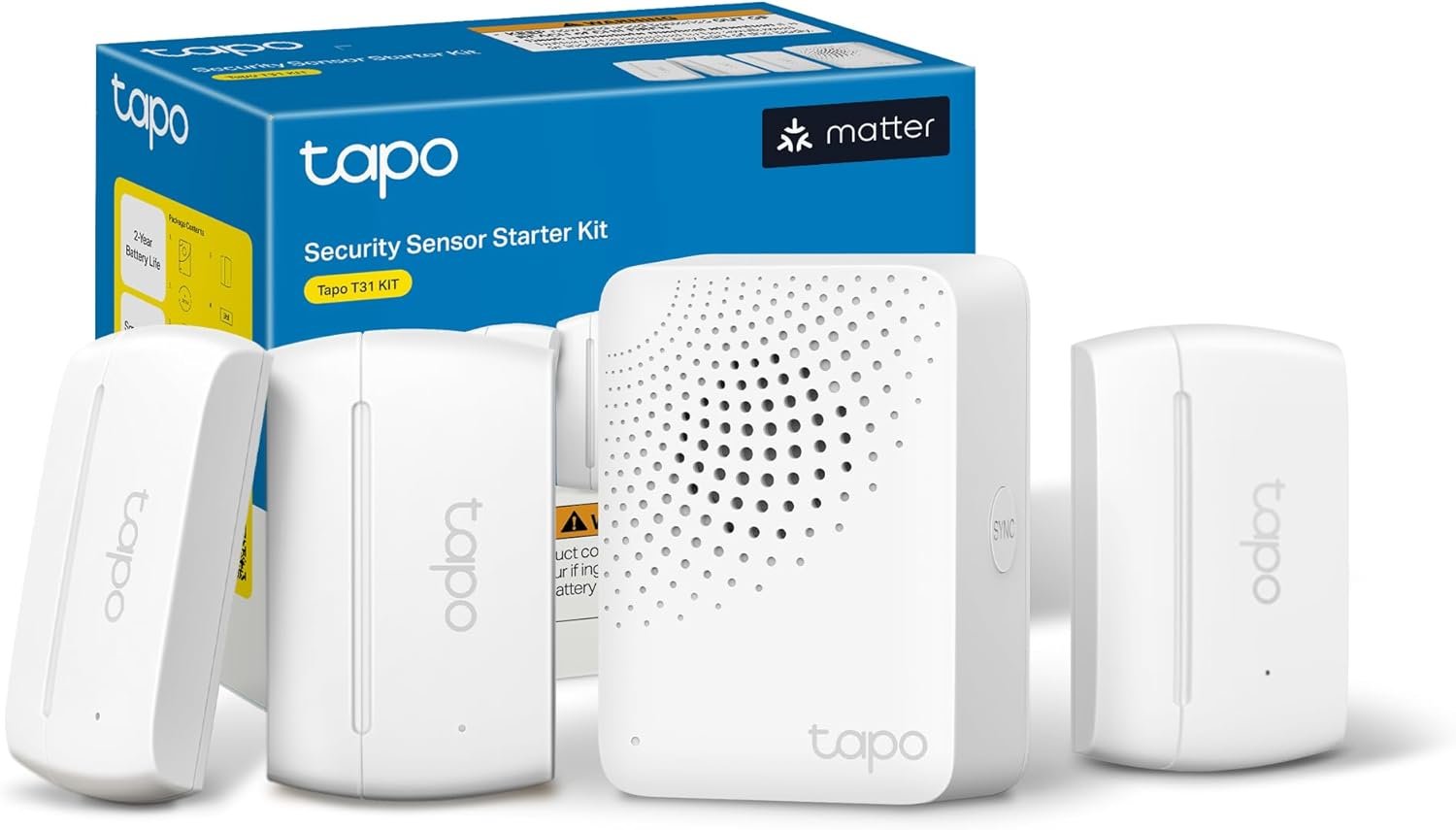
In an era where resilient home security and reliable off-grid power are paramount, the Tapo T31 KIT presents an intriguing, albeit segmented, approach to smart home safety. While this particular kit focuses solely on contact sensing, its Matter certification hints at a broader ecosystem potential that, if realized with robust cybersecurity, could be a valuable addition to a self-sufficient dwelling.
Core Specifications
- Connectivity: The Tapo H100 Smart Hub requires a 2.4 GHz Wi-Fi connection for initial setup and cloud integration. The T110 contact sensors utilize the Sub-G protocol, a low-power, long-range wireless technology (reportedly extending battery life up to 10x compared to Wi-Fi). The hub itself supports connecting up to 64 devices.
- Alarm System: The integrated chime in the H100 hub can produce a 90dB alarm, a moderate deterrent. The system provides real-time notifications via the Tapo App.
- Matter Compatibility: Certified for Matter, this kit is designed to interoperate with other Matter-enabled devices and platforms (Alexa, Google Home, Apple HomeKit, Samsung SmartThings). This is a crucial aspect for building a cohesive smart home network.
- Power Management: While the hub requires mains power (exact Wattage not specified), the T110 sensors operate on batteries (type and estimated lifespan not detailed in the provided information). The Sub-G protocol’s inherent low power draw is a significant advantage for off-grid battery longevity.
Real-world Reliability
In scenarios of prolonged power outages, the reliance on a Wi-Fi network for the Tapo Hub’s core functionality is a critical vulnerability. Without a stable internet connection and grid power, the real-time notifications and remote monitoring capabilities would cease. While the Sub-G sensors themselves operate independently of Wi-Fi once paired with the hub, their utility is diminished without the hub’s cloud connectivity. Extreme weather impacting Wi-Fi infrastructure would similarly render the remote access features inoperable.
Who is this for?
This kit is for individuals seeking foundational door and window monitoring within a broader, potentially Matter-enabled, smart home setup, contingent on reliable Wi-Fi and mains power.
The Tech Advantages:
- Matter certification for broad smart home interoperability.
- Sub-G protocol for potentially long sensor battery life.
- Hub supports a high number of connected devices.
- Integrated 90dB alarm chime.
The Trade-offs:
- Smart features dependent on Wi-Fi and internet connection.
- Main hub requires AC power.
- Sensor battery type and lifespan not detailed.
- Higher price point for a basic contact sensing kit.
4. Tuya Smart WiFi Door Sensor
Expert Rating: 4.0/5 Stars | Est. Value: $12.99
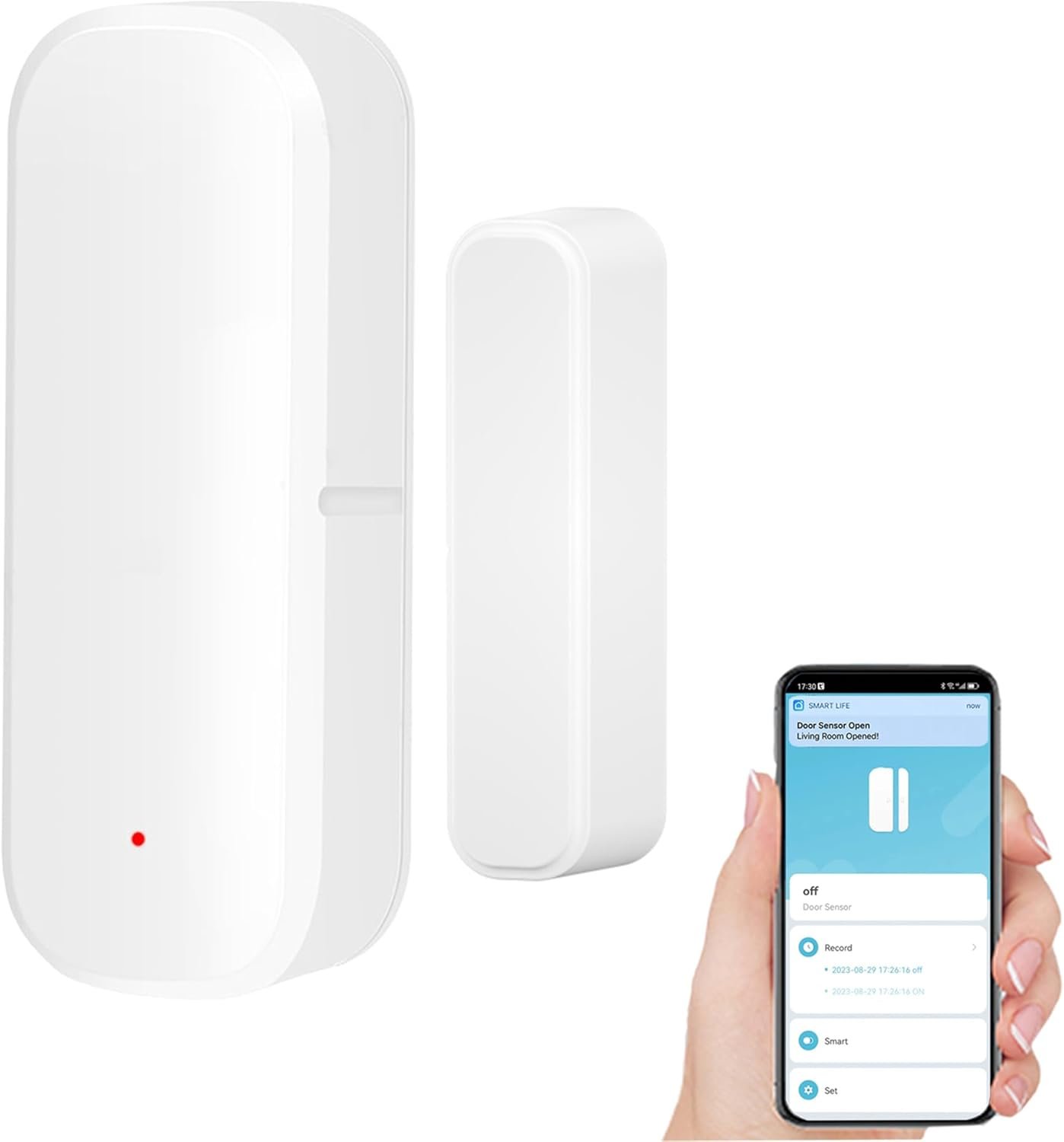
In an era of increasing cybersecurity threats and the growing imperative for energy independence, robust and reliable smart home peripherals are no longer a luxury, but a necessity. This Tuya-based WiFi door sensor offers a foundational layer of intrusion detection without the commitment of a proprietary hub, making it an accessible entry point for enhanced home security.
Core Specifications
- Connectivity: Operates exclusively on the 2.4GHz WiFi band, a critical detail for users with modern dual-band routers. It leverages the Tuya Smart or Smart Life application ecosystem for remote monitoring and control.
- Power Management: Utilizes 2x AAA batteries, specified to provide over six months of operational life under typical usage scenarios. Low battery alerts are a standard feature, transmitted via push notifications to the connected smartphone. Estimated power consumption, assuming an average of 10 activations per day at 10mA per activation and a 3V battery, is roughly 0.00018 Watt-hours per day, or approximately 0.066 Watt-hours per year, a remarkably low draw.
- Integration Capabilities: Fully compatible with Amazon Alexa and Google Assistant for voice queries regarding the status of connected doors or windows. Crucially, it supports automation routines within the Tuya platform, allowing it to trigger other Tuya-compatible smart devices (e.g., lights, switches) based on its open/closed state.
- Installation & Deployment: Features a simple adhesive mounting system (3M sticker included) and is designed for a broad range of applications beyond traditional doors and windows, including mailboxes, refrigerators, and drawers.
Real-world Reliability
While the sensor itself is designed for low-power operation, its reliance on a stable 2.4GHz WiFi connection is paramount. In the event of a localized Wi-Fi outage or internet service disruption, the sensor will be unable to transmit real-time alerts. However, the physical magnetic contact mechanism will still register changes in state. Upon network restoration, the device should re-establish connection and synchronize its state. For off-grid applications, a robust and stable Wi-Fi network provided by a local, independent router (powered by an inverter/battery system) is essential. Extreme weather conditions are unlikely to directly affect the internal electronics, provided the installation location offers adequate environmental protection.
Who is this for?
This sensor is ideal for users seeking cost-effective, hub-less smart home security monitoring and basic automation for individual entry points, particularly those already invested in or willing to adopt the Tuya Smart ecosystem.
The Tech Advantages:
- Extremely cost-effective for individual sensors.
- Hub-less design simplifies setup and reduces points of failure.
- Long battery life (over 6 months).
- Supports voice assistants and automation routines.
- Versatile mounting for various applications.
The Trade-offs:
- Strictly Wi-Fi dependent for notifications.
- Requires a 2.4GHz Wi-Fi network.
- Relies on the Tuya/Smart Life ecosystem.
- No integrated siren; alerts are purely app-based.
Summary Verdict: Spec Comparison
| Image | Product | Rating & Price | Action |
|---|---|---|---|
|
tolviviov WiFi Door Alarm | 4.2 Stars $59.99 |
View Specs |
|
YoLink LoRa Smart Door Sensor | 4.5 Stars $59.59 |
View Specs |
|
Tapo T31 KIT | 4.3 Stars $149.99 |
View Specs |
|
Tuya Smart WiFi Door Sensor | 4.0 Stars $12.99 |
View Specs |
Key Technical Considerations for Independent Security
When building a resilient smart home security system, especially with an eye towards off-grid functionality, two primary technical factors deserve meticulous attention: communication protocol reliability and power management strategies. For standalone smart window door alarms, understanding the underlying technology that transmits alerts is paramount. Protocols like Wi-Fi, while ubiquitous, are inherently dependent on a stable internet connection and power supply. For truly independent operation, consider systems utilizing long-range, low-power technologies like LoRaWAN (as seen with YoLink), which can establish direct sensor-to-hub communication and potentially send alerts even when your primary internet is down. This choice directly impacts the system’s resilience during power outages or network disruptions. Secondly, the power source and consumption of both the sensors and any associated hubs are critical. Battery-powered sensors are a must for continuous operation during grid failures. However, it’s crucial to assess not only the advertised battery life but also the efficiency of the device’s power management and the availability of low-battery notifications. For systems requiring a central hub, ensure it has adequate backup power or is integrated into your existing off-grid power solution (e.g., solar and battery storage) with appropriate inverter capacity to handle its load.