
In the ever-evolving landscape of smart home technology, achieving a secure and independent digital infrastructure hinges significantly on reliable, self-sustaining hardware. For those looking to fortify their perimeters without the constraints of wired power or constant maintenance, the solar powered wireless security camera outdoor is no longer a niche curiosity but a cornerstone of resilient home security. Choosing the right device means balancing advanced features with genuine power autonomy, ensuring your watchful eyes remain open, come rain or shine, and without adding to your monthly utility bills.
Contents
Unveiling the Top Solar WiFi Cameras: Our Tested Picks
1. Tapo SolarCam C402
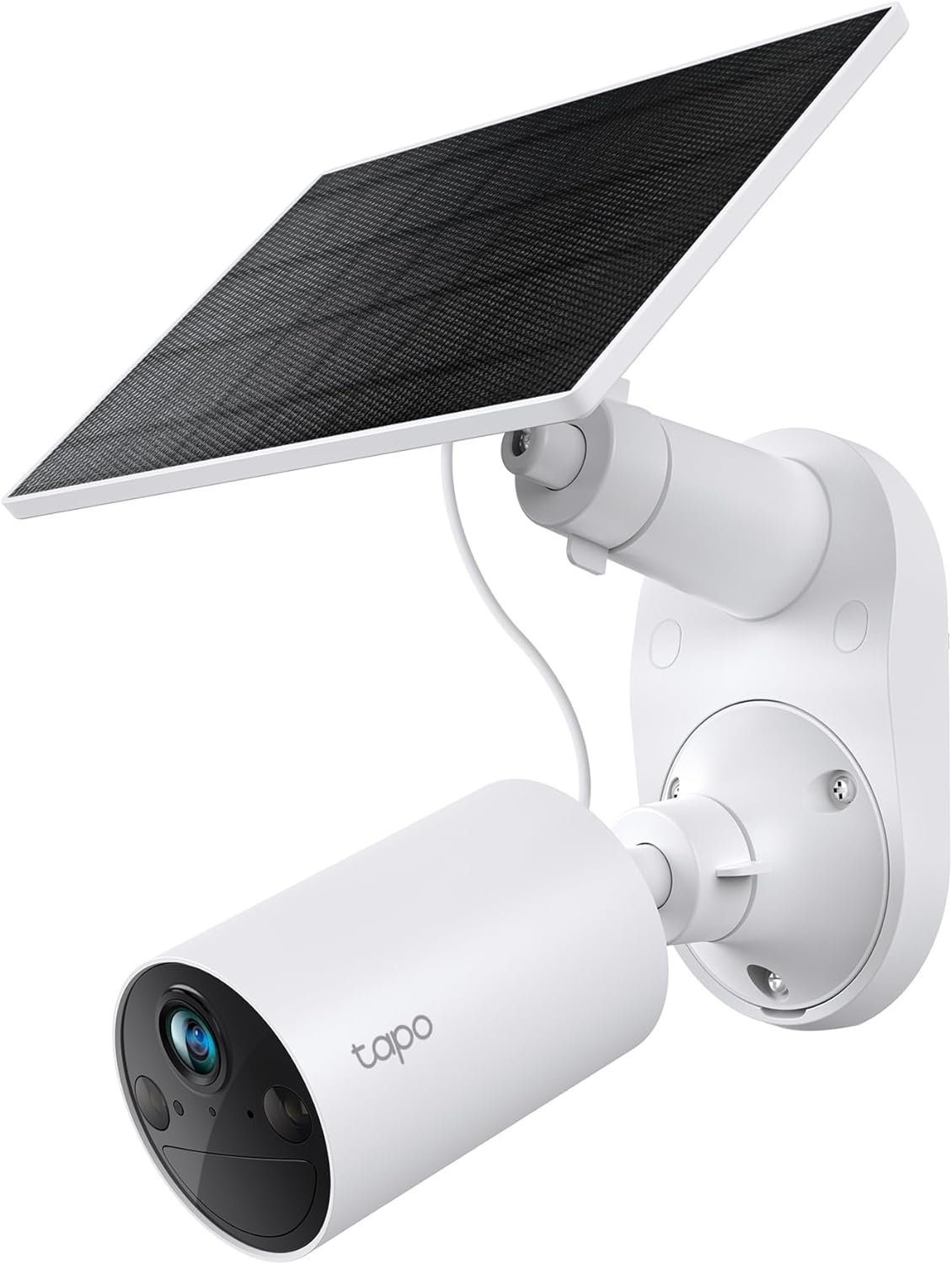
Expert Rating: 4.2/5 Stars | Est. Value: $47.99
Achieving robust off-grid surveillance demands meticulous attention to power autonomy and data integrity. The Tapo SolarCam C402 presents a compelling proposition for those prioritizing continuous monitoring without reliance on grid power, leveraging solar replenishment to maintain operational readiness.
Core Specifications
- Power System: Integrated modular solar panel with a rechargeable battery pack. While specific Watt-hour (Wh) ratings for the battery are not provided, the system claims up to 180 days of operation on a full charge, suggesting an optimized low-power standby mode. The solar panel’s continuous trickle charge is crucial for maintaining this longevity.
- Video Resolution: Records at 1080p (Full HD) resolution, offering 1920 x 1080 pixels. This provides sufficient detail for identifying individuals and general scene monitoring.
- Night Vision: Features color night vision up to 30 feet, augmented by built-in spotlights. This is a significant advantage over traditional infrared night vision for identifying details in low-light conditions.
- Connectivity: Utilizes Wi-Fi for data transmission. Robustness against network drops is a critical consideration for any remote surveillance device.
- Storage: Supports local storage via microSD card (up to 512GB) and optional cloud storage through Tapo Care subscription. Local storage provides a fallback mechanism for data retention in the event of cloud connectivity issues.
- Detection: Employs person and motion detection with definable activity zones to minimize false alerts, a key feature for managing notification fatigue and focusing on actionable events.
Real-world Reliability
In prolonged periods of reduced sunlight, the 180-day standby claim suggests a conservative power draw. However, the actual runtime will be heavily dependent on the intensity and duration of available sunlight for recharging. While the wire-free design offers installation flexibility, consistent solar input is paramount. In scenarios with frequent cloud cover or extended power outages, manual battery recharges or supplemental power sources would likely become necessary. The reliance on Wi-Fi means that network instability will directly impact real-time monitoring and remote access capabilities. Data encryption standards are not explicitly detailed, which is a critical oversight for a security device. Users should verify the specific encryption protocols employed by Tapo to ensure data security.
Who is this for?
This is for individuals seeking convenient, self-sustaining outdoor surveillance for areas without easy access to power outlets.
The Tech Advantages:
- 180-day battery claim offers extended off-grid operation.
- Color night vision with spotlights enhances low-light identification.
- Local storage provides data redundancy.
- Person detection minimizes false alerts.
The Trade-offs:
- Actual runtime is highly dependent on sunlight exposure.
- Wi-Fi dependency can affect real-time access.
- Specific data encryption details are not prominent.
2. AOSU Solar Camera
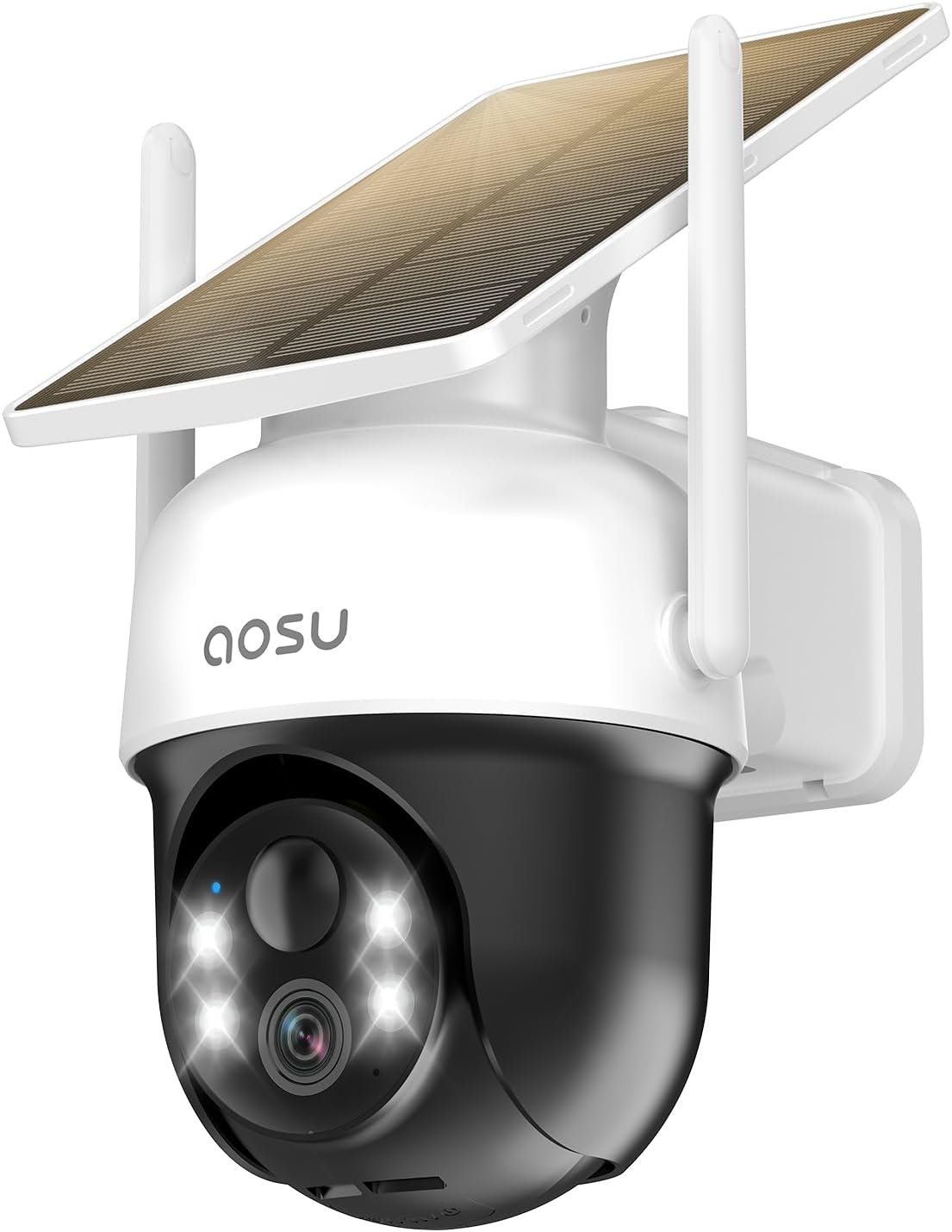
Expert Rating: 4.3/5 Stars | Est. Value: $69.99
For those prioritizing uncompromised security and true off-grid operation, the AOSU Solar Camera presents a compelling, wire-free solution. This device is engineered to eliminate the reliance on conventional power grids and constant battery maintenance, offering a robust, continuous surveillance capability powered solely by sunlight.
Core Specifications
- Power System: Integrated fixed solar panel designed for continuous recharging via direct sunlight, aiming for 365 days of operation without manual battery intervention. Estimated daily energy generation would depend heavily on solar irradiance, but continuous operation implies a battery capacity sufficient to cover nighttime and low-light periods, likely in the tens of Watt-hours (Wh) range for sustained 24/7 functionality.
- Video Resolution: Features “upgraded real 2K” resolution, translating to 2304 x 1296 pixels, providing enhanced detail and clarity for both daytime and nighttime surveillance compared to standard 1080p.
- Connectivity: Operates exclusively on 2.4GHz Wi-Fi networks, a critical consideration for network planning and ensuring compatibility with existing home infrastructure.
- Field of View & Tracking: Offers a 360-degree panoramic view with PTZ (Pan-Tilt-Zoom) capabilities allowing manual directional control via app. Incorporates “Human Auto Tracking” which automatically pans and tilts to follow detected human motion, capturing more context during an event.
- Durability: Rated IP65 weatherproof, indicating robust protection against dust ingress and low-pressure water jets, suitable for outdoor deployment in various climatic conditions.
- Smart Features: Includes AI-driven human detection for more accurate alerts, compatibility with Alexa and Google Assistant for voice control, and a “Smart Alert” system for event notifications.
Real-world Reliability
The AOSU Solar Camera is engineered for resilience, particularly in scenarios where grid power is intermittent or unavailable. Its solar charging system, when exposed to sufficient daily sunlight, aims to provide perpetual power, negating the need for battery swaps. In the event of a Wi-Fi network interruption, local recording capabilities (if supported, though not explicitly stated) would be crucial, but for full functionality, a stable 2.4GHz connection is paramount. The IP65 rating ensures it can withstand moderate environmental challenges like rain and dust.
Who is this for?
Ideal for homeowners seeking perpetual surveillance without wiring or battery management, or those in areas with unreliable grid power.
The Tech Advantages:
- Claimed 365 days of operation on a single charge is industry-leading.
- 2K resolution provides superior image detail.
- 360-degree PTZ with auto-tracking offers comprehensive coverage.
- IP65 rating ensures durability against elements.
The Trade-offs:
- Restricted to 2.4GHz Wi-Fi networks.
- Local storage functionality is not explicitly detailed.
- Requires consistent direct sunlight for optimal performance.
3. aosu Security Cameras Outdoor Wireless
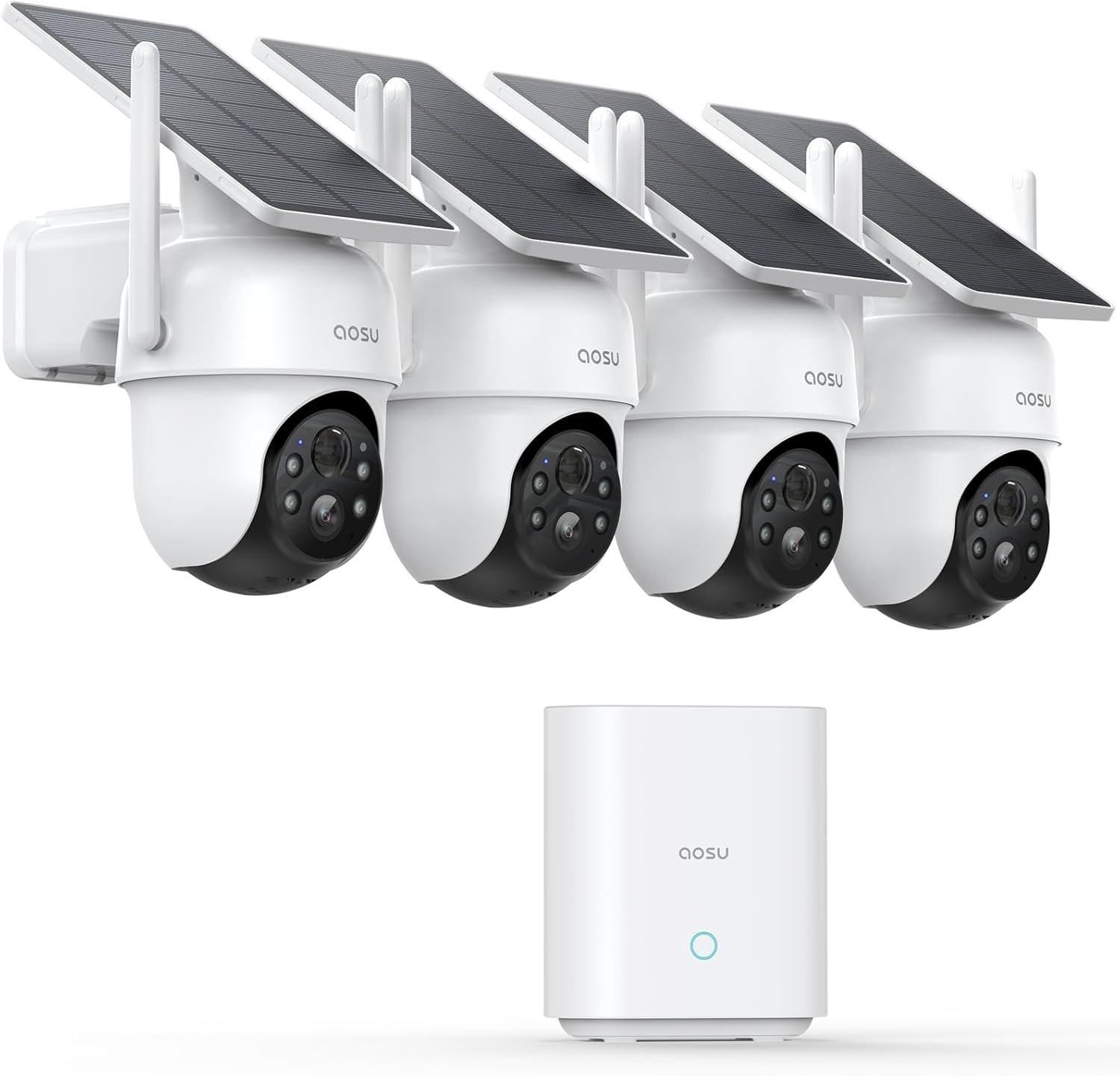
Expert Rating: 4.4/5 Stars | Est. Value: $379.99
Achieve robust, subscription-free home security and unparalleled power independence with the aosu Wireless Outdoor Camera System. Designed for the discerning homeowner prioritizing data security and continuous operation, this kit delivers comprehensive surveillance without ongoing costs.
Core Specifications
- Video Resolution: 3MP (2K) resolution ensures detailed image capture, critical for identification. Color night vision is enhanced by 4 LED lights, a significant improvement over typical dual-LED systems, promising improved visibility in low-light conditions.
- Local Storage: 32GB of encrypted local storage within the aosuBase eliminates subscription fees and ensures data remains secure even if the cameras are compromised. This capacity supports approximately 4 months of loop recording, a data retention period suitable for most residential security needs.
- Power System: Integrated solar panels are designed to continuously charge the camera batteries. The manufacturer claims 3 hours of daily sunlight is sufficient for operation, even under suboptimal weather conditions. This translates to an estimated daily energy input requirement. While specific Watt-hour (Wh) figures for daily consumption are not provided, the solar charging capability aims for perpetual operation, reducing reliance on grid power or frequent battery swaps.
- Connectivity: The system relies on Wi-Fi connectivity to the aosuBase for live streaming and notifications. The performance of this wireless link is paramount to the system’s real-time functionality.
- Pan & Tilt with Auto Tracking: 360° pan and tilt functionality, coupled with auto-tracking, provides comprehensive coverage without blind spots. This feature intelligently follows detected motion, ensuring continuous recording of events.
- Cross-Camera Tracking: A novel feature that automatically correlates video events across multiple cameras, simplifying review processes for a unified understanding of incidents.
Real-world Reliability
The solar-powered design is the cornerstone of this system’s off-grid potential, theoretically rendering it resilient to power outages. However, sustained operation during extended periods of heavy cloud cover or severe winter conditions where solar irradiance is significantly reduced would be a critical test of its energy management and battery capacity. Similarly, Wi-Fi network interruptions could temporarily disable remote access and live streaming, though local recording should continue uninterrupted assuming battery power is maintained.
Who is this for?
This system is ideal for off-grid homesteads or homeowners seeking to minimize recurring expenses and maximize security autonomy.
The Tech Advantages:
- Subscription-free operation with generous local storage (32GB).
- 3 hours of daily sunlight claim for continuous charging.
- 360° pan and tilt with cross-camera tracking offers advanced surveillance.
- 4 LED lights for enhanced color night vision.
The Trade-offs:
- Higher initial investment for a multi-camera system.
- Performance heavily relies on consistent solar input.
- System complexity may require more setup time.
4. TKENPRO Solar Security Camera
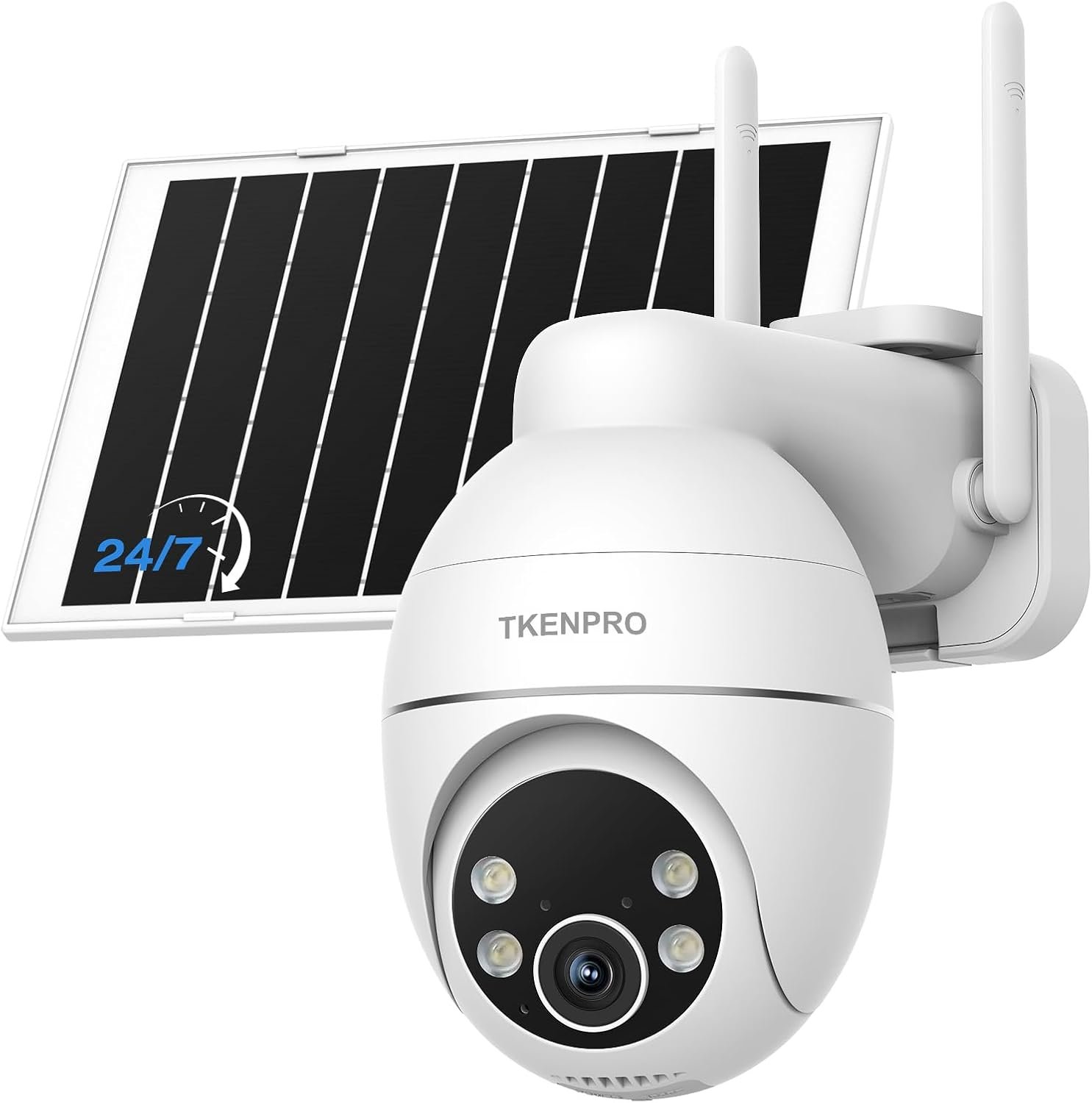
Expert Rating: 4.8/5 Stars | Est. Value: $35.13
In an era where robust security and independent power are paramount, the TKENPRO solar security camera aims to provide a compelling solution. This device integrates advanced detection capabilities with a self-sustaining power model, offering a vigilant eye over your property without reliance on grid infrastructure.
Core Specifications
- Video Resolution: Records at a 2K resolution, offering 2304 x 1296 pixels for detailed image capture.
- Night Vision: Features 2K color night vision, providing enhanced visibility and detail in low-light conditions beyond standard infrared.
- Field of View: Offers a 360° panoramic view, eliminating blind spots and ensuring comprehensive surveillance coverage.
- AI Smart Detection: Utilizes AI for human detection up to 98 feet, distinguishing between general motion and specific human activity to reduce false alerts. Includes auto-tracking for detected subjects.
- Power System: Powered by a high-capacity battery coupled with an 8W solar panel. The camera employs a low frame rate recording mode for power conservation during inactivity, automatically switching to a higher frame rate upon motion detection. Continuous recording is achievable with sufficient solar input and moderate activity.
- Connectivity: Operates on the 2.4GHz Wi-Fi frequency band for wireless network connectivity.
- Durability: IP65 weatherproof rating ensures resilience against dust ingress and low-pressure water jets, making it suitable for outdoor installation in various environmental conditions.
Real-world Reliability
The TKENPRO’s solar-powered design is its primary off-grid advantage. In the event of a grid power outage, its internal battery and solar charging continue operation, provided there is adequate sunlight. For network resilience, it relies on a stable 2.4GHz Wi-Fi connection. Network drops will prevent remote access and push notifications, but local recording (if supported by the specific firmware/app configuration) would continue. The IP65 rating offers protection against moderate environmental stressors like rain and dust, but prolonged exposure to extreme conditions or potential physical damage from severe weather is a consideration for any outdoor electronic device.
Who is this for?
This camera is ideal for off-grid homesteads, remote property monitoring, or those seeking to reduce their reliance on grid power for security infrastructure.
The Tech Advantages:
- Exceptional 4.8/5 rating signifies high user satisfaction.
- 2K color night vision offers superior low-light detail.
- 360° panoramic view with AI auto-tracking covers wide areas.
- IP65 weatherproof rating for robust outdoor performance.
- Aggressive pricing makes it highly accessible.
The Trade-offs:
- Power-saving low frame rate mode may miss some fast-moving events.
- Relies on 2.4GHz Wi-Fi only.
- Local storage details need verification for specific use cases.
Summary Verdict: Spec Comparison
| Image | Product | Rating & Price | Action |
|---|---|---|---|
|
Tapo SolarCam C402 | 4.2 Stars $47.99 |
View Specs |
|
AOSU Solar Camera | 4.3 Stars $69.99 |
View Specs |
|
aosu Wireless Outdoor | 4.4 Stars $379.99 |
View Specs |
|
TKENPRO Solar Camera | 4.8 Stars $35.13 |
View Specs |
Key Technical Factors for Solar Cameras
When evaluating solar powered wireless security cameras for outdoor use, two technical aspects are paramount for true independence and reliability: battery capacity and solar panel efficiency. A larger battery capacity (measured in Watt-hours, Wh) directly translates to longer operation during periods of low sunlight or at night. It’s crucial to understand how this capacity is managed; some cameras employ intelligent power-saving modes, like reducing frame rates when no motion is detected, to extend battery life. Complementing the battery is the solar panel’s efficiency and size. A higher wattage panel (e.g., 5W, 8W, or more) will recharge the battery faster and more effectively, even under less-than-ideal solar conditions. Look for specifications that indicate sustained operation with realistic daily sunlight exposure (e.g., “3 hours of sunlight per day”).