



Technical Review & Analysis
Elevate your surveillance with the Reolink TrackMix PoE, a revolutionary 4K PTZ security camera system designed for unparalleled clarity and intelligent tracking. Experience the future of outdoor security, blending cutting-edge technology with robust reliability. This system is engineered for those who demand the best, whether connected to a standard network or integrated into an off-grid energy setup.
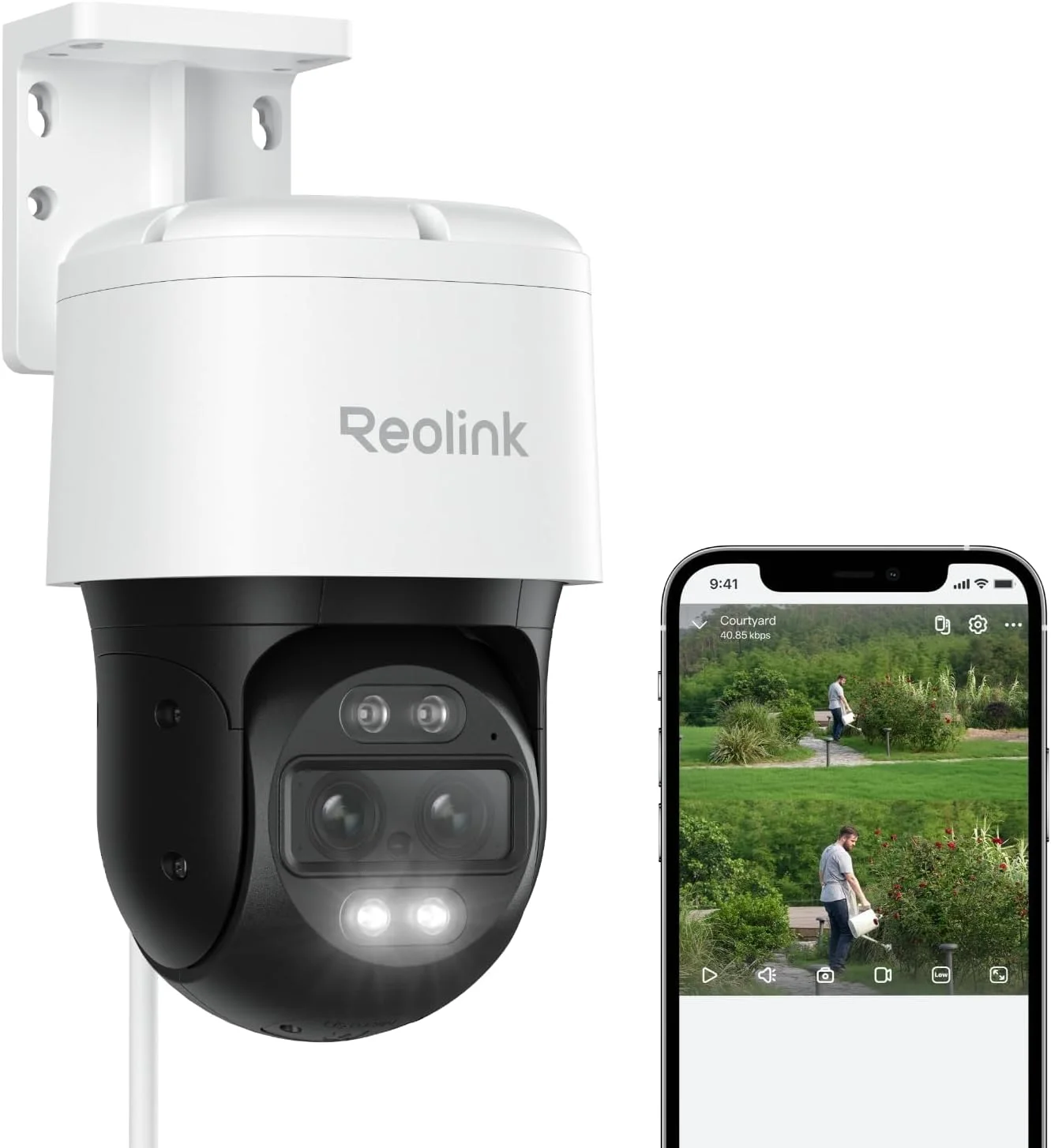
Introducing the Reolink TrackMix PoE: Comprehensive 4K Surveillance
Contents
Unrivaled Dual-Lens Clarity and Zoom
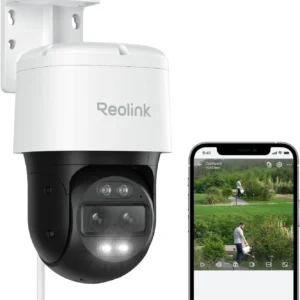
Witness the world in stunning detail with the Reolink TrackMix PoE’s innovative dual-lens design. A 2.8mm wide-angle lens provides an expansive panoramic view, capturing the bigger picture, while the 8mm telephoto lens offers sharp, detailed close-ups. Seamlessly switch between views or utilize the unique dual-view feature on a single screen to monitor vast areas and intricate details simultaneously. This camera adapts to your surveillance needs, offering unparalleled visual coverage.

Dual lenses ensure you never miss a detail, from panoramic vistas to granular close-ups.
Intelligent Auto-Tracking and 6X Hybrid Zoom
Never lose sight of your subject with the advanced Auto Tracking and 6X Hybrid Zoom capabilities. The camera automatically detects and follows moving people, vehicles, and pets, with the telephoto lens intelligently zooming in to capture crucial details. Choose from three distinct tracking modes to perfectly tailor the camera’s behavior to your specific environment. The close-up view is delivered in crisp 2MP or stunning 4K resolution, ensuring absolute clarity when it matters most.
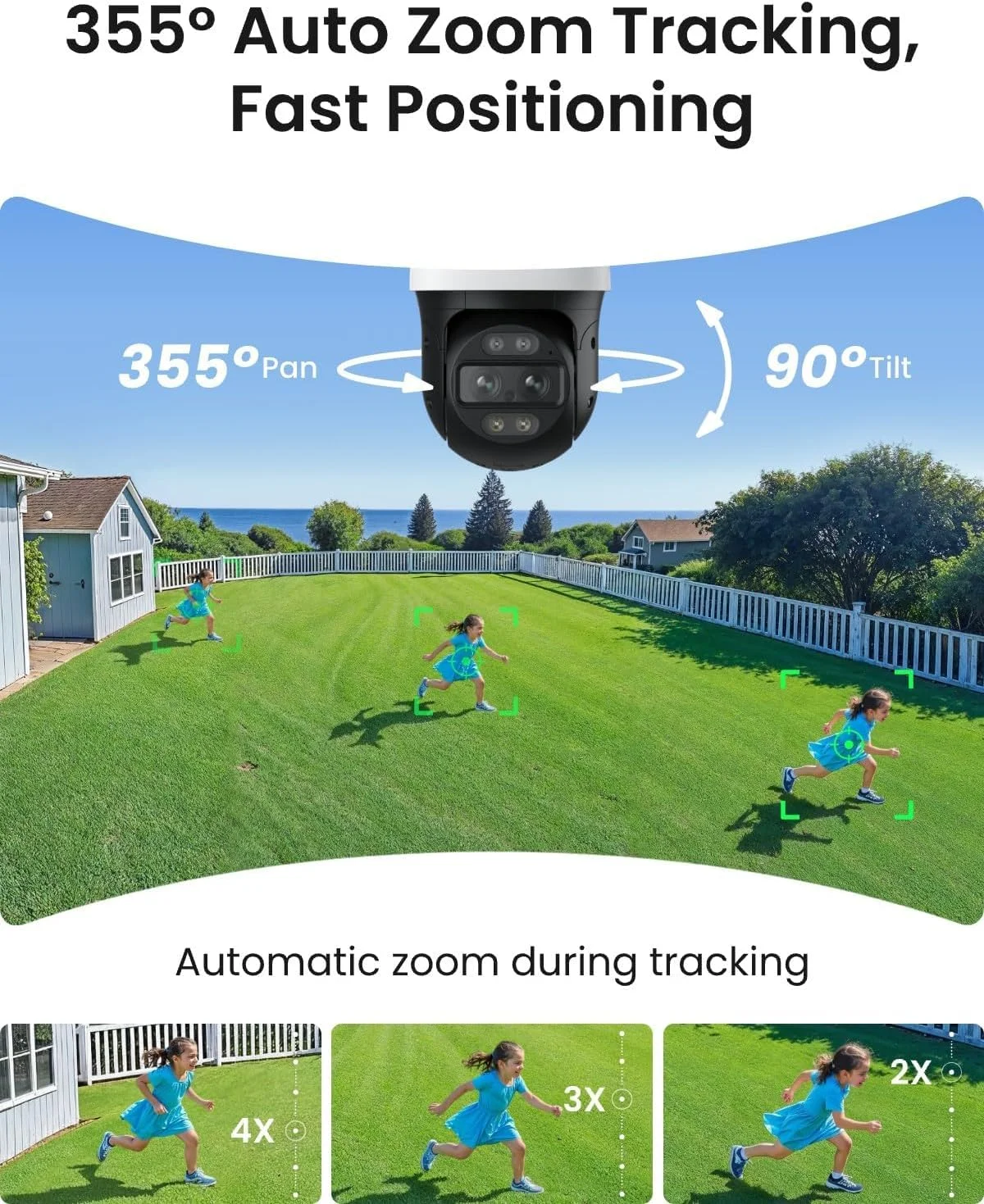
Automated tracking and 6X zoom keep moving subjects in sharp focus.
Smart AI Detection and Seamless Playback
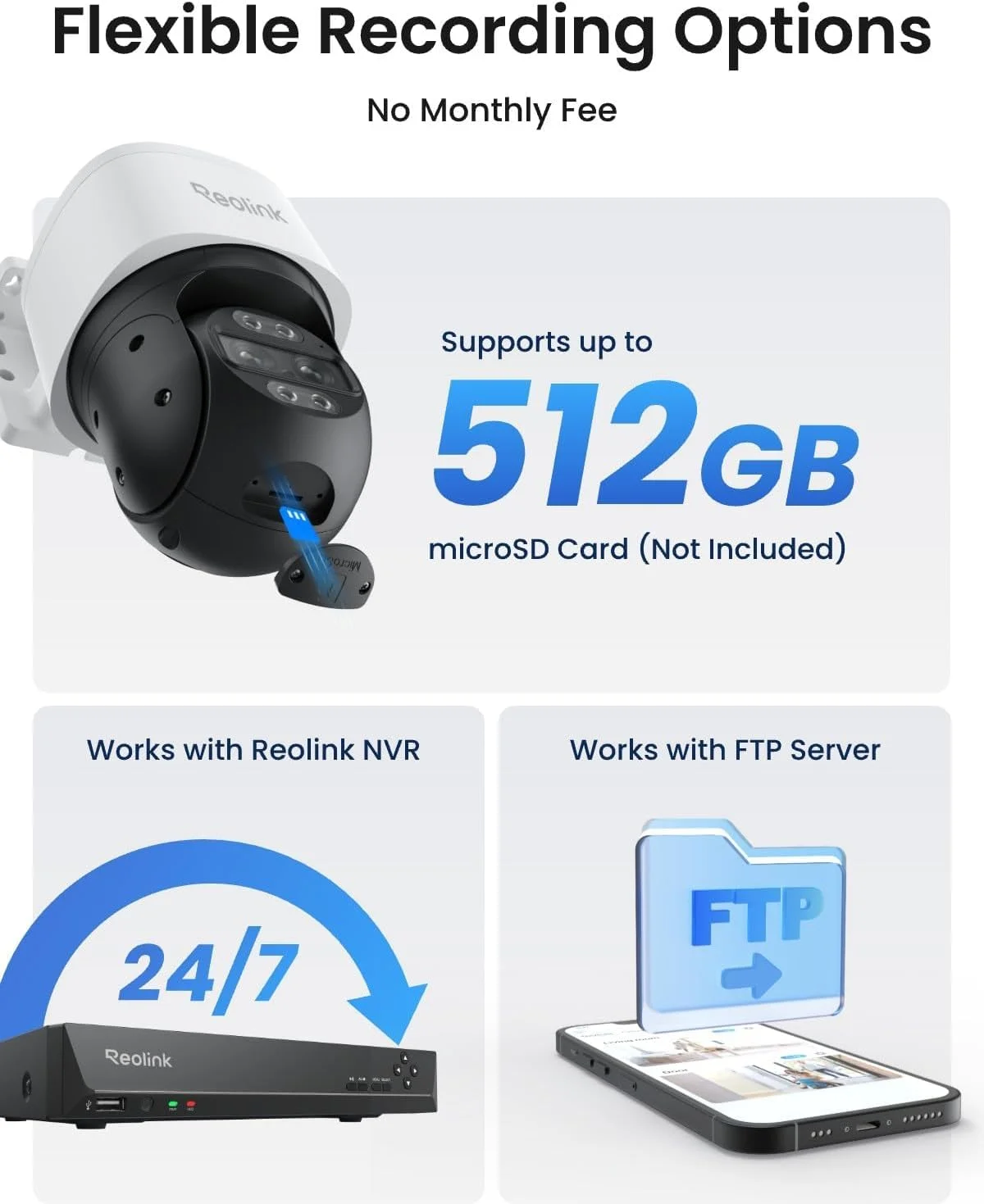
Reduce false alarms and streamline your security monitoring. The TrackMix PoE features advanced AI detection, accurately identifying people, vehicles, and pets. This intelligent system allows for efficient playback, with the ability to filter recordings by detection type and navigate the timeline to quickly find specific events. Enjoy comprehensive surveillance without recurring subscription fees.

Smart AI minimizes false alerts, focusing on genuine security events.
Instant Alerts and Deterrence
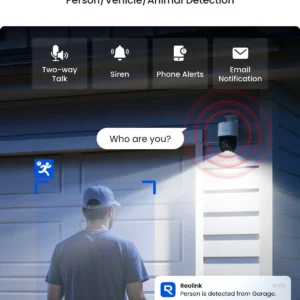
Stay informed and in control with instant alerts. Upon detecting suspicious motion, the camera activates integrated spotlights and a siren to deter potential intruders. Simultaneously, you’ll receive immediate push and email notifications on your device, ensuring you’re always aware of activity around your property. Feel a heightened sense of security, day and night.
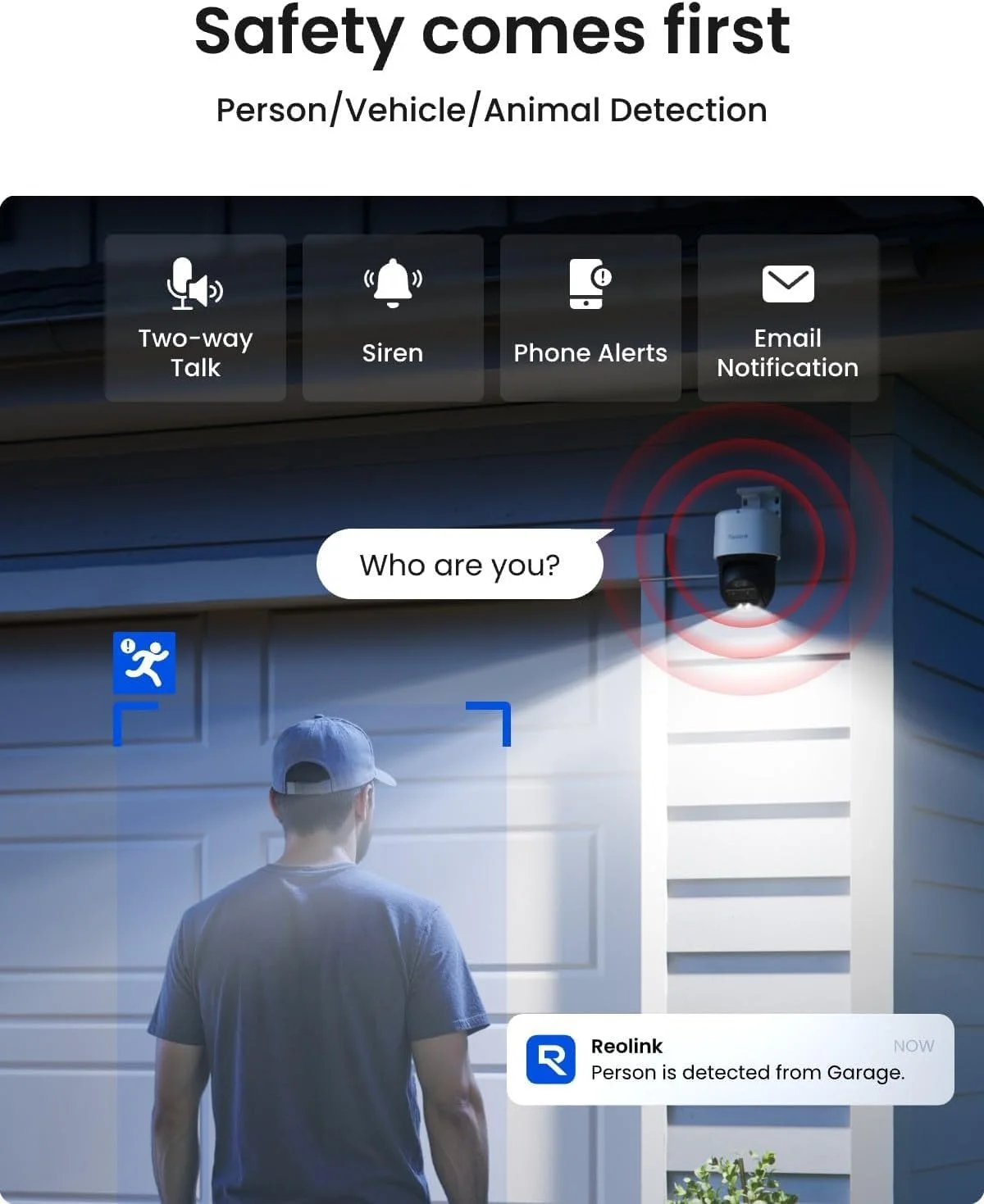
Active deterrence with lights, siren, and instant notifications.
Reliable PoE Connection for Uninterrupted Power
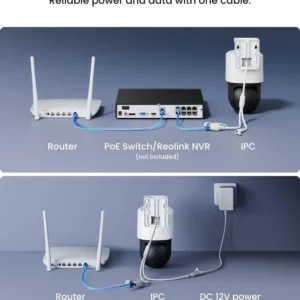
Experience unparalleled stability with Power over Ethernet (PoE) technology. The Reolink TrackMix PoE utilizes a single network cable to transmit both data and power, simplifying installation and ensuring a consistent, reliable connection for its 4K HD imaging. This makes it an ideal choice for both traditional setups and off-grid solutions where stable power is paramount. (Note: Requires IEEE802.3af PoE switch/PoE Injector/Reolink PoE NVR, sold separately. Ensure your Reolink NVR is updated for full dual-lens functionality).
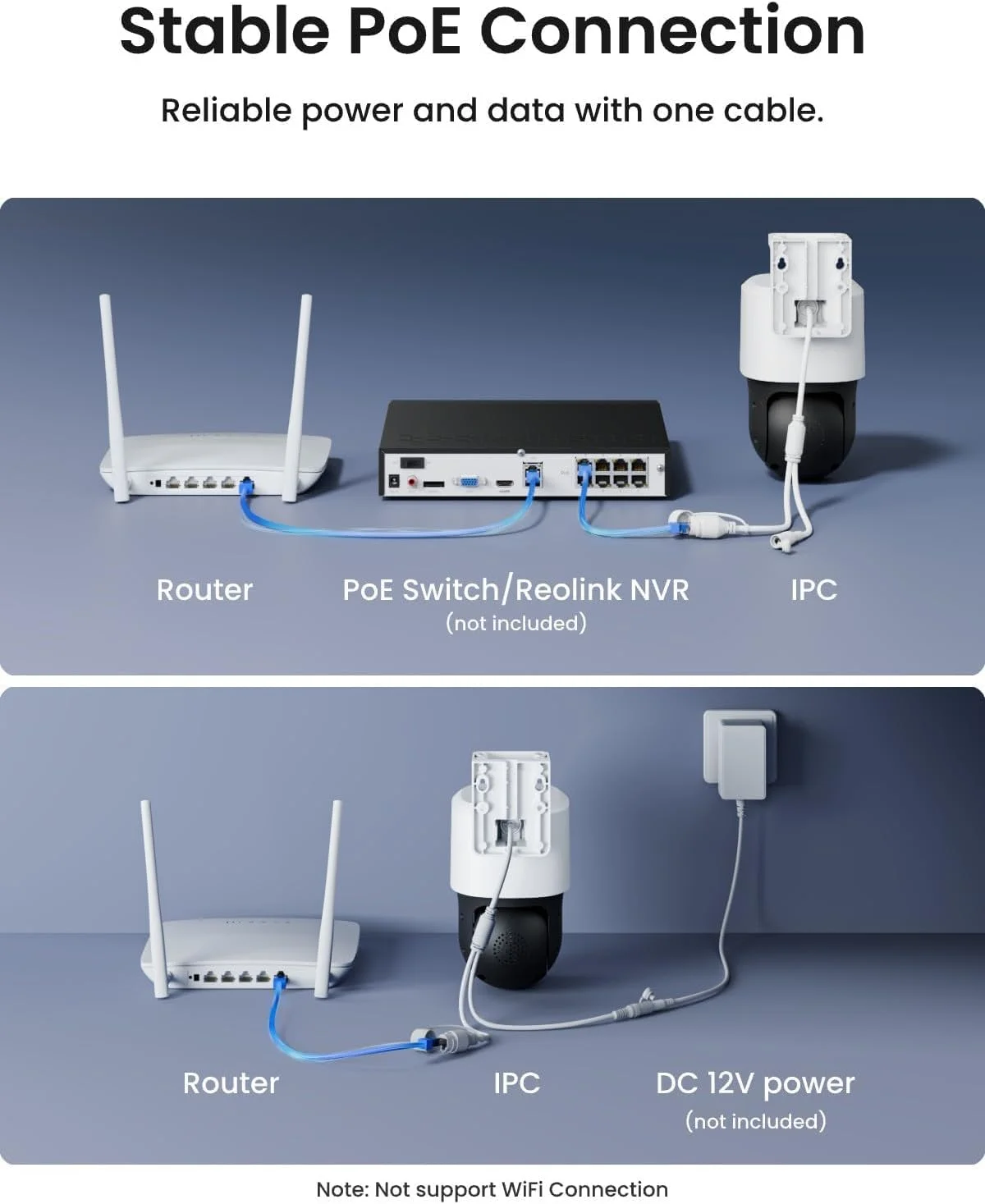
Stable and simple installation with Power over Ethernet (PoE).
Effortless Pan and Tilt Control
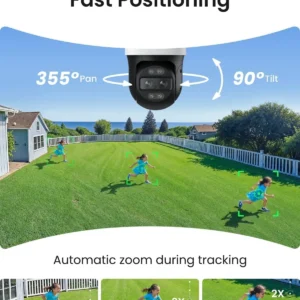
Gain complete command over your surveillance area with smooth 355° pan and 90° tilt capabilities. Manually direct the camera’s view or utilize its intelligent tracking features to follow subjects across a wide range of motion. The robust mechanical design ensures durability for long-term outdoor operation.
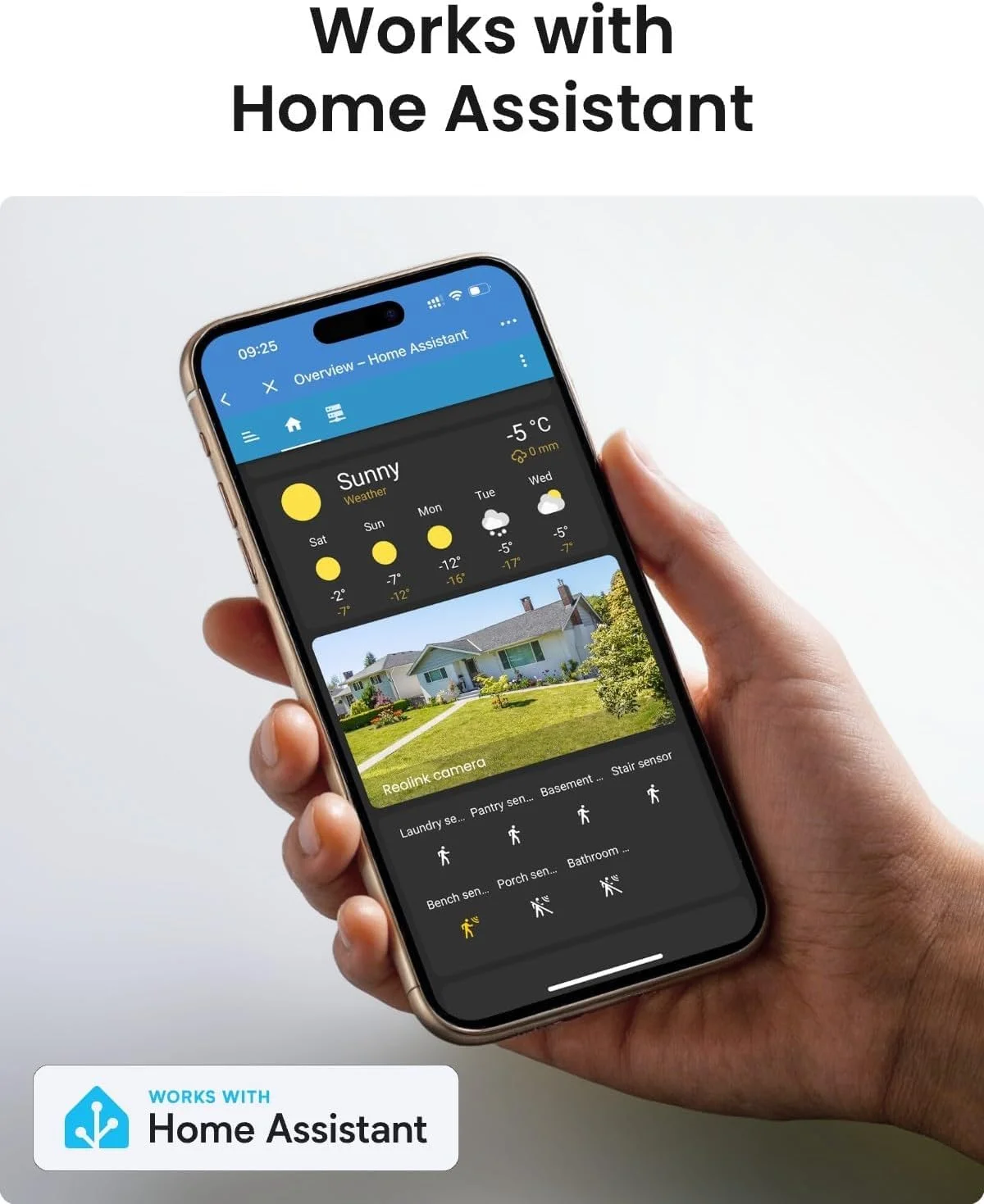
Comprehensive 355° pan and 90° tilt for complete situational awareness.