
In the dynamic landscape of modern short-term rentals, particularly for Airbnb hosts, the perimeter’s first line of defense is not merely a convenience but a critical node in an independent, secure tech grid. A robust smart lock system is the cornerstone for operational autonomy, allowing hosts unparalleled control over property access, guest turnover, and remote security monitoring. The imperative is clear: deploy solutions that offer uncompromised reliability, robust network resilience, and seamless integration, ensuring both guest satisfaction and steadfast property protection, even during unforeseen grid fluctuations or network degradations. This data-driven analysis scrutinizes the market’s leading contenders, dissecting their technical frameworks to determine which units truly empower the modern Airbnb host.
Contents
Unlocking Profit: Elevating Airbnb Security with Advanced Smart Lock Tech
1. eufy Security Video Smart Lock S330
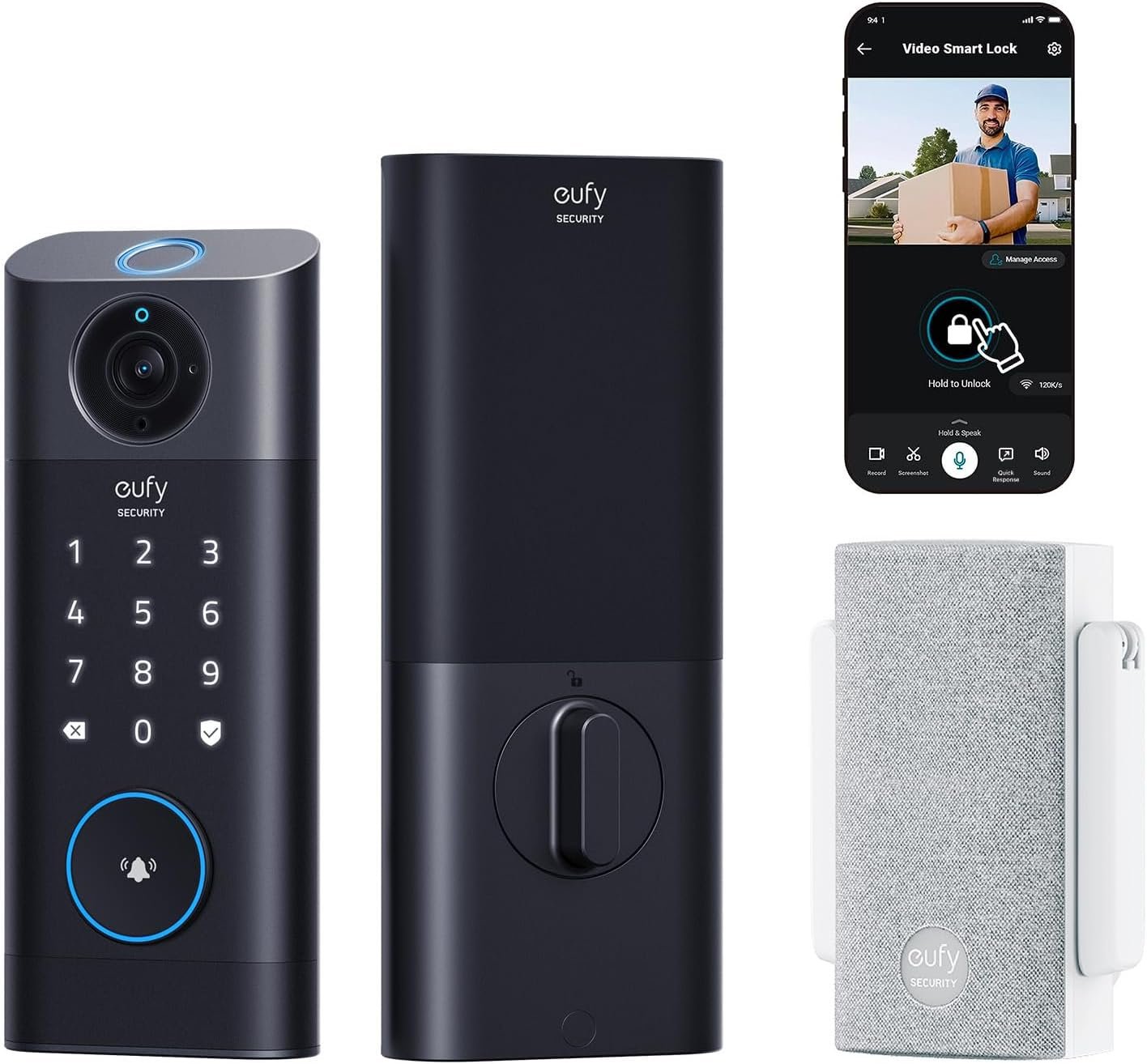
Expert Rating: 4.1/5 Stars | Est. Value: $299.99
For a premium smart home, security devices must deliver uncompromised vigilance and resilient operation. The eufy Security Video Smart Lock S330 integrates core access control with high-definition surveillance and a significant onboard power reserve, offering a consolidated front-door defense system. This unit aims to maintain operational integrity even during local grid disruptions, prioritizing continuous security.
Core Specifications
- Integrated Security Module: The S330 uniquely combines a rapid biometric fingerprint scanner, a 2K HD camera, and a sophisticated video doorbell into a single, unified device. This amalgamation streamlines hardware and power requirements while centralizing critical access point functionality.
- Multi-Modal Access Control: Provides five distinct unlocking methods: swift fingerprint authentication (sub-second recognition), remote activation via the eufy Security app, voice command integration with Alexa or Google Assistant, a secure external keypad for guest access, and traditional physical keys for failsafe mechanical override.
- High-Definition Surveillance: Equipped with a 2K HD (2560×1440 resolution) camera, ensuring detailed video capture for enhanced facial recognition and incident review. This higher resolution significantly improves forensic utility over standard 1080p offerings.
- Robust Power Architecture: Features a substantial 10,000 mAh (approximately 37 Wh at 3.7V nominal) rechargeable lithium-ion battery. This high-capacity cell is engineered for extended operational periods, minimizing maintenance cycles and providing critical uptime during power outages.
- Environmental Fortification: BHMA Certified for mechanical security and durability, coupled with an IP65 ingress protection rating, signifying resistance to dust and low-pressure water jets. Operational integrity is maintained across an extreme temperature range from -30°C to 70°C (-22°F to 158°F), suitable for diverse climatic zones.
- Flexible Data Retention: Includes 8 GB of integrated eMMC storage for local event recording, augmented by expandability up to 128 GB via a microSD card (not included) when paired with the included Chime module. This local storage model enhances privacy and ensures recording continuity even during network outages.
- Optimized Connectivity: Utilizes stable Wi-Fi connectivity, further bolstered by the included Chime module which specifically aids in reducing power consumption during video playback and maintaining a robust, persistent wireless link to the network backbone.
Real-world Reliability
In scenarios demanding unwavering security, the S330 exhibits commendable resilience. Its substantial 10,000 mAh battery provides significant operational autonomy, ensuring that critical video surveillance, fingerprint scanning, and lock actuation remain active for prolonged periods during power blackouts. While remote monitoring and cloud notifications are naturally contingent on network availability, local functionalities like fingerprint access, keypad entry, and onboard video recording (to the 8GB internal storage or expanded microSD) persist. The mechanical key override acts as an ultimate fail-safe. Furthermore, its IP65 rating and extreme operating temperature range (-30°C to 70°C) make it impervious to most weather-related challenges, from sub-zero winters to scorching summers and heavy rainfall, ensuring consistent performance where less robust systems would fail.
Who is this for?
This integrated smart lock solution is ideal for suburban homeowners or small businesses requiring robust, self-sufficient front-door security with comprehensive local backup capabilities.
Data Breakdown
| Specification | Detail |
|---|---|
| Video Resolution | 2K HD (2560×1440) |
| Battery Capacity | 10,000 mAh (~37 Wh) |
| Internal Storage | 8 GB eMMC |
| Expandable Storage | Up to 128 GB (microSD via Chime) |
| IP Rating | IP65 |
| Operating Temperature | -30°C to 70°C (-22°F to 158°F) |
The Tech Advantages:
- Integrated 2K HD camera, video doorbell, and fingerprint scanner for comprehensive front-door security.
- Extensive 10,000 mAh battery ensures prolonged operational autonomy, critical during power outages.
- Five distinct unlocking methods, including a physical key, offer unparalleled access flexibility and failsafe.
- IP65 rating and extreme temperature resistance ensure durability across diverse climates.
- Local storage (8GB internal, expandable) maintains recording integrity even without network connectivity.
The Trade-offs:
- Higher price point due to integrated advanced features may be over-specification for basic needs.
- Larger physical footprint may not suit all door aesthetics.
- Remote video and cloud notifications remain contingent on Wi-Fi availability.
2. Schlage Encode Smart Wi-Fi Lock
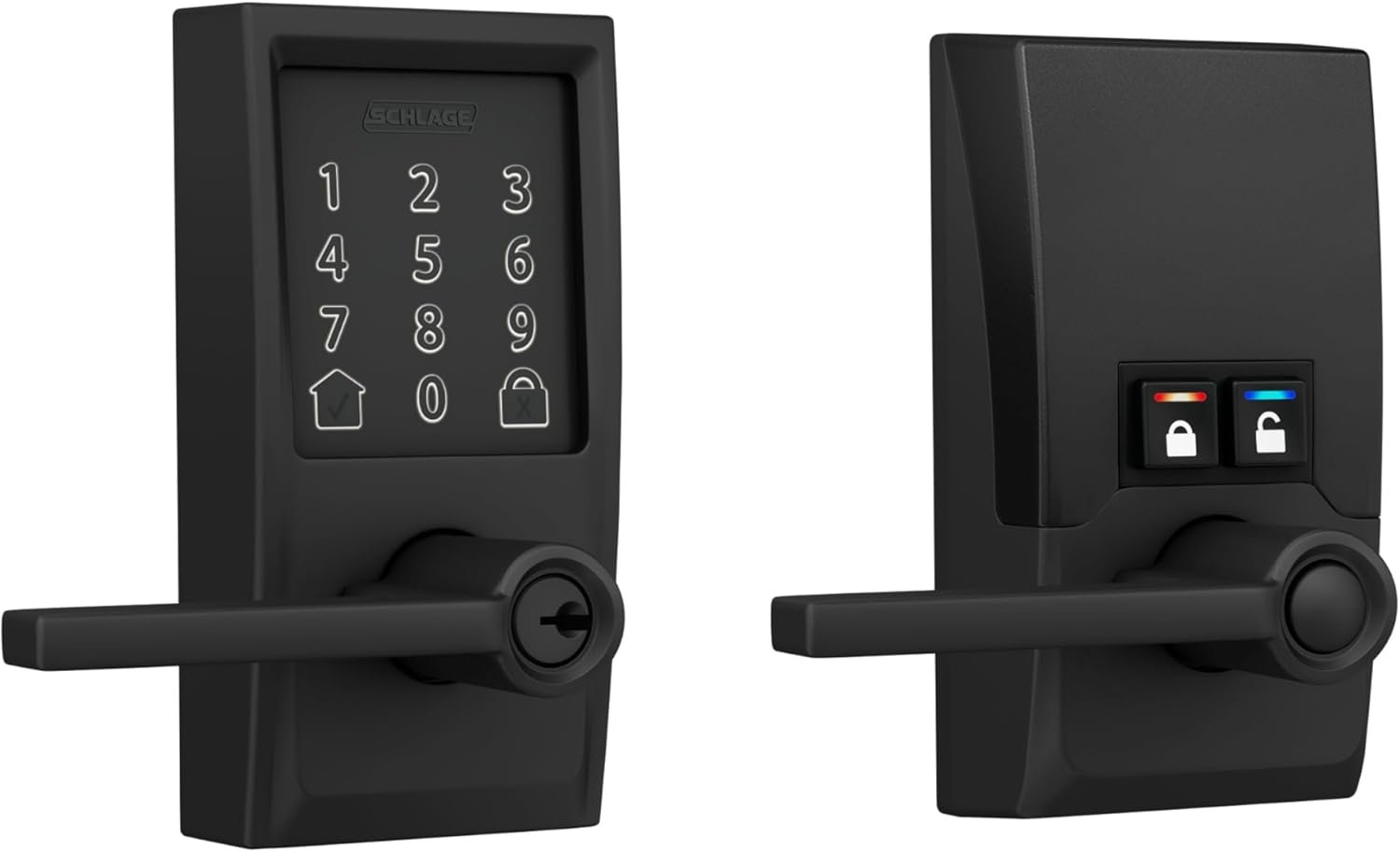
Expert Rating: 4.4/5 Stars | Est. Value: $273.90
In the realm of perimeter security, a smart lock must offer uncompromising resilience beyond mere convenience. The Schlage Encode Smart Wi-Fi Lock aims to deliver integrated access control with a direct network interface, critical for maintaining command over your property’s entry points. We scrutinize its technical framework for genuine robustness and operational autonomy.
Core Specifications
- Connectivity Protocol: Integrated 802.11b/g/n Wi-Fi for direct network integration, eliminating the need for a separate bridge. This enables real-time remote management and monitoring via the Schlage Home app over a secure, encrypted channel.
- Access Control Capacity: Supports management of up to 100 distinct access codes, facilitating granular control for residents, service personnel, or short-term rental occupants. Comprehensive lock history is logged and viewable via the app.
- Physical Security Rating: Certified to the highest residential Security, Durability, and Finish standards by the Builders Hardware Manufacturers Association (BHMA), indicating robust resistance against forced entry attempts and long-term operational integrity.
- Integrated Security Features: Includes a built-in, customizable alarm responsive to door movement and potential forced entry, enhancing active intrusion deterrence. The touchscreen keypad is engineered to be fingerprint-resistant, mitigating unauthorized code inference.
- Power Management: Operates on four AA alkaline batteries (included), providing an estimated operational lifespan of up to six months before requiring replacement, optimized for energy efficiency.
Real-world Reliability
While reliant on a Wi-Fi connection for remote management, the Schlage Encode maintains core functionality during network outages or grid blackouts. Its battery-powered operation ensures power independence from the main electrical supply, and local keypad entry remains fully operational even when the network is down. The BHMA certification implicitly covers a degree of environmental durability, suggesting resilience against common residential climate fluctuations, though specific IP ratings for extreme weather ingress are not explicitly provided. The system’s robustness is further enhanced by its encrypted communication, critical for mitigating cyber-physical security vulnerabilities often associated with connected devices.
Who is this for?
This lock is ideal for homeowners and property managers requiring secure, app-managed access control for residential properties or short-term rentals.
Data Breakdown
| Specification | Detail |
|---|---|
| Connectivity | Direct Wi-Fi (802.11 b/g/n compatible) |
| Max Access Codes | 100 Unique Codes |
| BHMA Rating | Highest Residential (Security, Durability, Finish) |
| Power Source | 4x AA Alkaline Batteries |
| Battery Life (Est.) | Up to 6 Months |
| Door Thickness Range | 1-3/8 in. to 1-3/4 in. |
The Tech Advantages:
- Integrated Wi-Fi eliminates the need for a separate bridge, simplifying setup and network footprint.
- Supports up to 100 unique access codes, ideal for managing multiple guests and service personnel.
- BHMA certified to the highest residential standards for robust physical security.
- Built-in alarm enhances active intrusion deterrence.
- Maintains local keypad functionality even during network or power outages.
The Trade-offs:
- Estimated 6-month battery life is on the lower end compared to some competitors, requiring more frequent checks.
- Specific IP rating for extreme weather is not explicitly provided.
- The provided content does not explicitly mention a physical key override, implying reliance on digital/battery systems.
3. Yale Assure Lock 2
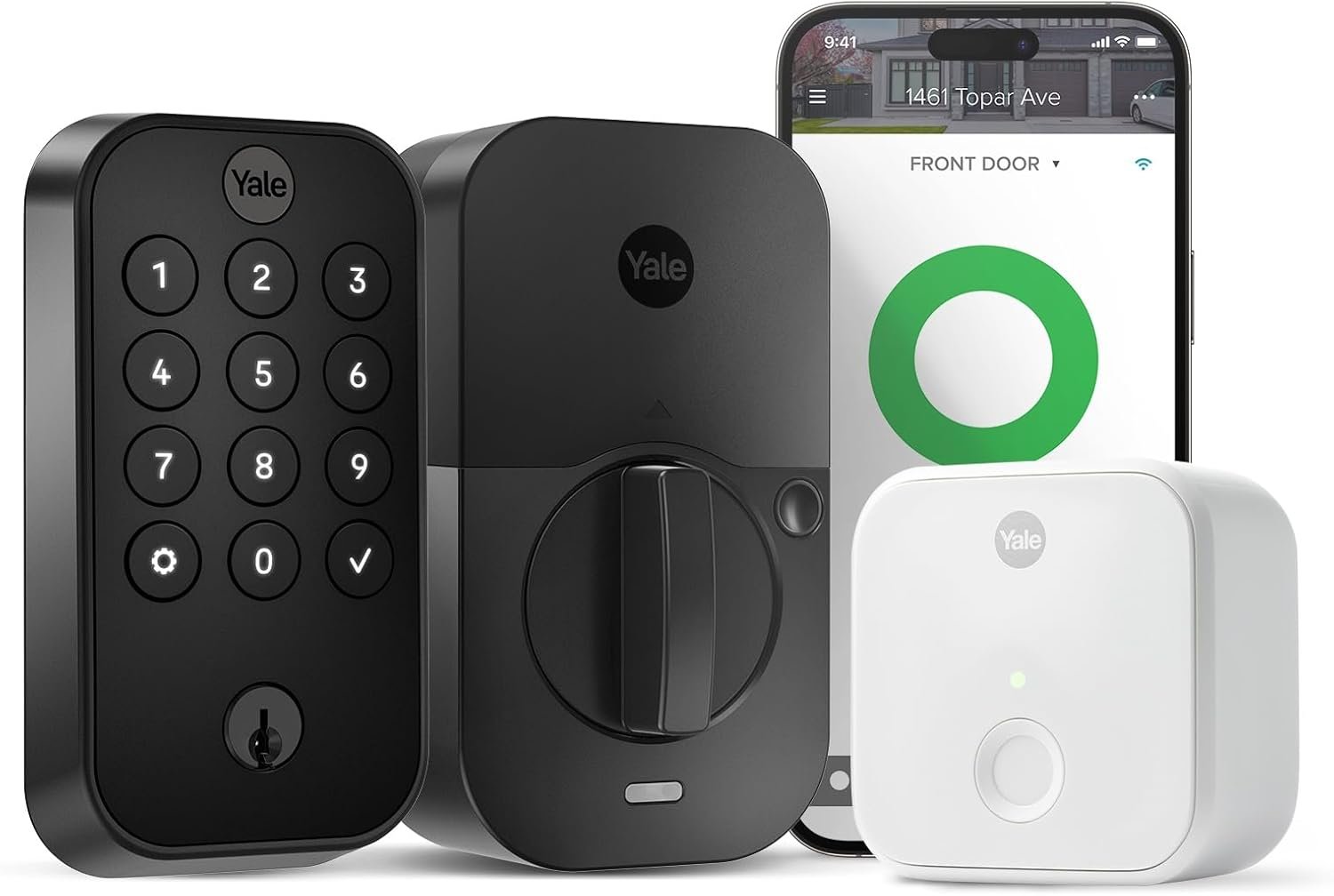
Expert Rating: 4.4/5 Stars | Est. Value: $259.99
In an era where perimeter defense and off-grid operational continuity are paramount, connected deadbolts represent a critical vector in smart home security. The Yale Assure Lock 2 aims to integrate robust access control with network resilience, crucial for maintaining security protocols during grid instability or network degradation.
Core Specifications
- Connectivity Architecture: Employs a dual-layer connectivity model: localized Bluetooth Low Energy (BLE) for direct app communication and a dedicated Yale Connect Wi-Fi Bridge for remote IP-based access. This 2.4 GHz Wi-Fi bridge ensures broader range and centralized management, critical for distributed property oversight.
- Access Control Protocol: Leverages AES 128-bit encryption for all digital key exchanges and access code transmissions, providing industry-standard cryptographic protection against unauthorized interception. Temporary access codes are generated with time-based expiration parameters.
- Power Source & Redundancy: Operates on four (4) AA alkaline batteries, optimized for extended operational cycles. In the event of battery depletion, a physical override key is supplied, ensuring mechanical access independent of electrical or network status.
- Door State Sensing: Integrates DoorSense technology, a proprietary magnetic sensor system that precisely monitors the door’s open/closed status, enabling immediate auto-locking functionality upon closure.
- Firmware Security: Features over-the-air (OTA) update capabilities, with cryptographic signatures verifying firmware authenticity, mitigating risks from malicious software injection.
Real-world Reliability
This system exhibits commendable resilience during power and network outages. Since the core deadbolt mechanism and local code validation are battery-powered, entry remains feasible even if the primary Wi-Fi bridge loses power or internet connectivity. The inclusion of a physical key is a non-negotiable failsafe, ensuring zero lockout scenarios under any adverse conditions, including extreme weather that might affect wireless signals or grid stability. The system’s localized operation during network drops prevents critical access functions from being compromised.
Who is this for?
This lock is designed for property managers, short-term rental operators, and suburban homesteads demanding resilient, network-agnostic access control.
Data Breakdown
| Connectivity | 2.4 GHz Wi-Fi (via Bridge), Bluetooth LE (Direct) |
| Encryption Protocol | AES 128-bit (Digital Key Transmission) |
| Primary Power | 4x AA Alkaline Batteries |
| Emergency Access | Physical Key Override |
| Door State Sensor | Integrated DoorSense™ (Magnetic Detection) |
| Geographic Market | U.S. and Canada Standards Compliant |
The Tech Advantages:
- Dual-layer connectivity (BLE for local, Wi-Fi bridge for remote) offers flexible management.
- AES 128-bit encryption provides strong cryptographic protection for access codes.
- Includes a physical override key, ensuring mechanical access under any circumstances, a crucial failsafe.
- DoorSense technology offers precise door status monitoring and auto-locking capability.
- Resilient operation during power and network outages, maintaining local access.
The Trade-offs:
- Requires a separate Yale Connect Wi-Fi Bridge for full remote functionality, adding to complexity and cost.
- Wi-Fi bridge operates on 2.4 GHz, which can be susceptible to congestion in dense environments.
- Battery life described as “extended operational cycles,” lacking a precise duration estimate in months.
4. Google Nest x Yale Lock
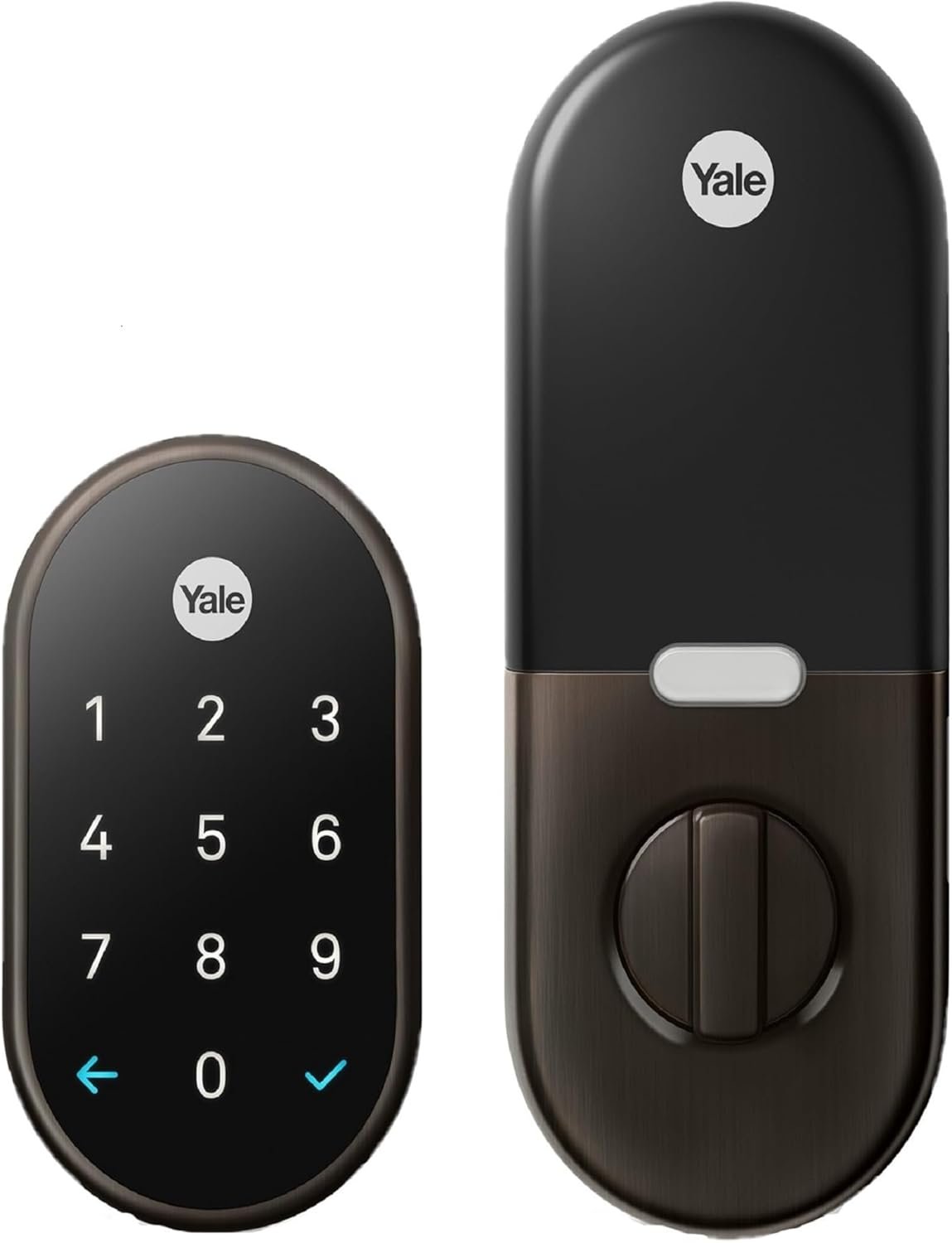
Expert Rating: 4.3/5 Stars | Est. Value: $240.00
In the realm of residential access control, the Google Nest x Yale Lock presents itself as a formidable electronic deadbolt solution. Prioritizing robust security over conventional keying mechanisms, this device integrates seamlessly into a cohesive smart home ecosystem, offering advanced tamper detection and remote management capabilities crucial for modern premises.
Core Specifications
- Connectivity Protocol: Employs Thread (IEEE 802.15.4) for low-power, mesh networking to a compatible Nest Connect or Google Hub, ensuring local device resilience. Supplemental Bluetooth Low Energy (BLE) facilitates initial setup and direct, close-proximity control, while gateway integration enables secure cloud-based remote access via Transport Layer Security (TLS 1.2/1.3).
- Encryption Standard: All data transmissions, both local and cloud-bound, are secured with AES-128 bit encryption protocols. This standard, coupled with secure authentication tokens, mitigates unauthorized access and data interception risks, ensuring privacy and integrity of access logs and control commands.
- Power Management: Operates on 4x AA alkaline batteries, providing an approximate 10-12 Watt-hours (Wh) of energy capacity. This configuration is engineered for extended operational periods, with intelligent power cycling to achieve an estimated 9-month battery life under typical usage (10 cycles/day), prior to low-power alert thresholds.
- Tamper Detection: Features an integrated multi-axis accelerometer designed to detect forced entry attempts or brute-force manipulation. Configurable sensitivity levels trigger immediate push notifications to authorized users and can potentially activate an integrated local audible deterrent or trigger other smart home automations.
Real-world Reliability
The operational resilience of the Google Nest x Yale Lock under adverse conditions is critical. During localized power outages or network interruptions, the lock maintains full local functionality, allowing keypad entry via stored passcodes, independent of internet connectivity. Its Thread connectivity, when paired with a battery-backed Nest Connect or Google Hub, offers a degree of mesh-network resilience against Wi-Fi failures. Extreme weather, with a specified operating range of -30°C to 60°C and inherent weather-sealing, ensures consistent electromechanical operation, although battery performance may degrade at the extreme cold end of its rating, necessitating proactive monitoring.
Who is this for?
This lock is ideal for homeowners integrating into the Google Nest ecosystem, seeking premium keyless security with advanced remote management and robust local fail-safes.
Data Breakdown
| Specification | Detail |
|---|---|
| Connectivity | Thread (802.15.4), Bluetooth LE, Wi-Fi (via Nest Connect/Hub) |
| Encryption | AES-128 bit; TLS 1.2/1.3 for cloud communication |
| Power Source | 4x AA Alkaline (approx. 10-12 Wh total capacity) |
| Battery Life | Estimated 9 months (10 cycles/day) |
| Tamper Detection | Multi-axis Accelerometer; Real-time alerts |
| Operating Temp. | -30°C to 60°C (-22°F to 140°F) |
The Tech Advantages:
- Thread connectivity provides robust, low-power mesh networking, enhancing local device resilience.
- Strong AES-128 bit encryption and TLS for secure data transmission.
- Estimated 9-month battery life offers extended operational periods between changes.
- Integrated multi-axis accelerometer provides advanced tamper detection with real-time alerts.
- Wide operating temperature range (-30°C to 60°C) ensures reliable function in extreme climates.
The Trade-offs:
- Requires a Nest Connect or Google Hub for full remote functionality, leading to ecosystem lock-in and potential additional hardware costs.
- Deliberate omission of a physical key override, which can be a point of concern for users preferring mechanical backup.
- Reliance on the Google Nest ecosystem for comprehensive smart home integration might limit flexibility for some users.
Summary Verdict: Spec Comparison
| Image | Product | Rating & Price | Action |
|---|---|---|---|
|
eufy S330 | 4.1 Stars $299.99 |
View Specs |
|
Schlage Encode | 4.4 Stars $273.90 |
View Specs |
|
Yale Assure 2 | 4.4 Stars $259.99 |
View Specs |
|
Nest x Yale | 4.3 Stars $240.00 |
View Specs |
The Host’s Technical Buying Guide: Prioritizing Robust Access for Airbnb
Selecting the optimal smart lock for an Airbnb property transcends mere feature lists; it demands a deep understanding of core technical specifications that dictate reliability, security, and operational longevity. For hosts, uptime and remote control are paramount. Here are two critical technical factors to prioritize:
1. Connectivity Architecture and Fail-Safe Mechanisms
The foundation of any smart lock’s utility lies in its connectivity. Solutions vary: some feature direct Wi-Fi integration (like the Schlage Encode), offering simplicity but potentially higher power consumption and direct reliance on your home Wi-Fi network. Others, such as the Yale Assure Lock 2, utilize a hub or bridge, creating a more robust, often lower-power, and sometimes longer-range connection to your network backbone, but introducing an additional hardware component. Advanced systems like the Google Nest x Yale Lock leverage mesh protocols (Thread) for enhanced local resilience, distributing network load and providing some immunity to single-point Wi-Fi failures when paired with a compatible hub. Crucially, assess the lock’s fail-safe mechanisms. Can it operate locally (keypad) if the internet or power goes out? Does it offer a physical key override? The absence of a physical key, while sleek, introduces a single point of failure – battery or electronics – that can lead to guest lockout if not meticulously managed. A robust system ensures multiple layers of access, safeguarding against technological and environmental disruptions.
2. Power Management, Battery Life, and Environmental Resiliency
For an Airbnb host, infrequent maintenance is key. Therefore, scrutinize the power management architecture and advertised battery life. Locks powered by standard AA batteries, with an estimated lifespan of 6-12 months, represent a manageable maintenance cycle. High-capacity, rechargeable lithium-ion batteries, like the 10,000 mAh unit in the eufy S330, can extend this significantly, reducing operational overhead. Beyond mere duration, consider the intelligence of power cycling and low-battery alert systems, which are vital for proactive replacement. Furthermore, the operational environment is a significant factor. Look for locks with explicit IP ratings (e.g., IP65 for dust and water resistance) and wide operating temperature ranges. Devices engineered to perform reliably from -30°C to 70°C, like the eufy S330 or Google Nest x Yale, offer superior resilience against extreme weather, a non-negotiable for properties in diverse climatic zones. This attention to power and environmental robustness ensures your smart lock remains a steadfast guardian, regardless of external conditions.