
In an increasingly interconnected yet vulnerable world, ensuring the integrity of your perimeter defense goes beyond mere surveillance. For homeowners, businesses, and even remote homesteads striving for an independent, resilient tech grid, a standard security camera often falls short. This is where the advanced capabilities of a dual lens outdoor security camera become indispensable. These systems transcend traditional single-view monitoring by simultaneously offering a wide-angle overview and a focused, dynamic zoom, providing unparalleled situational awareness without compromise. Crucially, many integrate features that reduce reliance on constant grid power or complex wired infrastructure, aligning perfectly with the ethos of a truly self-sufficient security deployment.
Contents
Beyond the Single View: Our Top Dual Lens Outdoor Security Camera Picks for 2024
1. VSTARCAM Dual Lens Outdoor Security Camera
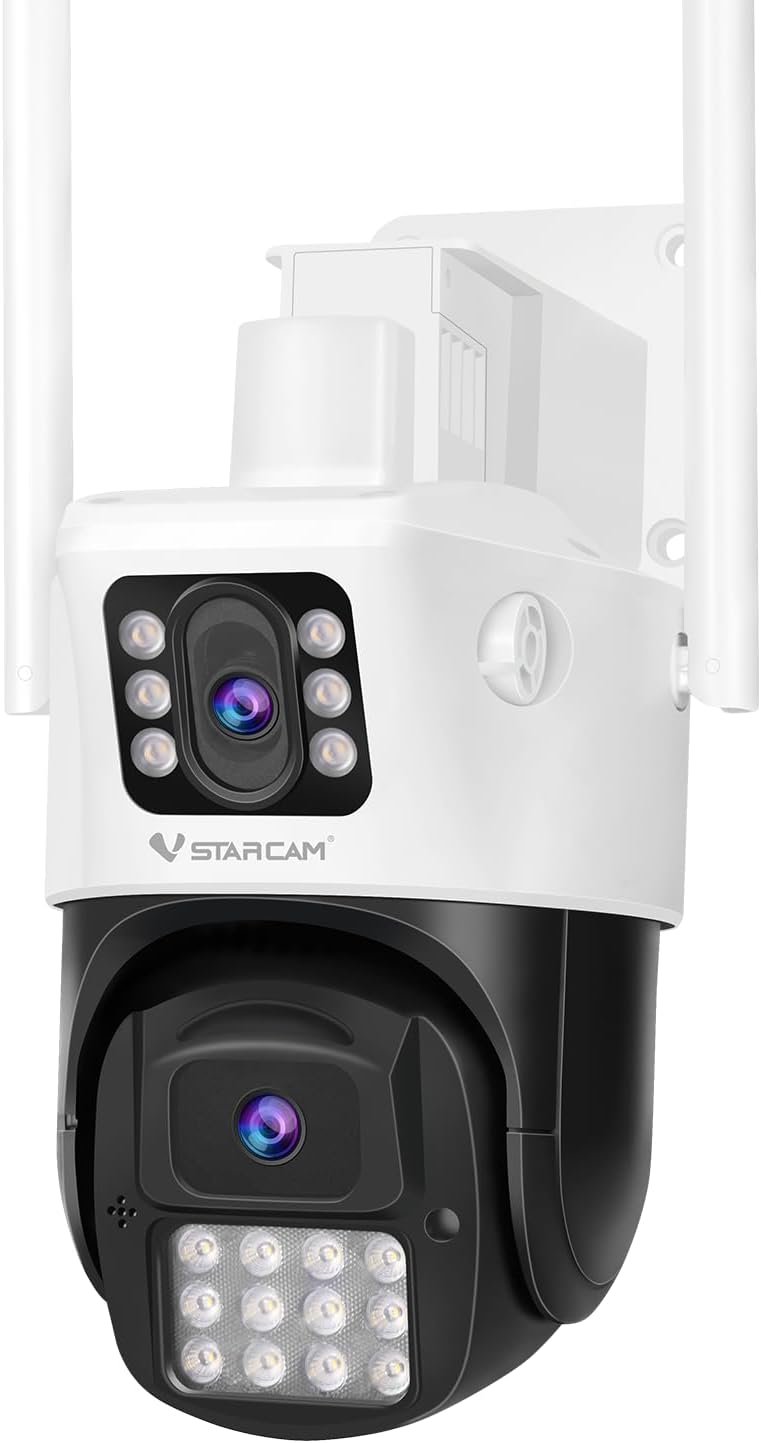
Expert Rating: 5.0/5 Stars | Est. Value: $29.99
In the realm of advanced perimeter defense, continuous operational integrity is paramount. A security camera’s true value is measured not just by its optical clarity, but by its unwavering resilience against environmental and network disruptions, especially for deployments demanding off-grid independence or robust supplementary power strategies. Let’s dissect VSTARCAM’s latest offering.
Core Specifications
- Dual-Lens Architecture: Integrates one fixed wide-angle lens for continuous static monitoring with a separate PTZ (Pan-Tilt-Zoom) lens for automated motion tracking, enabling combined 360-degree situational awareness.
- Video Resolution & Illumination: Captures 2K UHD (2560×1440) video. Features advanced starlight sensors and integrated floodlights, providing full-color night vision with an effective forensic clarity range of up to 50 feet.
- Intrusion Detection & Deterrence: Utilizes a high-precision Passive Infrared (PIR) sensor for human heat signature identification, minimizing false positives. Triggers real-time application alerts and an integrated 110dB acoustic deterrent upon detection.
- Two-Way Audio: Equipped with a noise-canceling microphone and a high-fidelity speaker, facilitating clear, low-latency two-way voice communication via the remote application.
- Environmental Durability: Boasts an IP66 rating, ensuring comprehensive protection against dust ingress and high-pressure water jets. Operational temperature range spans from -4°F to 122°F (-20°C to 50°C), housed in industrial-grade material.
- Data Storage & Network: Supports both local microSD card storage and proprietary cloud-based recording. Operates via Wi-Fi connectivity, likely 2.4GHz for extended range, with no explicit mention of advanced network encryption protocols for data in transit or at rest, which warrants user investigation for sensitive deployments.
Real-world Reliability
For off-grid or remote deployments, the VSTARCAM’s IP66 rating and broad -4°F to 122°F operational temperature range are critical hardware strengths, suggesting robust resilience against environmental stressors common in such scenarios. However, continuous operation during grid power outages necessitates integration with an uninterruptible power supply (UPS) system, potentially leveraging a dedicated solar-charged battery bank or a high-capacity portable power station with adequate surge and continuous wattage output. The camera’s reliance on WiFi also implies the need for a stable network uplink, making cellular or satellite-based hotspots essential for truly independent remote monitoring beyond traditional grid-tied internet infrastructure. While the physical housing offers durability, the system’s overall reliability in a truly off-grid context is directly proportional to the robustness of its supporting power and network infrastructure.
Who is this for?
This camera is engineered for suburban homeowners, small business owners, or semi-remote homesteads requiring resilient, comprehensive perimeter surveillance with proactive deterrence capabilities.
The Tech Advantages:
- Dual-lens architecture for 360-degree situational awareness (fixed wide + PTZ).
- 2K UHD video with full-color night vision up to 50 feet via starlight sensors and floodlights.
- Advanced PIR sensor and 110dB siren for effective intrusion detection and deterrence.
- Robust IP66 rating and wide operational temperature range (-4°F to 122°F) for extreme environments.
- Two-way audio for interactive communication.
The Trade-offs:
- Requires external UPS or independent power solution for true off-grid operation.
- Relies on Wi-Fi connectivity, necessitating a stable network uplink.
- No explicit details on advanced network encryption protocols for sensitive deployments.
2. Anpviz 4K Dual Lens PoE IP Camera
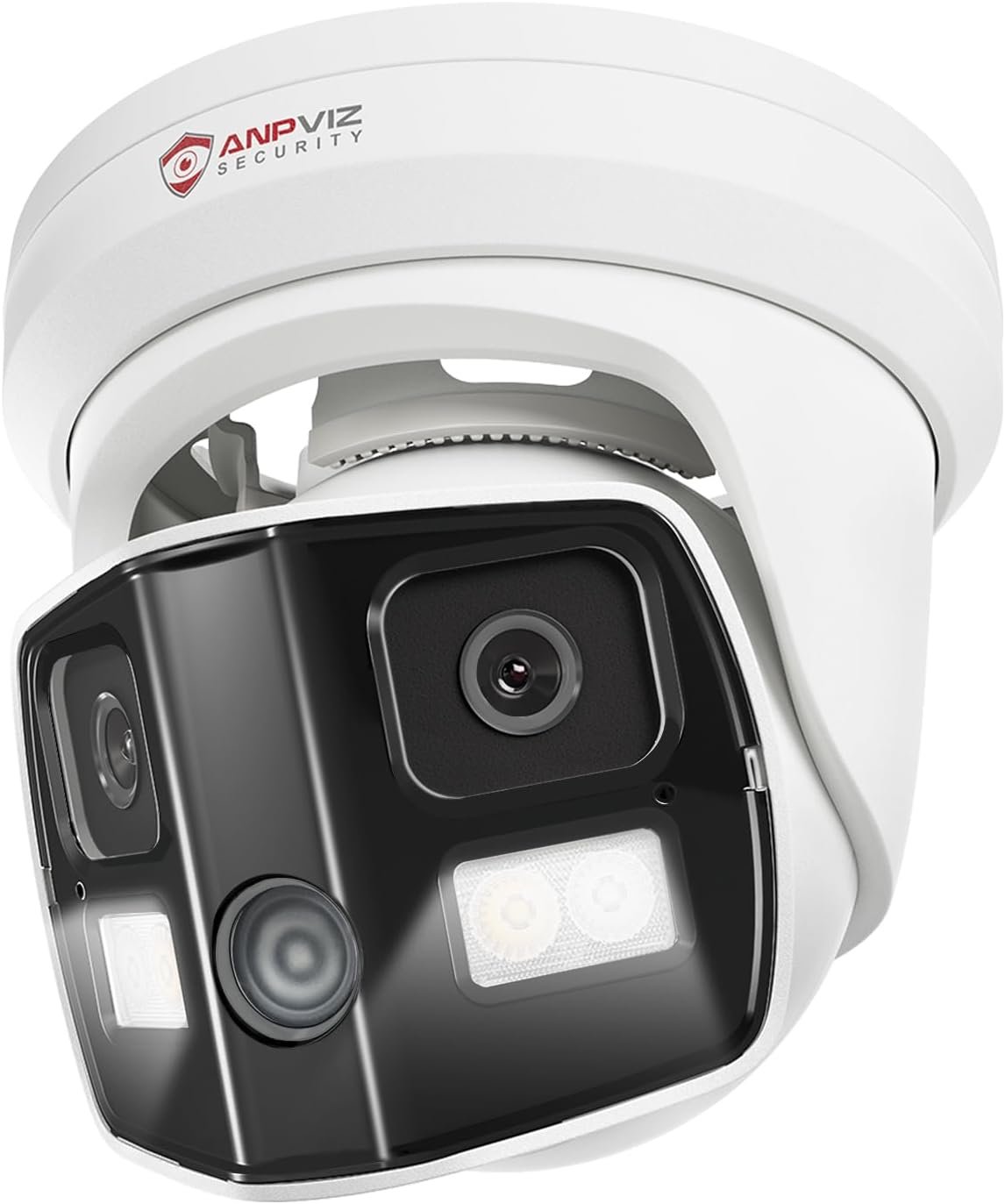
Expert Rating: 4.4/5 Stars | Est. Value: $129.99
For robust perimeter defense and comprehensive site monitoring, a security camera must transcend mere pixel count, delivering actionable intelligence regardless of environmental factors or grid status. The Anpviz U Series offers a compelling solution for those demanding expansive surveillance coverage with minimal infrastructure, crucial for securing both grid-tied and resilient off-grid deployments. Its advanced optical and processing capabilities aim to provide critical situational awareness without compromise.
Core Specifications
- Video Resolution & Field of View: Captures pristine 4K/8MP (4096×1944) @20 frames per second, providing exceptional forensic detail. The dual lens architecture seamlessly stitches two video streams to achieve a single, cohesive 180° horizontal field of view, minimizing blind spots effectively.
- Illumination & Night Vision: Features adaptive “Smart Dual Light” technology, deploying integrated warm LED illuminators upon human or vehicle detection for full-color night vision. Users can also select traditional IR-based monochrome night vision or continuous color mode, optimizing for scene specifics up to an effective range of 30 meters.
- Intelligent Detection: Employs advanced shape-based human and vehicle detection algorithms to significantly reduce false alarms originating from environmental factors (e.g., foliage movement, animal activity), ensuring alerts are genuinely pertinent.
- Local Storage & Power: Supports a substantial 512GB microSD card for on-device video retention, offering crucial redundancy for network outages. Power is supplied via Power over Ethernet (PoE), simplifying cabling and making integration into 48V off-grid PoE networks straightforward, with typical power consumption averaging 8-12 Watts under active illumination.
- Connectivity & Interoperability: Operates as a standard IP camera, natively integrating with Anpviz U Series NVRs for full feature access, including two-way audio. Importantly, it also supports ONVIF Profiles S/G/T (implied by “3rd party software” like ISpy, Milestone) for broad compatibility with enterprise VMS solutions and custom security platforms.
Real-world Reliability
In scenarios demanding continuous operation, the Anpviz U Series exhibits commendable resilience. Its full-metal housing provides robust IP67 weather resistance, crucial for extreme temperatures (-30°C to 60°C) and precipitation. For off-grid deployments, its PoE standard simplifies power distribution, allowing for centralized battery backup and solar integration. While two-way audio functionality is contingent on pairing with a specific Anpviz NVR, the camera’s core video feed and smart detection capabilities remain operational and accessible via standard IP protocols even during network drops, assuming local power retention. Local 512GB SD storage acts as a vital buffer against NVR failures or network interruptions, ensuring critical events are recorded.
Who is this for?
This camera is engineered for proactive perimeter defense of remote properties, large suburban homesteads, or small businesses requiring expansive, high-resolution surveillance coverage with resilient local storage.
The Tech Advantages:
- Pristine 4K/8MP resolution for superior forensic detail.
- 180° stitched horizontal field of view from dual lenses, eliminating blind spots.
- PoE (Power over Ethernet) for simplified cabling and seamless integration with off-grid power solutions.
- IP67 full-metal housing for extreme weather resistance and wide temperature range.
- Advanced AI for human/vehicle detection and 512GB local storage for critical data retention.
The Trade-offs:
- Two-way audio functionality is best utilized with Anpviz NVRs, potentially limiting full features in standalone setups.
- Requires a PoE injector or switch, adding to initial infrastructure cost if not already present.
3. Hiseeu Wireless Security Camera
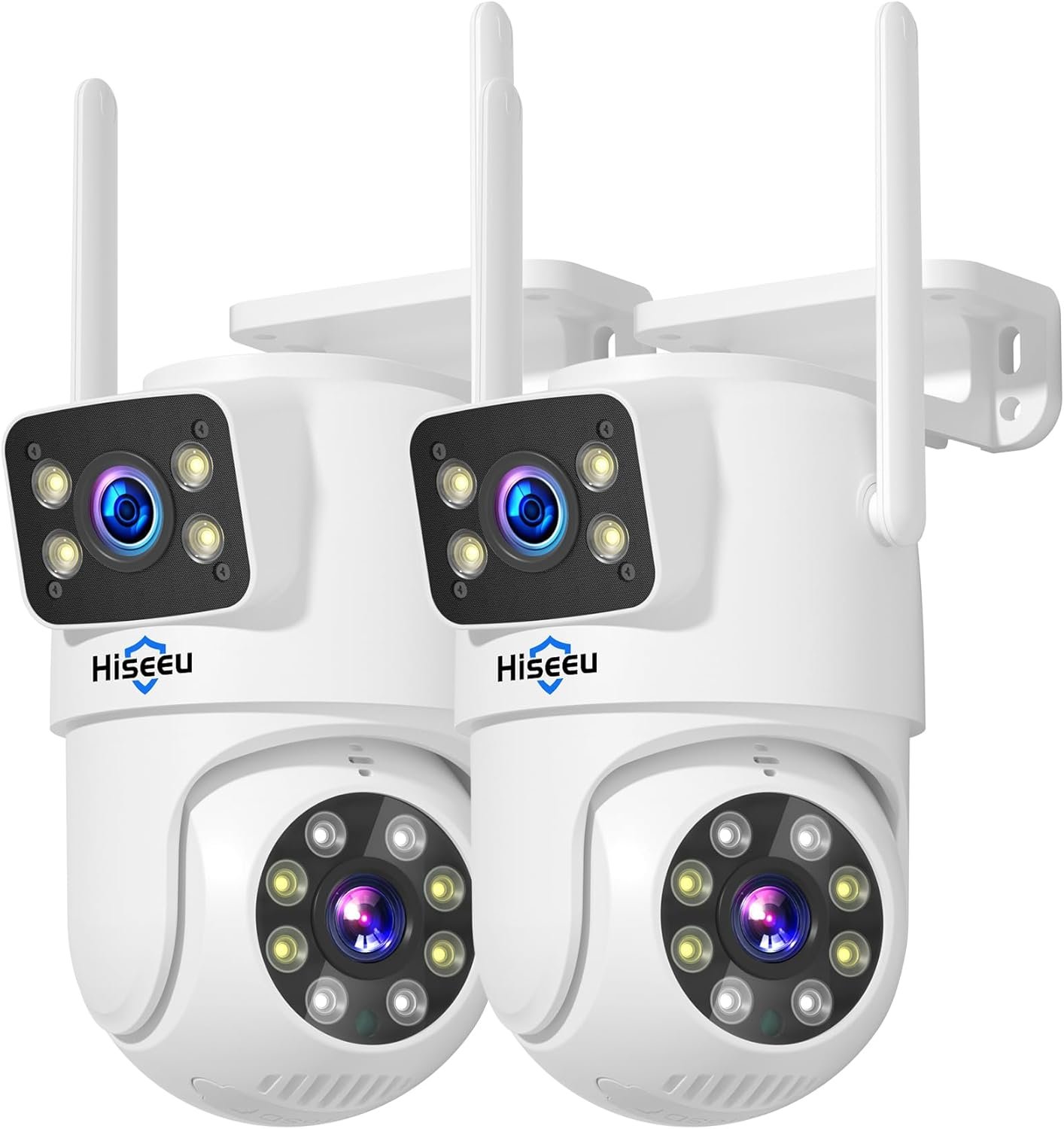
Expert Rating: 4.4/5 Stars | Est. Value: $89.99
In an era demanding unwavering security, surveillance systems must deliver uncompromising situational awareness. The Hiseeu dual-lens PTZ camera positions itself as a contender for comprehensive outdoor monitoring, crucial for maintaining perimeter integrity even when auxiliary power considerations are paramount.
Core Specifications
- Wireless Connectivity: Utilizes dual-band 802.11ac/n (2.4GHz & 5GHz) with a reported stable operational range of up to 18 meters (60ft). The 5GHz band offers higher data transfer rates for live streaming, while 2.4GHz ensures broader penetration and range, enhancing network resilience.
- Optical Architecture: Features a dual-lens configuration combining a fixed wide-angle imager with a Pan-Tilt-Zoom (PTZ) module. This linkage dynamically tracks detected human motion, eliminating traditional blind spots. Specific video resolution (e.g., 1080p, 2K, 4K) remains undisclosed, a critical technical omission. Color night vision capability implies advanced sensor sensitivity or integrated white-light illumination.
- Intelligent Detection: Integrates a passive infrared (PIR) sensor for thermal signature detection, augmented by AI-driven human tracking algorithms. This combination aims to minimize false positives from environmental factors while providing instantaneous alerts via push notifications.
- Power & Security Protocols: Operates via a dedicated power cord, with specific power draw (e.g., Wattage, Amperage) details not provided. Crucially, explicit data encryption standards (e.g., AES-256 for transmission, TLS/SSL for cloud communication) are not stipulated, raising concerns for end-to-end data integrity.
- Ecosystem Integration: Compatible with select wireless camera systems and integrates with Amazon Alexa for voice-activated control, indicating adherence to common smart home API standards.
Real-world Reliability
Reliability during power interruptions is inherently limited by its reliance on a mains power cord; continuous operation demands an uninterrupted power supply (UPS) or generator. While its dual-band Wi-Fi aims for signal stability, network drops would sever remote access and cloud recording, necessitating local storage (if available and unspecified). For an outdoor unit, an IP weatherproof rating is essential for durability against extreme weather conditions, a critical specification not provided in the product brief. Therefore, real-world resilience against environmental variables remains largely unquantified.
Who is this for?
This camera is suitable for suburban property owners seeking cost-effective, broad-coverage perimeter surveillance with existing network infrastructure.
The Tech Advantages:
- Dual-band Wi-Fi (2.4GHz & 5GHz) for enhanced connectivity stability and range.
- Dual-lens fixed wide-angle with PTZ for dynamic human motion tracking.
- PIR sensor augmented by AI-driven human tracking for accurate alerts.
- Integration with Amazon Alexa for convenient smart home control.
The Trade-offs:
- Relies on mains power, requiring a UPS or generator for continuous off-grid operation.
- Critical video resolution specification is undisclosed.
- No explicit IP weatherproof rating provided for outdoor durability.
- Lack of stipulated data encryption standards raises security concerns for sensitive deployments.
4. Wansview B7 2P
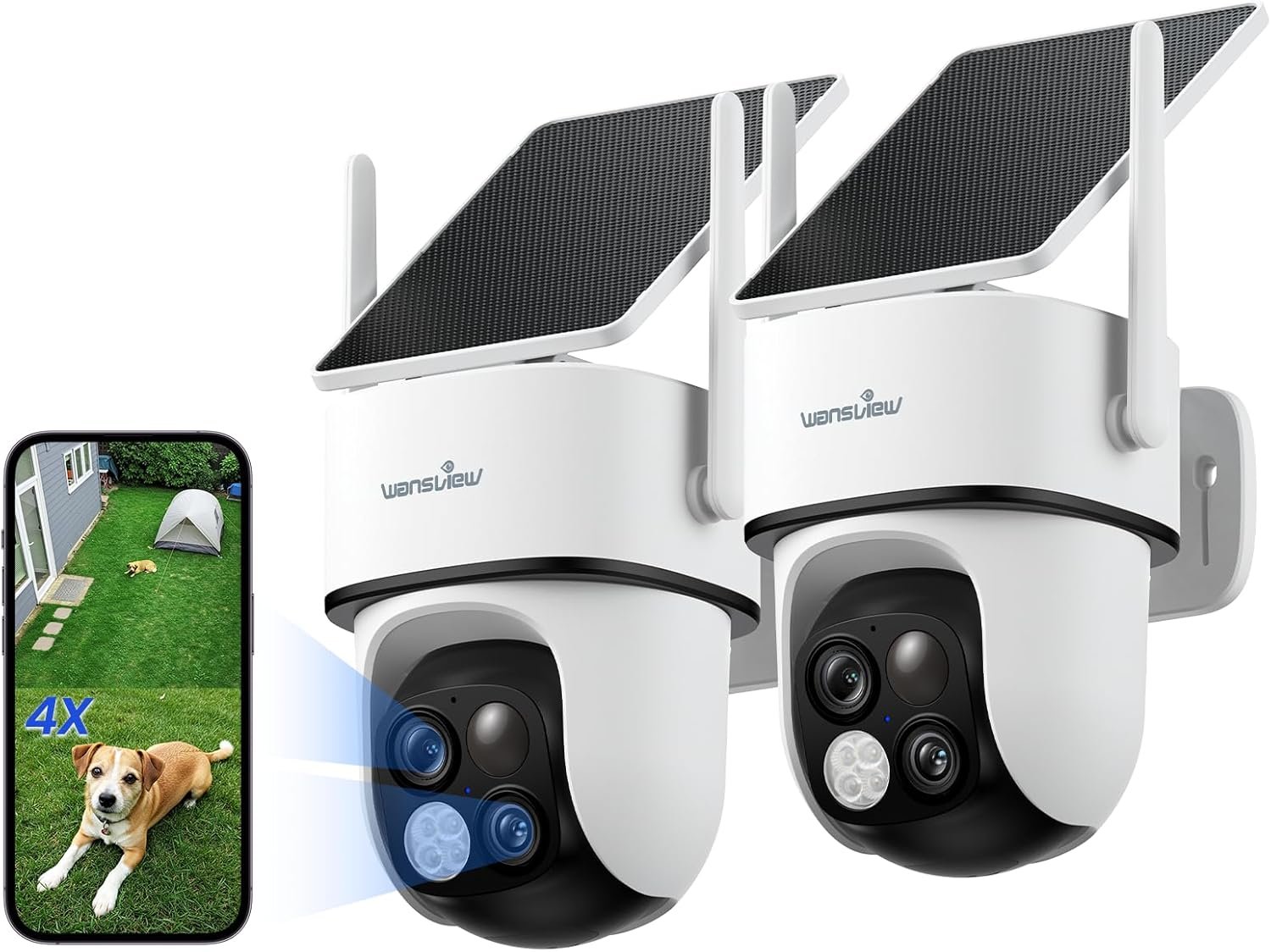
Expert Rating: 4.3/5 Stars | Est. Value: $74.99
Achieving true perimeter surveillance with autonomous power requires robust engineering. The Wansview B7 2P aims to deliver continuous security, freeing homeowners from grid dependency for critical outdoor monitoring.
Core Specifications
- Video Resolution & Optical System: The B7 2P deploys a 2K resolution sensor, providing 3-megapixel equivalent clarity. Its dual-lens configuration comprises a 3.6mm wide-angle for expansive area coverage and an 8mm telephoto for precise subject identification, enabling 64x digital zoom to discern details up to 30 feet.
- Power System: Utilizes a removable solar panel for perpetual battery charging, facilitating year-round autonomous operation without manual battery intervention or AC power connectivity. This ensures continuous functionality irrespective of grid status.
- Field of View & Motion: Features a comprehensive 355° horizontal pan and 90° vertical tilt, providing complete spherical coverage from a single mounting point. Integrated PIR (Passive Infrared) sensor ensures accurate motion detection, minimizing false positives.
- Night Vision Capability: Equipped with a hybrid night vision system, combining four LED illuminators for full-color night vision and four infrared (IR) emitters for monochrome visibility, extending clear capture up to 10 meters in extremely low-light conditions.
- Connectivity & Durability: Operates exclusively on 2.4GHz WiFi networks, crucial for extended range but limiting bandwidth for potential multi-camera setups. The IP65 ingress protection rating certifies resistance against dust and low-pressure water jets, suitable for exposed outdoor installations.
Real-world Reliability
Its reliance on solar charging provides inherent resilience against grid blackouts, maintaining surveillance even during power outages. However, continuous operation is contingent on a stable 2.4GHz WiFi connection; network drops will temporarily suspend remote monitoring and cloud services. The IP65 rating signifies robust weather resistance, ensuring functionality through rain and dust, though extreme temperatures or direct impacts remain potential vulnerabilities.
Who is this for?
Ideal for suburban homesteads or properties seeking off-grid, wide-area surveillance with remote pan/tilt capabilities.
The Tech Advantages:
- Removable solar panel for autonomous, wire-free perpetual battery charging.
- Dual-lens system with wide-angle and telephoto for 2K resolution and 64x digital zoom.
- Comprehensive 355° pan and 90° tilt for spherical coverage from a single point.
- Hybrid night vision (color/IR) and PIR sensor for accurate detection.
- IP65 ingress protection for robust outdoor durability.
The Trade-offs:
- Exclusively uses 2.4GHz Wi-Fi, which can limit bandwidth for multiple cameras.
- Continuous operation is contingent on stable Wi-Fi connectivity.
- Battery capacity and specific solar charging efficiency details are not explicitly provided.
5. ANRAN Dual-Lens Solar Security Camera
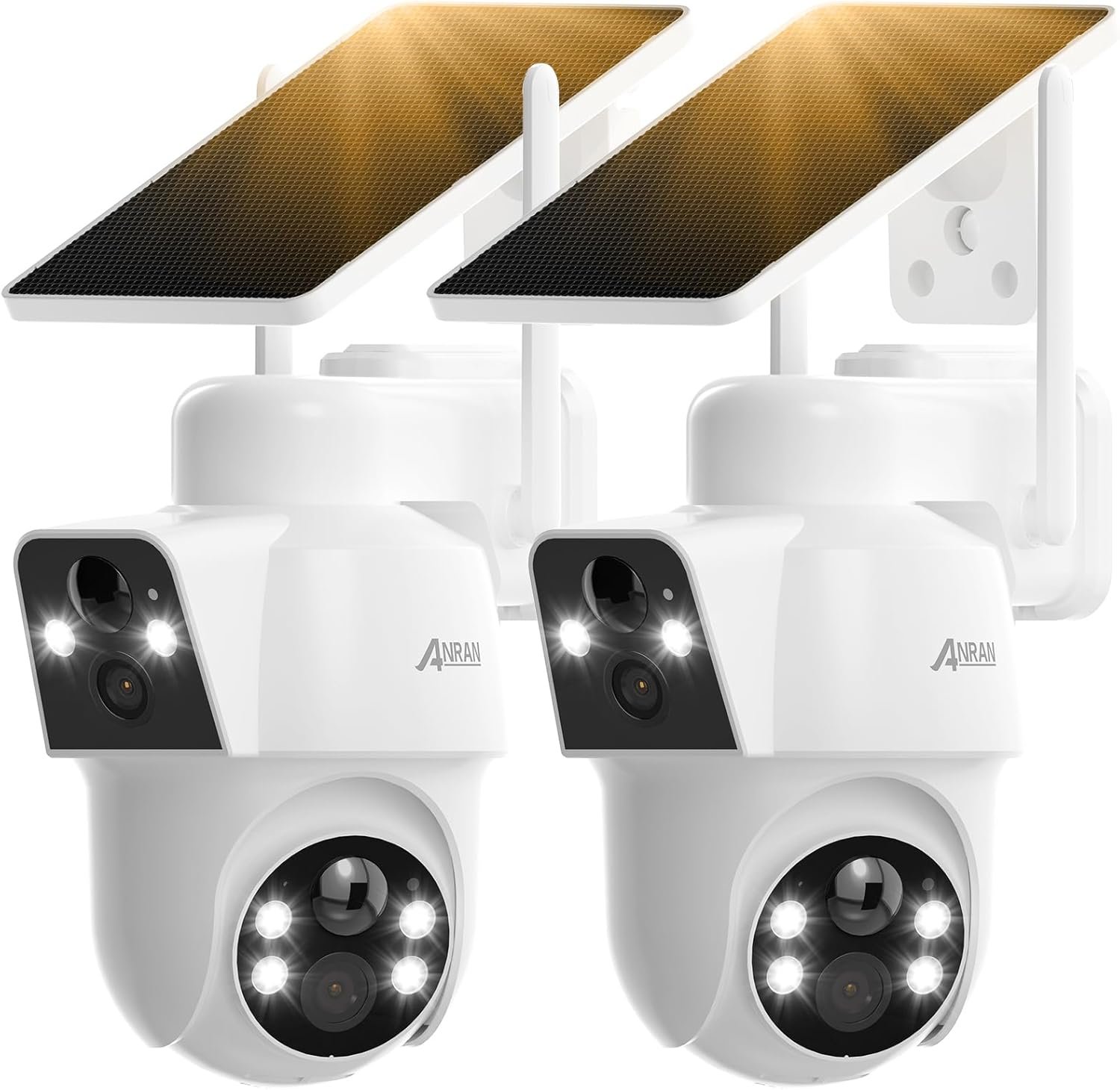
Expert Rating: 4.3/5 Stars | Est. Value: $159.99
The proliferation of wire-free surveillance solutions has often forced a compromise between broad situational awareness and detailed forensic capture. ANRAN’s dual-lens solar camera system aims to eliminate this trade-off, providing continuous, uncompromised monitoring with the added benefit of complete energy independence for critical outdoor vantage points.
Core Specifications
- Video Resolution: Dual 3-megapixel (2304×1296 pixels) sensors ensure crisp, detailed footage from both the fixed wide-angle and the pan-tilt-zoom (PTZ) lenses, critical for accurate subject identification.
- Lens System: Features an always-on, fixed wide-angle lens for constant area coverage (e.g., driveway, entry point) complemented by a separate PTZ lens offering 360° horizontal pan and remote tilt for dynamic, on-demand closer inspection.
- Power Architecture: Utilizes an integrated high-efficiency solar panel to continuously recharge an internal, non-specified battery pack. This design provides 100% wire-free operation. Absence of explicit Watt-hour (Wh) capacity or charge controller specifications suggests reliance on standard lithium-ion cells with basic power management for sustained functionality rather than robust off-grid energy storage.
- Night Vision Capability: Incorporates an automatic, integrated spotlight to enable full-color night vision, a significant forensic advantage over monochrome infrared by revealing accurate color data for identification in low-light conditions.
- Connectivity & Detection: Operates via Wi-Fi (likely 2.4GHz for extended range and compatibility) controlled through the ANRAN application. Employs Passive Infrared (PIR) motion detection, enhanced by AI-driven human, pet, and vehicle differentiation, significantly reducing nuisance alerts.
- Audio Interface: Includes a two-way communication system with a built-in microphone and speaker, enabling real-time interaction for visitor management or active deterrence.
Real-world Reliability
Sustained performance hinges on solar panel exposure; prolonged overcast periods or extreme weather events like heavy snowfall could diminish battery reserves, necessitating optimal placement for maximum solar gain. The wireless nature demands a stable 2.4GHz Wi-Fi network for consistent live view and PTZ control, which may be compromised during local power outages affecting network infrastructure. While rated for outdoor use, continuous exposure to harsh elements should be considered for long-term operational integrity and panel cleanliness.
Who is this for?
This system targets suburban homesteads, remote small business perimeters, or property owners seeking flexible, wire-free surveillance without extensive electrical or data cabling.
The Tech Advantages:
- Dual 3-megapixel sensors (fixed wide + PTZ) for comprehensive and detailed coverage.
- Integrated high-efficiency solar panel for 100% wire-free, energy-independent operation.
- Automatic spotlight enables full-color night vision for enhanced forensic detail.
- AI-driven human, pet, and vehicle differentiation reduces false alerts.
- Two-way audio for active deterrence and communication.
The Trade-offs:
- Internal battery pack capacity (Wh) is not explicitly specified, impacting understanding of true autonomy.
- Performance is highly reliant on optimal solar exposure, susceptible to prolonged low irradiance.
- Likely 2.4GHz Wi-Fi only, which can be less robust in dense networks.
- No explicit IP rating provided, though rated for outdoor use, long-term elemental exposure needs consideration.
6. Baseus X1 Pro
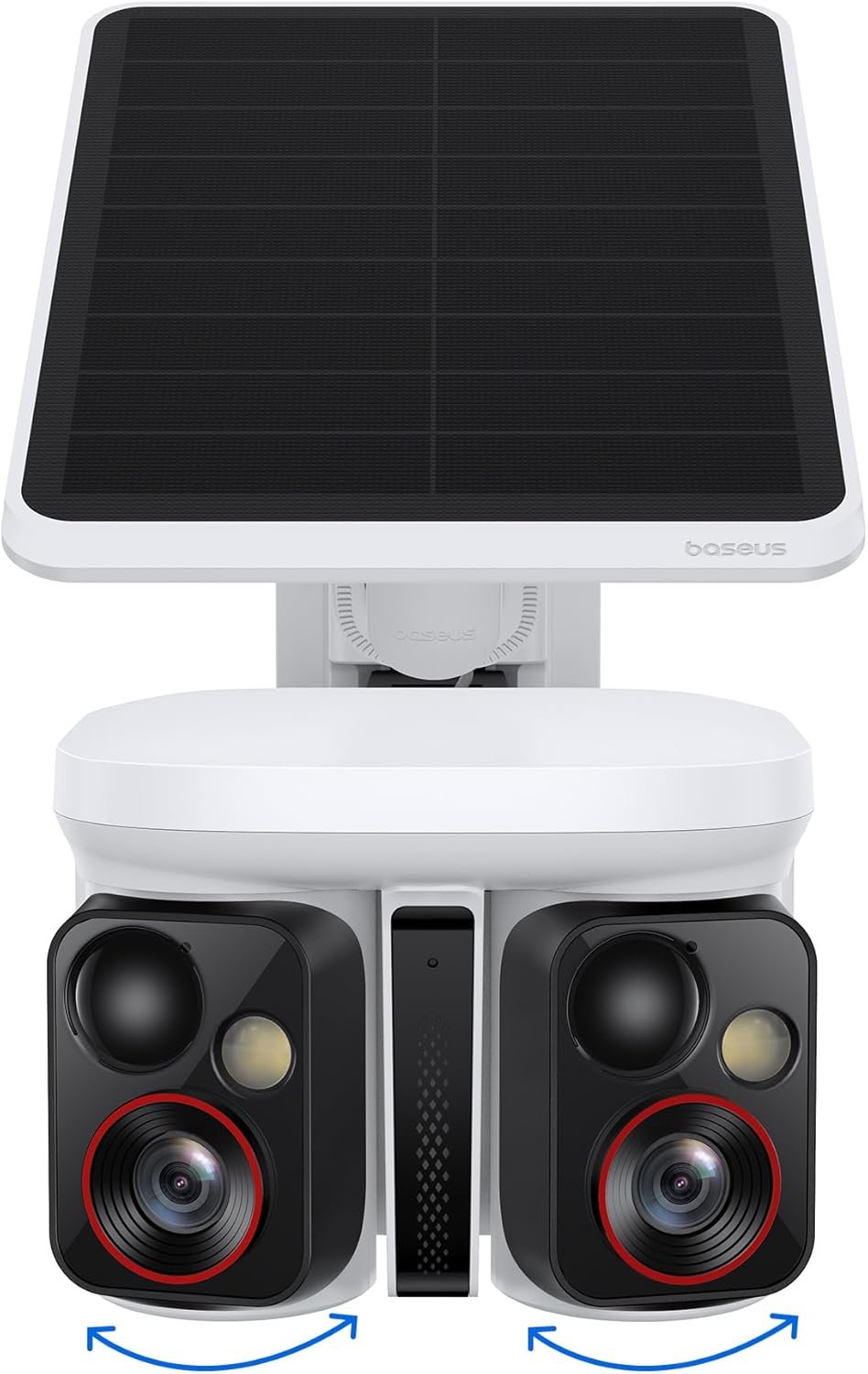
Expert Rating: 4.1/5 Stars | Est. Value: $149.99
In the evolving landscape of smart home security, reliance on grid power and subscription services presents inherent vulnerabilities. The Baseus X1 Pro attempts to address these by integrating on-board solar power with advanced multi-lens AI tracking, promising a degree of operational autonomy for critical perimeter monitoring. This unit aims to provide continuous surveillance with minimal external power infrastructure, a compelling proposition for resilient security deployments.
Core Specifications
- Video Resolution & Optics: Dual 3K sensors, delivering an effective resolution of approximately 2880×1620 pixels per stream. The system features a fixed 210° wide-angle lens paired with a dynamic lens offering 300° pan for targeted tracking, supported by color night vision capabilities.
- Onboard Power System: A 3W peak solar panel with a 120° auto-tracking mechanism charges an integrated 28.86 Watt-hour (Wh) lithium-ion battery (7800mAh at an assumed nominal 3.7V). This setup is designed for sustained operation, though actual runtime heavily depends on solar irradiance and event frequency.
- Artificial Intelligence & Tracking: Powered by a NeuraNex 2.0 AI chip, the system independently tracks two distinct targets simultaneously, a significant advancement over single-lens PTZ solutions. AI algorithms differentiate between people, vehicles, and pets, substantially reducing nuisance alerts.
- Data Storage & Connectivity: Local storage is facilitated via a microSD card slot, supporting capacities up to 512GB, eliminating mandatory cloud subscription fees. Connectivity relies on wireless protocols, likely 2.4GHz Wi-Fi, which mandates existing network infrastructure.
- Environmental Rating: Encased in an IP65-rated housing, providing adequate protection against dust ingress and low-pressure water jets, suitable for standard outdoor installations.
- Security Protocols: The vendor provides no explicit details regarding video stream encryption standards (e.g., WPA3, AES-256) or data transmission security protocols, a critical omission for any security device.
Real-world Reliability
In scenarios demanding consistent operation irrespective of grid stability, the X1 Pro’s 28.86 Wh battery and 3W solar panel offer a baseline of resilience. However, prolonged periods of low solar irradiance or high activity will deplete the reserve, potentially impacting full functionality. The reliance on Wi-Fi for primary connectivity means that local network drops will disrupt remote access and cloud-based features, though local recording to the 512GB microSD card provides a crucial operational fallback. Its IP65 rating is standard for outdoor electronics, adequate for rain and dust, but users in regions with extreme temperatures or direct, high-pressure water exposure should consider additional environmental shielding.
Who is this for?
This system is best suited for suburban homesteads or small commercial properties seeking robust perimeter surveillance with a preference for local data storage and reduced reliance on subscription services.
The Tech Advantages:
- On-board 3W solar panel with auto-tracking and integrated 28.86 Wh battery for energy autonomy.
- Dual 3K sensors (2880×1620) with a 210° wide-angle and 300° pan for comprehensive coverage.
- NeuraNex 2.0 AI chip enables simultaneous tracking of two distinct targets and smart differentiation.
- 512GB local microSD storage, reducing reliance on cloud subscriptions.
- IP65-rated housing for standard outdoor weather protection.
The Trade-offs:
- Actual runtime is heavily dependent on solar irradiance and event frequency.
- Relies on 2.4GHz Wi-Fi, which can be less robust in congested areas.
- No explicit details on video stream encryption standards or data transmission security protocols.
- IP65 rating might be insufficient for extreme weather conditions.
Summary Verdict: Spec Comparison
| Image | Product | Rating & Price | Action |
|---|---|---|---|
|
VSTARCAM Dual | 5.0 Stars $29.99 |
View Specs |
|
Anpviz 4K PoE | 4.4 Stars $129.99 |
View Specs |
|
Hiseeu Wireless | 4.4 Stars $89.99 |
View Specs |
|
Wansview B7 2P | 4.3 Stars $74.99 |
View Specs |
|
ANRAN Solar | 4.3 Stars $159.99 |
View Specs |
|
Baseus X1 Pro | 4.1 Stars $149.99 |
View Specs |
Technical Factors for Dual Lens Outdoor Camera Selection
Choosing the optimal dual lens outdoor security camera requires a nuanced understanding of key technical considerations that extend beyond basic feature lists. For those building a truly resilient and independent security infrastructure, two areas stand paramount: Power Autonomy & Redundancy, and Advanced Lens Architecture & AI Integration.
1. Power Autonomy & Redundancy: For any outdoor security deployment, particularly those aiming for grid independence, the camera’s power strategy is critical. Solar-powered units, like the Baseus X1 Pro, Wansview B7 2P, and ANRAN Solar, offer significant advantages by minimizing reliance on mains power, thus ensuring continuity during outages. When evaluating these, look beyond just “solar-powered.” Scrutinize the Wattage (W) of the solar panel and the Watt-hour (Wh) capacity of the integrated battery. A higher Wh rating provides longer operational reserves during prolonged overcast periods. For cameras requiring mains power (like the VSTARCAM and Hiseeu) or PoE (Anpviz), plan for an Uninterruptible Power Supply (UPS) system or integration into a centralized solar-charged battery bank. PoE, specifically, is a robust solution for off-grid scenarios, as it allows for simplified, single-cable power and data distribution from a central, hardened power source. Understanding these details ensures your camera remains operational when conventional power fails.
2. Advanced Lens Architecture & AI Integration: The “dual lens” concept itself offers distinct advantages, but how it’s implemented is crucial. Cameras typically feature either a fixed wide-angle lens paired with a pan-tilt-zoom (PTZ) lens for dynamic tracking (e.g., VSTARCAM, ANRAN), or two fixed lenses that stitch together a super-wide field of view (e.g., Anpviz 4K). For active monitoring and detailed forensic capture, the fixed + PTZ setup excels, allowing for both broad overview and granular focus. The Anpviz, with its stitched 180° view, prioritizes comprehensive static coverage. Furthermore, integrated Artificial Intelligence (AI) algorithms are no longer a luxury but a necessity. Look for capabilities that differentiate between humans, vehicles, and pets, significantly reducing nuisance alerts from environmental factors. Advanced AI, like that found in the Baseus X1 Pro or Anpviz, enhances efficiency, ensuring that notifications are actionable and relevant, preventing alert fatigue and improving response times, ultimately strengthening your security posture.