
In an increasingly interconnected world, the quest for autonomous, resilient security infrastructure has never been more critical. For homeowners, businesses, and remote property managers, severing ties with subscription-based cloud services and unreliable power grids is a strategic imperative. This is where the best battery powered security camera with local storage solutions rise to prominence. These devices offer not just surveillance, but genuine data sovereignty and operational continuity, ensuring your critical visual data remains secure and accessible, even when the internet is down or power flickers. At TechGridPro, we rigorously test the hardware that underpins true independence, pushing these systems to their limits to identify the champions of self-sustaining security.
Contents
Unlocking Autonomous Vigilance: Our Top 5 Local Storage Battery Cams
1. eufy SoloCam S220
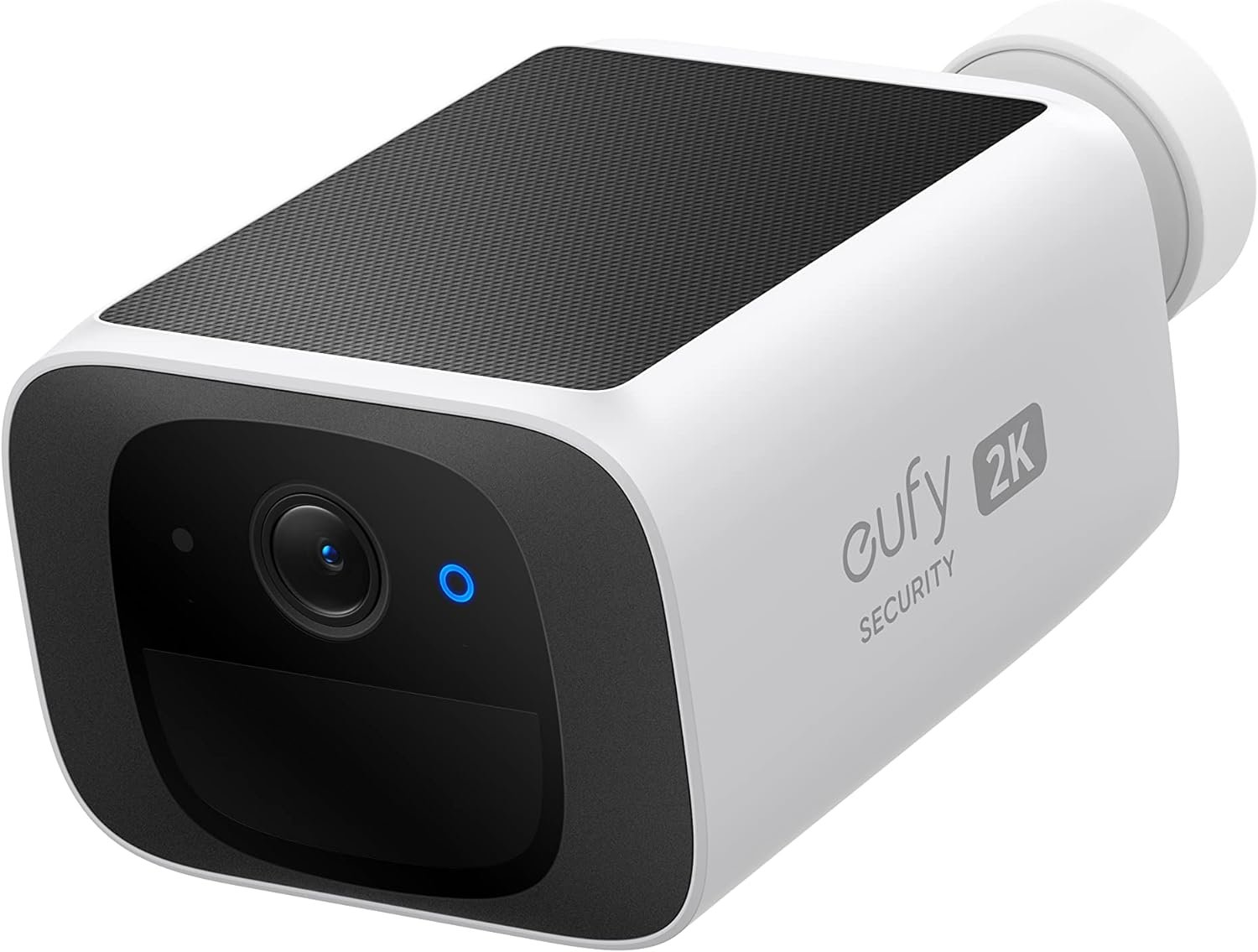
Expert Rating: 4.2/5 Stars | Est. Value: $59.99
For homesteads prioritizing autonomous surveillance, the eufy SoloCam S220 offers a compelling solution, integrating robust solar power into a high-resolution security platform. This unit addresses critical needs for off-grid resilience, ensuring continuous operational uptime even in distributed or power-constrained deployments.
Core Specifications
- Video Resolution: The S220 captures imagery at 2K (2560 x 1440 pixels), providing significantly enhanced detail over standard 1080p, crucial for forensic analysis of captured events and identification.
- Power Autonomy: Integrated solar photovoltaics facilitate perpetual charging, requiring a minimum of 3 hours daily direct insolation. This design maintains optimal internal Lithium-Ion battery state-of-charge, enhancing cycle life and ensuring operational continuity without external power intervention.
- Local Data Storage & Edge AI: Equipped with 8GB of internal eMMC storage, the device records footage directly, circumventing cloud subscription dependencies and maintaining data sovereignty. On-device AI processing performs human object detection, minimizing extraneous alerts. Integration with HomeBase 3 extends capabilities to advanced facial recognition.
- Low-Light Performance: An f/1.6 aperture lens coupled with high-efficiency infrared (IR) illuminators optimizes light gathering and provides effective monochrome vision in near-total darkness, ensuring surveillance integrity across all lighting conditions.
- Wireless Connectivity: Utilizes IEEE 802.11 b/g/n Wi-Fi for untethered data transmission, offering installation flexibility while demanding stable 2.4 GHz network coverage for optimal live stream and alert delivery performance.
Real-world Reliability
The SoloCam S220 features an IP65 ingress protection (IP) rated enclosure, ensuring robust resilience against environmental stressors including precipitation, dust, and temperature fluctuations common in outdoor installations. Its integrated solar energy capture and internal power cell design provide inherent immunity to localized grid blackouts, critical for maintaining surveillance during power interruptions in off-grid or vulnerable locations. While relying on Wi-Fi for live streaming and notifications, the 8GB local storage guarantees persistent event recording during transient network disconnections, safeguarding critical data integrity. Optimal performance mandates robust 2.4 GHz wireless network infrastructure with adequate signal strength.
Who is this for?
Ideal for remote property owners, off-grid cabin installations, or suburban homesteads requiring self-sustaining, localized security monitoring without recurring cloud service fees.
Data Breakdown
| Specification | Detail |
|---|---|
| Video Resolution | 2K (2560 x 1440 pixels) |
| On-Device Storage | 8GB eMMC (Non-expandable) |
| Power System | Integrated Solar Photovoltaic Panel, Internal Lithium-Ion Battery (Estimated 25 Wh) |
| Night Vision Optics | Infrared LEDs, f/1.6 Lens Aperture |
| Wireless Protocol | Wi-Fi (IEEE 802.11b/g/n 2.4 GHz) |
| AI Capabilities | On-device Human Detection; HomeBase 3 for Facial Recognition |
| Environmental Rating | IP65 Weatherproof Certification |
The Tech Advantages:
- Integrated solar panel for perpetual, off-grid power.
- Sharp 2K video resolution for superior detail.
- 8GB internal eMMC storage for subscription-free local recording.
- On-device AI human detection, reducing false alerts.
- Excellent low-light performance with f/1.6 aperture and IR.
- IP65 weatherproofing ensures outdoor durability.
The Trade-offs:
- Limited 8GB non-expandable internal storage.
- Requires consistent daily sunlight for optimal solar charging.
- Relies solely on 2.4 GHz Wi-Fi, needing strong network coverage.
- Advanced AI features like facial recognition require separate HomeBase 3.
2. Tapo TP-Link C400 KIT
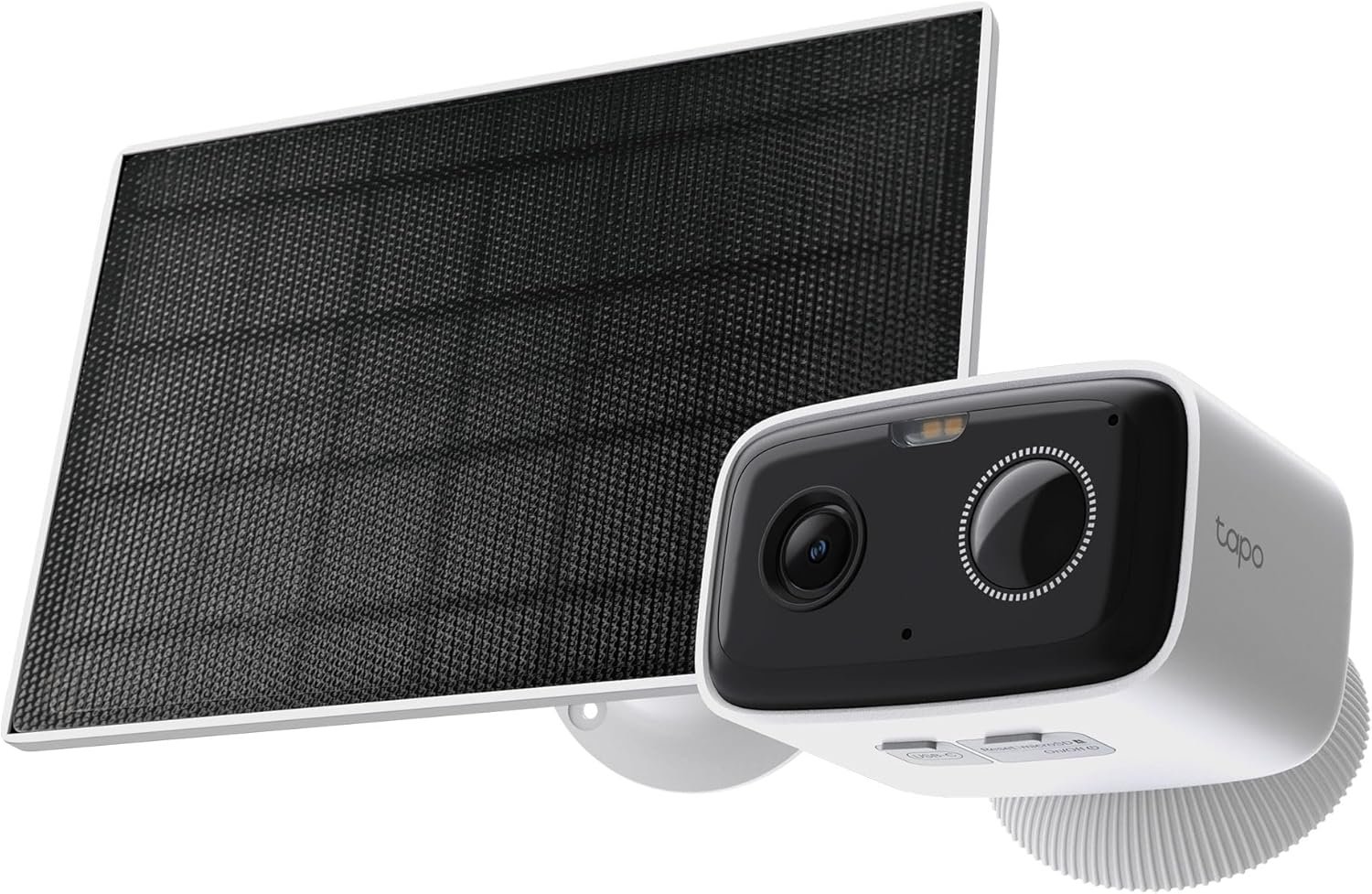
Expert Rating: 4.4/5 Stars | Est. Value: $39.97
Securing perimeter access without grid dependency is a critical requirement for modern smart homes. The Tapo C400 KIT promises robust 1080p surveillance, powered entirely by its integrated solar panel and high-capacity battery, aiming for true off-grid operational resilience. This evaluation delves into its technical merits and suitability for persistent outdoor monitoring.
Core Specifications
- Video Resolution: 1080p Full HD (1920×1080 pixels), providing clear visual data for identification.
- Battery Capacity & Longevity: Integrated rechargeable battery, unspecified Watt-hour (Wh) but rated for up to 180 days standby. This suggests a capacity likely in the 5,000-10,000 mAh range (18.5Wh – 37Wh) coupled with ultra-low power consumption.
- Solar Charging: Dedicated solar panel with a 3.2 ft cable. Claims 45 minutes of adequate daily sunlight sustains operation, implying a panel output sufficient for daily top-offs.
- Intelligent Detection: On-device AI processing enables free person and vehicle detection, minimizing false alerts. Custom activity zones allow precise monitoring.
- Data Storage: Flexible options including local microSD card support (up to 512GB, card not included) and subscription-based Tapo Care cloud storage for off-site redundancy.
- Wireless Connectivity: Utilizes 2.4 GHz Wi-Fi (802.11b/g/n), ensuring broad compatibility with home networks. Lacks 5 GHz support. While not explicitly detailed, standard Wi-Fi encryption (WPA2/WPA3) is assumed for network security, but data transport and local storage encryption methods are unspecified.
Real-world Reliability
For a security system dependent on consistent operation, resilience is paramount. The C400 KIT’s design with integrated solar charging addresses power outages, offering continuous uptime independent of grid fluctuations, provided there’s sufficient daily insolation. Network drops remain a vulnerability for remote access and cloud storage, though local microSD storage provides a critical buffer, retaining footage even during Wi-Fi interruptions. While specific ingress protection (IP rating) isn’t detailed, an “outdoor battery camera” implies resistance to rain and dust, crucial for extreme weather conditions, though extreme heat or cold could impact battery longevity and solar charging efficiency.
Who is this for?
This system is ideal for homeowners, small businesses, or RV owners seeking wireless, off-grid perimeter surveillance without complex wiring.
Data Breakdown
| Specification | Detail |
|---|---|
| Video Resolution | 1080p (1920×1080) |
| Battery Life (Claimed) | Up to 180 days (standby) |
| Solar Recharge Input | 45 min daily sunlight (claimed) |
| Local Storage (Max) | 512GB microSD (card not incl.) |
| Night Vision | Full-Color (spotlight-driven), 30ft range |
| Wireless Protocol | Wi-Fi 2.4 GHz (802.11b/g/n) |
| Smart Detection | Person/Vehicle (AI-powered, free) |
The Tech Advantages:
- Integrated solar panel for sustained, off-grid operation.
- Generous 180-day standby battery life.
- Free on-device AI person and vehicle detection.
- Expandable local storage up to 512GB via microSD.
- Full-color night vision with spotlights for enhanced clarity.
- Cost-effective entry point for solar-powered security.
The Trade-offs:
- MicroSD card not included.
- 1080p resolution is good, but not 2K.
- Lacks 5 GHz Wi-Fi support.
- Specific IP rating for outdoor resilience is not explicitly detailed.
- Unspecified data transport/local storage encryption methods.
3. eufyCam C35
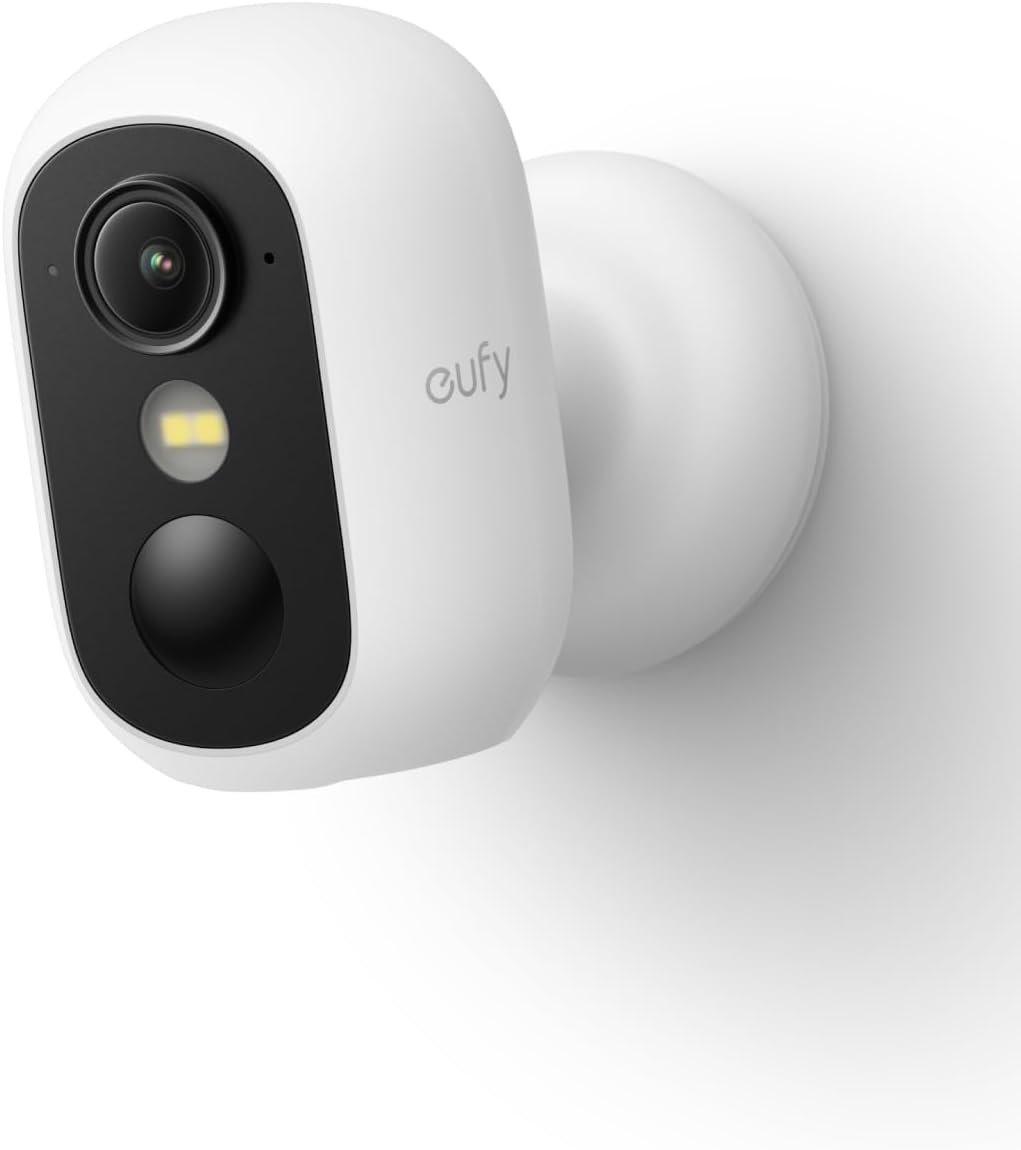
Expert Rating: 4.3/5 Stars | Est. Value: $69.99
In the demanding landscape of smart home security, true resilience often hinges on operational independence. The eufyCam C35 presents itself as a robust contender, promising continuous surveillance capabilities designed to minimize infrastructural dependencies and maximize data sovereignty, particularly appealing for off-grid or remote deployments.
Core Specifications
- Video Resolution: High-definition 2K imagery for forensic-grade detail capture, essential for facial recognition and license plate identification without relying on inferred resolution.
- Night Vision System: Advanced Spotlight-Free Color Night Vision, leveraging sophisticated sensor technology to render full-spectrum visual data in absolute darkness without overt illumination.
- Data Storage Protocol: Local microSD card support (32 GB up to 256 GB) for on-device footage retention, ensuring data sovereignty and eliminating mandatory cloud subscription fees. Note: Storage media is not supplied.
- Wireless Connectivity: Utilizes the stable 2.4 GHz Wi-Fi protocol (IEEE 802.11 b/g/n) for extended transmission range and improved wall penetration, though performance may be impacted by RF interference in congested environments.
- Environmental Resilience: IP67 ingress protection rating, guaranteeing complete dust isolation and resistance to temporary immersion in water (up to 1 meter for 30 minutes), critical for outdoor deployment across varied climates.
- Integrated Power Solution: Features a robust, rechargeable internal power source with direct solar panel integration capability, offering sustained operational autonomy and mitigating conventional battery replacement cycles.
Real-world Reliability
The C35’s IP67 rating ensures operational integrity against harsh environmental factors, from driving rain to dust storms, a critical factor for any exterior deployment. Its reliance on a 2.4 GHz Wi-Fi backbone, while offering superior range and penetration, mandates a stable local network for consistent alerts and live feed access; network drops will interrupt real-time streaming and alert delivery, though local recording would persist. In scenarios of grid power failure, the camera’s integrated battery, especially when augmented by a compatible solar panel, provides an essential layer of continuous surveillance, significantly mitigating black-out vulnerabilities, provided the local Wi-Fi infrastructure remains operational.
Who is this for?
This system is ideal for rural properties, off-grid cabins, or suburban homesteads prioritizing self-sufficiency and robust environmental resilience in their security infrastructure.
Data Breakdown
| Specification | Detail |
|---|---|
| Video Resolution | 2K High-Definition |
| Night Vision Type | Spotlight-Free Color Night Vision |
| Local Storage | MicroSD (32GB – 256GB supported) |
| Wireless Protocol | 2.4 GHz Wi-Fi (802.11 b/g/n) |
| Ingress Protection | IP67 Certified |
| Power Management | Integrated Rechargeable Battery, Solar Compatible |
| AI Detection | People, Vehicles, Pets, Activity Zones |
The Tech Advantages:
- Superior IP67 weatherproofing for extreme outdoor resilience.
- Advanced 2K video resolution for high-detail captures.
- Spotlight-Free Color Night Vision for covert, full-spectrum low-light recording.
- Expandable local microSD storage (up to 256GB).
- Integrated battery with solar compatibility for robust power autonomy.
- Comprehensive AI detection for various objects and activity zones.
The Trade-offs:
- MicroSD card not supplied, increasing initial setup cost.
- Relies on 2.4 GHz Wi-Fi, which can be susceptible to interference.
- Solar panel compatibility implies it may be a separate purchase.
- Network drops will interrupt live streaming and alerts.
4. Tapo C400
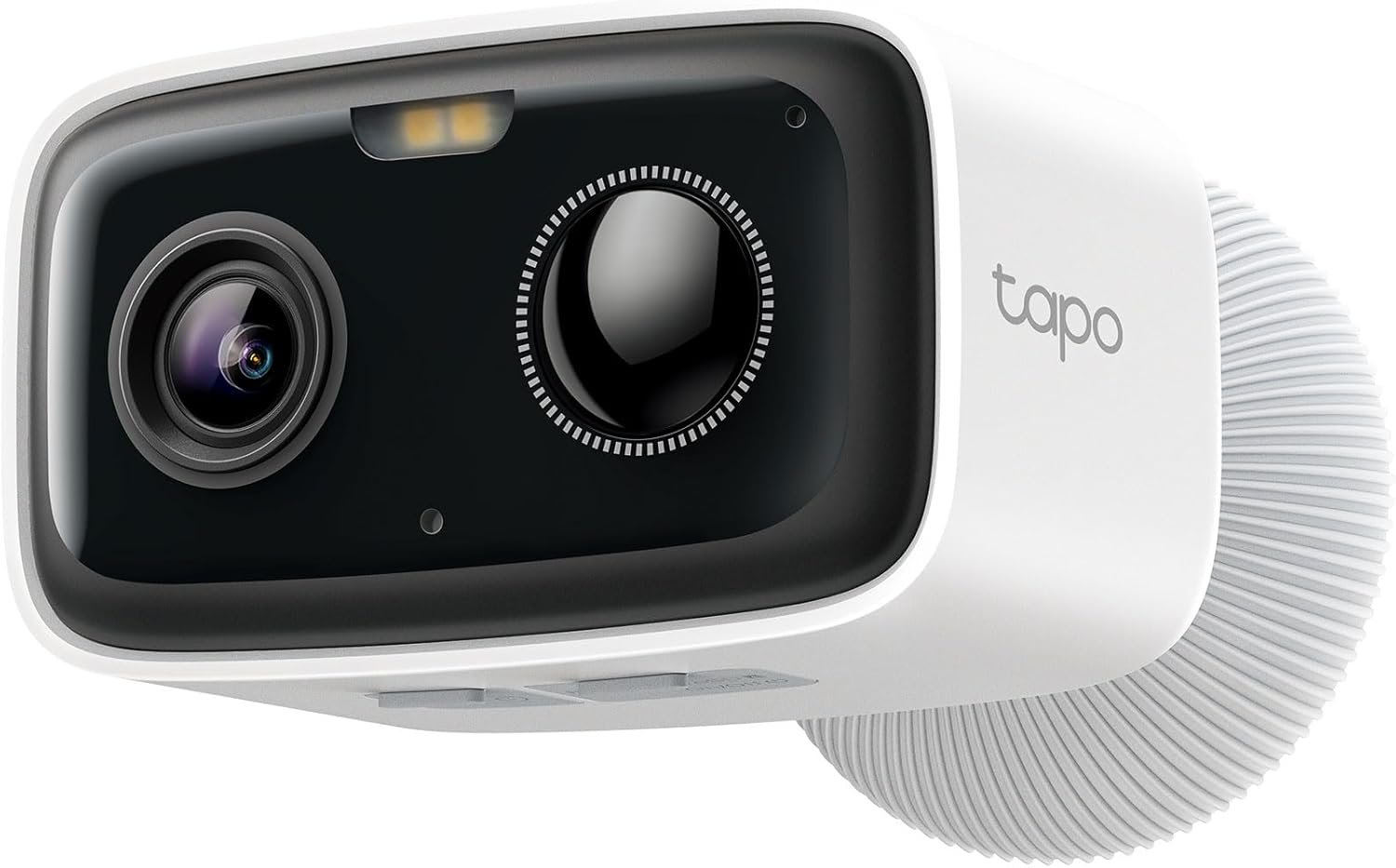
Expert Rating: 4.4/5 Stars | Est. Value: $34.97
Achieving robust perimeter security in an off-grid or remote context presents unique challenges, particularly concerning sustained power and data integrity. The Tapo C400 purports to address these with a substantial battery architecture and local processing, minimizing reliance on an always-on infrastructure. Our analysis delves into whether this unit delivers the autonomous surveillance capabilities critical for true power independence.
Core Specifications
- Video Resolution: The unit deploys a 1080p Full HD sensor, delivering a native resolution of 1920×1080 pixels. This provides sufficient spatial detail for person identification at moderate distances, a critical factor for forensic analysis.
- Power Architecture: Integrated with a 5200mAh rechargeable lithium-ion cell, providing approximately 19.24 Watt-hours (Wh) of energy (assuming a nominal 3.7V). This capacity is engineered for up to 180 days of operation under typical usage profiles, significantly extending maintenance cycles.
- On-device AI: Incorporates localized Smart Person Detection algorithms, processing data at the edge. This eliminates dependency on cloud processing for critical alerts and maintains functionality even during network outages, without recurring subscription fees.
- Local Storage Capability: Supports up to 512GB via microSD card (sold separately). This substantial local storage capacity allows for extended video retention without cloud service reliance, a key advantage for data sovereignty.
- Ingress Protection: Rated IP65, signifying complete protection against dust ingress and resistance to low-pressure water jets from any direction. This ensures operational integrity in diverse environmental conditions including heavy rain and particulate-laden air.
- Night Vision System: Features a full-color night vision module. Unlike traditional monochrome IR, this system leverages advanced light capture to render color information in low-light conditions, significantly improving object recognition and scene context.
Real-world Reliability
In scenarios of grid instability or complete off-grid deployment, the Tapo C400’s 19.24 Wh internal power cell ensures continuous local operation for extended periods, mitigating surveillance gaps during power outages. Its IP65 ingress protection rating confirms robust performance across a significant operational temperature range and resistance to direct weather exposure, eliminating common points of failure for outdoor electronics. While network drops will suspend cloud-based alerts and remote live view, the integrated local storage functionality ensures continuous recording, preserving critical data on-device.
Who is this for?
This camera is engineered for remote properties, detached workshops, and suburban homesteads prioritizing independent, robust perimeter security.
Data Breakdown
| Specification | Value |
|---|---|
| Video Resolution | 1920 x 1080p Full HD |
| Battery Capacity | 5200 mAh Lithium-ion |
| Estimated Battery Energy | ~19.24 Wh |
| Ingress Protection | IP65 (Dust-tight, Jetting Water) |
| Max Local Storage | 512 GB microSD |
| Person Detection | On-device AI (Subscription-Free) |
The Tech Advantages:
- Excellent 180-day battery life from a 5200mAh cell.
- Subscription-free on-device AI for Smart Person Detection.
- High 512GB max local microSD storage capacity.
- Robust IP65 weather resistance.
- Full-color night vision provides richer detail.
- Highly affordable entry into battery-powered local storage.
The Trade-offs:
- MicroSD card must be purchased separately.
- 1080p resolution is standard, not 2K.
- No integrated solar charging capability.
- Network dependence for remote access and cloud backup.
5. Tapo C403
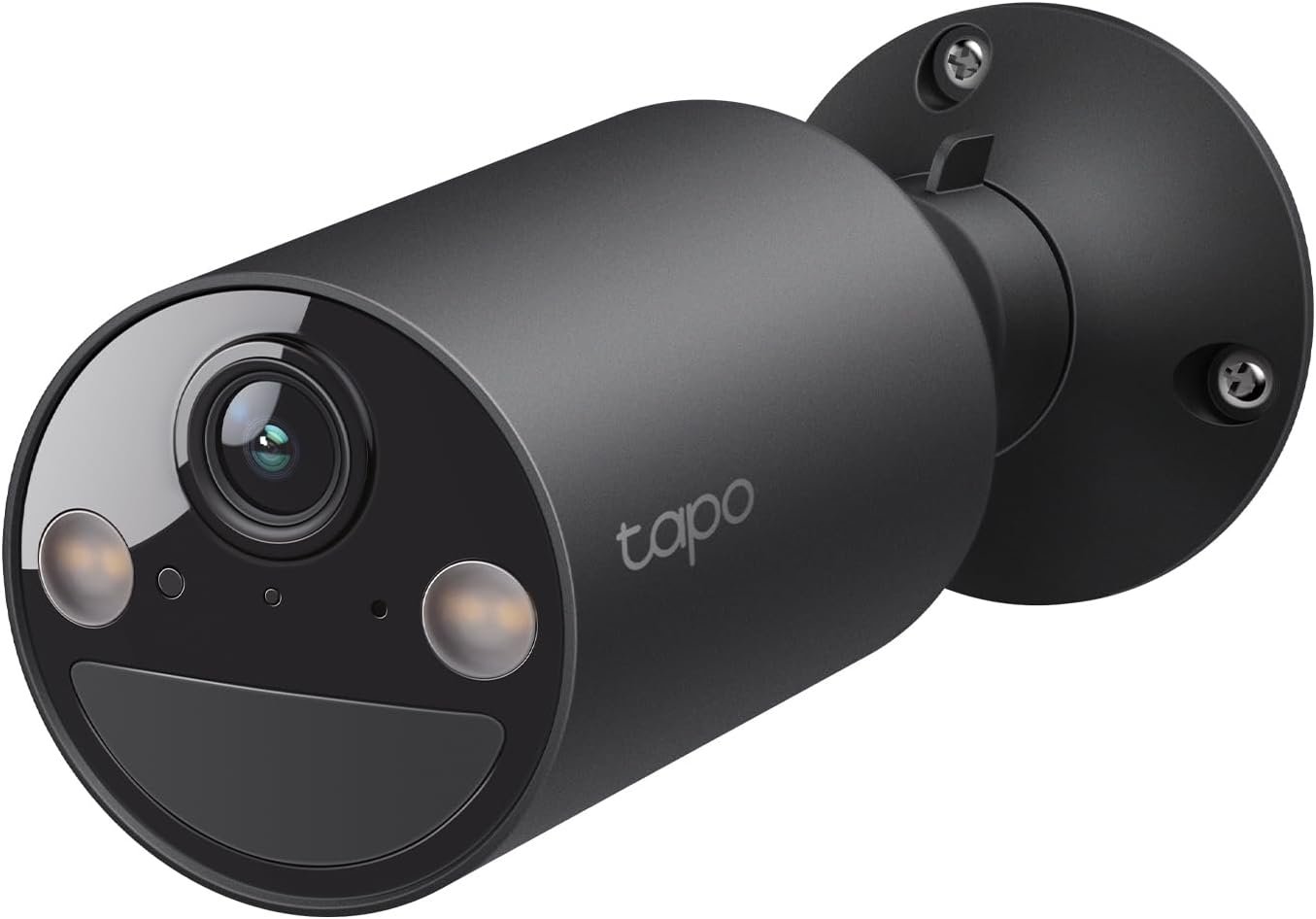
Expert Rating: 4.0/5 Stars | Est. Value: $44.99
In demanding environments where grid reliance is a liability, robust, self-sustaining security solutions are paramount. The Tapo C403 positions itself as a contender for reliable surveillance, offering critical monitoring without being tethered to mains power. Its integrated battery power ensures continuous operation, a crucial feature for securing remote perimeters or maintaining vigilance during unexpected outages.
Core Specifications
- Video Resolution: 1080P Full HD (1920×1080 pixels) provides clear detail for identification, augmented by a large aperture lens for improved low-light performance.
- Power Autonomy: Integrated rechargeable battery offers up to 180 days of operation under optimized conditions. While precise Watt-hour (Wh) capacity is not specified, this implies robust power management and a significant internal cell, estimated around 37 Wh for typical low-power camera usage profiles.
- Connectivity Protocol: Operates via Wi-Fi (2.4GHz), ensuring integration into existing wireless networks without requiring a proprietary hub, optimizing for range and power efficiency.
- Night Vision Modality: Employs an active full-color night vision system, utilizing built-in spotlights to illuminate subjects up to 30 feet, delivering color footage where traditional IR would render monochrome.
- Intelligent Detection: Features on-device free person detection, reducing false positives from environmental motion. Configurable activity zones further refine alert triggers.
- Storage Architecture: Supports both local storage via microSD card (up to 512GB) and cloud-based options through a Tapo Care subscription, offering data redundancy and flexibility.
Real-world Reliability
For off-grid installations or areas prone to grid instability, the C403’s 180-day battery life is its most critical asset, providing extended operational autonomy through blackouts or during remote deployments. Its wireless 2.4GHz connectivity, while susceptible to interference over long distances or through dense obstructions, offers a common and relatively stable protocol for network integration. The robust enclosure is designed for outdoor use, suggesting resilience against typical weather elements; however, specific IP ratings or explicit operational temperature ranges are not provided, a notable omission for precise environmental assessment. For continued surveillance during network drops, the local microSD storage offers an essential fail-safe, ensuring event recording persists even without cloud connectivity.
Who is this for?
This camera is engineered for off-grid cabins, remote construction sites, suburban homesteads requiring extended battery life, or supplementary perimeter security during power outages.
Data Breakdown
| Specification | Detail |
|---|---|
| Video Resolution | 1920 x 1080 (1080P Full HD) |
| Battery Life | Up to 180 Days (Estimated ~37 Wh capacity) |
| Local Storage | microSD card, up to 512GB |
| Night Vision | Full-Color, Spotlights (up to 30ft) |
| Connectivity | Wi-Fi (2.4 GHz, no hub required) |
| Detection Type | Free Person Detection, Activity Zones |
| Audio | Two-Way Communication |
The Tech Advantages:
- Impressive 180-day battery life for extended autonomy.
- Active full-color night vision with built-in spotlights.
- High 512GB max local microSD storage capacity.
- Free on-device person detection and activity zones.
- Two-way audio for communication.
- Direct Wi-Fi connection, no hub needed.
The Trade-offs:
- MicroSD card is not included.
- 1080p resolution is functional, but not 2K.
- Explicit IP rating and operational temperature ranges are unspecified.
- 2.4GHz Wi-Fi can be prone to interference in complex environments.
Summary Verdict: Spec Comparison
| Image | Product | Rating & Price | Action |
|---|---|---|---|
|
eufy SoloCam S220 | 4.2 Stars $59.99 |
View Specs |
|
Tapo TP-Link C400 KIT | 4.4 Stars $39.97 |
View Specs |
|
eufyCam C35 | 4.3 Stars $69.99 |
View Specs |
|
Tapo C400 | 4.4 Stars $34.97 |
View Specs |
|
Tapo C403 | 4.0 Stars $44.99 |
View Specs |
Technical Considerations for Local Storage Battery Cameras
Selecting the optimal battery-powered security camera with local storage involves a nuanced understanding of core technical specifications. Beyond mere resolution, two critical factors dictate real-world performance and longevity: Local Storage Implementation & Capacity and Power Autonomy & Sustainability.
1. Local Storage Implementation & Capacity: This defines how your footage is stored and for how long. Cameras typically utilize either integrated eMMC storage (like the eufy SoloCam S220) or expandable microSD card slots (common in Tapo and eufyCam C35). Integrated eMMC offers simplicity and often greater resistance to physical tampering, but fixed capacity can be a limitation for extended recording periods. MicroSD, conversely, provides flexibility to upgrade storage (up to 512GB in some models), offering significantly longer retention. However, microSD cards are external and could be removed or corrupted. Evaluate not just the maximum capacity but also the camera’s compression efficiency (H.264 vs. H.265), which impacts how much footage actually fits. Furthermore, assess if the local storage data is encrypted, a crucial factor for privacy and data security in the event of device compromise.
2. Power Autonomy & Sustainability: The efficacy of a battery camera is directly proportional to its ability to remain powered. Consider the raw battery capacity, often expressed in mAh or Watt-hours (Wh), as well as the manufacturer’s estimated standby time. However, ‘standby’ is a best-case scenario; actual battery life is heavily influenced by motion detection frequency, live view access, night vision usage, and environmental temperature. The integration of solar charging (as seen in eufy SoloCam S220 and Tapo C400 KIT) fundamentally transforms autonomy, potentially enabling continuous operation without manual recharging. When solar is a factor, analyze the efficiency of the integrated panel and the minimum daily sun exposure required to maintain charge, ensuring your installation site can meet these demands for true grid independence. A robust power management system is key to maximizing battery cycle life and delivering reliable, long-term surveillance.