
Choosing the right 1000W pure sine wave portable power station isn’t merely about convenience; it’s a strategic decision for power independence. In an increasingly interconnected yet volatile world, ensuring sensitive electronics, critical medical devices, or essential smart home systems remain operational through grid fluctuations or complete outages requires an uncompromising power source. A pure sine wave inverter is non-negotiable for preserving the longevity and functionality of sophisticated gear, preventing the power surges and waveform irregularities that modified sine wave units often inflict. This selection focuses on stations that deliver robust capacity, clean energy, and reliable performance, ensuring your tech grid remains secure and uninterrupted.
Contents
Command Your Power Grid: Precision-Engineered 1000W Stations Under Scrutiny
1. Portable Power Station 1000W
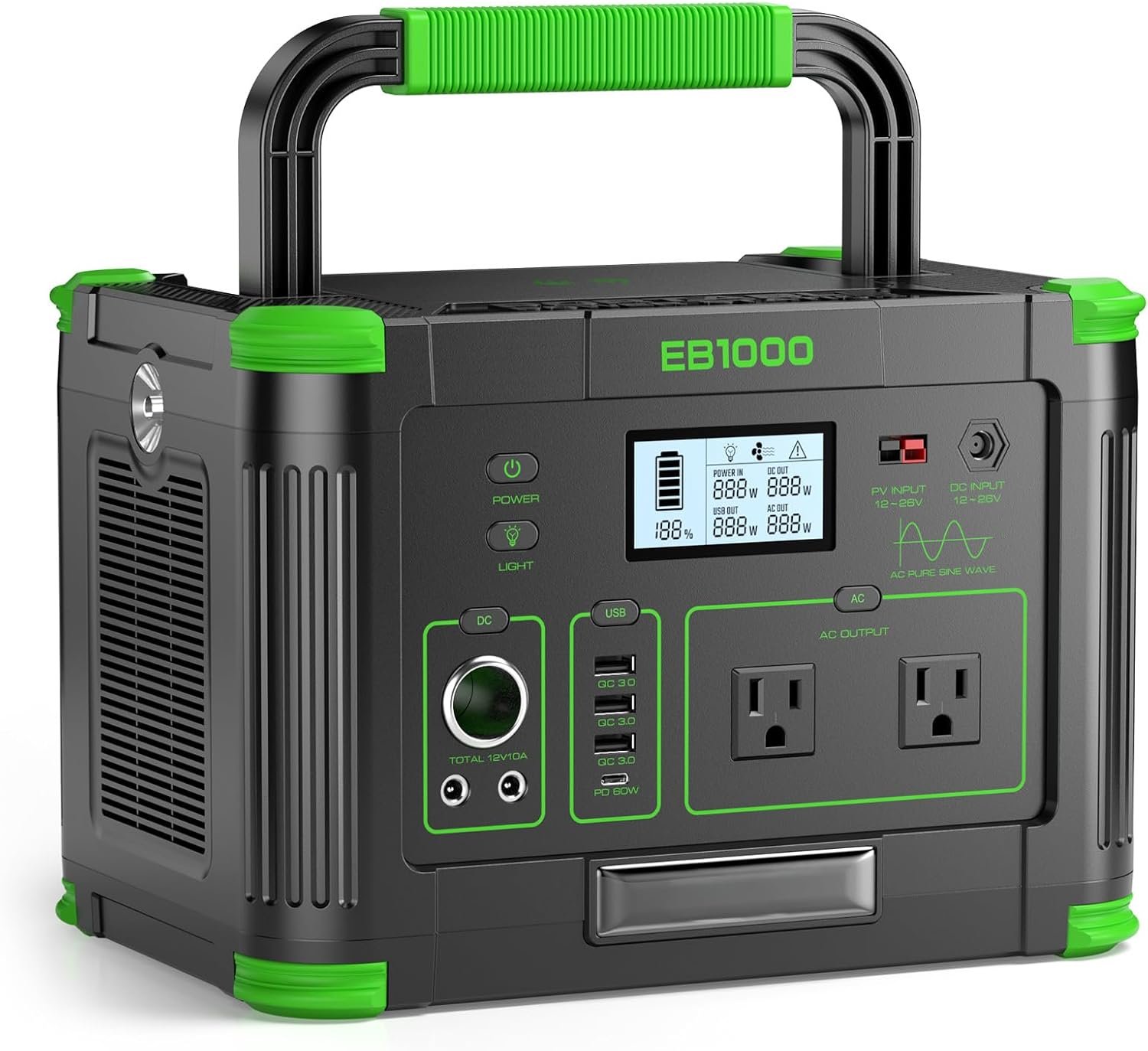
Expert Rating: 4.7/5 Stars | Est. Value: $279.99
In an era where power grid vulnerabilities are increasingly evident, securing reliable, independent energy is paramount. This unit offers a foundational layer of power resilience for critical devices, ensuring continuity during unexpected outages or for complete off-grid autonomy. Its technical specifications address both power output and intelligent battery management, crucial for demanding applications.
Core Specifications
- Battery Chemistry & Capacity: Features a 999Wh LiFePO4 battery, recognized for its superior thermal stability, extended cycle life (2000+ cycles to 80%), and inherent safety advantages over traditional NMC cells, ensuring long-term operational integrity.
- AC Output Purity & Power: Delivers a consistent 1000W of pure sine wave AC power with a 2000W surge capacity, essential for sensitive electronics such as medical devices (e.g., CPAP machines) and high-end computing equipment, preventing potential damage from irregular waveforms.
- Integrated Charging Protocols: Equipped with a 60W USB-C Power Delivery (PD) port and multiple 18W USB-A Quick Charge 3.0 ports, alongside a 10W wireless charging pad, providing optimized, high-speed charging for a diverse ecosystem of modern portable devices.
- Off-Grid Recharging Efficiency: Incorporates advanced Triple MPPT (Maximum Power Point Tracking) technology, enabling efficient power harvesting from solar panels up to 800W. This significantly enhances recharge rates under varying solar irradiance, critical for sustained off-grid operations.
- Battery Management System (BMS): Utilizes an upgraded, automotive-grade BMS that provides comprehensive multi-point protection against overcharge, over-discharge, overcurrent, short-circuiting, and thermal excursions, safeguarding both the battery pack and connected devices while maximizing operational lifespan.
Real-world Reliability
During grid blackouts or sustained off-grid operations, the 999Wh LiFePO4 battery, complemented by the pure sine wave inverter, ensures stable and clean power delivery, protecting delicate electronics from potential voltage irregularities. Its advanced MPPT controller effectively maximizes solar input even under fluctuating weather conditions, providing consistent replenishment without manual intervention, critical for maintaining essential operations regardless of external infrastructure reliability. The robust internal components are designed for resilience against typical environmental stressors encountered in outdoor or emergency scenarios.
Who is this for?
Ideal for individuals establishing robust emergency preparedness systems, remote workstation deployments, or self-sufficient recreational vehicle setups.
Data Breakdown
| Specification | Value |
|---|---|
| Battery Capacity | 999Wh LiFePO4 |
| Continuous AC Power | 1000W (Pure Sine Wave) |
| Peak AC Power | 2000W |
| USB-C PD Output | 60W |
| Max Solar Input | 800W (MPPT) |
| AC Recharge Time | 8-12 hours |
The Tech Advantages:
- Superior LiFePO4 battery chemistry for enhanced safety and significantly longer cycle life (2000+ cycles).
- Exceptional 800W maximum solar input with Triple MPPT for incredibly fast and efficient solar recharging.
- Robust 1000W pure sine wave output with a substantial 2000W surge capacity for demanding loads.
- Comprehensive fast-charging suite including 60W USB-C PD, QC 3.0, and a 10W wireless pad.
- Automotive-grade Battery Management System (BMS) offers top-tier protection and longevity.
The Trade-offs:
- AC recharge time of 8-12 hours is on the longer side for a rapid grid-based top-up.
- While LiFePO4 is superior, it often implies a heavier unit (though weight isn’t specified in data).
- Generic branding might suggest a less established long-term support ecosystem compared to major players.
2. GRECELL 999Wh Solar Generator 1000W
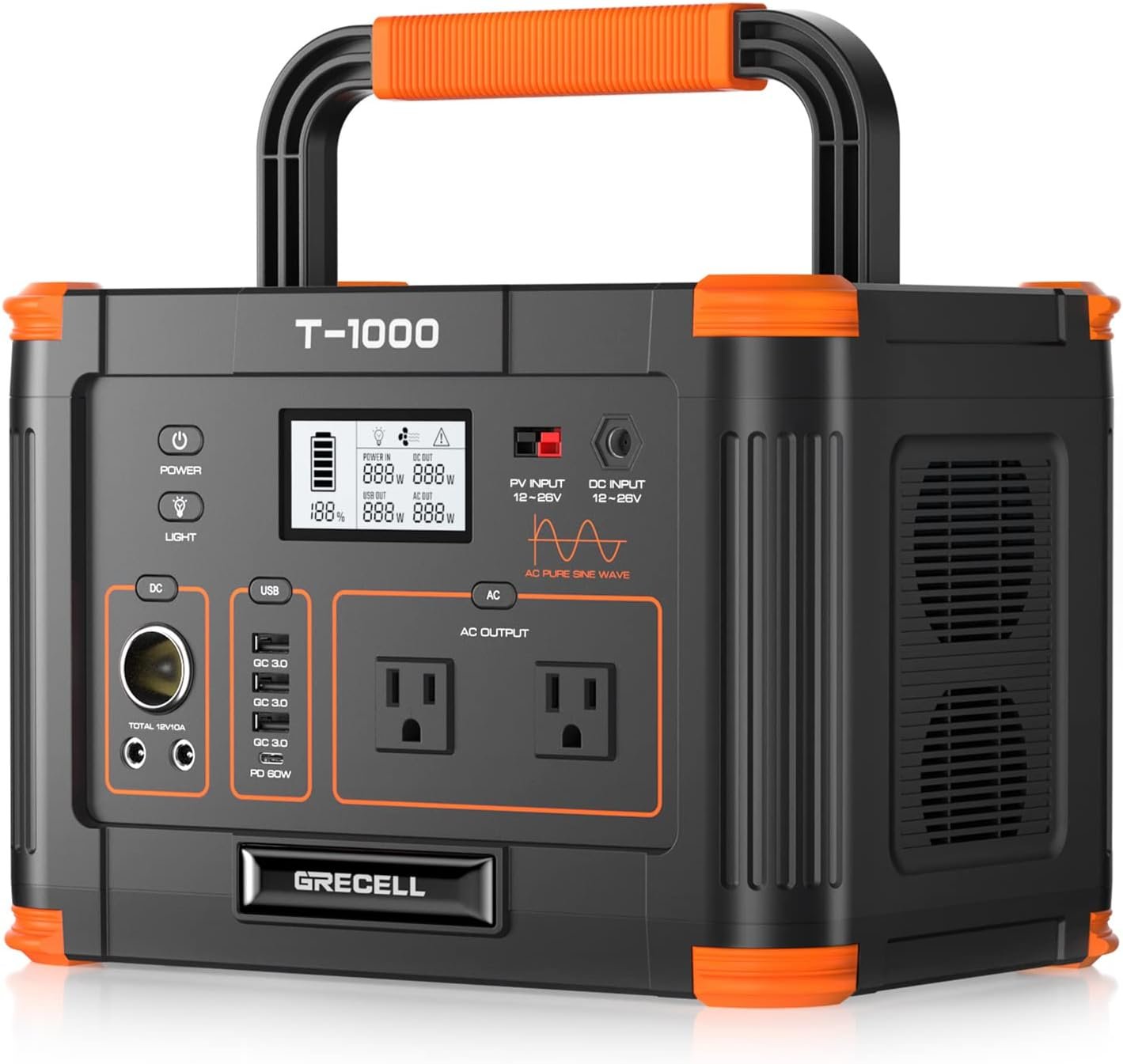
Expert Rating: 4.4/5 Stars | Est. Value: $319.94
In an era where uninterrupted power defines operational integrity, the GRECELL 999Wh Solar Generator presents itself as a contender for critical backup and independent energy supply. For those prioritizing energy resilience in smart home ecosystems or remote installations, understanding its technical specifications is paramount.
Core Specifications
- Battery Chemistry & Capacity: Utilizes a 999Wh lithium-ion cell array, providing substantial energy reserves for extended operation of critical low-wattage devices or short-duration support for higher-draw equipment.
- AC Output Performance: Delivers a continuous 1000W pure sine wave AC output, with a transient peak capacity of 2000W. This ensures compatibility and safe operation for sensitive electronics, including network infrastructure and medical devices.
- Integrated Power Delivery (PD): Features a dedicated 60W USB-C Power Delivery port, crucial for rapidly charging modern laptops, tablets, and advanced IoT components.
- Advanced Battery Management System (BMS): Incorporates a multi-layer BMS designed for overcharge, short-circuit, and surge protection. Thermal regulation is managed by silent dual cooling fans, critical for longevity and operational safety under load.
- Optimized Solar Charging: A built-in Maximum Power Point Tracking (MPPT) controller maximizes energy harvest efficiency from connected solar photovoltaic arrays, reducing recharge times and enhancing off-grid autonomy.
Real-world Reliability
During grid infrastructure failures or remote deployments, the GRECELL 999Wh unit demonstrates robust operational capacity. Its 999Wh reserve can sustain critical security sensors, network routers, or essential medical devices (like CPAP machines) for extended periods. The pure sine wave output mitigates risks of electromagnetic interference or operational instability common with modified sine wave inverters, ensuring integrity for sensitive electronics. The integrated BMS actively protects connected devices from voltage irregularities and manages internal temperatures via its dual fan system, contributing to reliable performance even during prolonged use or under challenging environmental conditions where active cooling is paramount. Solar recharge capabilities via the MPPT controller ensure a viable pathway to power independence during extended outages.
Who is this for?
Ideal for advanced off-grid installations, critical smart home backup, or robust mobile workstation power requirements.
Data Breakdown
| Specification | Detail |
|---|---|
| Battery Capacity | 999Wh |
| Continuous AC Output | 1000W Pure Sine Wave |
| Peak AC Output | 2000W |
| USB-C PD Output | 60W |
| Solar Charge Controller | Integrated MPPT |
| AC Outlets | 2 |
The Tech Advantages:
- Robust 1000W continuous pure sine wave output with a 2000W peak capacity.
- Dedicated 60W USB-C Power Delivery port for rapid charging of modern devices.
- Integrated MPPT controller maximizes solar energy harvest efficiency.
- Advanced multi-layer BMS with silent dual cooling fans ensures safety and longevity.
- Solid 999Wh lithium-ion capacity for extended operation of critical devices.
The Trade-offs:
- Utilizes standard lithium-ion (likely NMC) battery chemistry, which has a shorter cycle life than LiFePO4.
- Specific details on the total number and types of output ports (beyond AC and USB-C PD) are not fully enumerated.
- Maximum solar input wattage is not specified in the breakdown, making a direct comparison on solar recharge speed difficult.
3. EBL 1000W Portable Power Station
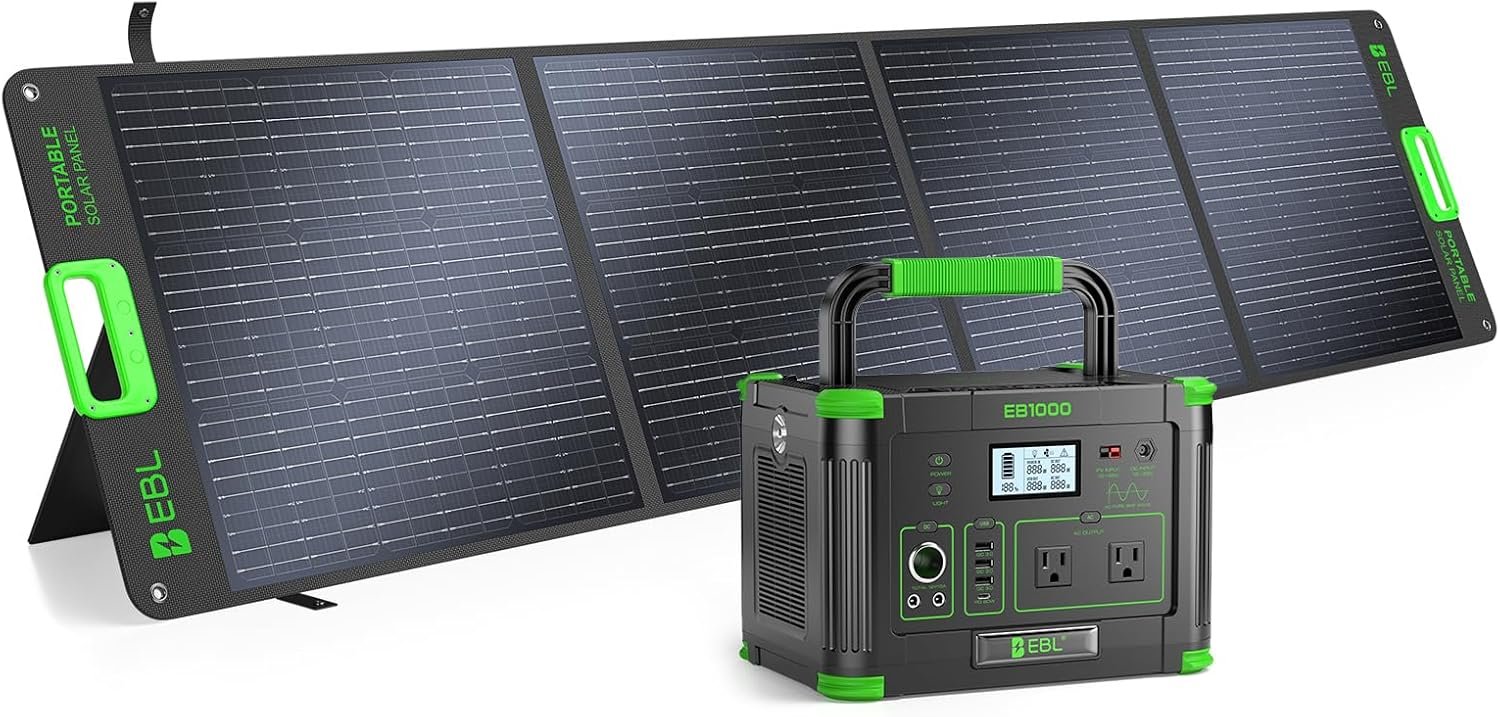
Expert Rating: 4.2/5 Stars | Est. Value: $419.98
For critical smart home systems and essential off-grid operations, reliable power independence is paramount. The EBL 1000W Portable Power Station aims to provide a robust energy backbone, ensuring continuous operation during grid instability or remote deployments. Its substantial 999Wh capacity and pure sine wave output are crucial for sensitive electronics and sustained utility.
Core Specifications
- Battery Capacity: 999Wh lithium-ion pack, providing significant energy reserve for extended device operation or multiple recharges.
- Rated Output Power: 1000W continuous AC output with pure sine wave inverter, suitable for sensitive electronics like laptops, medical devices, and server equipment.
- Output Ports: A versatile array including two 120V AC outlets, three USB-A QC ports, one 60W USB-C Power Delivery port, two 12V DC ports, one 12V automotive socket, and a 10W wireless charging pad. This comprehensive connectivity supports simultaneous powering of up to 10 distinct devices.
- Charging Input: Integrated MPPT controller for optimized solar charging (supports up to 200W input), AC wall adapter, and 12V automotive charging. The inclusion of MPPT is a critical feature for efficient solar energy harvesting.
- Battery Management System (BMS): Advanced system offering multi-level protection against overload, overcharge, and short-circuit events, coupled with active cooling via dual silent fans for thermal regulation and enhanced longevity.
Real-world Reliability
In scenarios demanding uninterrupted power, such as unexpected grid blackouts or prolonged off-grid deployments, the EBL 1000W unit demonstrates robust performance. Its 999Wh capacity provides a critical buffer, while the pure sine wave output mitigates risks to sensitive equipment often associated with modified sine wave inverters. The built-in MPPT controller ensures efficient solar replenishment even under fluctuating environmental conditions, making it a reliable power source where conventional grid access is compromised or unavailable due to extreme weather or infrastructure failures.
Who is this for?
Ideal for suburban homesteads requiring blackout backup, RV owners, or field technicians needing reliable, portable power.
Data Breakdown
| Specification | Detail |
|---|---|
| Battery Capacity | 999 Wh |
| AC Output | 1000W Pure Sine Wave |
| Solar Input | Up to 200W (MPPT) |
| AC Charging Time | 7-8 hours |
| Solar Charging Time (200W) | 6-8 hours |
| Total Output Ports | 10 (2x AC, 3x USB QC, 1x USB-C PD, 2x DC, 1x Car, 1x Wireless) |
The Tech Advantages:
- Delivers 1000W continuous pure sine wave output for safely powering sensitive electronics.
- Offers a comprehensive array of 10 output ports, including 60W USB-C PD and a wireless charging pad.
- Integrated MPPT controller for optimized solar charging up to 200W.
- Advanced BMS with dual silent fans ensures multi-level protection and efficient thermal regulation.
- Solid 999Wh lithium-ion capacity provides a significant energy reserve.
The Trade-offs:
- Uses standard lithium-ion (likely NMC) battery chemistry, which has fewer charge cycles compared to LiFePO4.
- Maximum solar input of 200W is lower than some competitors, potentially slowing solar recharge times.
- AC charging time of 7-8 hours is standard but not the fastest on the market.
- Higher price point compared to some other 1000W lithium-ion models with similar features.
Summary Verdict: Spec Comparison
| Image | Product | Rating & Price | Action |
|---|---|---|---|
|
PPS 1000W | 4.7 Stars $279.99 |
View Specs |
|
GRECELL 999Wh | 4.4 Stars $319.94 |
View Specs |
|
EBL 1000W | 4.2 Stars $419.98 |
View Specs |
The TechGridPro Buying Guide: Key Factors for 1000W Pure Sine Stations
Selecting a 1000W pure sine wave portable power station requires a discerning eye for technical specifications that go beyond mere wattage. Our analysts highlight two critical factors for ensuring optimal performance and longevity:
1. Battery Chemistry & Cycle Life: The heart of any portable power station is its battery. While most entry-to-mid-range units utilize Lithium-ion (NMC) cells, premium models are increasingly adopting Lithium Iron Phosphate (LiFePO4) chemistry. LiFePO4 batteries offer significantly longer cycle lives—often 2,000 to 3,500 cycles to 80% capacity compared to 500-1,000 cycles for NMC—meaning they can be fully charged and discharged far more times before significant degradation. They also boast superior thermal stability, enhancing safety and making them a more durable investment for long-term critical applications. Understanding this distinction is crucial for projecting the true cost of ownership and reliability over time.
2. Solar Input Capacity & MPPT Efficiency: For true energy independence, a portable power station’s ability to efficiently recharge from solar panels is paramount. The maximum solar input wattage (e.g., 200W, 500W, 800W) dictates how quickly the unit can replenish its capacity using photovoltaic arrays. Equally important is the presence and sophistication of a Maximum Power Point Tracking (MPPT) charge controller. An advanced MPPT controller intelligently adjusts to varying solar conditions, extracting the maximum possible power from your panels, even on cloudy days or when panels are partially shaded. Higher solar input capacity coupled with efficient MPPT dramatically reduces recharge times, ensuring continuous power availability for extended off-grid use or prolonged emergencies.