
In today’s increasingly connected world, the ability to safeguard your home or business without being tethered to monthly subscription fees is not just a convenience, it’s a cornerstone of digital independence and robust security. A DIY wireless home alarm system no monthly fee offers precisely that – control, autonomy, and the assurance that your security infrastructure works for you, not the other way around. These systems empower individuals to manage their own safety protocols, cutting down on recurring costs while maintaining effective surveillance and immediate alert capabilities. For the discerning tech-savvy individual, choosing the right system means balancing advanced features with ease of use and long-term value.
Contents
Fortress of Independence: Top DIY Wireless Alarms Tested
1. D1D9 Wireless DIY Burglar Alarm System
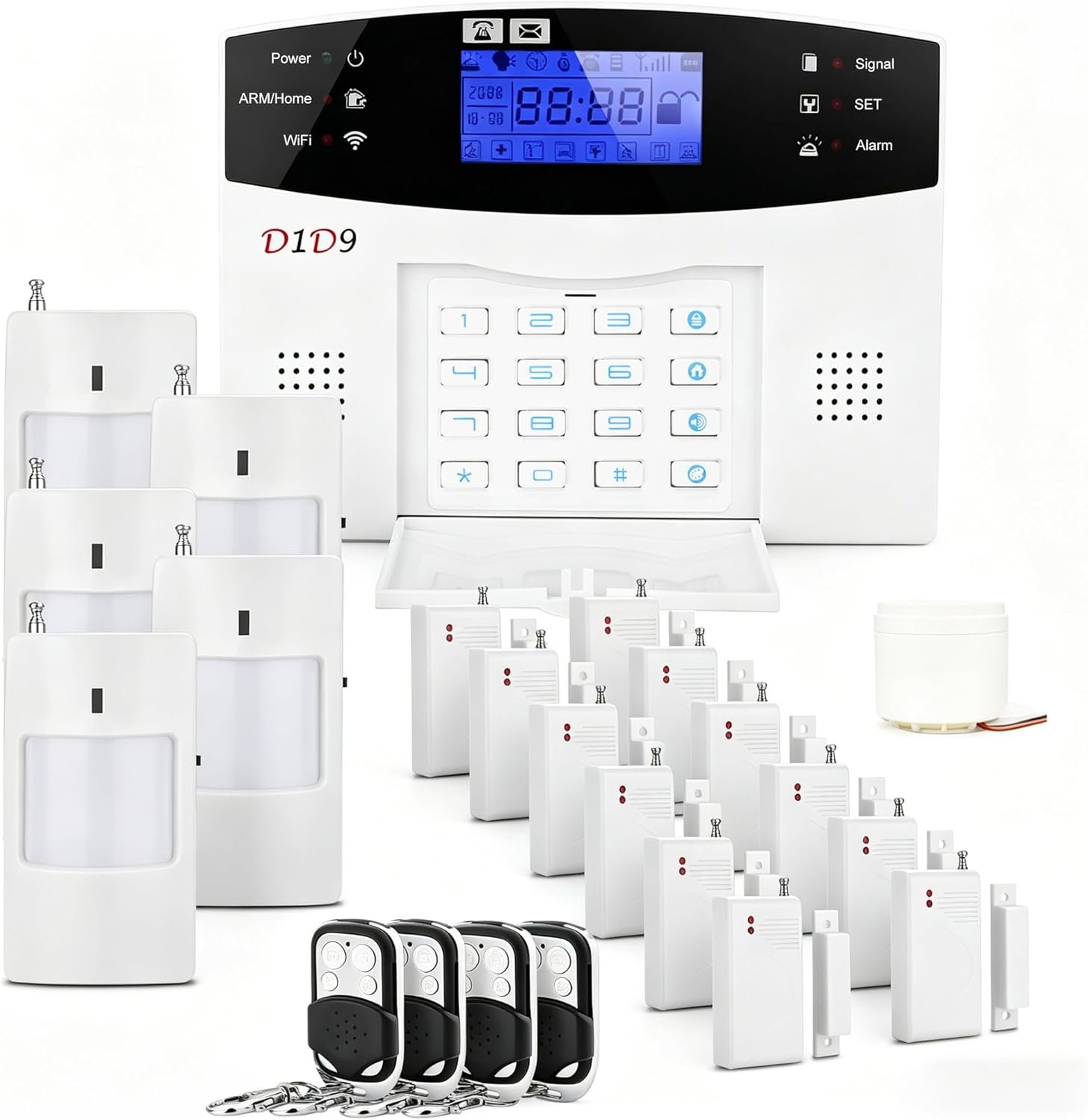
Expert Rating: 4.0/5 Stars | Est. Value: $109.89
For the discerning homeowner prioritizing both security and operational independence, the D1D9 system presents a unique proposition. This no-monthly-fee alarm system leverages a hybrid 4G and WiFi connectivity approach, ensuring persistent communication with your primary network and a robust cellular backup.
Core Specifications
- Connectivity: Features both 4G cellular and WiFi (IEEE 802.11 b/g/n) connectivity for redundant communication channels. The 4G aspect is crucial for off-grid or primary network failure scenarios.
- System Expandability: Designed for modularity, allowing integration of additional sensors beyond the included 24-piece kit. Compatibility with specific third-party smart home protocols is not specified but is a critical area for further investigation for true integration.
- Power Source (Sensors): Individual sensors operate on small, user-replaceable batteries. The product description notes batteries are “gifts” and may require independent purchase, highlighting potential long-term cost management considerations. The exact battery types and expected lifespans (measured in months or years, not Wh for individual low-power sensors) are not detailed.
- Siren Output: While the decibel level is not specified, a siren is included for audible deterrence.
- App Control: Real-time alerts and system control are facilitated via a proprietary mobile application, implying a cloud-based service.
Real-world Reliability
The D1D9’s dual 4G and WiFi connectivity offers a significant advantage during utility outages or localized network disruptions, a common concern for off-grid setups. The 4G fallback is instrumental in maintaining alert functionality. However, the reliance on cellular data means signal strength and network availability are paramount. Furthermore, the independent battery operation of sensors, while offering flexibility, necessitates diligent battery monitoring and replacement to prevent service interruptions, especially in remote or infrequently visited locations.
Who is this for?
This system is ideally suited for budget-conscious homeowners, small business owners, and caretakers seeking basic, expandable home security without recurring fees.
The Tech Advantages:
- Hybrid 4G and WiFi connectivity for dual-layer communication.
- Expandable system accommodating a significant number of additional sensors.
- Modular design for flexible installation and customization.
The Trade-offs:
- Battery “gifts” may require immediate replacement, adding unexpected costs.
- Specific battery lifespans and types for sensors are not clearly defined.
- Third-party smart home protocol integration is unconfirmed.
2. OSI Alarm System Gen 2 (4G)
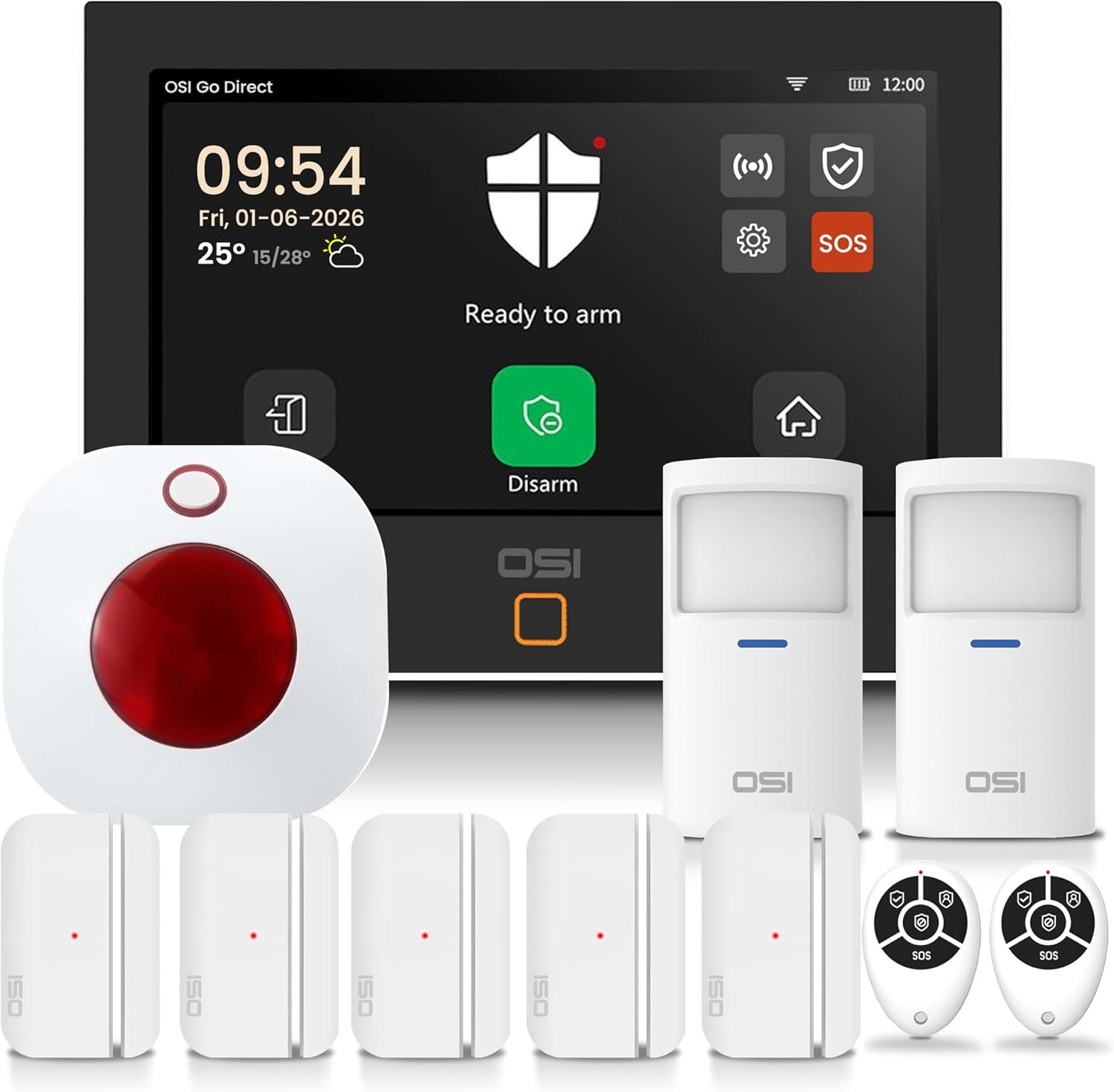
Expert Rating: 4.4/5 Stars | Est. Value: $135.68
For the discerning homeowner prioritizing robust security and off-grid resilience, the OSI Alarm System Gen 2 presents a compelling, albeit technically nuanced, solution. This system aims to bridge the gap between DIY affordability and professional-grade security, with a particular emphasis on cellular redundancy.
Core Specifications
- Connectivity: Features 4G cellular connectivity for SMS alerts and optional 24/7 professional monitoring (Canada only). Requires a user-provided SIM card with an active talk/text plan for SMS functionality. Supports Wi-Fi connectivity for primary operation.
- Power Management: Includes a 24-hour backup battery, crucial for maintaining security during grid outages. Specific Watt-hour (Wh) capacity of the backup battery is not detailed, which is a critical omission for off-grid planning.
- Sensor Integration: Supports up to 160 sensors, 6 controllers, 6 doorbells, and 6 keypads, offering significant scalability for comprehensive coverage. Specific sensor types included in the 11-piece kit are motion and entry sensors.
- User Interface: Employs an HD 1024 x 600px anti-fingerprint touchscreen with an enhanced UI. Supports one administrator account and five user accounts with tiered access levels, a commendable feature for multi-household or shared living situations.
- Alerting & Control: Capable of sending SMS alerts directly via the 4G connection. App and Alexa compatibility are listed, though the specifics of Alexa integration and the app’s feature set (e.g., video streaming resolution, encryption protocols) are not provided.
- System Features: Includes a wireless siren and remote controls. An SOS button feature is integrated for immediate assistance. Regular complimentary software updates are promised.
Real-world Reliability
The 24-hour backup battery is a key strength for maintaining operation during power outages. However, the system’s reliance on cellular for SMS alerts means that a SIM card from a compatible provider is essential, and signal strength in remote or shielded locations could impact this critical communication channel. The lack of detail regarding specific encryption standards used for app and Alexa communication leaves a gap in assessing its robust security posture against sophisticated cyber threats.
Who is this for?
This system is ideal for technically inclined homeowners seeking a customizable, self-monitored security solution with cellular backup, or those willing to engage with a third-party monitoring service.
The Tech Advantages:
- Extensive sensor support for highly comprehensive coverage.
- User-friendly HD touchscreen interface with multi-user support.
- 24-hour backup battery for continuous operation during power loss.
The Trade-offs:
- Requires a separate SIM card and talk/text plan for cellular alerts.
- Lack of detailed specifications on battery capacity and encryption protocols.
- Professional monitoring option is limited geographically (Canada only).
3. Home Security Systems GSM/4G+WiFi Alarm System
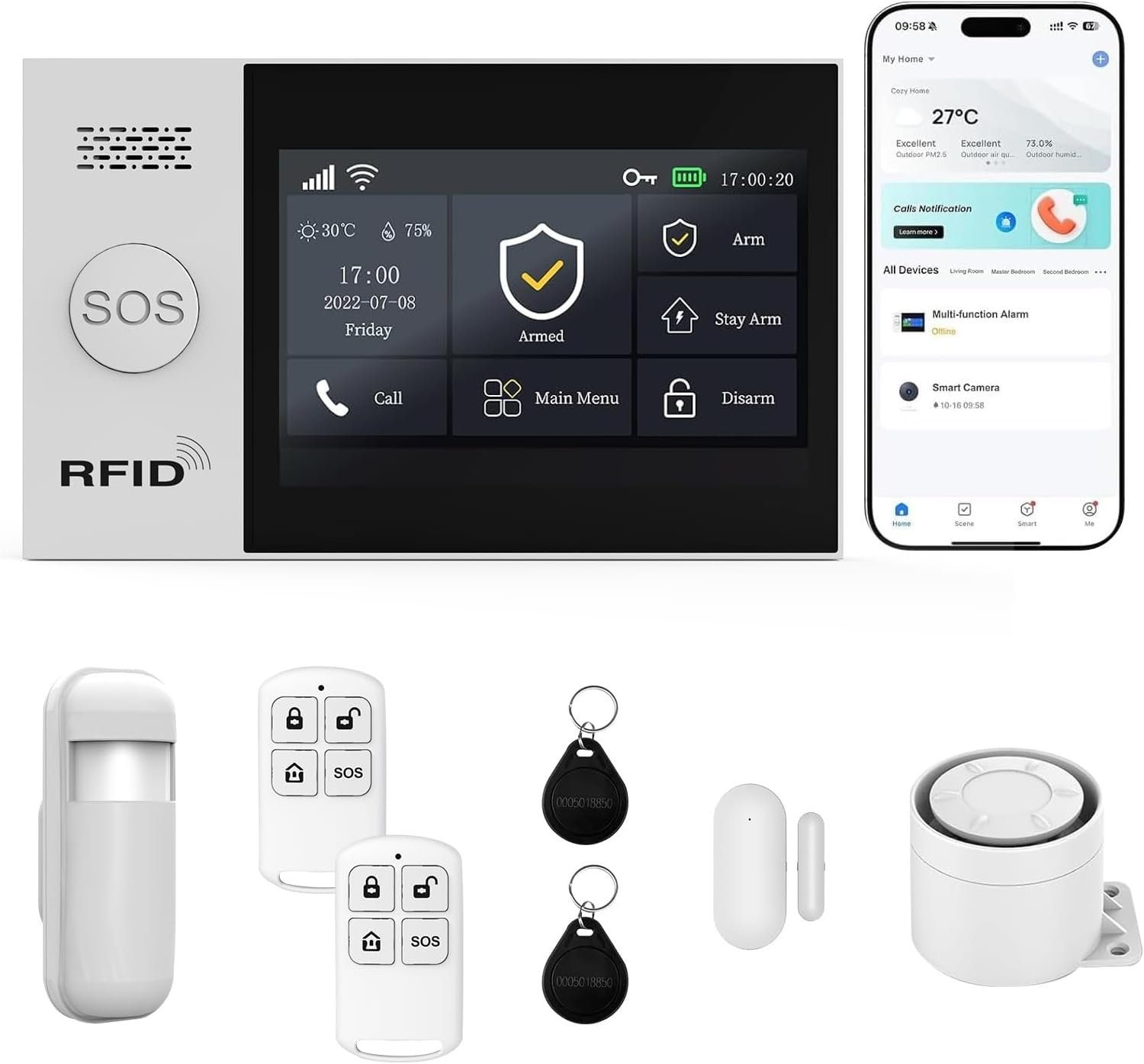
Expert Rating: 4.5/5 Stars | Est. Value: $69.99
For the discerning homeowner prioritizing robust security and off-grid resilience, this integrated alarm system offers a compelling solution. Its dual connectivity ensures steadfast operation, even when traditional power or internet infrastructure falters, providing continuous peace of mind.
Core Specifications
- Connectivity: Utilizes both 2.4GHz Wi-Fi and GSM/4G cellular (2G/4G bands supported, 5G not compatible) for redundant communication pathways. This dual-band approach mitigates single points of failure common with purely IP-based systems.
- User Interface: A 4.3-inch color touchscreen facilitates intuitive arming/disarming and status monitoring. Multi-language support enhances accessibility for diverse household demographics.
- Alerts & Notifications: Real-time push notifications, SMS messages, and voice calls are generated via the Smart Life/Tuya app upon sensor activation.
- Power Management: While specific Watt-hour (Wh) capacity for the base unit’s internal battery is not detailed, its operational reliance on cellular backup implies a designed capacity for extended functionality during power outages. Surge capacity is not specified.
- Sensor Pairing: Accessories are factory-pre-paired, simplifying installation for a true DIY experience, eliminating the need for complex configuration or technical expertise.
- SOS Functionality: Integrated SOS buttons on the base station, remote, and dedicated SOS device enable immediate emergency alerts with audible siren activation.
- Encryption: Encryption protocols for data transmission are not explicitly stated.
- Video Resolution: This system does not integrate video surveillance capabilities; it is purely a sensor-based alarm system.
Real-world Reliability
The dual Wi-Fi and 4G connectivity is the system’s strongest suit for off-grid scenarios. In the event of a local internet outage, the 4G cellular fallback ensures that alert signals can still be transmitted. Furthermore, the presence of an internal battery in the base station means the system can continue to function and communicate for a duration without mains power, critical for maintaining security during extended blackouts or in remote locations where grid power is intermittent.
Who is this for?
This system is ideal for homeowners seeking a self-monitored, no-monthly-fee security solution with enhanced reliability for power outages and internet disruptions.
The Tech Advantages:
- Dual Wi-Fi and 4G cellular connectivity for failover security.
- Intuitive 4.3-inch color touchscreen with multi-language support.
- Factory-pre-paired accessories for simplified DIY installation.
The Trade-offs:
- Specific internal battery capacity for power outages is not detailed.
- Lack of explicit information on data encryption protocols.
- 5G cellular is not supported.
4. tolviviov Home Security System
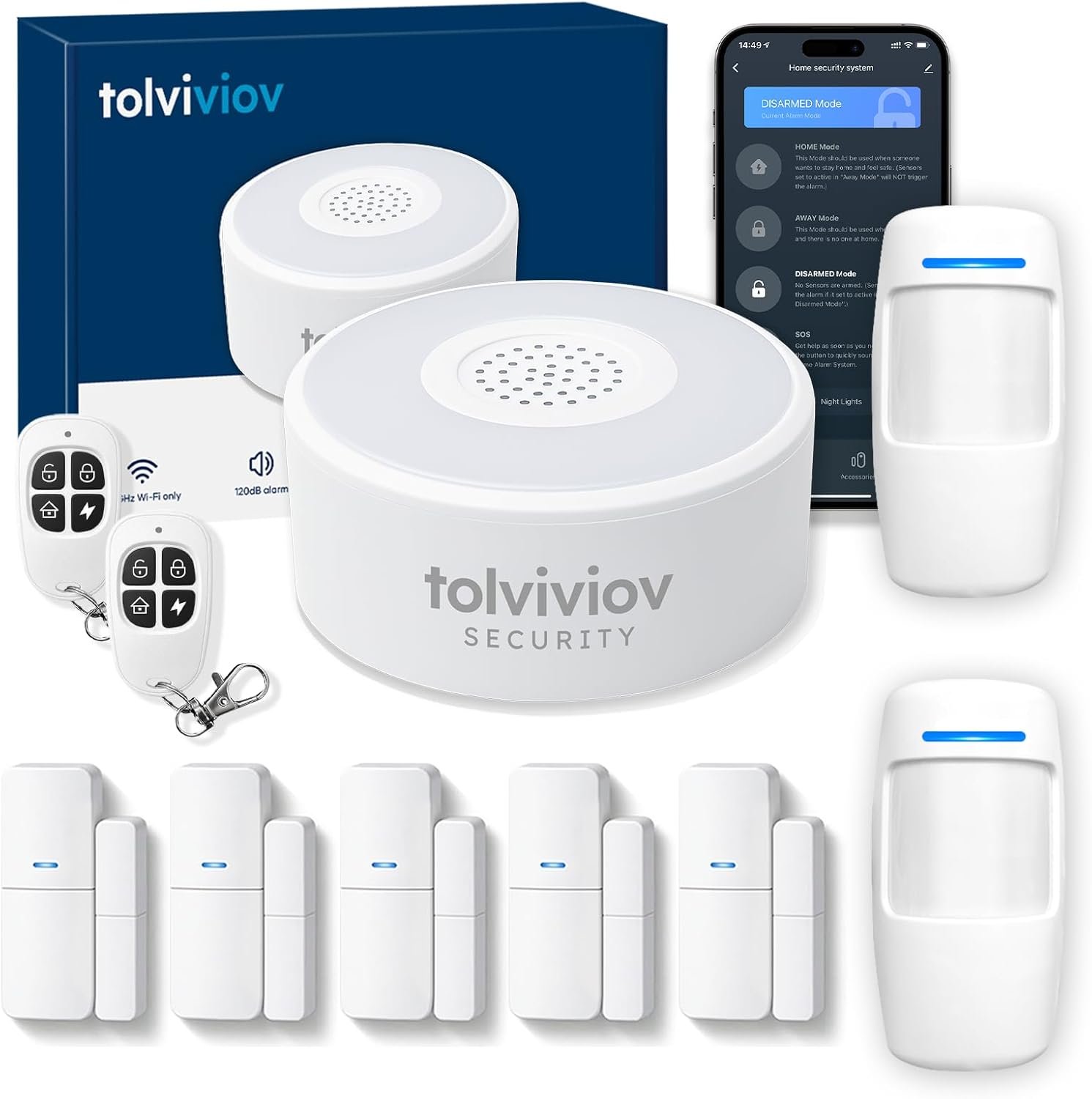
Expert Rating: 4.2/5 Stars | Est. Value: $79.99
In an era where data security and energy independence are paramount, a robust home security system that operates without reliance on monthly subscriptions and maintains functionality during power outages is no longer a luxury, but a necessity. This DIY system promises to deliver both, leveraging existing Wi-Fi infrastructure for alerts and offering a self-contained solution for peace of mind.
Core Specifications
- Connectivity: Primarily Wi-Fi (2.4GHz expected, specific band not detailed) for app communication and notifications. No mention of cellular backup, a critical component for true off-grid security during Wi-Fi outages.
- Sensor Type & Quantity: 5 Door/Window Sensors (magnetic contact type, assumed), 2 Passive Infrared (PIR) Motion Sensors. Maximum expansion to 20 sensors and 5 remotes/keypads.
- Audible Alarm: 120dB siren integrated into the base station. This is a significant decibel level, designed for deterrence and immediate local notification.
- Power Source: Base station likely uses AC power with a potential battery backup (not explicitly detailed regarding capacity or type, crucial for off-grid scenarios). Sensors are typically battery-powered (CR2032 coin cells for door sensors, AA/AAA for PIRs, expected).
- App Control: Proprietary app for arming/disarming, monitoring, and scheduling. Real-time push notifications.
- Voice Assistant Integration: Alexa compatibility for hands-free arming/disarming (functional only when the system is online and Alexa is operational).
- Encryption: No specific details on data encryption protocols used for communication between the app, base station, and cloud. This is a significant oversight for a security-focused product.
- Video Capabilities: None. This is a pure alarm system, not a video surveillance solution.
Real-world Reliability
The system’s reliance on Wi-Fi for notifications makes it vulnerable to internet service disruptions. In a true off-grid or blackout scenario, if the Wi-Fi router loses power or connectivity, remote alerts will cease. The 120dB siren will likely still function if the base station has a battery backup, providing a local deterrent, but without remote monitoring, its effectiveness is diminished. Extreme weather impacts would primarily affect Wi-Fi stability and potentially the sensors’ battery life in very cold/hot conditions, though no specific operating temperature range is provided.
Who is this for?
Budget-conscious homeowners seeking a basic, self-monitored alarm system for supplemental security and immediate local deterrence.
The Tech Advantages:
- Loud 120dB siren for immediate local deterrence.
- Alexa compatibility for convenient voice control.
- Supports expansion up to 20 sensors for moderate coverage.
The Trade-offs:
- No cellular backup, making it vulnerable to Wi-Fi outages.
- Battery backup details for the base station are not specified.
- Lack of information on data encryption protocols.
Summary Verdict: Spec Comparison
| Image | Product | Rating & Price | Action |
|---|---|---|---|
|
D1D9 Wireless DIY Burglar Alarm System | 4.0 Stars $109.89 |
View Specs |
|
OSI Alarm System Gen 2 (4G) | 4.4 Stars $135.68 |
View Specs |
|
GSM/4G+WiFi Alarm System | 4.5 Stars $69.99 |
View Specs |
|
tolviviov Home Security System | 4.2 Stars $79.99 |
View Specs |
Key Technical Considerations for Your DIY Alarm System
When evaluating a diy wireless home alarm system no monthly fee, two critical technical factors stand out for their impact on performance and reliability: connectivity redundancy and sensor power management. For robust security, especially in off-grid or unreliable network environments, having a system that supports dual connectivity (like Wi-Fi and 4G cellular) is paramount. This ensures that if your primary internet connection fails, alerts can still be transmitted via the cellular network, preventing a critical gap in your security coverage. This redundancy is a hallmark of systems designed for true independence.
Furthermore, the power source for sensors and the base unit is crucial for uninterrupted operation. While many DIY systems rely on individual battery-powered sensors, understanding the expected battery life, the ease of replacement, and the type of batteries used (e.g., coin cells, AA, AAA) is vital for long-term cost and maintenance planning. For the base station, the presence and capacity of an internal backup battery are essential for maintaining functionality during power outages, ensuring the alarm and communication systems remain active even without mains power. A well-designed system will offer clear specifications on these aspects, allowing you to make an informed decision about its real-world resilience.