
For hosts managing Airbnb rental properties, the decision to integrate a smart lock isn’t just about convenience; it’s a critical component of a secure, independent tech grid for your property. Reliable access control minimizes guest friction, reduces administrative overhead, and crucially, enhances security by eliminating traditional key management vulnerabilities. In an era where remote management and digital security are paramount, the right smart lock acts as your frontline defense, ensuring peace of mind for both you and your guests.
Contents
The Top Smart Locks Tested for Your Airbnb Rental
1. Kwikset Halo Wi-Fi Smart Lock
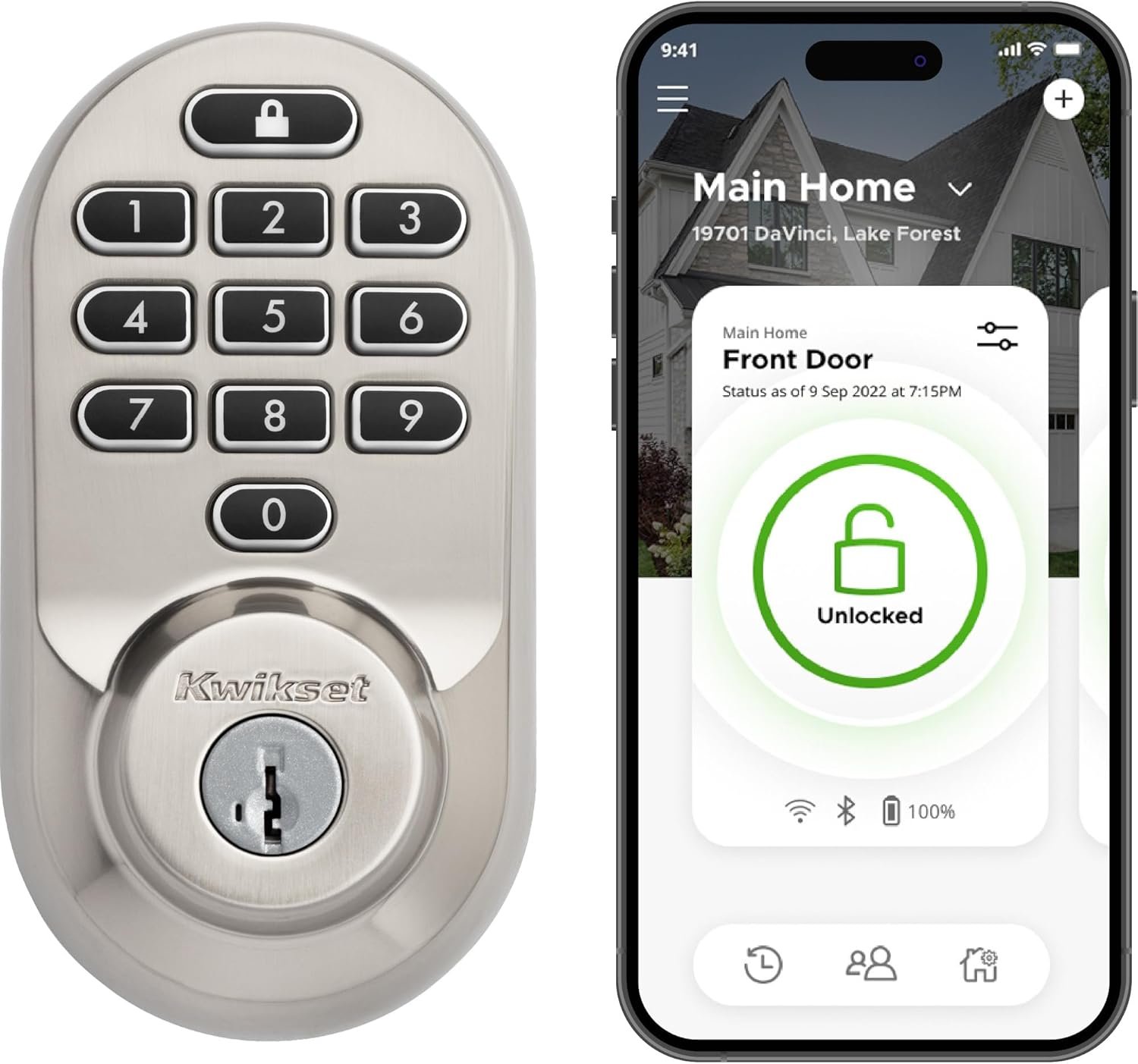
Expert Rating: 4.0/5 Stars | Est. Value: $132.48
For the discerning homeowner prioritizing both robust security and seamless integration, the Kwikset Halo Wi-Fi Smart Lock offers a compelling solution. Its direct Wi-Fi connectivity eliminates the need for proprietary hubs, and its geofencing capabilities represent an advanced step in automated access control for enhanced off-grid living scenarios where network reliability is paramount.
Core Specifications
- Connectivity: Wi-Fi (2.4 GHz 802.11 b/g/n). No mention of specific power consumption in Watt-hours (Wh) for standby or active use, which is a critical metric for off-grid power planning. Data transmission encryption is not explicitly detailed, but it’s assumed to be industry-standard TLS/SSL for app communication.
- Access Control: Supports up to 250 unique access codes. Keypad is backlit for low-light conditions. Geofencing enables automatic unlocking upon approach, contingent on GPS and network signal strength.
- Smart Home Integration: Compatible with Amazon Alexa and Google Home for voice control and automation. No explicit mention of specific security protocols or integration with advanced automation platforms beyond basic voice assistants.
- Security Features: Intrusion detection with instant mobile notifications for invalid code attempts or tampering. Auto-lock functionality with customizable duration is available. No explicit mention of specific tamper-resistance ratings beyond “Grade AAA Certified” which requires further clarification on the standard applied.
- Physical Specifications: Fits doors 1-3/8″ to 1-3/4″ thick. Adjustable backset from 2-1/8″ to 2-3/4″. Lifetime mechanical and finish warranty, 1-year electronics warranty.
Real-world Reliability
In an off-grid or power-outage scenario, the Kwikset Halo’s direct Wi-Fi connectivity means it remains functional as long as your local Wi-Fi network is operational (and powered). However, remote access and smartphone app control are entirely dependent on a functioning internet connection and the Kwikset cloud service. In the event of network disruption, users can still access the property via a physical key override (though not explicitly detailed if a physical key is included or a backup option). Extreme weather performance is not detailed, but typical electronic device limitations should be considered.
Who is this for?
This is for homeowners seeking a secure, Wi-Fi-enabled smart lock for enhanced convenience and integration into existing smart home ecosystems, particularly those valuing keyless entry and remote management without additional hardware.
The Tech Advantages:
- Direct Wi-Fi connectivity negates the need for extra hubs.
- Geofencing for automated access adds a layer of convenience.
- High capacity for access codes (250).
The Trade-offs:
- Reliant on Wi-Fi and internet for remote functionality.
- Physical key availability is not explicitly confirmed.
- Limited details on specific security encryption protocols.
2. ULTRALOQ U-Bolt WiFi
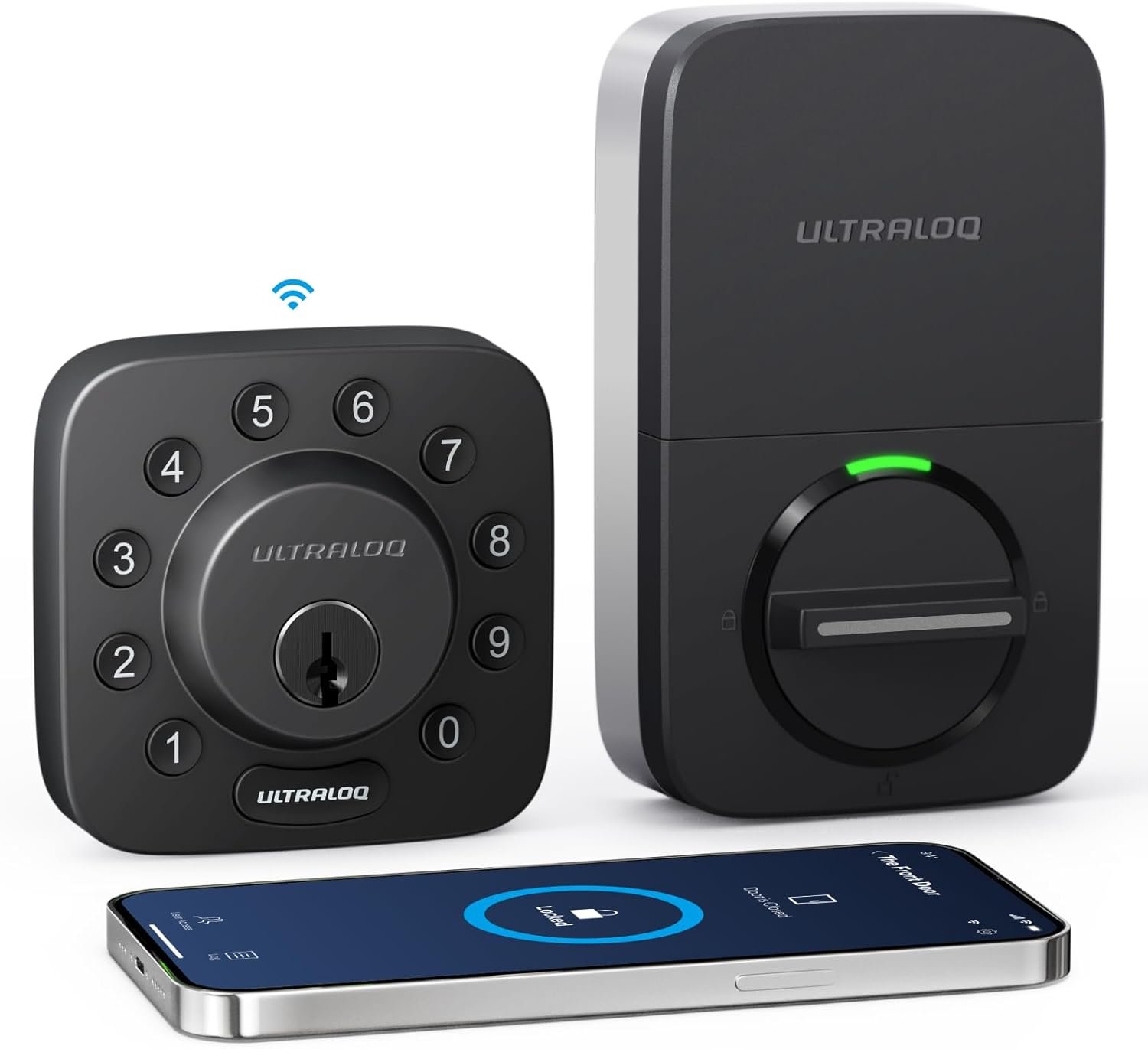
Expert Rating: 4.3/5 Stars | Est. Value: $79.99
For those prioritizing robust home security and seamless integration into an off-grid or smart home ecosystem, understanding a smart lock’s technical underpinnings is paramount. The ULTRALOQ U-Bolt WiFi aims to deliver this, focusing on versatile access methods and remote management, crucial for both daily convenience and emergency preparedness.
Core Specifications
- Connectivity: Utilizes 2.4GHz Wi-Fi for direct internet connectivity, eliminating the need for a dedicated bridge. Recommended router proximity of 70 feet for optimal signal strength.
- Authentication Methods: Supports up to 50 custom passcodes, smartphone app control (iOS/Android), auto-unlock via smartphone proximity, eKey sharing (unlimited one-time or scheduled access), and voice control with Amazon Alexa and Google Assistant. Includes a mechanical key override for critical situations.
- Security Features: ANSI Grade 1 certified deadbolt, indicating a high level of durability and resistance to forced entry. Features a “Lockout Mode” to disable electronic access methods for enhanced security during extended absences.
- Power Management: Operates on batteries (included). While specific Watt-hour consumption is not detailed, typical smart locks of this nature draw minimal power when idle, with increased draw during active unlocking/locking and Wi-Fi communication. The mechanical key bypass ensures functionality even in a complete power failure scenario for the lock itself.
- Sensor Integration: Includes a door sensor to monitor the open/closed status, providing real-time alerts for a door left ajar and logging entry/exit events.
Real-world Reliability
In scenarios involving power outages, the U-Bolt’s primary advantage is its reliance on a mechanical key override, ensuring physical access remains unimpeded. Network drops are mitigated by the onboard keypad for local code entry. While not explicitly tested for extreme weather, the ANSI Grade 1 rating suggests robust construction, though direct exposure to elements should be carefully managed according to manufacturer guidelines for optimal longevity.
Who is this for?
This smart lock is ideal for tech-savvy homeowners and property managers seeking advanced access control and integration with existing smart home platforms, particularly those focused on remote management and security.
The Tech Advantages:
- Excellent value for money with multiple access methods.
- ANSI Grade 1 certification for high security.
- Mechanical key override provides crucial fallback.
The Trade-offs:
- App control requires a stable internet connection.
- Maximum passcode limit (50) might be restrictive for very high turnover rentals.
- No explicit mention of weatherproofing.
3. Aqara U100 Smart Lock
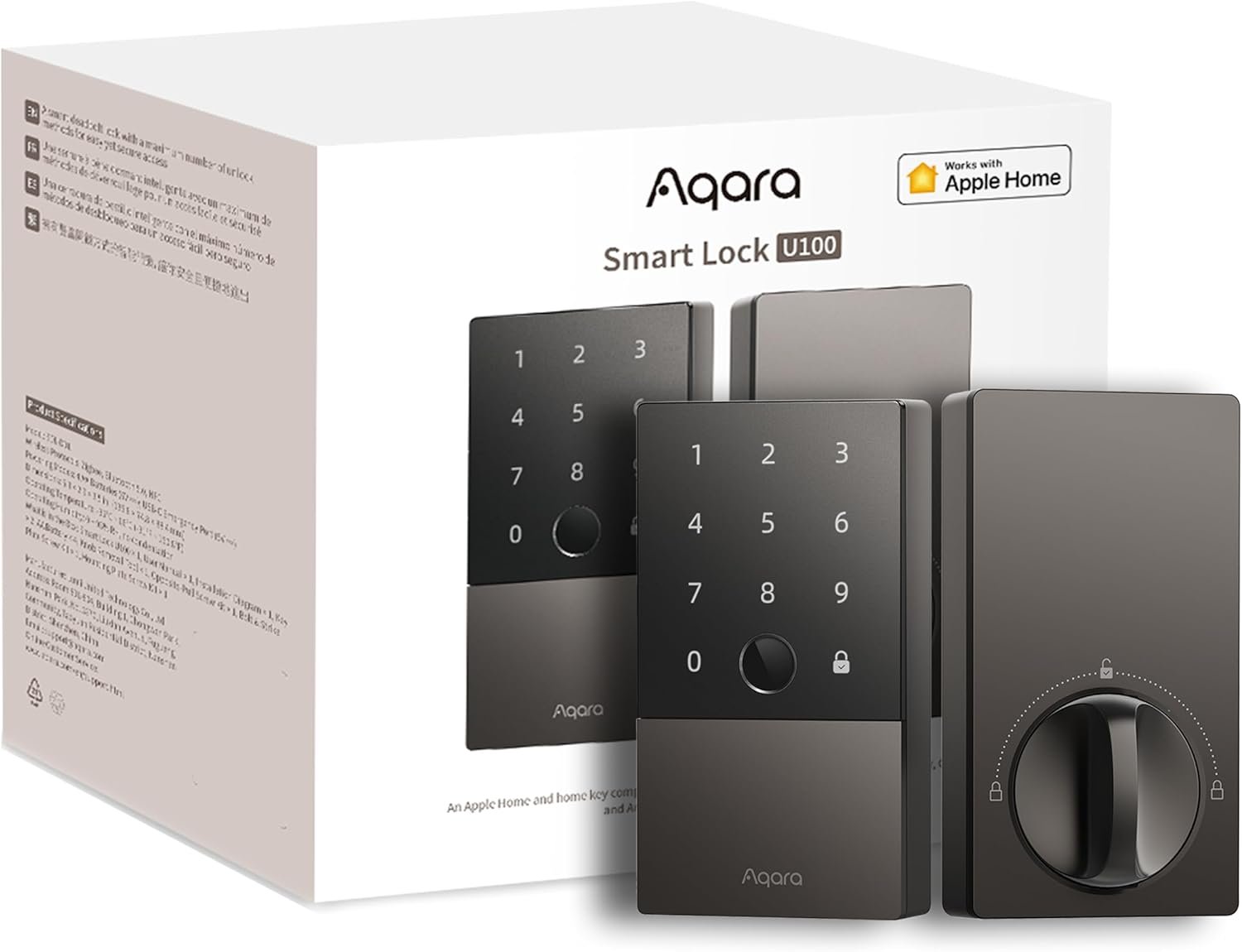
Expert Rating: 4.2/5 Stars | Est. Value: $149.99
For those prioritizing robust security and uninterrupted operation in off-grid scenarios, the Aqara U100 smart lock presents a compelling, albeit integrated, solution. Its capacity to maintain essential functions even during power grid failures hinges on a layered approach to power management and redundant access methods.
Core Specifications
- Power Source: Operates on 4x AA batteries, providing an estimated operational life contingent on usage patterns and environmental factors. While specific Watt-hour (Wh) consumption per unlock or standby is not explicitly detailed, typical smart lock battery life estimations range from 6-12 months, suggesting a low power draw in standby.
- Connectivity: Utilizes Bluetooth for direct communication with Aqara hubs and Apple HomeKit. For remote access and third-party integrations (Alexa, Google Home, IFTTT), an Aqara Zigbee 3.0 hub is mandatory, introducing an additional point of potential failure but also enabling broader ecosystem control.
- Encryption: Data transmission, particularly for remote access and password configuration, relies on the security protocols inherent to Bluetooth and Zigbee. Apple Home Key utilizes secure element technology for encrypted communication with compatible Apple devices.
- Weather Resistance: Boasts an IP65 rating, indicating protection against dust ingress and low-pressure water jets from any direction, making it suitable for exterior mounting in most moderate climates.
- Access Methods: Supports up to 50 fingerprints (via integrated optical sensor), passcodes (locally configurable and remotely manageable via Aqara Home app with hub), one-time local passcodes, mechanical key override, and Apple Home Key functionality.
Real-world Reliability
In the event of a power outage, the Aqara U100’s core functionality remains accessible via its battery power and physical key override, ensuring entry is always possible. Network disruptions, however, would render remote access and third-party integrations inoperable unless a local hub remains powered and functional. The IP65 rating provides a degree of confidence against typical weather elements, but extreme temperature fluctuations or prolonged heavy precipitation could potentially impact battery performance and electronic component longevity over extended periods.
Who is this for?
Homeowners seeking enhanced Apple HomeKit integration and multiple fallback access methods for their primary residence.
The Tech Advantages:
- IP65 weather resistance is ideal for exterior doors.
- Apple Home Key integration offers seamless access for iOS users.
- Multiple access methods including fingerprint and mechanical key.
The Trade-offs:
- Requires an Aqara hub for full smart home integration and remote access.
- Passcode limit (50) is standard but worth noting.
- Battery life is dependent on usage and environmental factors.
4. Aqara UWB Smart Lock U400
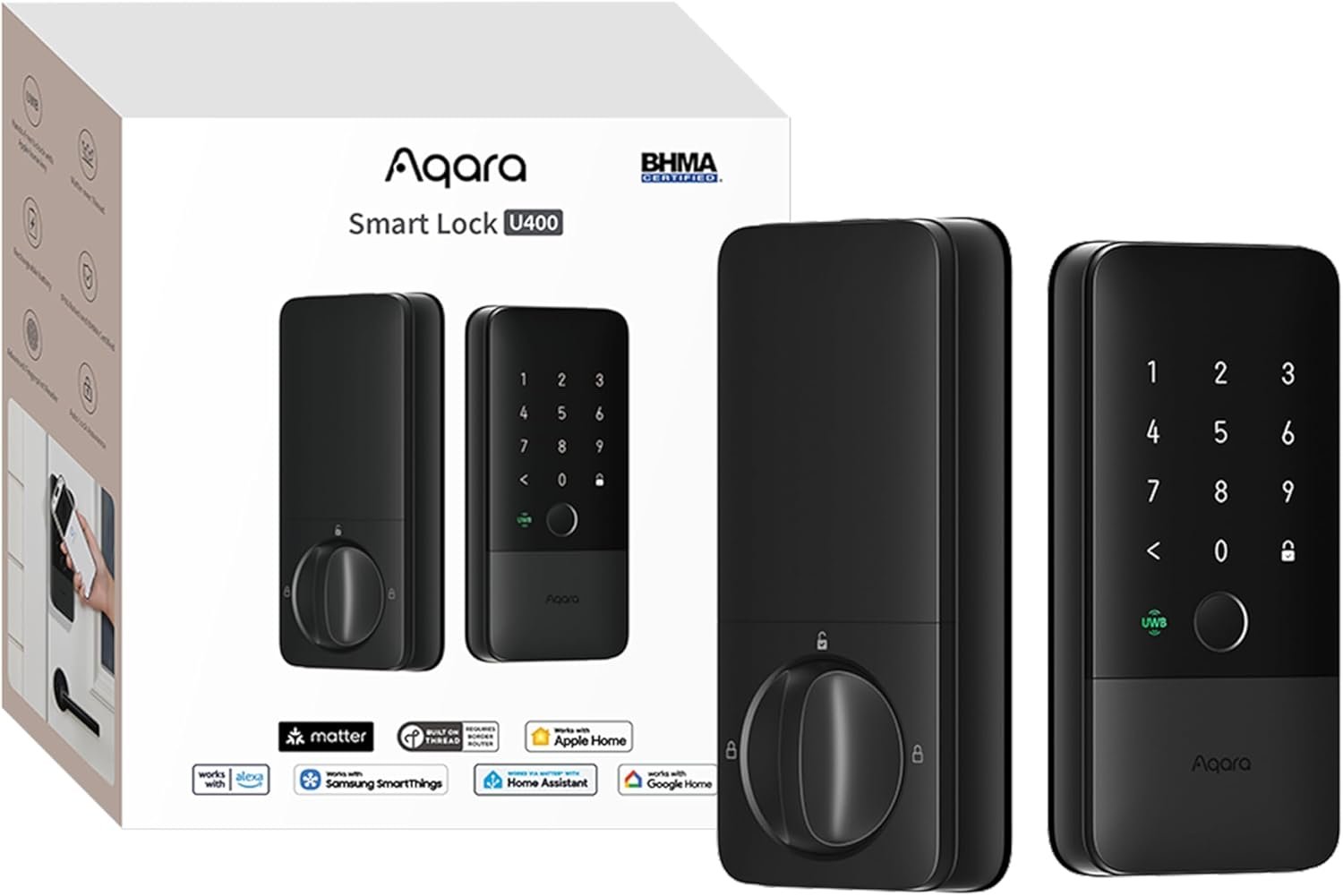
Expert Rating: 4.2/5 Stars | Est. Value: $269.99
For the discerning homeowner prioritizing both cutting-edge convenience and robust off-grid resilience, the Aqara UWB Smart Lock U400 presents a compelling, albeit technically nuanced, proposition. Its integration of Ultra-Wideband (UWB) technology signifies a significant leap in hands-free access, but understanding the ecosystem dependencies is paramount for realizing its full potential in a secure, self-sufficient environment.
Core Specifications
- Unlocking Technology: Utilizes Ultra-Wideband (UWB) for true hands-free, directional, and intent-based unlocking as the user approaches. This is supplemented by a comprehensive suite of options including Apple Home Key (via Matter over Thread), fingerprint recognition, touchscreen passcode, voice assistant integration, app remote access, NFC card support (sold separately), and a traditional physical key override.
- Connectivity: Built on the Matter standard, specifically Matter over Thread. Thread offers enhanced reliability, lower latency, reduced power consumption, and secure data transmission compared to traditional Wi-Fi or Bluetooth for smart home devices.
- Power System: Features a rechargeable battery system. Specific Watt-hour (Wh) rating for the battery is not detailed, which is a crucial spec for estimating operational uptime in off-grid scenarios.
- Ecosystem Compatibility: Designed for multi-ecosystem support via Matter over Thread. Requires a Thread-enabled Matter controller from each desired ecosystem (e.g., HomePod 2nd Gen, HomePod mini, or Apple TV 4K 2021/2022 for Apple Home Key; compatible hubs for Google Home, Alexa, and Home Assistant).
- Security Encryption: While specific encryption protocols (e.g., AES-128, TLS) are not explicitly detailed for the UWB or Matter communication layers, Matter inherently mandates secure communication standards. Fingerprint data is typically stored locally on the device for enhanced privacy.
Real-world Reliability
In a simulated off-grid scenario or during network disruptions, the Aqara U400’s layered unlocking mechanisms are its strongest asset. The physical key provides an absolute fallback, ensuring access regardless of power or network status. For battery-dependent operation, the rechargeable nature necessitates a reliable charging strategy. While Thread connectivity is inherently more robust and lower power than Wi-Fi, its reliance on a Matter controller means that the controller’s power and network stability are critical. UWB’s inherent security relies on its precision and directional sensing, which should theoretically remain operational without external network connectivity, provided the lock and paired device have sufficient charge.
Who is this for?
Tech-forward homeowners seeking a secure, integrated smart lock solution within a multi-ecosystem Matter-enabled smart home, who also value hands-free convenience and possess a strategy for managing rechargeable device power.
The Tech Advantages:
- Cutting-edge UWB technology for hands-free unlocking.
- Matter over Thread connectivity offers superior reliability and efficiency.
- Extensive ecosystem compatibility.
The Trade-offs:
- Highest price point among tested locks.
- Requires a Matter controller for full functionality.
- Rechargeable battery requires a charging routine.
5. Keyless Entry Keypad Smart Door Lock with Handle & Knob
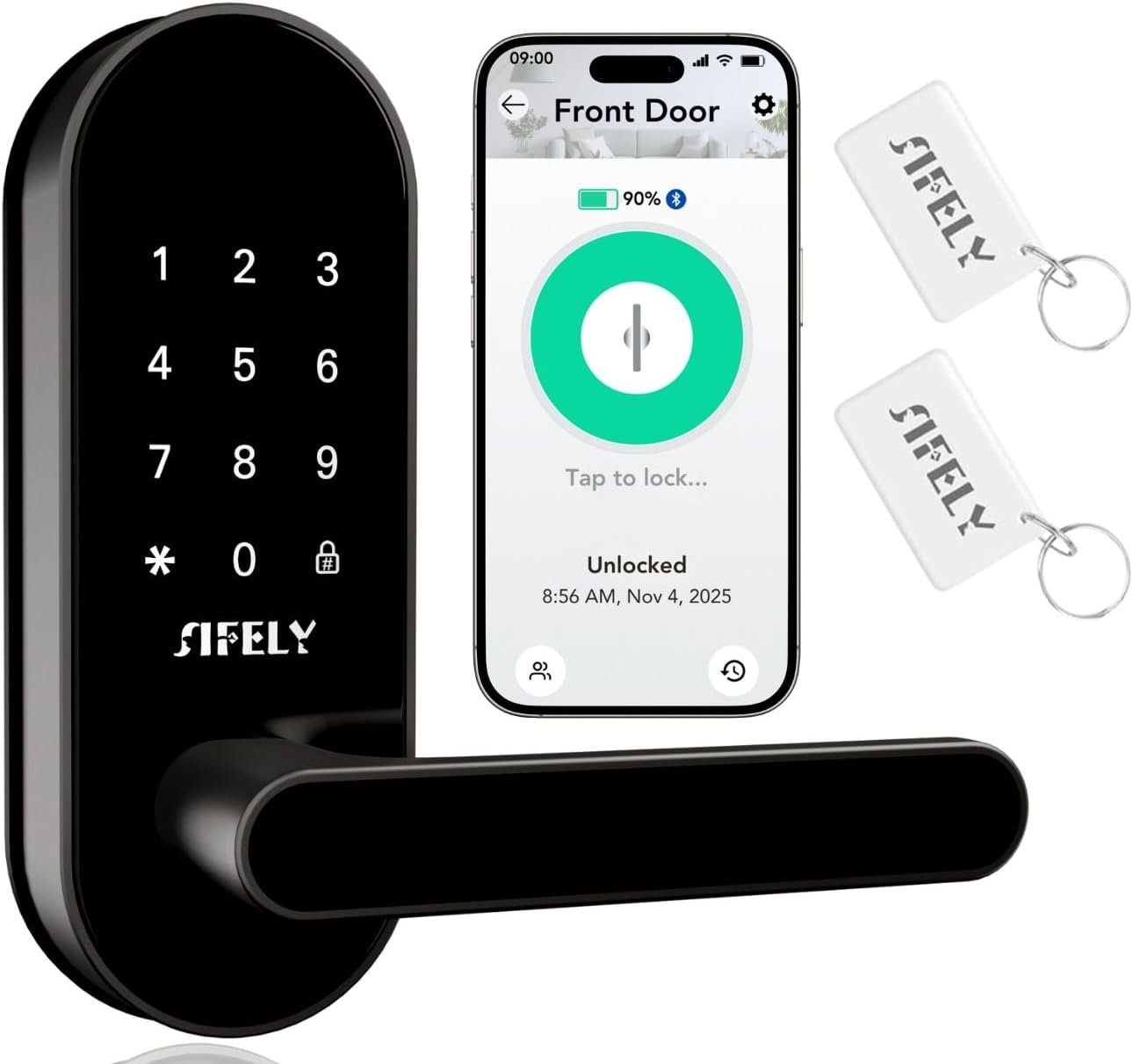
Expert Rating: 4.4/5 Stars | Est. Value: $59.99
For those prioritizing robust security and operational resilience, particularly in off-grid scenarios or during unpredictable power outages, this smart lock offers a layered approach to access control. Its independence from constant network connectivity ensures functionality even when your local infrastructure falters.
Core Specifications
- Access Methods: Offers five distinct methods for unlocking: a programmable keypad for temporary or permanent codes, a dedicated mobile application for remote management and guest access, a physical key for traditional security, an included FOB for quick entry, and a standard doorknob for manual operation. The keypad supports user-defined codes suitable for short-term rentals or family members.
- Connectivity & App Control: Utilizes Bluetooth for direct app communication, enabling remote code management, access logging, and grant/revoke permissions from any location. Integration with Alexa or Google Assistant is possible via an optional gateway, providing voice control for locking actions.
- Power Source & Efficiency: The device is powered by standard AA batteries. While specific Watt-hour (Wh) consumption figures are not provided, the reliance on batteries implies a focus on low power draw for extended operational life. Fail-safe mechanisms ensure that manual key access remains functional irrespective of battery status.
- Durability & Installation: Engineered for compatibility with standard US door preparations, requiring no specialized tools or wiring for DIY installation. Its design is intended for a range of door types, including front, bedroom, office, and interior applications.
Real-world Reliability
In the event of a power outage, the lock’s mechanical key override and battery backup ensure continuous operation, providing a reliable access point. While app-based control and remote management would be interrupted by internet or cellular service failures, the core unlock functions via keypad, FOB, and physical key remain operational. The absence of extreme weather performance data necessitates caution in environments with significant temperature fluctuations or high humidity.
Who is this for?
This lock is ideal for homeowners and property managers seeking convenient, code-based access control with robust manual fallback options.
The Tech Advantages:
- Most budget-friendly option with multiple access methods.
- Bluetooth connectivity for app control without constant Wi-Fi.
- Includes FOBs for quick access alongside keypad and key.
The Trade-offs:
- Voice assistant integration requires an optional gateway.
- No explicit mention of specific security certifications beyond general robustness.
- Limited weatherproofing information.
Summary Verdict: Spec Comparison
| Image | Product | Rating & Price | Action |
|---|---|---|---|
|
Kwikset Halo Wi-Fi | 4.0 Stars $132.48 |
View Specs |
|
ULTRALOQ U-Bolt WiFi | 4.3 Stars $79.99 |
View Specs |
|
Aqara U100 | 4.2 Stars $149.99 |
View Specs |
|
Aqara UWB U400 | 4.2 Stars $269.99 |
View Specs |
|
Keyless Entry Handle+Knob | 4.4 Stars $59.99 |
View Specs |
Key Technical Factors for Your Smart Lock Decision
When evaluating smart locks for your Airbnb rental property, two critical technical factors stand out for ensuring reliability and security, especially in varied conditions:
1. Connectivity Protocols and Hub Dependencies: Understand how your smart lock connects. Wi-Fi locks offer direct internet access but can be power-hungry and susceptible to network congestion. Bluetooth locks are more power-efficient but usually require a nearby smartphone or a dedicated bridge/hub for remote access. Zigbee and Z-Wave protocols, common in smart home ecosystems, offer robust, low-power mesh networking but invariably require a compatible hub. For an Airbnb, consider the implications of hub failures or internet outages. Locks with direct Wi-Fi or a reliable Bluetooth bridge offer a good balance of accessibility and independence. Matter-enabled locks are becoming a strong contender, promising interoperability and enhanced security across different ecosystems, often leveraging Thread for reliable, low-power communication without a single hub being a sole point of failure.
2. Power Source and Fail-Safe Mechanisms: The operational reliability of your smart lock hinges on its power. Battery-powered locks are convenient but require monitoring. Look for locks that provide ample battery life (often rated in months or years), low-battery alerts, and crucially, a physical key override. This mechanical backup is non-negotiable for ensuring guests can always access the property, regardless of electronic power failures or battery depletion. Some high-end locks feature rechargeable batteries, which demand a proactive charging strategy. For off-grid or remote locations, a robust battery system with clear indicators and a dependable physical key is paramount to avoid stranded guests or security risks.